
How does Dream Unlimited Corp. operate as a real estate developer and asset manager, and what drives its business?
Dream Unlimited Corp. mixes land development, rental operations, and fee-based asset management to scale returns while recycling capital. This matters because Dream reported NAV movements and asset sales in 2025 that shifted cash flow toward management fees and rental income.
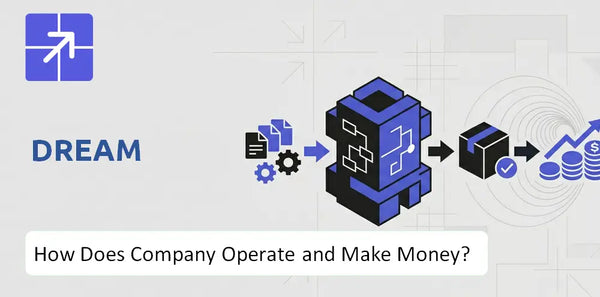
Focus on fee-bearing platforms, JV exits, and rental yield growth to predict cash generation; consider Dream BCG Matrix Analysis for portfolio signals.
What Does Dream Actually Sell?
Dream Unlimited Corp. sells developed real estate assets, investment management services, and renewable energy infrastructure – customers pay for finished residential and mixed-use properties, asset management and fund access, and utility-scale green power and infrastructure for communities.
 Core real estate, funds, and renewable power
Dream Unlimited Corp. markets finished residential lots, multi-family units, and mixed-use developments; it also offers asset management via vehicles like Dream Industrial REIT and Dream Impact Trust, and sells renewable energy capacity from its power portfolio.
Main buyer segments
Buyers include homebuilders and individual homebuyers for developed lots and units, institutional and retail investors for managed funds, and utilities or internal community projects for renewable energy and infrastructure.
Practical customer value
Customers receive turnkey real estate for immediate development or occupancy, professional portfolio oversight and predictable income streams from REITs and trusts, and long-term green energy supply that lowers carbon intensity for communities and offtakers.
Why this offering stands out
Dream combines development cashflow, fee and yield-based revenue from asset management, and renewable infrastructure scale – supporting diversified revenue streams that drive the Dream Company business model and How Dream Company works in practice; see Competitive Landscape of Dream Company for context.
Dream SWOT Analysis
- Complete SWOT Breakdown
- Fully Customizable
- Editable in Excel & Word
- Professional Formatting
- Investor-Ready Format

How Does Dream Run Its Business Day to Day?
Dream Unlimited Corp. runs day-to-day as a dual operator: a full – cycle developer and an external manager for REITs and private funds. Teams handle land acquisition, approvals, construction, leasing, asset management, and impact investing using integrated project, asset, and capital-allocation systems.

Operating model: integrated developer plus manager
Dream Unlimited Corp. combines development (land acquisition to sale) with third-party management for listed and private vehicles; the operating model centers on project teams, an internal capital-allocation desk, and centralized legal and approvals support to coordinate municipal, lender, and investor requirements.
Product and service delivery: real estate assets and management services
End customers access finished residential, office, and industrial real estate via sales and leasing; institutional investors access exposure through REITs and private funds that Dream manages, with leasing teams negotiating contracts across millions of square feet.
Production, sourcing, and development: full lifecycle control
Development teams source land, secure zoning, and manage construction. Major projects like the Zibi waterfront require phased permitting, contractor procurement, and construction management; construction capex and timelines are tracked centrally against budgets and IRR targets.
Sales channels and distribution: direct, institutional, and capital markets
Residential units sell through brokers and direct sales teams; commercial space leases via in – house leasing and broker networks; institutional capital enters through REIT listings and private fund raises, plus occasional asset dispositions to third parties.
Key assets, systems, and partnerships: scale enablers
Critical assets include land banks, completed properties, and management mandates. Systems: ERP/project-management, lease-administration, and ESG reporting platforms. Partnerships: municipal stakeholders, large contractors, institutional lenders, and capital partners that fund development and acquisitions.
What makes the model work in practice: aligned incentives and recurring fees
The model scales because development profits and recurring management fees diversify cash flow: development disposals yield one-time gains while management of REITs/funds generates steady fees and performance incentives. Impact investing standards help attract institutional capital seeking ESG-compliant assets.
Daily workflows: acquisition committees review offers using underwriting models; zoning and approvals teams coordinate with municipalities; construction managers track milestones and capex to budget; leasing teams renew and sign leases across millions of sq ft; the capital-allocation desk shifts equity and debt between development and managed vehicles to optimize returns and liquidity. See a fuller context in History and Background of Dream Company.
Dream Business Model Canvas
- One-time Payment
- No Research Needed – Save Hours of Work
- Built by Experts, Trusted by Consultants
- Instant Download, Ready to Use
- 100% Editable, Fully Customizable

How Does Revenue Flow Through Dream?
Revenue at Dream Unlimited Corp. flows through three complementary channels: fee-based asset management, episodic development sales, and investment income from owned properties and REIT stakes. Demand for housing and institutional capital converts into fees, closings, and distribution income.
Fee income from asset management
Management fees are the primary recurring revenue, charged as a percentage of AUM. As of early 2025 Dream Unlimited Corp. reports over $25,000,000,000 in AUM, producing steady fee cash flow to cover overhead and debt service.
Development sales and closings
Development revenue comes from lot sales and condominium unit closings and is realized in large, irregular increments. This channel drives spikes in revenue tied to housing demand, pricing, and construction completion schedules.
Investment income and distributions
Investment income includes net operating income from Dream Unlimited Corp. owned properties and distributions from its equity stakes in managed REITs. These returns smooth overall cash flow and enhance shareholder value.
What most drives revenue
Revenue is most sensitive to AUM growth, condo/lot sales velocity, and property NOI margins. Market conditions that lift housing closings and institutional capital inflows boost both the fee base and one-time development gains.
Pricing and monetization rely on tiered management fees, project-level sales margins, and equity returns; this hybrid Dream Company revenue model balances predictable fee-based cash flow with higher-margin but cyclical development profits – see further context in Growth Outlook of Dream Company.
Dream Marketing Mix
- Complete Marketing Mix Analysis
- Effortlessly Communicate Your Business Strategy
- Investor-Ready Format
- 100% Editable and Customizable
- Clear and Structured Layout

What Makes Dream's Model Sustainable or Fragile?
Dream Unlimited Corp.'s model is sustained by diversified assets, strong industrial demand, and fee-earning AUM, yet it is fragile to rising interest rates and office-sector decline. Structural strengths include impact-investing credibility and capital partnerships; key risks are financing costs and office-to-residential conversion execution.
Core Structural Strengths
Dream Unlimited Corp.'s diversification across residential, industrial, and commercial real estate reduces single-market exposure and supports recurring fee income from asset management; industrial vacancy in major Canadian markets entered 2026 below 3%, keeping rental growth durable. Its impact-investing niche attracts ESG-focused capital and lower-cost institutional partners, improving access to non-traditional financing.
Key Assets and Capabilities
Fee-earning assets under management (AUM) provide predictable revenue streams; as of fiscal 2025 AUM and fee income supported operating cash flow even with development cycles slowing. Scale in industrial land and development pipelines enables faster leasing and unit economics, while strategic partnerships help syndicate risk and access capital for large mixed-use projects.
Dependencies and Constraints
Revenue and margins depend on interest rates, lending availability, and Canadian residential absorption; higher rates in 2025 raised secured financing costs and extended hold periods for developments. Concentration in Dream Office REIT exposure ties performance to structural office demand, forcing costly repositioning or write-down risks during conversion to residential or mixed-use.
Durability Outlook for 2025 – 2026
Professional judgment: Dream Unlimited Corp. appears resilient in 2025 due to robust fee income and strong industrial fundamentals, but growth hinges on residential absorption stabilizing and successful office-asset repositioning. If Canadian residential absorption normalizes and conversions proceed efficiently, upside returns resume; if interest rates stay elevated and office vacancies persist, margin pressure will likely compress returns and slow capital recycling.
Target Customers and Market of Dream Company
Dream Boston Consulting Group Matrix
- Built by Experts, Trusted by Consultants
- Structured for Consultants, Students, and Founders
- 100% Editable in Microsoft Word & Excel
- Instant Digital Download – Use Immediately
- Compatible with Mac & PC – Fully Unlocked

Related Blogs
- What Is the History of Dream Company and How Did It Evolve?
- What Is the Competitive Landscape of Dream Company and How Does It Compete?
- What Is the Growth Outlook of Dream Company and Where Is It Heading?
- How Does Dream Company Reach Customers and Turn Demand into Sales?
- What Do the Mission, Vision, and Core Values of Dream Company Reveal?
- Who Are the Core Customers in Dream Company's Target Market?
- Who Owns Dream Company Today and Who Holds Control?
Frequently Asked Questions
Dream sells developed real estate assets, investment management services, and renewable energy infrastructure. Its offerings include finished residential lots, multi-family units, mixed-use developments, managed REITs and private funds, and renewable power capacity for communities and offtakers.
Disclaimer
All information, articles, and product details provided on this website are for general informational and educational purposes only. We do not claim any ownership over, nor do we intend to infringe upon, any trademarks, copyrights, logos, brand names, or other intellectual property mentioned or depicted on this site. Such intellectual property remains the property of its respective owners, and any references here are made solely for identification or informational purposes, without implying any affiliation, endorsement, or partnership.
We make no representations or warranties, express or implied, regarding the accuracy, completeness, or suitability of any content or products presented. Nothing on this website should be construed as legal, tax, investment, financial, medical, or other professional advice. In addition, no part of this site - including articles or product references - constitutes a solicitation, recommendation, endorsement, advertisement, or offer to buy or sell any securities, franchises, or other financial instruments, particularly in jurisdictions where such activity would be unlawful.
All content is of a general nature and may not address the specific circumstances of any individual or entity. It is not a substitute for professional advice or services. Any actions you take based on the information provided here are strictly at your own risk. You accept full responsibility for any decisions or outcomes arising from your use of this website and agree to release us from any liability in connection with your use of, or reliance upon, the content or products found herein.