
Who are Federal Realty Investment Trust's core customers in affluent coastal markets?
Federal Realty Investment Trust targets high-income households and premium retailers in dense coastal submarkets; this matters because 58 years of consecutive dividend increases through 2025 signal resilient cash flow and tenant demand. See a product analysis here: Federal BCG Matrix Analysis
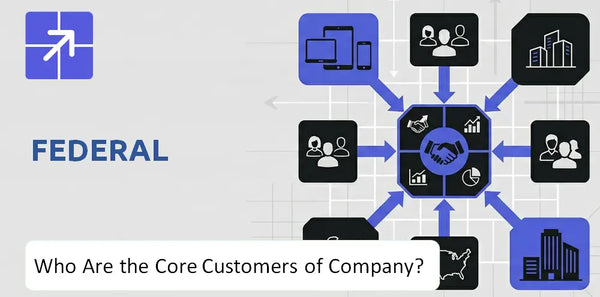
Focus on affluent households, boutique brands, and grocery-anchored retailers who drive above-market sales per sq ft; these tenants reduce vacancy risk and support rent premiums in 2025 coastal portfolios.
Who Is Federal Trying to Win?
Federal Realty Investment Trust targets premier retail brands and affluent local consumers – anchor grocers and omnichannel retailers that drive foot traffic, plus luxury residents and boutique office tenants in mixed-use assets.
 Main institutional retail customers
Federal Realty focuses on best-in-class retailers – examples include Lululemon and Sephora – and essential anchors like Whole Foods Market and Wegmans because they deliver steady visits and resilient rent streams; as of 2025 these tenants account for a majority of shop-level net operating income in top-tier assets.
Secondary residential and office users
Luxury residential renters and boutique office occupants fill the mixed-use pipeline, supporting higher per-square-foot retail sales and affording premium rents; lease-up velocity in 2025 shows these segments raising blended yields in submarkets with wealthy zip codes.
Customer type and market role
Federal Realty serves a mixed customer base: institutional retail tenants (businesses) and affluent consumers (individuals), plus commercial office tenants and multifamily residents – this hybrid model stabilizes cash flows and supports retail rent growth.
Most important segment by strategic impact
The strategic core is omnichannel-centric retailers within high-income trade areas; in 2025 these retailers drove foot traffic that supported over 60% of Federal Realty's stabilized retail revenue in key markets and remain the top priority for leasing and redevelopment.
See more corporate context in the History and Background of Federal Company
Federal SWOT Analysis
- Complete SWOT Breakdown
- Fully Customizable
- Editable in Excel & Word
- Professional Formatting
- Investor-Ready Format

What Do Federal's Customers Care About Most?
Core customers of Federal Company prioritize trade areas with dense, affluent households and seek convenience-driven luxury and curated experiences; retail tenants demand high-intent traffic and halo-brand adjacency, consumers want walkable, safe, high-end amenities, and residential tenants pay a 20 – 25% rent premium for 24/7 lifestyle integration.

Demographic density and disposable income
Retail tenants require trade areas where the average household income exceeds $150,000 within a three-mile radius to ensure sufficient consumer spending power and predictability of sales.
Practical buying drivers: halo effect and foot traffic
Brands choose Federal Company locations for the halo effect of premium neighbors, which raises high-intent consumer traffic and conversion rates – key practical drivers beyond base rent and lease terms.
Emotional appeal: convenience-driven luxury
Consumers seek curated, identity-affirming experiences – premium dining, wellness, and retail within a safe, walkable public realm – motivated by lifestyle and status signaling.
What customers value most: quality public realm
Walkability, visible safety, and a mix of high-end dining and wellness options drive dwell time and basket size; these features materially lift retail sales per square foot and residential desirability.
Loyalty and repeat demand: integrated 24/7 lifestyle
Residential tenants at Federal Realty Investment Trust properties accept a 20 – 25% rent premium versus stand-alone apartments for constant access to curated retail, dining, and services – supporting retention and steady income streams.
Why customers choose Federal Company
Federal Company target market wins through proven trade-area economics, premium tenant mixes that create a halo effect, and a public realm that delivers convenience-driven luxury – clear drivers for retailers, consumers, and residents alike. See Mission, Vision, and Values of Federal Company
Federal Business Model Canvas
- One-time Payment
- No Research Needed – Save Hours of Work
- Built by Experts, Trusted by Consultants
- Instant Download, Ready to Use
- 100% Editable, Fully Customizable

Where Is Demand Strongest for Federal?
Demand concentrates in Super Zip coastal gateways – Silicon Valley, Greater Boston, and the Washington D.C. Metro – peaking in mixed-use nodes where occupancy and consumer spend are highest.
Main market: Coastal Super Zip mixed-use corridors
Core customers of Federal Company cluster in high-income coastal corridors: the Silicon Valley corridor, Greater Boston, and the Washington D.C. Metro. These Super Zip locations matter because dense affluence and limited new retail supply push foot traffic and sales per square foot above regional averages.
Secondary demand areas: Bethesda, Northern Virginia, Southern California
Government agency buyers and other Federal government customers sustain stable cash flows in Bethesda and Northern Virginia; Southern California shows fastest rent momentum, with re-leasing spreads rising 12 – 15% on new leases versus prior rates.
Where Federal Company is strongest: mixed-use, supply-constrained assets
Federal Company is strongest in large-scale mixed-use environments – examples include Santana Row (San Jose) and Assembly Row (Somerville) – where integrated residential demand has pushed total property occupancy toward 96%, stabilizing revenues and retail sales per square foot.
Fastest growing demand: Southern California re-leasing and mixed-use infill
Demand is growing fastest in supply-constrained Southern California submarkets where re-leasing spreads hit 12 – 15% in early 2026; prime mixed-use infill projects capture both retail consumers and institutional tenants such as prime contractors and subcontractors servicing federal programs. See related analysis: How Federal Company Works and Makes Money
Federal Marketing Mix
- Complete Marketing Mix Analysis
- Effortlessly Communicate Your Business Strategy
- Investor-Ready Format
- 100% Editable and Customizable
- Clear and Structured Layout

How Does Federal Keep Its Audience Growing?
Federal Realty Investment Trust grows its audience by converting aging retail parks into mixed-use, adding residential towers and office lofts to create a built-in customer base and attract adjacent segments; proactive leasing brings digitally native brands into storefronts and cycles out weak concepts, improving retention and repeat demand.
Asset Intensification and Market Expansion
Federal Realty expands its audience by densifying existing assets: adding residential units and office lofts within retail footprints draws new households and professionals into its catchment, increasing walk-in traffic and widening the Federal Company target market to include primary consumers and adjacent segments like office workers and young professionals.
Proactive Leasing to Attract High-Value Tenants
The leasing team prioritizes top-decile income demographics and digitally native brands moving to physical retail, replacing underperformers to lift sales per square foot and boost portfolio appeal to government agency buyers and other premium customers.
Repeat Demand, Loyalty, and Ecosystem Stickiness
By colocating residences and offices with retail, Federal Realty creates captive repeat demand – residents and employees shop locally – supporting higher tenant renewal rates and deeper customer relationships among core customers of Federal Company and long-tail segments such as prime contractors and federal program managers visiting retail nodes near agency hubs.
Key Growth Lever in 2025/2026
The strongest lever is asset intensification: densification plus curated retail mix. For fiscal 2025 the portfolio is projected to sustain an occupancy rate of 94 to 95 percent, supporting mid-single-digit FFO growth and continued dividend appreciation through 2026; see Competitive Landscape of Federal Company for context: Competitive Landscape of Federal Company
Federal Boston Consulting Group Matrix
- Built by Experts, Trusted by Consultants
- Structured for Consultants, Students, and Founders
- 100% Editable in Microsoft Word & Excel
- Instant Digital Download – Use Immediately
- Compatible with Mac & PC – Fully Unlocked

Related Blogs
- What Is the History of Federal Company and How Did It Evolve?
- What Is the Competitive Landscape of Federal Company and How Does It Compete?
- What Is the Growth Outlook of Federal Company and Where Is It Heading?
- How Does Federal Company Work and What Drives Its Business Model?
- How Does Federal Company Reach Customers and Turn Demand into Sales?
- What Do the Mission, Vision, and Core Values of Federal Company Reveal?
- Who Owns Federal Company Today and Who Holds Control?
Frequently Asked Questions
Federal's core customers are institutional retail tenants, affluent consumers, luxury residential renters, and boutique office occupants. The article says the main strategic focus is omnichannel-centric retailers in high-income trade areas, while residential and office users support the mixed-use model and help stabilize cash flow.
Disclaimer
All information, articles, and product details provided on this website are for general informational and educational purposes only. We do not claim any ownership over, nor do we intend to infringe upon, any trademarks, copyrights, logos, brand names, or other intellectual property mentioned or depicted on this site. Such intellectual property remains the property of its respective owners, and any references here are made solely for identification or informational purposes, without implying any affiliation, endorsement, or partnership.
We make no representations or warranties, express or implied, regarding the accuracy, completeness, or suitability of any content or products presented. Nothing on this website should be construed as legal, tax, investment, financial, medical, or other professional advice. In addition, no part of this site - including articles or product references - constitutes a solicitation, recommendation, endorsement, advertisement, or offer to buy or sell any securities, franchises, or other financial instruments, particularly in jurisdictions where such activity would be unlawful.
All content is of a general nature and may not address the specific circumstances of any individual or entity. It is not a substitute for professional advice or services. Any actions you take based on the information provided here are strictly at your own risk. You accept full responsibility for any decisions or outcomes arising from your use of this website and agree to release us from any liability in connection with your use of, or reliance upon, the content or products found herein.