
How does Federal Realty Investment Trust's sales and marketing model convert foot traffic into premium rents?
Federal Realty targets first-ring, urban-edge locations and markets mixed-use experiences to affluent, high-density demographics. This matters because by 2025 it sustained a 95 percent+ leased rate and steady FFO growth, showing demand capture despite retail volatility.
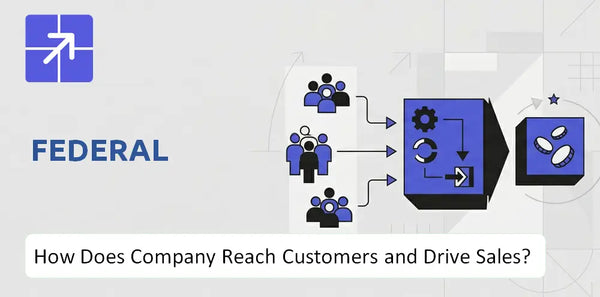
Use curated tenant mixes, local experiential events, and digital customer data to drive repeat visits and higher sales per square foot. Track tenant sales and adjust leasing to protect yield; see Federal BCG Matrix Analysis.
Who Does Federal Want to Sell To?
Federal Realty Investment Trust targets high-productivity retail tenants and affluent residential and office occupiers in supply-constrained coastal markets, aiming to win national grocery, dining, and lifestyle brands plus premium residents and office tenants through high-visibility, mixed-use assets.
 Primary commercial tenants: best-in-class retail
Federal Realty prioritizes top-tier grocery, dining, and lifestyle brands that drive daily foot traffic and long dwell times; by 2025 grocery-anchored centers account for a larger share of leasing, reflecting a pivot to essential and experience-based retail.
Secondary targets: affluent residents and office occupiers
Federal Realty seeks high-income households and premium office tenants in mixed-use projects – properties like Santana Row demonstrate the strategy: integrated retail plus $125,000+ median household income trade areas attract discretionary spend and corporate demand.
Market positioning: coastal, supply-constrained assets
Federal Realty positions itself in top coastal markets – Washington D.C., Boston, San Francisco, Los Angeles – focusing on scarcity-driven locations where national brands need physical presence; this supports premium rents and lower vacancy versus national averages.
Why this positioning works
Concentrating on grocery-anchored and mixed-use hubs captures essential and experience-led demand; in 2025 Federal Realty's tenant mix shift improves resilience – grocery anchors and experiential retail reduce leasing volatility and lift sales per square foot.
For competitive context see Competitive Landscape of Federal Company.
Federal SWOT Analysis
- Complete SWOT Breakdown
- Fully Customizable
- Editable in Excel & Word
- Professional Formatting
- Investor-Ready Format

How Does Federal Get in Front of Customers?
Federal Realty Investment Trust gets in front of customers by using destination retail properties as marketing engines, a data-driven institutional leasing platform, and concentrated corridor clusters that attract premium tenants and foot traffic.

Asset-level Destination Branding
Federal Realty Investment Trust turns high-quality mixed-use properties into self-sustaining marketing assets that drive walk-in traffic and organic awareness, making the portfolio the first contact for retailers evaluating market entry.
Data-driven Site Selection and Digital Evidence
The leasing team uses real-time mobility and trade-area analytics to prove consumer reach to prospects; in early 2026 this includes footfall, drive-time, and demographic overlays to validate demand during negotiations.
Institutional Leasing and Tenant Relationships
Federal Realty Investment Trust deploys an in-house leasing team with deep credit-tenant relationships that convert leads into long-term leases via tailored deal structures and fast responsiveness to national retailers.
Cluster Strategy and Regional Dominance
By concentrating multiple properties in high-growth corridors, the firm creates dominant regional footprints that make it the preferred landlord for retailers expanding in specific markets, increasing tenant demand and bargaining power.
Demand Generation via Events and On-site Activation
On-site events, seasonal activations, and curated tenant mix strategies boost monthly foot traffic metrics; management reports mid-2025 year-over-year footfall gains in core assets that support higher retail rents.
Customer Acquisition Efficiency and Lease Velocity
Leasing velocity benefits from integrated marketing and analytics; Federal Realty Investment Trust converted a higher share of proposals to signed leases in 2025 versus 2024, aided by proven trade-area metrics and flexible deal terms.
Most Important Reach Advantage: Real Assets plus Data
The strongest reach advantage in 2025/2026 is the combination of physical destination assets and real-time mobility analytics, which together demonstrate proven consumer pull and justify premium rents to national tenants; see How Federal Company Works and Makes Money for operational context: How Federal Company Works and Makes Money
Federal Business Model Canvas
- One-time Payment
- No Research Needed – Save Hours of Work
- Built by Experts, Trusted by Consultants
- Instant Download, Ready to Use
- 100% Editable, Fully Customizable

How Does Federal Turn Attention Into Sales?
Federal Realty Investment Trust converts attention into sales by redeveloping underperforming assets, densifying sites, and enforcing lease terms that drive cash flow; high retention and contractual escalations turn interest into predictable revenue.
Core sales model: Value-add leasing and mixed-use redeployment
Federal Realty Investment Trust signs long-term leases with retail and service operators and adds residential density to sites, creating a captive consumer base that supports tenant sales and stable rental income.
Pricing and monetization logic: Base rent, percentage rent, and escalations
Revenue mixes include fixed base rent, percentage rent participation tied to tenant sales, and contractual rent escalations; 2025 cash-on-cash returns on redevelopment projects exceeded 7 percent.
Conversion and purchase drivers: Retention, densification, and lease economics
Leases prioritize retention – comparable-space retention typically above 75 percent – while redevelopment increases rentable productivity per square foot, allowing lease spreads often exceeding 10 percent on new signings.
Repeat revenue and customer expansion: Tenant mix optimization and participation value
Federal Realty Investment Trust grows repeat revenue by densifying properties with residential units, optimizing tenant mix for recurring foot traffic, and capturing upside through percentage rent clauses that scale with tenant sales.
For context on target segments and market positioning see Target Customers and Market of Federal Company.
Federal Marketing Mix
- Complete Marketing Mix Analysis
- Effortlessly Communicate Your Business Strategy
- Investor-Ready Format
- 100% Editable and Customizable
- Clear and Structured Layout

How Strong Does Federal's Commercial Engine Look Going Forward?
Federal Realty Investment Trust's commercial engine looks solid entering 2026, supported by redevelopment-driven revenue and strong suburban demand; key risks are leverage and rising rates. Main supports: affluent, growing suburbs, a >$1,000,000,000 development pipeline, and projected 96% occupancy that sustain rent growth and leasing velocity.
What Supports Future Demand
Concentration in high-income suburbs and mixed-use redevelopments (retail plus residential) drive foot traffic and spend; the pipeline exceeds $1,000,000,000, enabling external growth and rent bumps that convert demand into leases.
Channel and Marketing Effectiveness
Omnichannel leasing, targeted tenant outreach, and place-based events improve tenant retention and B2G-like outreach for service tenants; CRM and digital leasing tools shorten the federal sales funnel stages for contractors and increase conversion rates.
Risks to Commercial Performance
Net Debt-to-EBITDA near 6x (2025) raises refinancing and interest-service risk if rates stay high; slower consumer spending or office-to-resi conversion delays could pressure leasing velocity and NOI growth.
The Overall Sales and Marketing Outlook
Outlook for 2025 – 2026 is strong and adaptable: portfolio quality, sustained occupancy at 96%, and a 50+-year dividend growth record underpin resilience versus peer retail REITs, while targeted acquisition and redevelopment strategies should support above-peer rent growth.
For context and further detail on strategy and outlook see Growth Outlook of Federal Company
Federal Boston Consulting Group Matrix
- Built by Experts, Trusted by Consultants
- Structured for Consultants, Students, and Founders
- 100% Editable in Microsoft Word & Excel
- Instant Digital Download – Use Immediately
- Compatible with Mac & PC – Fully Unlocked

Related Blogs
- What Is the History of Federal Company and How Did It Evolve?
- What Is the Competitive Landscape of Federal Company and How Does It Compete?
- What Is the Growth Outlook of Federal Company and Where Is It Heading?
- How Does Federal Company Work and What Drives Its Business Model?
- What Do the Mission, Vision, and Core Values of Federal Company Reveal?
- Who Are the Core Customers in Federal Company's Target Market?
- Who Owns Federal Company Today and Who Holds Control?
Frequently Asked Questions
Federal wants to sell to high-productivity retail tenants, especially grocery, dining, and lifestyle brands. It also targets affluent residents and premium office occupiers in mixed-use projects. The article says this focus helps Federal attract daily foot traffic, long dwell times, and discretionary spend in supply-constrained coastal markets.
Disclaimer
All information, articles, and product details provided on this website are for general informational and educational purposes only. We do not claim any ownership over, nor do we intend to infringe upon, any trademarks, copyrights, logos, brand names, or other intellectual property mentioned or depicted on this site. Such intellectual property remains the property of its respective owners, and any references here are made solely for identification or informational purposes, without implying any affiliation, endorsement, or partnership.
We make no representations or warranties, express or implied, regarding the accuracy, completeness, or suitability of any content or products presented. Nothing on this website should be construed as legal, tax, investment, financial, medical, or other professional advice. In addition, no part of this site - including articles or product references - constitutes a solicitation, recommendation, endorsement, advertisement, or offer to buy or sell any securities, franchises, or other financial instruments, particularly in jurisdictions where such activity would be unlawful.
All content is of a general nature and may not address the specific circumstances of any individual or entity. It is not a substitute for professional advice or services. Any actions you take based on the information provided here are strictly at your own risk. You accept full responsibility for any decisions or outcomes arising from your use of this website and agree to release us from any liability in connection with your use of, or reliance upon, the content or products found herein.