
Who are Groupe Bertrand's core customers across its hospitality segments?
Groupe Bertrand serves mass-market diners, urban professionals, tourists, and high-net-worth clients through fast food, casual dining, and luxury restaurants and hotels. This mix matters because by 2025 the group held 12 – 15% market share in French commercial catering, buffering cyclical risks and capturing post-inflation recovery.
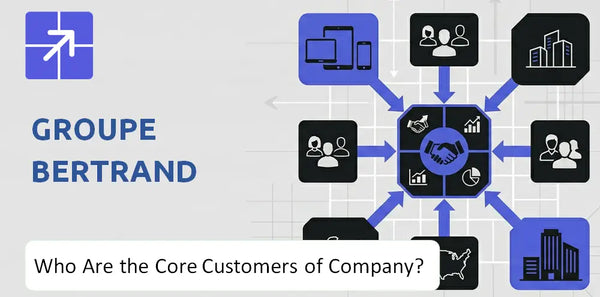
Segment core customers by spend and visit frequency; target urban commuters for QSR and international tourists for luxury venues. See product insight: Groupe Bertrand BCG Matrix Analysis
Who Is Groupe Bertrand Trying to Win?
Groupe Bertrand tries to win three customer tiers: a high-volume Value-Seeking Mass Market (Gen Z, Millennials, families) for fast food; a mid-tier Casual Dining Enthusiast (French middle class, ages 30 – 55); and High-Net-Worth Individuals plus international tourists for prestige dining.
 Main customer group – Value-Seeking Mass Market
Groupe Bertrand target customers are led by mass-market fast-food guests who prioritize affordability and speed; Burger King France (master franchise) drives volume, representing over 50% of group revenue in 2025 and attracting Gen Z, Millennials, and families seeking low-cost, frequent visits.
Secondary groups – Casual Dining Enthusiasts
The second tier comprises hospitality customers France in mid-market sit-down brands like Au Bureau, Hippopotamus, and Leon; these restaurant group clientele are typically aged 30 – 55, French middle-class diners who use venues for social and business meals, contributing significant same-restaurant average check and weekday footfall.
Customer type and market role
Groupe Bertrand serves a mixed customer base: primarily consumers (B2C) across fast-food, casual and prestige formats, plus B2B relationships (event planners, corporate clients) that boost bookings and private events revenue in urban centers.
Most important segment by revenue and scale
The fast-food segment is the most important by revenue and scale, accounting for over 50% of 2025 group revenue and enabling geographic density; prestige and casual dining supply brand equity, higher average checks, and prime urban locations that capture tourists and HNW clientele.
For deeper context on operations and revenue mix, see How Groupe Bertrand Company Works and Makes Money
Groupe Bertrand SWOT Analysis
- Complete SWOT Breakdown
- Fully Customizable
- Editable in Excel & Word
- Professional Formatting
- Investor-Ready Format

What Do Groupe Bertrand's Customers Care About Most?
Groupe Bertrand target customers seek fast, convenient digital experiences in quick service and authenticity, atmosphere, and provenance in casual and prestige venues; across segments they care about price, quality, and ESG commitments. Mobile ordering, transparent sourcing, and lifestyle signaling drive visits and spending.

Convenience and Digital Integration
Quick-service guests prioritize speed and digital-first options; over 40 percent of transactions in 2025 originate via mobile apps or in-store kiosks, reducing wait time and friction for Groupe Bertrand core customers.
Practical Buying Drivers: Price and Quality
Price sensitivity remains high among hospitality customers France, but many trade up for consistent food quality and transparent sourcing; menu value and promotions influence repeat visits among middle-income demographics.
Emotional and Aspirational Appeal
Casual dining and prestige guests seek the French Art de Vivre; meals are lifestyle choices for tourists, local residents who frequent Groupe Bertrand venues, and event planners booking Groupe Bertrand restaurants.
What Customers Value Most
Across Groupe Bertrand customer segments, provenance and sustainability matter: by 2026 customers reward the shift to 100 percent reusable tableware and increased use of locally sourced French beef and produce, impacting purchase decisions.
Loyalty and Repeat Demand
Loyalty program targets for Groupe Bertrand hinge on convenience (app ordering), rewards tied to frequency, and ESG signaling; corporate clients and business and corporate clients of Groupe Bertrand return for reliability and venue atmosphere.
Why Customers Choose Groupe Bertrand
Groupe Bertrand wins by combining accessible digital fulfillment in quick service with authentic French dining experiences, appealing to millennials, Gen Z, families, and tourists; see the Sales and Marketing Strategy of Groupe Bertrand Company for more detail.
Groupe Bertrand Business Model Canvas
- One-time Payment
- No Research Needed – Save Hours of Work
- Built by Experts, Trusted by Consultants
- Instant Download, Ready to Use
- 100% Editable, Fully Customizable

Where Is Demand Strongest for Groupe Bertrand?
Demand for Groupe Bertrand offerings is concentrated in Paris and other high-density urban centers, with growing traction in secondary French cities and suburban retail hubs where quick-service and casual-dining formats perform strongly.
Paris: Core Urban Market
Paris drives prestige and brasserie revenue; international tourism to Paris is projected to rise by 4.5 percent for the 2025/2026 season, supporting luxury and visitor-focused concepts and high ticket averages.
Secondary Cities and Suburban Hubs
Fastest growth appears in secondary French cities and suburban outskirts where Au Bureau and Burger King anchor local commercial activity and footfall, expanding the Groupe Bertrand target customers beyond central Paris.
Strength by Channel and Brand
Groupe Bertrand is strongest in mixed-format reach: prestige dining and brasseries in Paris, plus broad coverage via Au Bureau and Burger King. Digital channels now represent about 30 percent of total group sales, shifting the revenue mix toward delivery and click-and-collect.
Fastest Growing Demand Areas (2025/2026)
Digital demand and suburban expansion lead growth in 2025/2026; international demand for luxury exports – notably Angelina – rises in Middle Eastern and Asian markets through high-end franchise deals, increasing overseas revenue exposure.
For ownership context and how strategic brand mix shapes customer segments, see Ownership and Control of Groupe Bertrand Company
Groupe Bertrand Marketing Mix
- Complete Marketing Mix Analysis
- Effortlessly Communicate Your Business Strategy
- Investor-Ready Format
- 100% Editable and Customizable
- Clear and Structured Layout

How Does Groupe Bertrand Keep Its Audience Growing?
Groupe Bertrand grows its audience by acquiring legacy brands, digitizing menus and channels, and placing outlets in transit hubs to reach tourists and commuters; cross-brand loyalty and premiumization drive retention and deeper spend across customer segments.
Expanding Reach via Portfolio and Channels
Groupe Bertrand expands its customer base by buying distressed legacy brands, modernizing them with digital ordering and menu innovation, and opening locations in airports and train stations to capture transit and tourist traffic; this targets both Groupe Bertrand target customers and adjacent segments like business travelers and millennials.
Customer Retention Drivers
Retention relies on a cross-brand loyalty ecosystem that rewards movement between price tiers, consistent digital engagement (apps, personalized offers), and menu premiumization in brasseries; these reduce churn among core diners and hospitality customers France.
Loyalty and Repeat Demand Mechanics
Cross-brand points and tiered rewards increase repeat visits and customer depth by encouraging spend across fast-food and upscale divisions; loyalty data lets Groupe Bertrand segment by age and income to target millennials, Gen Z, families, and corporate clients.
Strongest Growth Lever in 2025/2026
The dominant lever is portfolio scaling – notably growing the Burger King network toward 650 units – combined with luxury brasserie premiumization; management projects Groupe Bertrand to outperform the French hospitality market (2.8%) with revenue growth of 6 – 8% year-over-year in 2025/2026, per corporate targets and market analysis Growth Outlook of Groupe Bertrand Company.
Groupe Bertrand Boston Consulting Group Matrix
- Built by Experts, Trusted by Consultants
- Structured for Consultants, Students, and Founders
- 100% Editable in Microsoft Word & Excel
- Instant Digital Download – Use Immediately
- Compatible with Mac & PC – Fully Unlocked

Related Blogs
- What Is the History of Groupe Bertrand Company and How Did It Evolve?
- What Is the Competitive Landscape of Groupe Bertrand Company and How Does It Compete?
- What Is the Growth Outlook of Groupe Bertrand Company and Where Is It Heading?
- How Does Groupe Bertrand Company Work and What Drives Its Business Model?
- How Does Groupe Bertrand Company Reach Customers and Turn Demand into Sales?
- What Do the Mission, Vision, and Core Values of Groupe Bertrand Company Reveal?
- Who Owns Groupe Bertrand Company Today and Who Holds Control?
Frequently Asked Questions
Groupe Bertrand targets three main tiers. The largest is the value-seeking mass market, including Gen Z, Millennials, and families for fast food. It also serves casual dining enthusiasts in the French middle class aged 30-55, plus high-net-worth individuals and international tourists for prestige dining.
Disclaimer
All information, articles, and product details provided on this website are for general informational and educational purposes only. We do not claim any ownership over, nor do we intend to infringe upon, any trademarks, copyrights, logos, brand names, or other intellectual property mentioned or depicted on this site. Such intellectual property remains the property of its respective owners, and any references here are made solely for identification or informational purposes, without implying any affiliation, endorsement, or partnership.
We make no representations or warranties, express or implied, regarding the accuracy, completeness, or suitability of any content or products presented. Nothing on this website should be construed as legal, tax, investment, financial, medical, or other professional advice. In addition, no part of this site - including articles or product references - constitutes a solicitation, recommendation, endorsement, advertisement, or offer to buy or sell any securities, franchises, or other financial instruments, particularly in jurisdictions where such activity would be unlawful.
All content is of a general nature and may not address the specific circumstances of any individual or entity. It is not a substitute for professional advice or services. Any actions you take based on the information provided here are strictly at your own risk. You accept full responsibility for any decisions or outcomes arising from your use of this website and agree to release us from any liability in connection with your use of, or reliance upon, the content or products found herein.