
Who are GS Retail's core customers among South Korea's single-person households and daily shoppers?
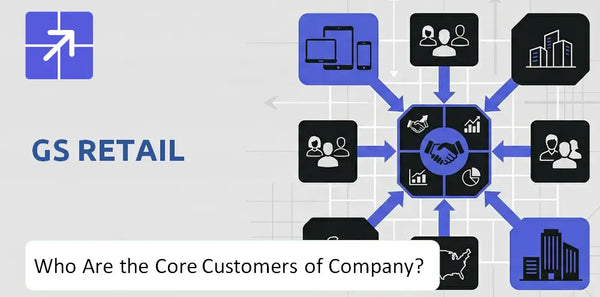
GS Retail targets high-frequency, convenience-focused consumers – primarily single-person households and urban commuters – whose micro-consumption drives repeat visits. This matters because GS Retail projects 2025 revenue >13 trillion KRW, reflecting O4O gains and rising per-store digital transactions.
Focus on retention: prioritize tailored promotions and quick-delivery picks to boost basket size and lifetime value; see GS Retail BCG Matrix Analysis.
Who Is GS Retail Trying to Win?
GS Retail tries to win single-person households – especially Gen Z and Alpha urbanites who treat convenience stores as lifestyle hubs – plus suburban families, the silver generation, and high-net-worth travelers through its Parnas hotels.
 Main customer group: single-person households and Gen Z/Alpha
GS Retail focuses on the 36.5 percent of South Koreans living alone (early 2026), targeting Gen Z and Alpha who use GS25 as a lifestyle destination for exclusive drops, modisumer trends, and ready-to-eat meals. This group drives high-frequency visits and impulsive spend, key to store-level sales growth.
Secondary groups: suburban families and silver generation
Suburban families and older shoppers favor GS THE FRESH for perishables and weekly grocery needs, contributing sizable basket values and steady grocery revenue. The silver generation increases weekday daytime traffic and loyalty-program uptake.
Customer type and market role: mixed retail and hospitality base
GS Retail serves a mixed base: mass-market consumers at GS25 and GS THE FRESH plus affluent guests via Parnas hotels. This multi-tier approach captures daily essentials buyers and high-margin hospitality customers, diversifying revenue streams.
Most important segment by scale and strategic relevance
Single-person households (urban young adults) are most important by visit frequency and per-store sales velocity; they drive convenience-store same-store sales and product innovation. For strategic diversification, Parnas targets premium revenue per guest, while GS THE FRESH secures grocery market share.
How GS Retail Company Works and Makes Money
GS Retail SWOT Analysis
- Complete SWOT Breakdown
- Fully Customizable
- Editable in Excel & Word
- Professional Formatting
- Investor-Ready Format

What Do GS Retail's Customers Care About Most?
GS Retail core customers prioritize ultra-convenience, exclusive products, and seamless digital experiences to save time and access premium ready-to-eat options; freshness and traceability drive supermarket buyers, while hotel guests expect personalized, high-touch service.

Time-saving convenience for busy urban shoppers
Customers use GS Retail to cut shopping friction: pre-orders, locker pickup, and in-app stock checks reduce run time for commuters and office workers. Home Meal Replacements (HMR) and Restaurant Meal Replacements account for a major share of demand.
Practical buying drivers: speed, freshness, and price
Shoppers choose GS Retail for quick access to fresh meals and competitive pricing via YouUs private label; fresh food categories represent over 45% of non-tobacco revenue in 2025, underscoring demand for quality ready-to-eat options.
Emotional appeal: trusted private label and premium feel
YouUs builds trust by offering premium perceived quality at accessible prices, appealing to identity and lifestyle needs of young urban professionals and value-conscious families.
What customers value most: traceability and freshness
Supermarket customers prioritize traceability and same-day freshness for Daily Cook meal kits; transparency in sourcing influences repeat purchases and willingness to pay premium prices.
Loyalty drivers: convenience ecosystems and private labels
Retention hinges on app features, locker networks, and private-label value. Loyalty program uptake is strongest among college students and office workers who transact multiple times weekly.
Why customers pick GS Retail over rivals
GS Retail wins by combining digital seamlessness with a broad fresh-food assortment and exclusive YouUs SKUs; this mix targets Korean convenience store shoppers and tourists seeking fast, high-quality meals. Read the company growth context in Growth Outlook of GS Retail Company.
GS Retail Business Model Canvas
- One-time Payment
- No Research Needed – Save Hours of Work
- Built by Experts, Trusted by Consultants
- Instant Download, Ready to Use
- 100% Editable, Fully Customizable

Where Is Demand Strongest for GS Retail?
Demand is strongest in high-density urban centers – primarily the Seoul Metropolitan Area and Gyeonggi Province – where store proximity and convenience drive frequent visits; quick commerce and international outlets also show rapid growth.
Main Market: Seoul Metro and Gyeonggi
GS Retail core customers cluster in Seoul and Gyeonggi, where Korean convenience store shoppers value proximity and ready-to-eat options; these areas generate the largest transaction volumes and daily footfall.
Secondary Markets: International Growth
GS25 customer demographics are expanding overseas – Vietnam and Mongolia show meaningful demand; by end-2025 GS25 Vietnam stores are projected to exceed 480 locations, targeting young, tech-savvy shoppers with rising incomes.
Where GS Retail Is Strongest
GS Retail is strongest in urban convenience and quick commerce: GS THE FRESH leverages its >500 supermarkets as localized fulfillment centers to offer 60-minute delivery windows, boosting frequency among busy commuters and young urban professionals.
Fastest-Growing Demand: Quick Commerce & International
The fastest growth is in quick commerce (instant delivery), and internationally in Vietnam and Mongolia; this helps offset domestic market saturation and taps into new GS Retail customer segments like expatriates and digitally native consumers. Read more on company evolution at History and Background of GS Retail Company
GS Retail Marketing Mix
- Complete Marketing Mix Analysis
- Effortlessly Communicate Your Business Strategy
- Investor-Ready Format
- 100% Editable and Customizable
- Clear and Structured Layout

How Does GS Retail Keep Its Audience Growing?
GS Retail keeps its audience growing by combining a digital loyalty ecosystem with AI-driven operations and a Wide-Network retail strategy, reaching adjacent segments like logistics users and EV drivers while improving retention through better in-stock rates and targeted offers.
How GS Retail Expands Its Customer Base
GS Retail attracts new customers via the Our Neighborhood GS platform, which surpassed 22 million cumulative downloads by early 2026, and GS Pay fintech features that draw younger urban professionals and tourists. Converting stores into service hubs (logistics, banking, EV charging) brings adjacent segments and increases foot traffic from nontraditional shoppers.
Customer Retention Drivers
AI-driven predictive analytics optimize store-level inventory, raising retention by 18 percent year-over-year through fewer stockouts on private label and seasonal SKUs. Personalized promotions via GS Pay and data from the app improve repeat visits and average basket size among core GS Retail customer segments.
Loyalty, Repeat Demand, and Customer Depth
The integrated loyalty ecosystem ties purchases, payments, and promotions – boosting stickiness for GS25 customer demographics such as college students, office workers, and young urban professionals. High-margin private label lines drive repeat demand; scaling these SKUs increases lifetime value and deepens engagement across retail customer segmentation GS Retail efforts.
The Strongest Customer-Base Growth Lever
Private label expansion coupled with the digital payments and app ecosystem is the key lever: it improves margins, retention, and cross-sell opportunities. My professional judgment for 2025/2026 is that sustaining market leadership depends on scaling high-margin private label and international expansion while managing automated logistics costs and e-commerce competition; see related analysis in Sales and Marketing Strategy of GS Retail Company.
GS Retail Boston Consulting Group Matrix
- Built by Experts, Trusted by Consultants
- Structured for Consultants, Students, and Founders
- 100% Editable in Microsoft Word & Excel
- Instant Digital Download – Use Immediately
- Compatible with Mac & PC – Fully Unlocked

Related Blogs
- What Is the History of GS Retail Company and How Did It Evolve?
- What Is the Competitive Landscape of GS Retail Company and How Does It Compete?
- What Is the Growth Outlook of GS Retail Company and Where Is It Heading?
- How Does GS Retail Company Work and What Drives Its Business Model?
- How Does GS Retail Company Reach Customers and Turn Demand into Sales?
- What Do the Mission, Vision, and Core Values of GS Retail Company Reveal?
- Who Owns GS Retail Company Today and Who Holds Control?
Frequently Asked Questions
GS Retail's core customers are single-person households, especially Gen Z and Alpha urbanites, along with suburban families, the silver generation, and high-net-worth travelers through Parnas hotels. The biggest focus is on young, urban convenience-store users, while GS THE FRESH and Parnas broaden the customer base.
Disclaimer
All information, articles, and product details provided on this website are for general informational and educational purposes only. We do not claim any ownership over, nor do we intend to infringe upon, any trademarks, copyrights, logos, brand names, or other intellectual property mentioned or depicted on this site. Such intellectual property remains the property of its respective owners, and any references here are made solely for identification or informational purposes, without implying any affiliation, endorsement, or partnership.
We make no representations or warranties, express or implied, regarding the accuracy, completeness, or suitability of any content or products presented. Nothing on this website should be construed as legal, tax, investment, financial, medical, or other professional advice. In addition, no part of this site - including articles or product references - constitutes a solicitation, recommendation, endorsement, advertisement, or offer to buy or sell any securities, franchises, or other financial instruments, particularly in jurisdictions where such activity would be unlawful.
All content is of a general nature and may not address the specific circumstances of any individual or entity. It is not a substitute for professional advice or services. Any actions you take based on the information provided here are strictly at your own risk. You accept full responsibility for any decisions or outcomes arising from your use of this website and agree to release us from any liability in connection with your use of, or reliance upon, the content or products found herein.