
How does GS Retail's sales and marketing model convert neighborhood touchpoints into repeat sales?
GS Retail uses over 17,500 physical touchpoints plus O4O tech to drive frequent transactions and fast fulfillment. This matters because in 2025 its integrated same-day delivery pilots expanded urban coverage, signalling stronger omnichannel monetization.
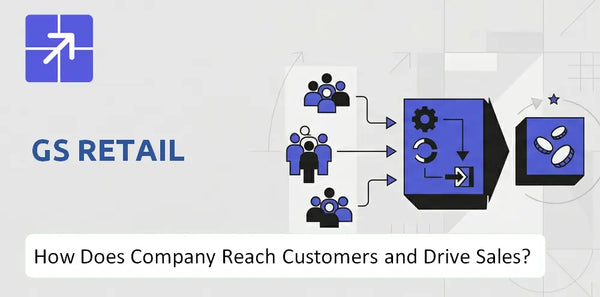
Focus marketing on location-based promos and micro-fulfillment to boost basket size and visit frequency; GS Retail's 2025 trials showed higher AOV in stores tied to realtime app offers. See product insight: GS Retail BCG Matrix Analysis
Who Does GS Retail Want to Sell To?
GS Retail targets three overlapping buyer groups: urban single-person households and Gen Z/Millennials seeking instant, snackable experiences; suburban families and value-conscious shoppers for fresh groceries; and high-net-worth business/leisure travelers via Parnas Hotel. The company focuses on Heavy Users inside its 16.5 million registered app members to drive repeat sales and fast delivery expectations.
 Primary: Urban Singles, Gen Z and Millennials
Urban singles and Gen Z/Millennials account for roughly 65% of GS25 foot traffic; GS Retail targets them with convenience assortments, ready-to-eat meals, 15-minute delivery windows, and mobile app promotions to drive GS Retail customer acquisition and omnichannel conversions.
Secondary: Suburban Families and Value Shoppers
Suburban shoppers use GS THE FRESH for perishables and bulk essentials; merchandising tactics and pricing strategies emphasize quality and value, supporting GS Retail distribution channels and seasonal demand management to convert pantry replenishment trips into higher basket sizes.
Premium: Business and Leisure Travelers via Parnas Hotel
Parnas Hotel targets high-net-worth travelers and corporate clients, integrating hospitality sales with retail promotions and cross-sell offers that feed GS Retail loyalty program uptake and premium product sales.
Market Positioning: Fast Convenience, Fresh Value, Premium Experience
GS Retail positions itself across convenience, grocery, and hospitality tiers to capture urban immediacy and suburban scale; this mix supports GS Retail sales strategy and GS Retail omnichannel marketing while enabling online to offline conversion strategies.
Why This Positioning Works
Targeting Heavy Users inside the 16.5 million app base lets GS Retail predict purchasing cycles with data analytics, personalize offers, and promise 15-minute windows – boosting repeat frequency and app-driven sales conversions while optimizing supply chain and in-store merchandising for conversion.
Related Analysis
See a detailed operational and revenue breakdown in this article: How GS Retail Company Works and Makes Money
GS Retail SWOT Analysis
- Complete SWOT Breakdown
- Fully Customizable
- Editable in Excel & Word
- Professional Formatting
- Investor-Ready Format

How Does GS Retail Get in Front of Customers?
GS Retail gets in front of customers via a dominant omnichannel footprint: dense GS25 stores acting as visible local hubs and a unified Our Neighborhood GS super-app that links GS THE FRESH and GS Shop, backed by targeted geo-fenced pushes and TV/home-shopping to convert demand into sales.

Brick-and-mortar ubiquity as primary acquisition engine
GS25 convenience stores provide the core acquisition channel, holding roughly 30% market share in Korea's convenience store sector and serving as high-visibility billboards and same-day distribution points that drive walk-in traffic and O2O (online-to-offline) conversions.
Digital marketing and unified super-app engagement
The Our Neighborhood GS super-app aggregates GS THE FRESH and GS Shop, enabling push, email, search and paid-media funnels; geo-fenced push notifications within 500 meters of stores boost immediate visits and app-driven pick-up discounts.
Sales channels: stores, home shopping, and e – commerce
Physical GS25 outlets, GS Shop home-shopping (TV and mobile), and GS THE FRESH e-commerce form an integrated distribution network that reaches both younger, mobile-first shoppers and older, high-spending customers via televised segments.
Demand generation tactics: hyper – local promos and timed offers
GS Retail drives demand with geo-fenced limited-time offers, Pick-up discounts, seasonal campaigns across GS25 and GS Shop, plus televised home-shopping events that target spending-heavy demographics and lift short-term sales spikes.
Customer acquisition efficiency and channel ROI
Efficiency comes from store-led acquisition combined with app retargeting; store density reduces customer acquisition cost per visit while app-driven pick-up and promotions increase basket size and frequency, improving LTV (lifetime value) metrics.
Most important reach advantage in 2025
The largest reach advantage is the dual physical-digital network: 30% market share in convenience retail plus the Our Neighborhood GS super-app creates near-constant proximity to consumers and seamless O2O conversion, supporting broad age coverage and high conversion rates; see Growth Outlook of GS Retail Company for deeper context Growth Outlook of GS Retail Company.
GS Retail Business Model Canvas
- One-time Payment
- No Research Needed – Save Hours of Work
- Built by Experts, Trusted by Consultants
- Instant Download, Ready to Use
- 100% Editable, Fully Customizable

How Does GS Retail Turn Attention Into Sales?
GS Retail turns attention into sales by combining exclusive Youus private-label products, high-profile fresh-food and liquor collaborations, and the GS Pay ecosystem to drive higher-margin, repeat purchases. Quick Commerce (Q-commerce) and store-based micro-fulfillment convert digital browsing into fast, higher-value transactions.
Core Sales Model: Omnichannel retail plus Q-commerce
GS Retail sells through company-operated convenience stores, franchise outlets, and digital channels, using stores as micro-fulfillment centers for quick commerce. The model is omnichannel: in-store retail, app-driven purchases, and partner-led marketplace distribution.
Pricing and Monetization Logic: Margin focus on private label and collaborations
The firm monetizes via one-time retail sales and transaction fees on digital orders, pushing higher-margin Youus private-label goods and exclusive liquor/fresh-food collaborations that realize 7 – 12% higher gross margins than national brands. Bundles and time-limited promotions increase basket value.
Conversion and Purchase Drivers: Convenience, exclusive SKUs, and frictionless checkout
Conversion relies on store proximity, curated Youus assortments, fast delivery, and GS Pay one-touch checkout. Quick Commerce averages 20 minutes delivery, cutting cart abandonment and raising conversion compared with slower channels.
Repeat Revenue and Customer Expansion: Loyalty and data-driven personalization
GS Pay loyalty program reached 4.2 million active users by end-2025, offering tiered rewards and seamless checkout to boost retention; personalized promos and push offers increase repeat visits and raise average basket size by about 15% in Q-commerce vs. in-store.
GS Retail customer acquisition and GS Retail sales strategy lean on targeted mobile app promotions, in-store merchandising tactics, and supply-chain-enabled speed that turn attention into measurable sales; see the company context in Mission, Vision, and Values of GS Retail Company.
GS Retail Marketing Mix
- Complete Marketing Mix Analysis
- Effortlessly Communicate Your Business Strategy
- Investor-Ready Format
- 100% Editable and Customizable
- Clear and Structured Layout

How Strong Does GS Retail's Commercial Engine Look Going Forward?
GS Retail's commercial engine looks robust into 2025/2026, driven by a projected revenue rise of 5.8% and an operating margin approaching 4.0%. Key supports are stronger per-store productivity and digital O4O integration, while labor inflation and BGF Retail competition remain headwinds.
What Supports Future Demand
Brand strength, expanded premium channels like Wine 25 Plus, and recovering hotel revenue diversify cash flow; per-store daily sales rose 4% year-over-year, backing organic growth. GS Retail customer acquisition benefits from a loyalty-heavy base and tailored promotions that lift average transaction value.
Channel and Marketing Effectiveness
GS Retail omnichannel marketing and mobile app promotions drive online-to-offline conversion, with specialized fresh food delivery and Wine 25 Plus expanding premium convenience share. Distribution channels and franchise networks keep penetration high, while data-driven merchandising tactics improve SKU productivity.
Risks to Commercial Performance
Rising labor costs (wage inflation in South Korea) and intense rivalry from BGF Retail can compress margins and slow footfall growth. Execution risks include scaling premium offerings without eroding core convenience sales and managing supply chain pressure on fresh assortments.
The Overall Sales and Marketing Outlook
Outlook is strong and adaptable: GS Retail sales strategy emphasizes quality growth over store count, creating a high-moat O4O ecosystem poised to outperform peers. Cash generation and digital integration support marketing spend and loyalty investments, positioning the company to convert demand into sales efficiently.
Ownership and Control of GS Retail Company
GS Retail Boston Consulting Group Matrix
- Built by Experts, Trusted by Consultants
- Structured for Consultants, Students, and Founders
- 100% Editable in Microsoft Word & Excel
- Instant Digital Download – Use Immediately
- Compatible with Mac & PC – Fully Unlocked

Related Blogs
- What Is the History of GS Retail Company and How Did It Evolve?
- What Is the Competitive Landscape of GS Retail Company and How Does It Compete?
- What Is the Growth Outlook of GS Retail Company and Where Is It Heading?
- How Does GS Retail Company Work and What Drives Its Business Model?
- What Do the Mission, Vision, and Core Values of GS Retail Company Reveal?
- Who Are the Core Customers in GS Retail Company's Target Market?
- Who Owns GS Retail Company Today and Who Holds Control?
Frequently Asked Questions
GS Retail targets urban single-person households, Gen Z and Millennials, suburban families, and high-net-worth travelers. It also focuses on Heavy Users within its 16.5 million registered app members to drive repeat purchases and faster delivery expectations across convenience, grocery, and hospitality channels.
Disclaimer
All information, articles, and product details provided on this website are for general informational and educational purposes only. We do not claim any ownership over, nor do we intend to infringe upon, any trademarks, copyrights, logos, brand names, or other intellectual property mentioned or depicted on this site. Such intellectual property remains the property of its respective owners, and any references here are made solely for identification or informational purposes, without implying any affiliation, endorsement, or partnership.
We make no representations or warranties, express or implied, regarding the accuracy, completeness, or suitability of any content or products presented. Nothing on this website should be construed as legal, tax, investment, financial, medical, or other professional advice. In addition, no part of this site - including articles or product references - constitutes a solicitation, recommendation, endorsement, advertisement, or offer to buy or sell any securities, franchises, or other financial instruments, particularly in jurisdictions where such activity would be unlawful.
All content is of a general nature and may not address the specific circumstances of any individual or entity. It is not a substitute for professional advice or services. Any actions you take based on the information provided here are strictly at your own risk. You accept full responsibility for any decisions or outcomes arising from your use of this website and agree to release us from any liability in connection with your use of, or reliance upon, the content or products found herein.