
Who are Lindab Company's core customers in the commercial and residential construction market?
Lindab Company serves builders, HVAC contractors, and developers focused on energy-efficient ventilation and indoor air quality. This matters as tighter 2025 EU regulations drove higher demand and supported Lindab Company's margin expansion. See product fit in Lindab BCG Matrix Analysis
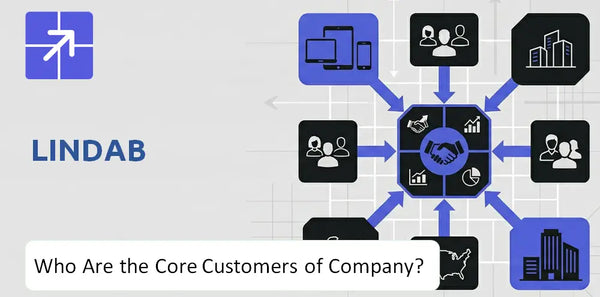
Core buyers prioritize regulatory compliance and lifecycle cost; channel partners value quick delivery and modular systems. Expect steady organic growth from retrofit and new-build segments in 2025.
Who Is Lindab Trying to Win?
Lindab Company targets professional ventilation installers and mechanical contractors who value speed and reliability; these trade buyers drive most revenue. Secondary audiences include large construction firms, industrial developers, and specifying architects and consultants.
 Main customer group: Professional installers and mechanical contractors
Professional ventilation installers and mechanical contractors choose Lindab for fast on-site fit, consistent stock levels, and technical support; they account for roughly 65 – 75% of Lindab revenue in 2025 and are the direct decision-makers on small to mid-sized projects.
Secondary customer groups: Developers and large contractors
Large-scale construction firms and industrial developers buy integrated building systems and drive bulk orders for HVAC and rainwater solutions; they represent about 15 – 25% of revenues and grow with infrastructure and commercial builds.
Customer type and market role: B2B-focused, trade-primary
Lindab mainly serves business customers – HVAC contractors for Lindab, MEP consultants, architects specifying Lindab products, and distributors – prioritizing trade channels over retail consumers to secure repeat business and higher retention.
Most important segment: Trade contractors in Europe and Scandinavia
The most important segment by revenue and volume is mechanical contractors and installers across Europe and Scandinavia; these Lindab core customers use Lindab ventilation systems on the majority of commercial HVAC installs and drive demand for related products and spare parts – see Growth Outlook of Lindab Company for context: Growth Outlook of Lindab Company.
Lindab SWOT Analysis
- Complete SWOT Breakdown
- Fully Customizable
- Editable in Excel & Word
- Professional Formatting
- Investor-Ready Format

What Do Lindab's Customers Care About Most?
Lindab core customers care most about efficiency, regulatory compliance, and lower life – cycle costs; installers want fast assembly, specifiers need energy and embodied – carbon reductions, and developers seek products that help secure green building certifications while cutting operational expenses.

Speed of installation and technical fit
Installers and HVAC contractors for Lindab choose products that reduce onsite labor. The Lindab Safe system cuts installation time by up to 30% versus traditional methods, easing skilled – labor shortages in the 2025 market.
Practical buying drivers: compliance and cost
Architects specifying Lindab products and MEP consultants prioritize compliance with the Energy Performance of Buildings Directive and lower operating costs, so energy efficiency and documented performance data often drive purchase decisions.
Emotional and aspirational appeal
Developers using Lindab target LEED or BREEAM points; demand for fossil – free steel in building products rose roughly 15% year – over – year, reflecting an aspiration to lower embodied carbon and public ESG visibility.
What customers value most
Commercial building end users and mechanical engineers who purchase Lindab products value predictable performance, ease of integration with HVAC systems, documented energy savings, and low maintenance over product lifetime.
Loyalty and repeat demand
Repeat demand from Lindab distributors and wholesalers list members and contractors hinges on consistent product quality, reliable lead times, and post – sale technical support; products that save labor and energy drive higher reorder rates.
Why customers choose Lindab Company
Lindab target customers pick the company for measurable installation time savings, compliance with EU energy rules, and access to sustainable materials that help secure certifications; see Mission, Vision, and Values of Lindab Company for corporate context.
Lindab Business Model Canvas
- One-time Payment
- No Research Needed – Save Hours of Work
- Built by Experts, Trusted by Consultants
- Instant Download, Ready to Use
- 100% Editable, Fully Customizable

Where Is Demand Strongest for Lindab?
Demand for Lindab Company solutions is strongest in Northern and Central Europe, driven by strict building codes and high energy costs; renovation projects now account for about 60% of sales and mission-critical sites like hospitals, schools, and data centers show the highest uptake.
Primary Market: Northern and Central Europe
Northern and Central Europe, including Scandinavia, remains the Lindab target market in Europe and Scandinavia because regulation and energy prices push demand for advanced ventilation and building envelope products; Lindab core customers here include HVAC contractors for Lindab, mechanical engineers who purchase Lindab products, and architects specifying Lindab products.
Secondary Markets and Vertical Hotspots
Western Europe showed the fastest growth in 2025 due to retrofit subsidies; building developers using Lindab and Lindab distributors and wholesalers list channels capture sizable volume, while long-tail buyers include Lindab target customers residential developers and MEP consultants and designers specifying systems for commercial buildings.
Where Lindab Is Strongest
Lindab Company is strongest through its network of over 150 branches, which secures local availability and supports HVAC installers and contractors; revenue mix is now skewed to renovation work (60% of 2026 sales), with hospitals, schools, and data centers as high-margin end users.
Fastest-Growing Demand Areas (2025 – 2026)
Growth accelerated in Western Europe in 2025 via government subsidies for energy-efficient retrofits; demand for Lindab target customers in sustainable building projects and for Lindab customers in the construction industry – especially retrofit HVAC and drainage solutions – rose fastest during the 2025 fiscal year.
History and Background of Lindab Company
Lindab Marketing Mix
- Complete Marketing Mix Analysis
- Effortlessly Communicate Your Business Strategy
- Investor-Ready Format
- 100% Editable and Customizable
- Clear and Structured Layout

How Does Lindab Keep Its Audience Growing?
Lindab Company grows its audience by buying local market leaders, integrating digital tools into design workflows, and leveraging green product commitments to reach adjacent segments and deepen project-level adoption. Cross-selling ventilation and drainage to HVAC contractors, architects, developers, and distributors expands reach while LindQST and sustainability milestones raise retention.
Expanding Lindab target customers Across Markets
Lindab Company adds new customers by completing an aggressive M&A cadence – typically acquiring 5 – 8 firms per year – to enter local markets across Europe and Scandinavia and onboard established Lindab distributors and wholesalers. Cross-selling ventilation systems and rainwater/drainage products brings HVAC contractors for Lindab and building developers using Lindab into the fold, widening Lindab customer segments to include residential developers and commercial end users in construction projects.
Customer Retention Drivers
Retention hinges on digital design tools like LindQST that embed Lindab products early in project planning, shortening spec cycles for mechanical engineers who purchase Lindab products and MEP consultants and designers. Service, prompt local supply via acquired partners, and a clear ESG pathway – most notably the 2025 rollout of fossil-free steel in standard lines – boost loyalty among architects specifying Lindab products and ESG-conscious developers.
Loyalty, Repeat Demand, and Ecosystem Stickiness
Repeat purchases come from project-based procurement and spec continuity: once Lindab components are specified, HVAC installers and contractors return for matching parts across projects. LindQST and localized stock from acquisitions increase ecosystem stickiness, turning one-off buyers into recurring Lindab customers in the construction industry and encouraging distributors to list more Lindab products.
Strongest Growth Lever in 2025/2026
The primary growth lever is M&A combined with digital integration: acquisitions expand geographic footprint and channel access while LindQST locks product choice early. With a structural shift toward indoor air quality and mandatory building decarbonization, Lindab Company targets maintaining an operating margin above 10% in 2025 – 2026, supported by higher-margin ventilation sales and sustainability premiums that attract developers and long-term Lindab core customers.
How Lindab Company Works and Makes Money
Lindab Boston Consulting Group Matrix
- Built by Experts, Trusted by Consultants
- Structured for Consultants, Students, and Founders
- 100% Editable in Microsoft Word & Excel
- Instant Digital Download – Use Immediately
- Compatible with Mac & PC – Fully Unlocked

Related Blogs
- What Is the History of Lindab Company and How Did It Evolve?
- What Is the Competitive Landscape of Lindab Company and How Does It Compete?
- What Is the Growth Outlook of Lindab Company and Where Is It Heading?
- How Does Lindab Company Work and What Drives Its Business Model?
- How Does Lindab Company Reach Customers and Turn Demand into Sales?
- What Do the Mission, Vision, and Core Values of Lindab Company Reveal?
- Who Owns Lindab Company Today and Who Holds Control?
Frequently Asked Questions
Lindab's core customers are professional ventilation installers and mechanical contractors. They drive most revenue because they value fast on-site fit, consistent stock, and technical support. The company also serves large construction firms, industrial developers, architects, consultants, and distributors, but trade buyers remain the main focus.
Disclaimer
All information, articles, and product details provided on this website are for general informational and educational purposes only. We do not claim any ownership over, nor do we intend to infringe upon, any trademarks, copyrights, logos, brand names, or other intellectual property mentioned or depicted on this site. Such intellectual property remains the property of its respective owners, and any references here are made solely for identification or informational purposes, without implying any affiliation, endorsement, or partnership.
We make no representations or warranties, express or implied, regarding the accuracy, completeness, or suitability of any content or products presented. Nothing on this website should be construed as legal, tax, investment, financial, medical, or other professional advice. In addition, no part of this site - including articles or product references - constitutes a solicitation, recommendation, endorsement, advertisement, or offer to buy or sell any securities, franchises, or other financial instruments, particularly in jurisdictions where such activity would be unlawful.
All content is of a general nature and may not address the specific circumstances of any individual or entity. It is not a substitute for professional advice or services. Any actions you take based on the information provided here are strictly at your own risk. You accept full responsibility for any decisions or outcomes arising from your use of this website and agree to release us from any liability in connection with your use of, or reliance upon, the content or products found herein.