
How does Lindab's sales and marketing model convert local distribution and centralized manufacturing into repeat sales?
Lindab sells through a dense network of local distributors and direct contractor channels while centralizing production to cut costs. This matters as 2026 labor-driven margin pressure makes availability and green compliance decisive purchase drivers; see recent 2025 order visibility uptick.
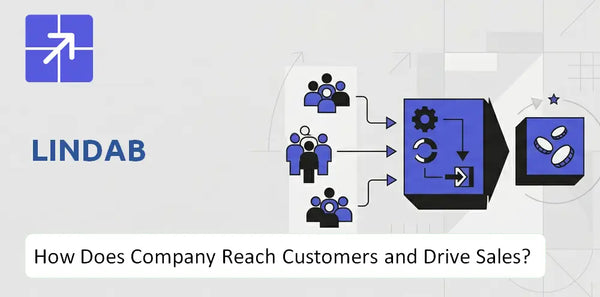
Lindab emphasizes inventory availability and contractor support, turning leads into orders via technical service and confidence in delivery. One practical lever: prioritize stocked SKUs tied to energy-efficient lines like Lindab BCG Matrix Analysis.
Who Does Lindab Want to Sell To?
Lindab company sells primarily to professional buyers in the built-environment: HVAC installers, general contractors, and large property developers across Europe, focusing on projects where ease of assembly and energy efficiency drive procurement decisions. The firm targets renovation and public-sector projects to convert tightening EU energy rules into secured contracts.
 Main customer group: Professional installers and contractors
HVAC installers and general contractors are Lindab sales strategy's core buyers because they specify system compatibility, installation speed, and operational efficiency; these professionals account for the majority of product adoption in commercial and residential retrofits.
Additional target segments: Developers and public-sector procurers
Large-scale property developers and public-sector clients (schools, hospitals, municipal buildings) are prioritized for their larger contract sizes – renovation and public-sector demand represented over 55 percent of total demand by early 2026 due to stricter EU Energy Performance of Buildings Directive requirements.
Market positioning: Premium, installation-friendly, energy-focused
Lindab customer acquisition emphasizes products that save installers time and reduce building energy use rather than lowest-unit price; about 90 percent of revenue is generated in Europe, allowing concentrated Lindab distribution network and channel investments.
Why this positioning works: Regulation and procurement priorities
EU mandates and client procurement criteria increasingly reward ease of assembly and energy performance, so Lindab's B2B sales approach for construction suppliers turns regulatory demand into sales through targeted bids, installer support programs, and dealer partners – see the Growth Outlook of Lindab Company for context: Growth Outlook of Lindab Company.
Lindab SWOT Analysis
- Complete SWOT Breakdown
- Fully Customizable
- Editable in Excel & Word
- Professional Formatting
- Investor-Ready Format

How Does Lindab Get in Front of Customers?
Lindab company reaches customers through a hybrid B2B model: a physical network of over 130 branches across 20 countries paired with a growing digital sales platform that drives about 40% of order volume in mature markets. It combines branch availability, upstream specification work with architects/engineers, and software-led integration to convert demand into sales.

Branch-led field sales and local availability
Lindab sales strategy centers on physical reach: over 130 branches deliver stock, technical support, and fast lead response across 20 countries, which shortens the Lindab sales funnel and reduces project lead times.
Digital ordering and self-service platform
Lindab online sales strategy for HVAC and ventilation has web-based orders contributing ~40% of volume in the Nordics and Western Europe, using e-commerce, product configurators, and account portals to scale repeat B2B transactions.
Distribution partners and contractor access
Lindab distribution network includes direct sales to contractors, wholesalers, and dealers; branches act as local distributors, enabling quick pick-up and supporting installers to drive sales on-site.
Upstream selling and specification influence
Lindab B2B sales approach for construction suppliers focuses on upstream selling: collaboration with architects and engineering consultants during specification, securing inclusion before tendering to reduce competitive leakage.
Demand generation via tools and events
Lindab lead generation tactics combine software tools (LindQST airflow calculations), trade shows, technical seminars, targeted email campaigns, and regional promotions to convert design-stage interest into purchase orders.
Acquisition efficiency and unit economics
High branch density plus digital sales lowers customer acquisition costs; in mature markets where web sales hit ~40%, Lindab improves order frequency and reduces sales cycle length, boosting conversion rates versus traditional tender-only models.
Key reach advantage in 2025
The strongest reach advantage is the integrated model: local branch presence plus specification tools like LindQST embeds Lindab in project blueprints, ensuring early-stage inclusion and higher win rates in 2025.
Competitive Landscape of Lindab Company
Lindab Business Model Canvas
- One-time Payment
- No Research Needed – Save Hours of Work
- Built by Experts, Trusted by Consultants
- Instant Download, Ready to Use
- 100% Editable, Fully Customizable

How Does Lindab Turn Attention Into Sales?
Lindab company turns attention into sales by selling technical differentiation and logistical reliability to contractors and specifiers, converting interest via faster installs and compliance-driven value pricing. The sales funnel emphasizes product performance, cross-selling, and long-term service contracts to lock in revenue.
Core sales model: direct and partner-led contracts
Lindab sales strategy relies on B2B direct sales to large projects and a dealer network for contractors; contracts, project bids, and partner-led selling dominate. Field sales and distribution partners in Europe close specification-led deals for HVAC and ventilation systems.
Pricing and monetization logic: value-based premiums for low-carbon steel
Pricing uses a value-based model where premiums for fossil-free steel via SSAB partnerships are accepted to meet carbon reporting obligations; one-off product sales are supplemented by service and maintenance contracts that create recurring revenue.
Conversion drivers: technical differentiation and logistical reliability
Conversion is driven by Lindab Safe, a self-sealing duct system that reduces installation time by up to 25 percent, addressing skilled-labor shortages and improving contractor ROI. Reliable delivery times and availability from the Lindab distribution network increase purchase certainty.
Repeat revenue and customer expansion: cross-sell and service contracts
Revenue growth is pushed by cross-selling ventilation hardware with digital indoor climate control systems, raising average contract value and creating long-term maintenance demand; service agreements and spare-part sales drive recurring income and customer retention.
Sales execution metrics: Lindab customer acquisition blends trade shows, targeted field sales, dealer enablement, and digital lead generation; conversion improves where installers receive training and fast deliveries. See a company overview at Mission, Vision, and Values of Lindab Company.
Lindab Marketing Mix
- Complete Marketing Mix Analysis
- Effortlessly Communicate Your Business Strategy
- Investor-Ready Format
- 100% Editable and Customizable
- Clear and Structured Layout

How Strong Does Lindab's Commercial Engine Look Going Forward?
Lindab company's commercial engine looks resilient heading into 2025/2026, driven by a clear 10 percent operating margin target, focused high-margin ventilation products, and M&A scaling that pushes net sales toward 15 billion SEK. Support comes from mandated energy retrofits and superior supply-chain execution; risks include macro volatility and integration pacing for 5 – 10 acquisitions annually.
What Supports Future Demand
Leadership in decarbonized building materials and a product-market fit for energy-efficient ventilation underpin demand; mandatory energy retrofits across Europe create a stable baseline for Lindab sales strategy. Brand recognition among contractors and a growing dealer network support Lindab customer acquisition.
Channel and Marketing Effectiveness
Direct B2B field sales, distributor partnerships, and digital channels combine to move leads through a structured Lindab sales funnel; e-commerce and CRM-driven follow-up improve conversion rates. Trade shows and installer programs keep the dealer network and local partners engaged.
Risks to Commercial Performance
Macroeconomic downturns could depress construction spending and slow Lindab sales strategy traction; failure to integrate 5 – 10 acquisitions per year or supply-chain shocks would pressure margins. Price competition in commoditized ducting risks margin erosion.
The Overall Sales and Marketing Outlook
The outlook for 2025/2026 is strong but conditional: disciplined M&A, focus on high-margin ventilation, and rollout of Lindab marketing channels and digital tactics should sustain growth toward 15 billion SEK in net sales and preserve the 10 percent operating margin target, assuming stable retrofit demand and continued supply-chain execution. Read more on Ownership and Control of Lindab Company Ownership and Control of Lindab Company
Lindab Boston Consulting Group Matrix
- Built by Experts, Trusted by Consultants
- Structured for Consultants, Students, and Founders
- 100% Editable in Microsoft Word & Excel
- Instant Digital Download – Use Immediately
- Compatible with Mac & PC – Fully Unlocked

Related Blogs
- What Is the History of Lindab Company and How Did It Evolve?
- What Is the Competitive Landscape of Lindab Company and How Does It Compete?
- What Is the Growth Outlook of Lindab Company and Where Is It Heading?
- How Does Lindab Company Work and What Drives Its Business Model?
- What Do the Mission, Vision, and Core Values of Lindab Company Reveal?
- Who Are the Core Customers in Lindab Company's Target Market?
- Who Owns Lindab Company Today and Who Holds Control?
Frequently Asked Questions
Lindab primarily sells to professional buyers in the built-environment. Its core customers are HVAC installers and general contractors, with large property developers and public-sector procurers also targeted. The company focuses on projects where ease of assembly, energy efficiency, and compliance with EU rules matter most.
Disclaimer
All information, articles, and product details provided on this website are for general informational and educational purposes only. We do not claim any ownership over, nor do we intend to infringe upon, any trademarks, copyrights, logos, brand names, or other intellectual property mentioned or depicted on this site. Such intellectual property remains the property of its respective owners, and any references here are made solely for identification or informational purposes, without implying any affiliation, endorsement, or partnership.
We make no representations or warranties, express or implied, regarding the accuracy, completeness, or suitability of any content or products presented. Nothing on this website should be construed as legal, tax, investment, financial, medical, or other professional advice. In addition, no part of this site - including articles or product references - constitutes a solicitation, recommendation, endorsement, advertisement, or offer to buy or sell any securities, franchises, or other financial instruments, particularly in jurisdictions where such activity would be unlawful.
All content is of a general nature and may not address the specific circumstances of any individual or entity. It is not a substitute for professional advice or services. Any actions you take based on the information provided here are strictly at your own risk. You accept full responsibility for any decisions or outcomes arising from your use of this website and agree to release us from any liability in connection with your use of, or reliance upon, the content or products found herein.