
Who are Molina Healthcare's core customers among government-sponsored low-income populations?
Molina Healthcare serves Medicaid and Medicare Advantage members, mainly low-income, disabled, and medically complex patients; this matters because membership drives premium revenue and quality payments. In 2025 Molina scaled to over 5.5 million members and is guiding toward > $43 billion in revenue by 2026.
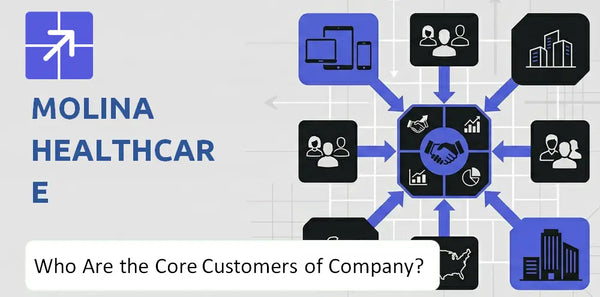
Molina's core customers are low-income families, dual-eligibles, and behavioral-health cohorts; targeting these groups affects utilization, risk scores, and state contracts. See Molina Healthcare BCG Matrix Analysis for product positioning: Molina Healthcare BCG Matrix Analysis
Who Is Molina Healthcare Trying to Win?
Molina Healthcare tries to win Medicaid beneficiaries – especially TANF and ABD enrollees – and, in 2025, has pivoted to capture dual-eligibles (Medicare and Medicaid) while also courting ACA marketplace enrollees who churn between programs.
 Main customer group: Medicaid beneficiaries
Molina Healthcare target customers are primarily Medicaid beneficiaries under TANF (working-age low-income families) and ABD (Aged, Blind, Disabled). These groups drive enrollment volume and state-contracted revenue; in fiscal 2025 Medicaid membership accounted for roughly ~80% of managed-membership nationwide for Molina.
Secondary customer groups: Marketplace and churn-prone families
Secondary targets include individuals and families buying subsidized private insurance via the ACA marketplace and low-income adults who cycle on/off Medicaid. Molina focuses outreach to reduce churn because members who lose Medicaid eligibility often return as marketplace enrollees.
Customer type and market role: institutional buyers, individual end-users
State governments are the institutional buyer (payor and contract partner); individuals – Medicaid beneficiaries, dual-eligibles, and marketplace enrollees – are end-users. Molina operates a mixed model: managed-care contracts with states plus direct-risk plans for Medicare Advantage and ACA members.
Most important segment in 2025: dual-eligibles
In 2025 Molina shifted strategy toward Medicare and Medicaid dual eligibles – higher-acuity, higher-margin patients. Dual-eligible membership grew meaningfully; Molina reported Medicare enrollment of roughly ~1.2 million members in FY2025 and emphasized integrated care models to boost per-member-per-month revenue and lower total cost of care.
How Molina Healthcare Company Works and Makes Money
Molina Healthcare SWOT Analysis
- Complete SWOT Breakdown
- Fully Customizable
- Editable in Excel & Word
- Professional Formatting
- Investor-Ready Format

What Do Molina Healthcare's Customers Care About Most?
Individual members prioritize affordability, local access, and fewer administrative hurdles, while state agencies prioritize cost-containment and measurable clinical outcomes; Molina Healthcare target customers seek integrated supports for transportation, pharmacy access, and language-concordant care alongside accountable performance metrics.

Access to affordable, local care
Members – largely Medicaid beneficiaries and low-income families healthcare coverage – need plans that cover primary, specialty, and hospital services near home; geographic accessibility reduces missed appointments and ED use.
Practical buying drivers: cost and administrative simplicity
People pick Molina Healthcare target customers offerings for low premiums, minimal out-of-pocket costs, and streamlined enrollment; states prefer managed care that keeps per-member costs down while meeting quality metrics.
Emotional and aspirational appeal: security and dignity
Members value feeling respected and supported – language-concordant care, culturally competent staff, and help navigating services increase trust and reduce care avoidance.
What customers value most: integrated social supports
Integrated supports – transportation, pharmacy access, behavioral health, and community health center partnerships – directly affect adherence and outcomes for Molina Medicaid recipients profile and Molina Healthcare behavioral health patients.
Loyalty and repeat demand: ease and outcome visibility
Retention improves when members experience timely appointments, clear benefits, and measurable health gains; for states, consistent MCR management and improved HEDIS-like metrics sustain contract renewals.
Why customers choose Molina Healthcare
Molina target market wins by combining Medicaid-focused networks with operational discipline – maintaining a Medical Care Ratio near 88% in 2025 to show cost-effectiveness versus fee-for-service models and by serving Molina Medicare Advantage customers, dual eligibles, pregnant women and children, seniors, and disabled individuals.
See related context on governance in this article: Ownership and Control of Molina Healthcare Company
Molina Healthcare Business Model Canvas
- One-time Payment
- No Research Needed – Save Hours of Work
- Built by Experts, Trusted by Consultants
- Instant Download, Ready to Use
- 100% Editable, Fully Customizable

Where Is Demand Strongest for Molina Healthcare?
Molina Healthcare finds the most demand in high-population Medicaid hubs and expanding managed-care programs, especially California, Florida, and Texas, where Medicaid redeterminations and budget pressure boost managed-care enrollment.
Main Market: High-Population Medicaid Hubs
Demand is concentrated in California, Florida, and Texas – states with large Medicaid beneficiary pools and ongoing redeterminations; these markets drove a combined $--- of Medicaid membership growth for Molina in 2025, reflecting where Molina Healthcare target customers cluster.
Secondary Markets: Marketplace and D-SNP Channels
Health Insurance Marketplace enrollment surged in 2025 due to stronger federal subsidies, lifting Molina Healthcare silver and bronze plan uptake among low-income families; D-SNP growth accelerated as Medicare and Medicaid dual eligibles demand coordinated care.
Where Molina Healthcare Is Strongest
Molina is strongest in Medicaid managed-care operations by membership and state contract presence; in 2025 Medicaid beneficiaries accounted for the majority of enrollment and drove the largest revenue share versus Marketplace and Medicare Advantage lines.
Fastest-Growing Demand Areas (2025/2026)
Fastest growth in 2025/2026 appeared in LTSS-managed care, D-SNPs for seniors, and Marketplace silver/bronze plans for working poor; these segments reflect Molina target market trends: aging population, Medicaid redeterminations, and expanded subsidies. See Growth Outlook of Molina Healthcare Company for more context: Growth Outlook of Molina Healthcare Company
Molina Healthcare Marketing Mix
- Complete Marketing Mix Analysis
- Effortlessly Communicate Your Business Strategy
- Investor-Ready Format
- 100% Editable and Customizable
- Clear and Structured Layout

How Does Molina Healthcare Keep Its Audience Growing?
Molina Healthcare grows its audience by winning state Medicaid/Medicare contracts and buying complementary plans, while using analytics to cut churn and boost retention through consistent NCQA ratings and targeted outreach to Medicaid beneficiaries and Medicare and Medicaid dual eligibles.
Expansion via Contract Wins and M&A
Molina expands membership by aggressively bidding state Medicaid and Medicare contracts and completing targeted acquisitions like the 2025 Bright Health California Medicare business integration, which added rapid inorganic membership growth and a playbook for market entry into adjacent segments such as Medicare Advantage and dual-eligible programs.
Customer Retention Drivers
Retention hinges on sustained NCQA star ratings that influence contract renewals and auto-assignment of new members, plus data-driven care management that flags at-risk members early – helping reduce churn and improve health equity scores for Molina Healthcare target customers.
Loyalty, Repeat Demand, and Customer Depth
Membership stickiness increases through provider network continuity, chronic care programs, behavioral health integration, and community partnerships that serve low-income families healthcare coverage and Molina Medicaid recipients profile needs – driving renewals and deeper per-member-per-month utilization.
Strongest Growth Lever in 2025/2026
The key lever is a dual-track strategy: organic growth from state outsourcing of high-cost, high-need populations plus opportunistic M&A. My professional judgment for 2025/2026 is that Molina Healthcare will sustain 6 to 8 percent organic revenue growth, supplemented by acquisitions and contract expansions as states shift more Medicaid beneficiaries and Medicare and Medicaid dual eligibles to managed care.
For context on market positioning and competitors see Competitive Landscape of Molina Healthcare Company
Molina Healthcare Boston Consulting Group Matrix
- Built by Experts, Trusted by Consultants
- Structured for Consultants, Students, and Founders
- 100% Editable in Microsoft Word & Excel
- Instant Digital Download – Use Immediately
- Compatible with Mac & PC – Fully Unlocked

Related Blogs
- What Is the History of Molina Healthcare Company and How Did It Evolve?
- What Is the Competitive Landscape of Molina Healthcare Company and How Does It Compete?
- What Is the Growth Outlook of Molina Healthcare Company and Where Is It Heading?
- How Does Molina Healthcare Company Work and What Drives Its Business Model?
- How Does Molina Healthcare Company Reach Customers and Turn Demand into Sales?
- What Do the Mission, Vision, and Core Values of Molina Healthcare Company Reveal?
- Who Owns Molina Healthcare Company Today and Who Holds Control?
Frequently Asked Questions
Molina Healthcare's core customers are mainly Medicaid beneficiaries, especially TANF and ABD enrollees. The company also targets dual-eligibles and ACA marketplace enrollees who move between programs. In the blog's view, state governments are the institutional buyers, while members are the end-users of Molina's plans.
Disclaimer
All information, articles, and product details provided on this website are for general informational and educational purposes only. We do not claim any ownership over, nor do we intend to infringe upon, any trademarks, copyrights, logos, brand names, or other intellectual property mentioned or depicted on this site. Such intellectual property remains the property of its respective owners, and any references here are made solely for identification or informational purposes, without implying any affiliation, endorsement, or partnership.
We make no representations or warranties, express or implied, regarding the accuracy, completeness, or suitability of any content or products presented. Nothing on this website should be construed as legal, tax, investment, financial, medical, or other professional advice. In addition, no part of this site - including articles or product references - constitutes a solicitation, recommendation, endorsement, advertisement, or offer to buy or sell any securities, franchises, or other financial instruments, particularly in jurisdictions where such activity would be unlawful.
All content is of a general nature and may not address the specific circumstances of any individual or entity. It is not a substitute for professional advice or services. Any actions you take based on the information provided here are strictly at your own risk. You accept full responsibility for any decisions or outcomes arising from your use of this website and agree to release us from any liability in connection with your use of, or reliance upon, the content or products found herein.