
How does Molina Healthcare convert government contracts into sales through its Medicaid, Medicare, and marketplace sales and marketing model?
Molina Healthcare sells through state procurement, broker networks, and direct enrollment for Medicaid, Medicare, and ACA marketplaces. This matters because winning contracts and integrating acquisitions drove Molina to double-digit earnings growth by March 2026, highlighting scalable low-cost operations. Molina Healthcare BCG Matrix Analysis
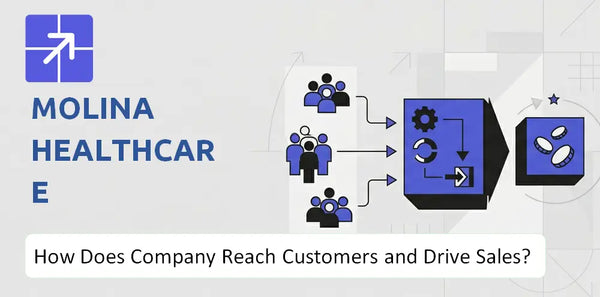
Molina focuses on contract wins, tight provider networks, and targeted outreach to eligible populations; streamlined administration cuts per-member costs and boosts margins.
Who Does Molina Healthcare Want to Sell To?
Molina Healthcare sells primarily to state Medicaid agencies that contract managed care, and to low-income, dual-eligible, and high-acuity individuals who enroll in Medicaid, Medicare Advantage, or Marketplace plans. The company wins through focused Medicaid enrollment strategies, provider partnerships, and targeted outreach to high-cost cohorts.
 Primary buyer: State Medicaid agencies
State agencies are the core buyer because they award fixed-capitation contracts to manage Medicaid populations. Molina Healthcare marketing strategy targets these regulators by demonstrating cost control, network adequacy, and compliance with CMS rules; in 2025 Molina reported managed Medicaid enrollment of approximately 3.5 million members, underscoring scale in state partnerships.
Secondary buyers: Low-income and high-acuity individuals
Molina customer acquisition focuses on the estimated 80 million Medicaid-eligible Americans, dual-eligible seniors, and price-sensitive Marketplace shoppers. The company prioritizes high-acuity cohorts – behavioral health and long-term services and supports (LTSS) – because these segments raise per-member-per-month revenue and justify targeted Molina Medicaid enrollment strategy and outreach.
Market positioning: Value-focused Medicaid and Medicare managed care
Molina positions itself as a low-cost, compliance-focused managed care partner for states and a community-oriented payer for members. Molina Healthcare marketing channels and tactics combine provider partnerships, telephonic outreach, and community enrollment events to convert demand into plan enrollments efficiently.
Why this positioning works: Scale, community reach, and high-acuity specialization
The message – reliable Medicaid operations plus community-level outreach – resonates with state buyers and members. Molina uses brokers, digital marketing channels, and onsite provider collaborations; reported enrollment growth and medical-loss trends in 2025 show improved sales conversion for healthcare plans when outreach targets LTSS and behavioral health cohorts. Read more context in How Molina Healthcare Company Works and Makes Money.
Molina Healthcare SWOT Analysis
- Complete SWOT Breakdown
- Fully Customizable
- Editable in Excel & Word
- Professional Formatting
- Investor-Ready Format

How Does Molina Healthcare Get in Front of Customers?
Molina Healthcare gets in front of customers via a dual-track distribution strategy: institutional sales and state RFP wins plus localized, community-based outreach and expanded digital enrollment for individual members.

Institutional RFPs and Government Contracts
Molina Healthcare marketing strategy centers on winning multi-year state Medicaid and Medicare Advantage contracts through a dedicated business development and government relations team that highlights cost containment and clinical outcomes to secure renewals and new footprints.
Digital Marketing and Mobile-First Enrollment
Molina digital marketing channels now include mobile-first enrollment platforms, paid search, social, email, and apps; as of early 2026, a significant portion of Marketplace and Medicare Advantage leads originate from mobile and online funnels.
Community Partnerships and Broker Networks
For Molina customer acquisition the company partners with Federally Qualified Health Centers, community clinics, and independent insurance brokers and agents to reach Medicaid and low-income populations at the local level.
Demand Generation through Local Outreach
Molina community outreach and enrollment tactics include enrollment events, provider-led outreach, targeted state campaigns during open enrollment, and broker-led promotions to drive inquiries that convert into plan enrollments.
Acquisition Efficiency and Conversion Metrics
Molina sales conversion for healthcare plans improved after digital upgrades; company disclosures show lower per-member acquisition costs in states where mobile enrollment adoption exceeded 30% of leads in 2025, improving ROI on digital advertising spend.
Reach Advantage: State-Level Scale and Local Presence
The most important reach advantage is Molina Healthcare's combined scale in state Medicaid programs plus deep local provider relationships, which in 2025 delivered sustained enrollment growth in targeted regions and higher retention on managed plans; see Growth Outlook of Molina Healthcare Company for more context.
Molina Healthcare Business Model Canvas
- One-time Payment
- No Research Needed – Save Hours of Work
- Built by Experts, Trusted by Consultants
- Instant Download, Ready to Use
- 100% Editable, Fully Customizable

How Does Molina Healthcare Turn Attention Into Sales?
Molina Healthcare turns attention into sales by winning state Medicaid contracts, retaining members through preventive clinical care, and buying underperforming plans to apply its operational playbook – converting interest into recurring premium revenue via competitive bids and narrow-network consumer products.
Core Sales Model: Contract-led and M&A-fueled enrollment
Molina Healthcare marketing strategy centers on bidding for Managed Medicaid and Medicare contracts with state governments and acquiring underperforming plans. Sales are primarily contract-driven, supplemented by broker-led retail enrollment and digital direct-to-consumer channels for ACA/individual products.
Pricing and Monetization Logic: Competitive MCR and narrow-network pricing
Pricing targets a Medical Care Ratio (MCR) near 88 percent at the state level to offer value bids to Medicaid agencies while preserving administrative margin. Consumer plans use narrow-network designs to lower premiums versus diversified competitors, converting price-sensitive shoppers into members.
Conversion and Purchase Drivers: Retention, clinical model, and local outreach
Conversion relies on an operational playbook: targeted community outreach, broker and agent engagement, digital marketing, and telephonic outreach. Molina customer acquisition emphasizes preventive care to reduce high-cost events, helping maintain a member retention rate above 82 percent in 2025 enrollment cycles.
Repeat Revenue and Expansion: Retain, upsell, and scale via acquisitions
Repeat revenue comes from renewals of Medicaid and Medicare contracts and member retention. Molina Healthcare converts inquiries into plan enrollments through renewals, cross-selling supplemental benefits, and expanding state footprints via strategic M&A where the company improves margins post-acquisition.
Key metrics and tactics: state bids optimize for an approximate 88 percent MCR; 2025 member retention > 82 percent; inorganic growth through acquired plans improved margins by applying the Molina Healthcare operational playbook; digital channels, brokers, telephonic outreach, and community events drive enrollment. See further competitive context in Competitive Landscape of Molina Healthcare Company
Molina Healthcare Marketing Mix
- Complete Marketing Mix Analysis
- Effortlessly Communicate Your Business Strategy
- Investor-Ready Format
- 100% Editable and Customizable
- Clear and Structured Layout

How Strong Does Molina Healthcare's Commercial Engine Look Going Forward?
Molina Healthcare's commercial engine looks solid through 2026, backed by a projected revenue run-rate above $44,000,000,000 and steady pre-tax margins of 4 – 5%. Major contract wins in California and Florida, the ConnectiCare integration, and a government-program focus support predictable enrollment, while Medicaid redetermination volatility and state policy shifts remain downside risks.
What Supports Future Demand
Strong placement in Medicaid and Medicare programs, expanded footprint from the ConnectiCare acquisition, and large state contract renewals drive Molina Healthcare marketing strategy and Molina Medicaid enrollment strategy; these elements underpin a projected > $44 billion revenue run-rate and resilient Molina customer acquisition.
Channel and Marketing Effectiveness
Molina leverages brokers, agents, digital marketing channels, telephonic outreach, and community outreach and enrollment events to convert leads into plan enrollments; reported organic premium growth and per-share earnings trends through 2025 show Molina sales conversion for healthcare plans outpacing diversified peers.
Risks to Commercial Performance
Key risks include Medicaid redetermination impacts on membership counts, CMS marketing and compliance changes, state-level reimbursement pressure, and integration execution for acquisitions; any prolonged enrollment declines would hurt Molina member retention and upsell strategies and overall ROI on Molina digital marketing channels.
The Overall Sales and Marketing Outlook
Outlook is strong and adaptable for 2025/2026: conservative capital structure with a maintained low debt-to-capital ratio, consistent 4 – 5% pre-tax margins, and major state contract wins position Molina Healthcare to keep growing enrollment through targeted advertising by state and region and effective Molina community outreach programs to drive enrollment; see Ownership and Control of Molina Healthcare Company for governance context.
Molina Healthcare Boston Consulting Group Matrix
- Built by Experts, Trusted by Consultants
- Structured for Consultants, Students, and Founders
- 100% Editable in Microsoft Word & Excel
- Instant Digital Download – Use Immediately
- Compatible with Mac & PC – Fully Unlocked

Related Blogs
- What Is the History of Molina Healthcare Company and How Did It Evolve?
- What Is the Competitive Landscape of Molina Healthcare Company and How Does It Compete?
- What Is the Growth Outlook of Molina Healthcare Company and Where Is It Heading?
- How Does Molina Healthcare Company Work and What Drives Its Business Model?
- What Do the Mission, Vision, and Core Values of Molina Healthcare Company Reveal?
- Who Are the Core Customers in Molina Healthcare Company's Target Market?
- Who Owns Molina Healthcare Company Today and Who Holds Control?
Frequently Asked Questions
Molina Healthcare is mainly trying to reach state Medicaid agencies and low-income members who enroll in Medicaid, Medicare Advantage, or Marketplace plans. Its approach focuses on cost control, compliance, provider partnerships, and targeted outreach to high-acuity groups like dual-eligible members and people needing behavioral health or LTSS support.
Disclaimer
All information, articles, and product details provided on this website are for general informational and educational purposes only. We do not claim any ownership over, nor do we intend to infringe upon, any trademarks, copyrights, logos, brand names, or other intellectual property mentioned or depicted on this site. Such intellectual property remains the property of its respective owners, and any references here are made solely for identification or informational purposes, without implying any affiliation, endorsement, or partnership.
We make no representations or warranties, express or implied, regarding the accuracy, completeness, or suitability of any content or products presented. Nothing on this website should be construed as legal, tax, investment, financial, medical, or other professional advice. In addition, no part of this site - including articles or product references - constitutes a solicitation, recommendation, endorsement, advertisement, or offer to buy or sell any securities, franchises, or other financial instruments, particularly in jurisdictions where such activity would be unlawful.
All content is of a general nature and may not address the specific circumstances of any individual or entity. It is not a substitute for professional advice or services. Any actions you take based on the information provided here are strictly at your own risk. You accept full responsibility for any decisions or outcomes arising from your use of this website and agree to release us from any liability in connection with your use of, or reliance upon, the content or products found herein.