
Who are Netflix Company's core customers within the global streaming market?
Netflix Company targets global streaming households and mobile-first subscribers aged 18 – 49 who value original series, films, and ad-supported lower-price tiers. This matters because in 2025 Netflix reached ~260 million paid memberships and shifted to maximize ARM while managing a $18 billion content budget.
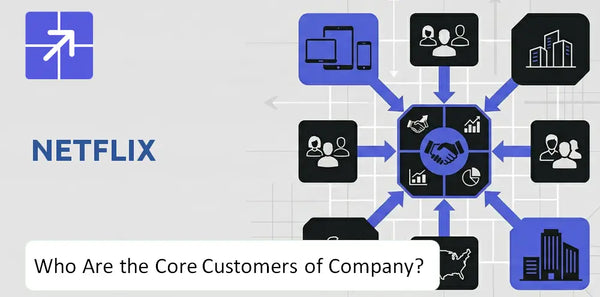
Segment focus: urban, middle-income, global English- and non-English-speaking viewers; prioritize tier mix and localized originals to protect 28% operating margin. See Netflix BCG Matrix Analysis
Who Is Netflix Trying to Win?
Netflix tries to win premium households in developed markets who pay for high-fidelity, multi-device access and a fast-growing price-sensitive cohort reached via ad-supported tiers; it also targets mobile-first viewers in APAC and EMEA with localized content to scale subscriptions.
 Main customer group: Premium households in developed markets
These are high-income households that prefer 4K, multiple simultaneous streams, and ad-free viewing; they remain the revenue foundation, accounting for a large share of global ARPU (average revenue per user) in 2025.
Secondary customer groups: Price-sensitive and ad-supported sign-ups
The Standard with Ads plan captured over 55 percent of new sign-ups in available markets by early 2026, reflecting Netflix target market expansion among cost-conscious subscribers and advertisers seeking streaming service demographics for reach.
Customer type and market role: Primarily consumers, globally mixed by region
Netflix serves direct-to-consumer subscription video on demand users (SVOD) across households and mobile users; in some markets it also monetizes via advertising, so the base mixes paying subscribers and ad-viewers.
Most important segment: Mobile-first viewers in APAC and EMEA
Targeting roughly 600 million broadband-enabled households in APAC and EMEA with localized, high-production content aims to capture cord cutters and mobile subscribers; this international push drives subscriber volume growth and long-term ARPU upside. Read more in the Growth Outlook of Netflix Company.
Netflix SWOT Analysis
- Complete SWOT Breakdown
- Fully Customizable
- Editable in Excel & Word
- Professional Formatting
- Investor-Ready Format

What Do Netflix's Customers Care About Most?
Netflix Company's customers care most about must-watch exclusive hits, a frictionless personalized experience, and a price-to-value balance that fits their viewing habits. Demand centers on cultural watercooler events, low-ad ad loads for cheaper tiers, and an algorithm that cuts search time across a library of over 18,000 titles.

Must-watch cultural hits drive appointment viewing
Customers want exclusive series and live events that create social currency – examples include latest seasons of Squid Game and Stranger Things plus integrated live programming like WWE Raw and NFL Christmas Day games. These events spike acquisition and short-term subscriber engagement.
Practical drivers: convenience, price, and streaming quality
Practical reasons to choose Netflix Company include ease of use across devices, low-friction personalization that reduces search time, and tiered pricing – especially the ad-supported plan which targets price-sensitive cord cutters by offering lower entry cost with a targeted ad load.
Emotional appeal: cultural belonging and status
Subscribers, especially millennials and Gen Z, value being part of cultural conversations and signaling taste. Owning the latest must-watch shows or being part of live event viewing offers social reward and identity alignment.
What customers value most: relevance and low friction
Core customers value the personalization engine (recommendations and reduced search friction) that surfaces content from a catalog exceeding 18,000 titles and the combination of exclusive originals plus select live sports to keep the service relevant.
Loyalty drivers: continual new hits and algorithmic retention
Repeat demand is supported by steady release cadence of originals, appointment viewing, and recommendation quality; Netflix Company reported retention improvements when flagship titles and personalized rows converge to increase weekly active use.
Why customers choose Netflix Company
Netflix Company wins because it combines high-profile originals and select live content with a best-in-class personalization engine and flexible pricing – ad tiers average under 4 minutes of ads per hour, preserving a premium feel while attracting subscription video on demand users and cord cutters.
Ownership and Control of Netflix Company
Netflix Business Model Canvas
- One-time Payment
- No Research Needed – Save Hours of Work
- Built by Experts, Trusted by Consultants
- Instant Download, Ready to Use
- 100% Editable, Fully Customizable

Where Is Demand Strongest for Netflix?
Demand for Netflix is strongest in Asia-Pacific – led by India and Southeast Asia – driven by mobile-first users and localized pricing, while mature markets (North America and Europe) focus on monetizing shared accounts and ad-tier conversions.
Main Market: Asia-Pacific Drives Subscriber Growth
Asia-Pacific, led by India and Southeast Asia, is the primary Netflix target market for new subscribers because of affordable, mobile-centric pricing and partnerships with telcos; this region accounted for the largest share of global net additions in 2025.
Secondary Markets: Mature Western Markets Focus on Revenue
North America and Europe are secondary demand areas where growth shifted from user additions to monetization – converting borrower accounts and upselling to ad-tier or paid sharing plans; ad-supported users exceeded 75 million monthly active users in Q1 2026 in the United States.
Where Netflix Company Is Strongest: Smart TV Reach and Revenue Mix
Netflix Company is strongest on smart TVs, which represent the majority of viewing hours and higher ARPU (average revenue per user) via paid households; ad-tier scale and paid conversions now drive near-term revenue growth in core markets.
Fastest-Growing Demand Areas: Mobile Acquisition and Ad Tier
Demand grew fastest in mobile-first emerging markets (India, Southeast Asia) for acquisitions, while the ad-supported tier became the strongest U.S. revenue channel by Q1 2026; mobile remains dominant for user acquisition, smart TV for engagement.
For context on company evolution and strategy see History and Background of Netflix Company
Netflix Marketing Mix
- Complete Marketing Mix Analysis
- Effortlessly Communicate Your Business Strategy
- Investor-Ready Format
- 100% Editable and Customizable
- Clear and Structured Layout

How Does Netflix Keep Its Audience Growing?
Netflix keeps its audience growing by expanding content ubiquity, scaling ad-supported offerings, and adding appointment viewing via live sports and reality franchises to reach adjacent segments and deepen household relationships.
Expanding Netflix target market with content ubiquity
Netflix adds customers by blending global blockbusters with hyper-local originals, launching an ad-supported tier that targets subscription video on demand users and cord cutters, and integrating live sports to attract sports fans and families.
Customer retention drivers for Netflix core customers
Retention is driven by a steady release cadence (weekly and monthly premieres) that reduces subscription cycling, personalized recommendations, and the industry-low churn for core subscribers at approximately 2 percent in 2025.
Building loyalty, repeat demand, and household depth
Netflix increases repeat usage through bingeable series, family-friendly catalogs for households, kid profiles, and appointment viewing that raises daily active usage; this drives greater share of household entertainment time and ad impressions.
Strongest growth lever in 2025 – 2026
The dominant lever is scale-funded content diversity: using superior cash flow to invest in both global tentpoles and local originals while scaling ad infrastructure – projected to be a multi-billion dollar stream by end-2026 – to convert advertising demand into lower net subscription prices and faster international expansion.
For deeper tactics on segmentation, advertising strategy, and marketing to millennial and Gen Z streaming habits, see Sales and Marketing Strategy of Netflix Company.
Netflix Boston Consulting Group Matrix
- Built by Experts, Trusted by Consultants
- Structured for Consultants, Students, and Founders
- 100% Editable in Microsoft Word & Excel
- Instant Digital Download – Use Immediately
- Compatible with Mac & PC – Fully Unlocked

Related Blogs
- What Is the History of Netflix Company and How Did It Evolve?
- What Is the Competitive Landscape of Netflix Company and How Does It Compete?
- What Is the Growth Outlook of Netflix Company and Where Is It Heading?
- How Does Netflix Company Work and What Drives Its Business Model?
- How Does Netflix Company Reach Customers and Turn Demand into Sales?
- What Do the Mission, Vision, and Core Values of Netflix Company Reveal?
- Who Owns Netflix Company Today and Who Holds Control?
Frequently Asked Questions
Netflix's core customers are premium households in developed markets, price-sensitive subscribers using ad-supported tiers, and mobile-first viewers in APAC and EMEA. The company serves direct-to-consumer streaming users, mixing paying subscribers with ad-viewers in some markets. Its customer base is both global and regionally varied.
Disclaimer
All information, articles, and product details provided on this website are for general informational and educational purposes only. We do not claim any ownership over, nor do we intend to infringe upon, any trademarks, copyrights, logos, brand names, or other intellectual property mentioned or depicted on this site. Such intellectual property remains the property of its respective owners, and any references here are made solely for identification or informational purposes, without implying any affiliation, endorsement, or partnership.
We make no representations or warranties, express or implied, regarding the accuracy, completeness, or suitability of any content or products presented. Nothing on this website should be construed as legal, tax, investment, financial, medical, or other professional advice. In addition, no part of this site - including articles or product references - constitutes a solicitation, recommendation, endorsement, advertisement, or offer to buy or sell any securities, franchises, or other financial instruments, particularly in jurisdictions where such activity would be unlawful.
All content is of a general nature and may not address the specific circumstances of any individual or entity. It is not a substitute for professional advice or services. Any actions you take based on the information provided here are strictly at your own risk. You accept full responsibility for any decisions or outcomes arising from your use of this website and agree to release us from any liability in connection with your use of, or reliance upon, the content or products found herein.