
How does Netflix's sales and marketing model convert content demand into paid subscribers?
Netflix aligns content investment with targeted marketing and tiered pricing to lower acquisition cost and lift revenue per member. In 2025 Netflix shifted emphasis from pure subscriber growth to optimizing average revenue per user, supported by ad tiers and password-sharing fixes.Netflix BCG Matrix Analysis
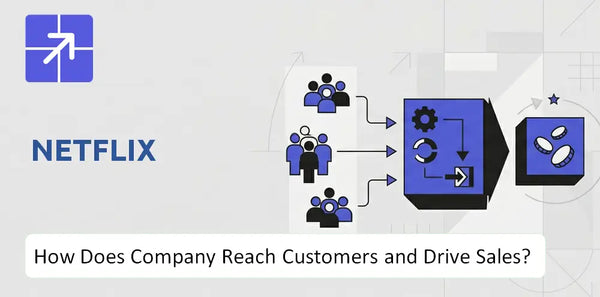
Focus marketing on high-ROI titles, use first-party data for precise ads, and push affordable ad-supported tiers to upsell. In 2025 ad-tier uptake and account consolidation improved ARPU and free cash flow.
Who Does Netflix Want to Sell To?
Netflix wants to sell to a global, internet-connected audience of paid members and advertisers, tailoring offers by price sensitivity and viewing habits to convert demand into subscriptions and ad revenue. It wins users through tiered pricing, localized content, and data-driven personalization.
 Core Streaming Subscribers (Mass Market)
Netflix targets mass-market consumers across ages and geographies; as of early 2026 paid memberships exceed 315 million, so scale and broad content appeal drive acquisition via Netflix marketing and subscription conversion tactics.
Value-Conscious & Ad-Supported Segment
The ad-supported tier attracts price-sensitive viewers in mature markets like the US and UK and has been a primary driver of new sign-ups, leveraging Netflix pricing strategy to convert free or low-cost trial users into paying members.
Premium Households & Heavy Viewers
High-income households seeking 4K and multiple streams form a premium segment; Netflix targets them with higher-tier plans and content personalization that increases viewing and revenue per account.
B2B Advertisers and Partners
Netflix sells high-value ad inventory to advertisers, expanding customer definition to include B2B buyers and using targeted advertising examples, data analytics, and audience reach to attract ad spend.
Geographic Focus: APAC & Latin America
Growth emphasis is on Asia-Pacific and Latin America; localized content, lower-priced mobile plans, and partnerships drive international expansion strategies and how Netflix acquires new subscribers among growing middle classes.
Market Positioning
Netflix positions itself as a global, premium-first streaming service that also offers affordable, ad-supported access; this dual strategy balances subscriber growth with ad monetization and supports Netflix customer acquisition and retention strategies and tactics.
Why This Positioning Works
Personalized recommendations (impact of Netflix recommendation algorithm on subscriptions) increase viewing and reduce churn; mobile plans and localized titles lower barriers in emerging markets, while ad tiers and premium plans capture both price-sensitive and high-ARPU customers.
Supporting Evidence & Channels
Netflix uses digital marketing strategies, social media to drive signups, email marketing campaigns, and partnerships to optimize onboarding and free-trial conversion; see further numeric detail in Growth Outlook of Netflix Company Growth Outlook of Netflix Company.
Netflix SWOT Analysis
- Complete SWOT Breakdown
- Fully Customizable
- Editable in Excel & Word
- Professional Formatting
- Investor-Ready Format

How Does Netflix Get in Front of Customers?
Netflix gets in front of customers via platform ubiquity, telco and pay-TV bundling, and content-driven cultural moments that turn awareness into subscriptions. It builds demand with high-budget originals, live sports/events, smart-device integrations, and partnerships that shorten the path to sign-up.

Hardware and Platform Integration as Primary Acquisition Channel
Netflix marketing leans on pre-installed apps, dedicated remote buttons, and deep Smart TV and console integration to make sign-up one click away; this reduces friction and increases first-session conversions.
Digital Marketing and Online Reach
Netflix uses paid social, search, app-store optimization, push/email campaigns, and platform distribution inside iOS/Android to drive installs and trials; personalization and A/B testing tune messaging for subscription conversion tactics.
Telco and Pay-TV Partnerships for Distribution Access
Strategic on-ramps with providers like T-Mobile and Sky bundle Netflix into mobile and cable plans, enabling large-scale customer acquisition via operator billing and zero – friction onboarding.
Content-as-Marketing Demand Generation Tactics
High-profile originals and live rights (WWE Raw, NFL windows) create organic social momentum; cultural moments and influencer amplification drive signups without relying solely on paid media.
Customer Acquisition Efficiency
In 2025 Netflix reported over 279 million paid memberships globally; bundling and platform placement keep cost-per-acquisition lower than pure paid funnels, while recommendation-driven retention boosts lifetime value.
Most Important Reach Advantage in 2025/2026
Ubiquitous device presence plus content that becomes cultural conversation is Netflix's edge – platform distribution plus original hits turn awareness into subscriptions more efficiently than standard ad buys; see How Netflix Company Works and Makes Money for operational context: How Netflix Company Works and Makes Money
Netflix Business Model Canvas
- One-time Payment
- No Research Needed – Save Hours of Work
- Built by Experts, Trusted by Consultants
- Instant Download, Ready to Use
- 100% Editable, Fully Customizable

How Does Netflix Turn Attention Into Sales?
Netflix turns attention into sales by minimizing friction across signup, pricing, and content discovery while converting viewership into recurring revenue via subscriptions and ad sales.
Core Sales Model: Subscription-led, direct-to-consumer
Netflix sells direct subscriptions via self-serve digital channels, supplemented by ad-supported tiers and B2B ad sales. The model is primarily subscription-based with a second revenue stream from targeted advertising that monetizes attention at scale.
Pricing and Monetization Logic: Tiered pricing captures consumer surplus
In the US Netflix offers plans from about $7.99 (ad-supported) to $24.99 (premium) to span low-cost access to premium features; advertising and add-on member fees convert passive viewers into paid revenue.
Conversion and Purchase Drivers: Reduce friction, nudge upgrades
Key drivers: seamless onboarding, streamlined payment flows, personalized trial-to-paid prompts, and paid-sharing enforcement. The paid sharing initiative converted millions of freeloaders into primary or extra paid members, raising average revenue per member (ARPM).
Repeat Revenue and Expansion: Recommendations and low churn
Netflix keeps monthly churn near 2 percent through a recommendation engine that boosts engagement and viewing hours; upsells occur via plan upgrades and add-on member purchases, while ad revenue offers high-margin expansion.
Recommendation-driven personalization, optimized onboarding, targeted email and social campaigns, and international price segmentation together form the Netflix sales strategy that converts marketing attention into subscription growth and ad monetization; see related analysis in Mission, Vision, and Values of Netflix Company.
Netflix Marketing Mix
- Complete Marketing Mix Analysis
- Effortlessly Communicate Your Business Strategy
- Investor-Ready Format
- 100% Editable and Customizable
- Clear and Structured Layout

How Strong Does Netflix's Commercial Engine Look Going Forward?
Netflix's commercial engine enters 2025/2026 from a position of financial strength, with expanding operating margins near 28 percent and > $9 billion in annual free cash flow; disciplined content spend (~$17 billion) and a growing ad tier underpin outlook. Key supports include advertising maturation and live/weekly appointment programming; headwinds include time competition from YouTube and global macro sensitivity.
What Supports Future Demand
Brand strength and subscription conversion tactics boost acquisition and retention – Netflix marketing benefits from content personalization and a recommendation algorithm that increases viewing and revenue; steady pricing power supports ARPU gains.
Channel and Marketing Effectiveness
Digital marketing strategies, targeted advertising, social media campaigns, and email marketing campaigns show efficient CAC (customer acquisition cost) trends – ad-tier growth and partnerships improve monetization per user and lower reliance on pure subscriber growth.
Risks to Commercial Performance
Competition for attention (YouTube, short-form), ad market cyclicality, and regional pricing pressure could slow revenue growth; large one-off sports rights could raise content spend above the disciplined $17 billion target and compress operating margin.
Overall Sales and Marketing Outlook
The sales and marketing outlook for 2025/2026 appears strong and adaptable: diversified revenue streams (subscription + ad) plus live sports lower seasonality and churn, while > $9 billion free cash flow funds buybacks and strategic content buys to sustain growth.
For deeper detail on target segments, see Target Customers and Market of Netflix Company
Netflix Boston Consulting Group Matrix
- Built by Experts, Trusted by Consultants
- Structured for Consultants, Students, and Founders
- 100% Editable in Microsoft Word & Excel
- Instant Digital Download – Use Immediately
- Compatible with Mac & PC – Fully Unlocked

Related Blogs
- What Is the History of Netflix Company and How Did It Evolve?
- What Is the Competitive Landscape of Netflix Company and How Does It Compete?
- What Is the Growth Outlook of Netflix Company and Where Is It Heading?
- How Does Netflix Company Work and What Drives Its Business Model?
- What Do the Mission, Vision, and Core Values of Netflix Company Reveal?
- Who Are the Core Customers in Netflix Company's Target Market?
- Who Owns Netflix Company Today and Who Holds Control?
Frequently Asked Questions
Netflix wants to sell to a global, internet-connected audience of paid members and advertisers. It tailors offers by price sensitivity and viewing habits, using tiered pricing, localized content, and personalization to convert demand into subscriptions and ad revenue.
Disclaimer
All information, articles, and product details provided on this website are for general informational and educational purposes only. We do not claim any ownership over, nor do we intend to infringe upon, any trademarks, copyrights, logos, brand names, or other intellectual property mentioned or depicted on this site. Such intellectual property remains the property of its respective owners, and any references here are made solely for identification or informational purposes, without implying any affiliation, endorsement, or partnership.
We make no representations or warranties, express or implied, regarding the accuracy, completeness, or suitability of any content or products presented. Nothing on this website should be construed as legal, tax, investment, financial, medical, or other professional advice. In addition, no part of this site - including articles or product references - constitutes a solicitation, recommendation, endorsement, advertisement, or offer to buy or sell any securities, franchises, or other financial instruments, particularly in jurisdictions where such activity would be unlawful.
All content is of a general nature and may not address the specific circumstances of any individual or entity. It is not a substitute for professional advice or services. Any actions you take based on the information provided here are strictly at your own risk. You accept full responsibility for any decisions or outcomes arising from your use of this website and agree to release us from any liability in connection with your use of, or reliance upon, the content or products found herein.