
Who are Ultragenyx Pharmaceutical Inc. core customers among patients with ultra-rare genetic diseases?
Ultragenyx targets patients with ultra-rare, life-threatening genetic disorders and the specialist centers that treat them. This matters because the rare disease market topped $260 billion by March 2026, and Ultragenyx's pipeline addresses gaps where no approved therapies exist. See Ultragenyx BCG Matrix Analysis
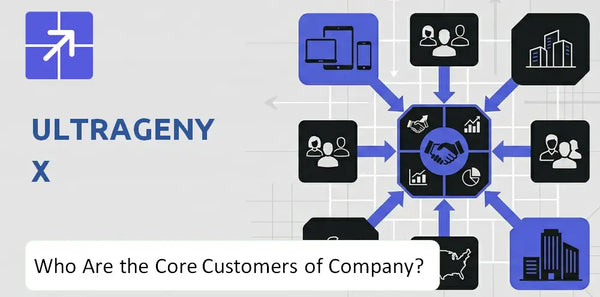
Focus on rare-disease patients, clinical specialists, and payers; prioritizing treatments with high lifetime value and strong regulatory exclusivity.
Who Is Ultragenyx Trying to Win?
Ultragenyx tries to win ultra-orphan rare disease patients, specialist clinicians, and institutional payers who enable access and reimbursement for high-cost therapies.
 Main customer group: Patients with ultra-orphan disorders
Ultragenyx core customers are patients with X-linked hypophosphatemia (XLH), Long-Chain Fatty Acid Oxidation Disorders (LC-FAOD), and Mucopolysaccharidosis VII (MPS VII), often under 5,000 patients globally per indication; these patient profiles drive clinical priority and revenue per patient.
Secondary customer groups: Clinicians and advocacy networks
Healthcare providers prescribing Ultragenyx include metabolic geneticists, pediatric endocrinologists, and neurologists who act as KOLs and gatekeepers; rare disease advocacy groups and caregivers also shape diagnosis and trial enrollment.
Customer type and market role: Mixed institutional-consumer model
Ultragenyx target market is mixed: direct patients and caregivers plus institutional buyers – hospitals, specialty clinics, payers and formulary committees – that determine access and reimbursement for orphan therapies.
Most important segment: Payers and specialist prescribers
By revenue and access impact, payers and insurers for orphan therapies and key opinion leaders in metabolic genetics matter most; managed care decisions and formulary inclusion drive uptake and average revenue per patient, which for Ultragenyx indications can exceed $200,000 annually per treated patient in published payer models.
Competitive Landscape of Ultragenyx Company
Ultragenyx SWOT Analysis
- Complete SWOT Breakdown
- Fully Customizable
- Editable in Excel & Word
- Professional Formatting
- Investor-Ready Format

What Do Ultragenyx 's Customers Care About Most?
Ultragenyx core customers prioritize treatments that change disease course: improved function, fewer crises, and durable outcomes that justify high upfront costs; clinicians, payers, patients, and caregivers want rigorous long-term data and value-based evidence.

Clinical efficacy and disease modification
Patients with rare genetic disorders treated by Ultragenyx and caregivers focus on therapies that restore function – XLH patients want better bone density and mobility, LC-FAOD families seek avoidance of metabolic crises, and clinicians demand peer-reviewed longitudinal data showing true disease modification.
Practical buying drivers: coverage, durability, and cost-offsets
Payers and insurers for orphan therapies prioritize value-based contracting and durability metrics in 2025/2026, especially for gene therapies like DTX401 for Glycogen Storage Disease Type Ia; they require evidence that a $ high upfront price reduces decades of chronic care, ER visits, and hospitalizations.
Emotional and aspirational needs
Pediatric rare disease patients targeted by Ultragenyx and their families seek hope and normalcy; caregivers value therapies that reduce daily care burden and increase independence, influencing adherence and advocacy for coverage.
What customers value most
Healthcare providers prescribing Ultragenyx value robust safety profiles, clear functional endpoints, and long-term follow-up data; formulary committees and neurologists prescribing Ultragenyx medications look for statistically and clinically meaningful outcomes at 1 – 5 years post-treatment.
Loyalty and repeat demand drivers
Continuity of care, real-world evidence demonstrating sustained benefit, and manufacturer support programs (patient access, reimbursement assistance) sustain repeat demand among hospitals and specialty clinics adopting Ultragenyx treatments.
Why customers choose Ultragenyx
Physician decision makers for Ultragenyx indications and payers often select therapies that combine proven clinical benefit, published long-term data, and structured value agreements; see further commercial and financial context in How Ultragenyx Company Works and Makes Money.
Ultragenyx Business Model Canvas
- One-time Payment
- No Research Needed – Save Hours of Work
- Built by Experts, Trusted by Consultants
- Instant Download, Ready to Use
- 100% Editable, Fully Customizable

Where Is Demand Strongest for Ultragenyx ?
Demand is strongest in the United States, which concentrates Ultragenyx core customers and accounts for over 65 percent of total product sales; Latin America (notably Brazil) and Europe show expanding uptake where reimbursement improves.
Primary market: United States
The US remains the Ultragenyx target market hub because of the favorable reimbursement landscape and high per-patient pricing for orphan therapies; hospitals, specialty clinics, and neurologists drive most prescriptions for rare disease patients and pediatric rare disease patients.
Secondary markets: Latin America and Europe
Brazil shows a surge after specialized rare disease legislation accelerated patient access; Germany and France expanded Crysvita reimbursement, lifting demand among endocrinologists treating metabolic disorders and caregivers of patients using Ultragenyx therapies.
Where Ultragenyx is strongest
Ultragenyx is strongest in markets where payers and insurers for orphan therapies grant coverage and specialty clinics adopt treatments – reflected in a revenue mix dominated by US sales and heavy uptake of Crysvita among hospitals and formulary committees.
Fastest-growing demand: gene therapy pipeline
By early 2026 demand growth is fastest for gene therapies targeting Angelman syndrome and GSDIa; specialized treatment centers in North America and the EU are preparing commercial rollout, shifting patient profiles toward gene therapy clinical trial participants and specialized care teams.
Key customer segments include neurologists prescribing Ultragenyx medications, endocrinologists treating metabolic disorders, payers and managed care organizations evaluating coverage, rare disease advocacy groups, caregivers, and biotech investors monitoring commercial potential; see Sales and Marketing Strategy of Ultragenyx Company for related detail: Sales and Marketing Strategy of Ultragenyx Company
Ultragenyx Marketing Mix
- Complete Marketing Mix Analysis
- Effortlessly Communicate Your Business Strategy
- Investor-Ready Format
- 100% Editable and Customizable
- Clear and Structured Layout

How Does Ultragenyx Keep Its Audience Growing?
Ultragenyx keeps its audience growing by finding undiagnosed patients via genetic screening partnerships and converting late – stage pipeline successes into commercial users, while UltraCare boosts adherence and payer access to broaden and retain its rare disease patient base.
Expanding Ultragenyx core customers through diagnosis and indication expansion
Ultragenyx expands its target market by partnering with genetic screening programs to identify patients with rare genetic disorders treated by Ultragenyx, and by pursuing new indications such as moving Crysvita into tumor – induced osteomalacia and adult populations to reach adjacent patient profiles and physicians.
Customer Retention Drivers
Retention hinges on the UltraCare support program that provides nurse navigation, reimbursement assistance, and adherence monitoring, plus strong clinical outcomes in metabolic and bone diseases that keep healthcare providers prescribing Ultragenyx products and payers renewing coverage.
Loyalty, repeat demand, and ecosystem stickiness
High switching costs for orphan therapies, chronic dosing for bone and metabolic indications, and caregiver reliance on coordinated care create repeat demand; UltraCare and specialty pharmacy pathways deepen ecosystem stickiness among payers and clinicians.
Strongest customer – base growth lever in 2025/2026
The key lever is pipeline monetization: converting GTX – 102 (Angelman syndrome) and other late – stage programs into commercial revenue – management projects a revenue CAGR of 18 percent into 2026, with GTX – 102 viewed as a potential multi – billion dollar opportunity that expands Ultragenyx patient profiles and attracts neurologists, pediatric rare disease patients, and payers.
History and Background of Ultragenyx Company
Ultragenyx Boston Consulting Group Matrix
- Built by Experts, Trusted by Consultants
- Structured for Consultants, Students, and Founders
- 100% Editable in Microsoft Word & Excel
- Instant Digital Download – Use Immediately
- Compatible with Mac & PC – Fully Unlocked

Related Blogs
- What Is the History of Ultragenyx Company and How Did It Evolve?
- What Is the Competitive Landscape of Ultragenyx Company and How Does It Compete?
- What Is the Growth Outlook of Ultragenyx Company and Where Is It Heading?
- How Does Ultragenyx Company Work and What Drives Its Business Model?
- How Does Ultragenyx Company Reach Customers and Turn Demand into Sales?
- What Do the Mission, Vision, and Core Values of Ultragenyx Company Reveal?
- Who Owns Ultragenyx Company Today and Who Holds Control?
Frequently Asked Questions
Ultragenyx's core customers are ultra-orphan rare disease patients, along with specialist clinicians and institutional payers. The blog highlights patients with XLH, LC-FAOD, and MPS VII as the main group, while metabolic geneticists, pediatric endocrinologists, neurologists, hospitals, specialty clinics, and formulary committees also play major roles in access and treatment decisions.
Disclaimer
All information, articles, and product details provided on this website are for general informational and educational purposes only. We do not claim any ownership over, nor do we intend to infringe upon, any trademarks, copyrights, logos, brand names, or other intellectual property mentioned or depicted on this site. Such intellectual property remains the property of its respective owners, and any references here are made solely for identification or informational purposes, without implying any affiliation, endorsement, or partnership.
We make no representations or warranties, express or implied, regarding the accuracy, completeness, or suitability of any content or products presented. Nothing on this website should be construed as legal, tax, investment, financial, medical, or other professional advice. In addition, no part of this site - including articles or product references - constitutes a solicitation, recommendation, endorsement, advertisement, or offer to buy or sell any securities, franchises, or other financial instruments, particularly in jurisdictions where such activity would be unlawful.
All content is of a general nature and may not address the specific circumstances of any individual or entity. It is not a substitute for professional advice or services. Any actions you take based on the information provided here are strictly at your own risk. You accept full responsibility for any decisions or outcomes arising from your use of this website and agree to release us from any liability in connection with your use of, or reliance upon, the content or products found herein.