
How does Ultragenyx's sales and marketing model identify patients and convert specialist demand into prescriptions?
Ultragenyx uses a clinical-first, high-touch sales model focused on rare-disease centers and specialty pharmacies to find dispersed patients and secure prescriptions. This matters because successful patient ID drove 2025 revenue stabilization and supported late-stage gene therapy launches.
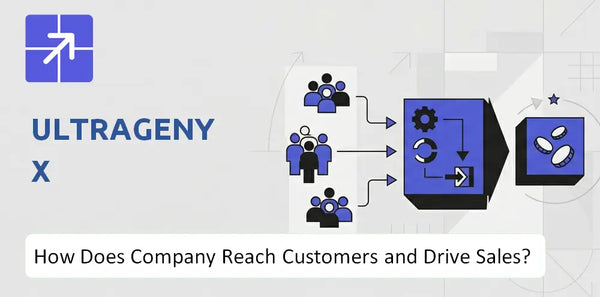
Prioritize clinician outreach, genetic testing programs, and hub services to shorten time-to-treatment; monitor referral conversion rates and specialty pharmacy fulfillment as real-time KPIs. See Ultragenyx BCG Matrix Analysis
Who Does Ultragenyx Want to Sell To?
Ultragenyx targets patients with rare genetic metabolic and bone diseases and the specialist clinicians and payers who decide treatment access. The company wins by combining strong clinical evidence, targeted physician outreach, and payer-focused market access to convert unmet need into prescriptions and reimbursement.
 Main customer group: Specialist physicians and their patients
Ultragenyx focuses on pediatric endocrinologists, metabolic geneticists, and neurologists at academic medical centers and orphan disease clinics who treat X-linked hypophosphatemia (XLH) and LC-FAOD; these clinicians are primary prescribers and gatekeepers for therapies like Crysvita and Dojolvi. Targeting specialists concentrates effort where clinical evidence matters most and shortens the decision chain for rare disease commercialization.
Additional target segments: High-value payers and patient advocates
Commercial focus includes private US insurers and national health authorities in Europe and Latin America that fund high-cost orphan drugs; securing reimbursement requires robust clinical and health-economic data. Ultragenyx also engages patient advocacy groups and centers of excellence to drive diagnosis, referral, and adherence through patient support programs.
Market positioning: Premium specialty rare-disease therapeutics
Ultragenyx positions itself as a developer of first-in-class or best-in-class therapies for niches with limited alternatives, pricing at the high end justified by clinical benefit and small patient populations. This positioning underpins Ultragenyx commercialization and Ultragenyx marketing that emphasize clinical outcomes, payer value, and specialty pharma market access expertise.
Why this positioning works: Evidence, capture, and scale
With indications where alternatives are absent, Ultragenyx targets capturing 80 percent or more of addressable patients per indication; this is realistic given concentrated specialist prescribers and robust Phase 3/real-world data used in payer negotiations. The Go-to-market blends Ultragenyx physician outreach strategies, patient advocacy partnerships, and payer engagement to convert demand into prescriptions and reimbursement.
See a focused analysis in this article: Growth Outlook of Ultragenyx Company
Ultragenyx SWOT Analysis
- Complete SWOT Breakdown
- Fully Customizable
- Editable in Excel & Word
- Professional Formatting
- Investor-Ready Format

How Does Ultragenyx Get in Front of Customers?
Ultragenyx gets in front of clinicians and patients through a medical-affairs-led model that drives disease-state awareness, diagnostic programs, and targeted specialist outreach. The company combines a specialized field force, digital medical education, congress presence, and regional hybrid commercial partnerships to generate diagnoses and convert demand into prescriptions.

Centers of Excellence and Field Force Engagement
Ultragenyx deploys a specialist field force that works directly with Centers of Excellence to identify patients via sponsored genetic testing and screening initiatives; this channel remains the primary acquisition route because it converts awareness into verified diagnoses and referrals.
Digital Medical Education and Online Reach
Ultragenyx uses digital platforms to deliver continuing medical education (CME), webinars, and clinical resources to community-based specialists and rare-disease networks, driving discovery of undiagnosed patients through searchable content and targeted email campaigns.
Hybrid Sales and Partnership Distribution
In 2025/2026 Ultragenyx expanded in Latin America and the Asia-Pacific with a hybrid mix of direct sales and strategic partners such as Kyowa Kirin, combining local market access with direct specialty sales to reach clinicians and hospitals.
Demand Generation via Congresses and Sponsored Diagnostics
Ultragenyx maintains visibility at major medical congresses and runs sponsored diagnostic programs and awareness campaigns; these activities produce measurable uplifts in genetic test orders and trial inquiries following key presentations.
Customer Acquisition Efficiency and Metrics
Ultragenyx monitors conversion metrics: diagnostic-to-treatment conversion, time-to-diagnosis, and prescription initiation rates; in recent reporting cycles, diagnostic programs increased referral volumes by double digits year-over-year, improving per-patient acquisition cost versus broad specialist promotion.
Key Reach Advantage: Medical-Affairs-Led Model
The strongest reach advantage is the medical-affairs-led approach that pairs specialist field teams with diagnostic sponsorship and digital education, enabling precise targeting of rare-disease patients and efficient conversion to treatment, especially in markets scaled via partners.
For detailed market segmentation and target profiles see Target Customers and Market of Ultragenyx Company
Ultragenyx Business Model Canvas
- One-time Payment
- No Research Needed – Save Hours of Work
- Built by Experts, Trusted by Consultants
- Instant Download, Ready to Use
- 100% Editable, Fully Customizable

How Does Ultragenyx Turn Attention Into Sales?
Ultragenyx turns clinical interest into revenue by removing access barriers via a centralized patient support hub and by building payer-facing economic evidence that drives coverage. Label expansions and trial-to-commercial transitions secure long-term, recurring therapy revenue for rare disease indications.
Core sales model: specialty, channel-led coordination
Ultragenyx sells high-cost biologic therapies through a specialty, partner-led model that combines a small field specialty sales force with specialty pharmacies and contract manufacturers to reach physicians and centers treating rare diseases.
Pricing and monetization logic: premium, per-patient therapy
Pricing reflects therapy value for ultra-rare diseases; annual therapy costs for indications like MPS VII exceed $300,000, generating recurring, per-patient revenue when payers approve long-term coverage.
Conversion drivers: access facilitation and evidence
Conversion relies on UltraCare patient support for insurance verification, reimbursement navigation, and specialty pharmacy coordination, plus payer dossiers showing reduced hospitalizations and improved mobility to secure formulary access and prior authorizations.
Repeat revenue and expansion: early starts and label growth
Label expansions into younger pediatric cohorts lock patients in earlier, creating multi-decade recurring revenue; clinical-trial-to-commercial transitions also convert trial participants into commercial patients, accelerating uptake post-approval.
Operationally, Ultragenyx marketing and Ultragenyx commercialization prioritize payer engagement, specialty pharmacy partnerships, and patient advocacy alignment to reduce administrative denials; typical prior-authorization success rates for supported rare-disease launches rise above industry baselines when robust support is provided, improving time-to-first-dose and adherence.
Evidence: payer value dossiers quantify reductions in inpatient days and long-term mobility improvements to justify coverage; revenue growth is driven by price-per-patient and expanding treated population via label expansions and broader physician outreach. See related governance and culture framing in Mission, Vision, and Values of Ultragenyx Company
Ultragenyx Marketing Mix
- Complete Marketing Mix Analysis
- Effortlessly Communicate Your Business Strategy
- Investor-Ready Format
- 100% Editable and Customizable
- Clear and Structured Layout

How Strong Does Ultragenyx 's Commercial Engine Look Going Forward?
Ultragenyx commercial engine enters 2026 at its strongest to date, with projected 2026 revenue topping $600,000,000; growth rests on Crysvita scale and Dojolvi adherence above 90 percent, while the infrastructure is sized to absorb DTX401 without proportional OpEx increases. Key supports: global commercialization scale, high adherence, diversified modalities; key weaknesses: payer scrutiny and regulatory risk.
What Supports Future Demand
Crysvita global scaling and Dojolvi persistence create predictable revenue streams; patient support programs and high adherence sustain lifetime value. A diversified portfolio of small molecules, enzyme replacement, and gene therapies gives Ultragenyx commercialization resilience across ultra-rare niches.
Channel and Marketing Effectiveness
Ultragenyx marketing combines specialty sales force deployment with digital patient engagement and physician outreach strategies, driving referrals and prescriptions. Omnichannel tactics and payer engagement improve specialty pharma market access and conversion of demand into prescriptions.
Risks to Commercial Performance
Payer scrutiny on price and reimbursement, shifting regulatory requirements, and single-product risk for each indication could compress uptake or delay launches. Market access and reimbursement tactics must remain proactive to mitigate coverage denials and utilization management.
The Overall Sales and Marketing Outlook
Outlook for 2025/2026 appears strong and adaptable: disciplined Ultragenyx sales strategy and patient advocacy partnerships aim for operational cash flow positivity in 2026, supported by a maturing portfolio and scalable commercial infrastructure. See a focused market analysis in Competitive Landscape of Ultragenyx Company.
Ultragenyx Boston Consulting Group Matrix
- Built by Experts, Trusted by Consultants
- Structured for Consultants, Students, and Founders
- 100% Editable in Microsoft Word & Excel
- Instant Digital Download – Use Immediately
- Compatible with Mac & PC – Fully Unlocked

Related Blogs
- What Is the History of Ultragenyx Company and How Did It Evolve?
- What Is the Competitive Landscape of Ultragenyx Company and How Does It Compete?
- What Is the Growth Outlook of Ultragenyx Company and Where Is It Heading?
- How Does Ultragenyx Company Work and What Drives Its Business Model?
- What Do the Mission, Vision, and Core Values of Ultragenyx Company Reveal?
- Who Are the Core Customers in Ultragenyx Company's Target Market?
- Who Owns Ultragenyx Company Today and Who Holds Control?
Frequently Asked Questions
Ultragenyx primarily sells to specialist physicians, their patients, and the payers who approve treatment access. The company focuses on pediatric endocrinologists, metabolic geneticists, neurologists, private insurers, national health authorities, and patient advocacy groups to move rare disease therapies from diagnosis to reimbursement.
Disclaimer
All information, articles, and product details provided on this website are for general informational and educational purposes only. We do not claim any ownership over, nor do we intend to infringe upon, any trademarks, copyrights, logos, brand names, or other intellectual property mentioned or depicted on this site. Such intellectual property remains the property of its respective owners, and any references here are made solely for identification or informational purposes, without implying any affiliation, endorsement, or partnership.
We make no representations or warranties, express or implied, regarding the accuracy, completeness, or suitability of any content or products presented. Nothing on this website should be construed as legal, tax, investment, financial, medical, or other professional advice. In addition, no part of this site - including articles or product references - constitutes a solicitation, recommendation, endorsement, advertisement, or offer to buy or sell any securities, franchises, or other financial instruments, particularly in jurisdictions where such activity would be unlawful.
All content is of a general nature and may not address the specific circumstances of any individual or entity. It is not a substitute for professional advice or services. Any actions you take based on the information provided here are strictly at your own risk. You accept full responsibility for any decisions or outcomes arising from your use of this website and agree to release us from any liability in connection with your use of, or reliance upon, the content or products found herein.