
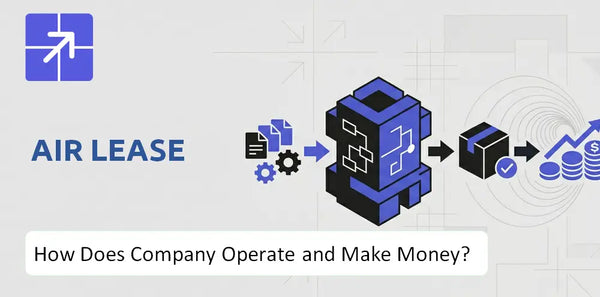
How does Air Lease Corporation generate revenue by leasing aircraft to airlines?
Air Lease Corporation buys and finances aircraft, then leases them to carriers under multi-year contracts, converting fleet demand into steady rental income. This matters because in 2025 aircraft demand and lease rates rose as airlines sought fuel-efficient jets after capacity recoveries.
Track lease maturity schedules and residual values to gauge cash flow risk; see Air Lease BCG Matrix Analysis for product-level positioning.
What Does Air Lease Actually Sell?
Air Lease Corporation sells access to modern commercial aircraft through long-term operating leases and related fleet services. Customers pay for aircraft availability, fleet flexibility, and outsourced fleet management rather than ownership of the jets.
 What Air Lease Corporation Offers
Air Lease Corporation provides operating leases for narrow-body and wide-body jets – notably Airbus A321neo and Boeing 737 MAX – on typical contracts of 8 – 12 years. It also sells sale-and-leaseback transactions, purchase-and-lease arrangements, and fleet transition planning.
Who Buys It
Primary customers are scheduled passenger carriers and cargo airlines worldwide seeking capacity without capital expenditure. Leasing intermediaries and airlines executing sale and leaseback deals also buy fleet capacity and liquidity solutions.
What Value Customers Get
Airlines gain fuel-efficient, modern aircraft to cut operating costs and meet emissions rules while preserving balance sheet cash; sale-and-leaseback can free up working capital – Air Lease reported $7.4 billion of assets under management and delivery commitments in its 2025 fiscal disclosures, supporting fleet flexibility.
Why the Offering Stands Out
Air Lease Corporation differentiates by focusing on new-technology aircraft, active lease placement, and residual value discipline; its average lease term of ~10 years and deep OEM relationships enable rapid delivery and lower time-to-service for lessees. See Ownership and Control of Air Lease Company for corporate structure context: Ownership and Control of Air Lease Company
Air Lease SWOT Analysis
- Complete SWOT Breakdown
- Fully Customizable
- Editable in Excel & Word
- Professional Formatting
- Investor-Ready Format

How Does Air Lease Run Its Business Day to Day?
Air Lease Corporation runs day-to-day through a tight loop of aircraft procurement, lease placement, and active portfolio management; teams secure delivery slots, negotiate lease terms, and oversee technical and regulatory compliance to keep aircraft in service and value protected.

Operational Engine: Procurement to Placement
Management executes a disciplined cycle of buying new aircraft from OEMs, placing them on long-term operating leases, and remarketing assets at end-of-lease. Daily tasks include contract negotiation, delivery coordination, and cashflow forecasting tied to a forward order book that secures future deliveries years ahead.
Customer Access and Lease Delivery
Airlines across more than 60 countries contract operating leases or sale-and-leaseback deals; leasing teams structure terms to match airline cashflows and credit profiles, then manage delivery logistics, crew acceptance checks, and entry-into-service paperwork.
Production Sourcing and Order Book Management
The firm secures production slots with manufacturers and staggers deliveries to optimize fleet mix and residual value exposure. Procurement teams monitor OEM production rates and engine/airframe tech updates to keep the average fleet age at a sector-leading 4.7 years.
Sales Channels and Distribution
Direct sales and account teams work with airlines for bespoke leases and sale-and-leaseback transactions; marketing to institutional investors and asset managers supports secondary sales of older aircraft and block trades to optimize capital recycling.
Key Assets, Systems, and Partnerships
Key assets include a fleet with book value exceeding $26 billion (early 2026), a large forward order book, technical compliance systems, and OEM/maintenance partnerships that ensure regulatory airworthiness and residual-value preservation.
What Makes the Model Work in Practice
Efficiency rests on matching long-term lease cashflows with financed purchases, proactive maintenance to protect residuals, and active secondary-market management – selling older aircraft to institutional buyers or rotating them between lessees to sustain portfolio liquidity and returns.
Day-to-day priorities: negotiate leases with over 115 airlines globally, ensure technical compliance, execute deliveries from the forward order book, and manage secondary-life dispositions to keep fleet economics and residual values intact; see Target Customers and Market of Air Lease Company for demand context: Target Customers and Market of Air Lease Company
Air Lease Business Model Canvas
- One-time Payment
- No Research Needed – Save Hours of Work
- Built by Experts, Trusted by Consultants
- Instant Download, Ready to Use
- 100% Editable, Fully Customizable

How Does Revenue Flow Through Air Lease?
Revenue flows mainly from monthly lease payments that convert airline demand into steady cash; supplementary gains come from aircraft sales and management fees. Demand becomes revenue through long-term operating leases, sale-and-leaseback deals, and third-party portfolio services.
Monthly lease payments: the core recurring cash stream
Air Lease Corporation earns most income from monthly operating lease rentals, which produced over $2.7 billion in annual rental revenue as of Q1 2026; near-100 percent utilization turns contracted airline demand into predictable, recurring cash.
Aircraft sales and portfolio management fees
Strategic sales of owned aircraft realize capital gains, often amplified when manufacturer delivery delays lift market values; management fees from running third-party portfolios provide fee income without adding debt to the balance sheet.
Monetization via lease spreads and asset disposals
Monetization hinges on the spread between the company's cost of capital (debt and secured financing) and the lease yield charged to airlines; sale-and-leaseback and secondary market sales convert residual value into one-time profit boosts.
Key revenue drivers
Revenue is driven most by high utilization, lease rates set vs aircraft age/type, airline credit quality, and residual value management; fleet mix and timing of disposals materially affect margins. See related perspective on corporate strategy: Mission, Vision, and Values of Air Lease Company
Air Lease Marketing Mix
- Complete Marketing Mix Analysis
- Effortlessly Communicate Your Business Strategy
- Investor-Ready Format
- 100% Editable and Customizable
- Clear and Structured Layout

What Makes Air Lease's Model Sustainable or Fragile?
Air Lease Corporation's model is sustained by a young, in-demand fleet and a backlog exceeding $20 billion, which supports lease rates and residual values; risks include interest-rate sensitivity and manufacturer execution that can compress margins or delay growth.
Fleet age and backlog underpin pricing power
Air Lease Corporation benefits from a young fleet with high utilization and maintenance predictability; a backlog north of $20 billion through mid-decade insulates cash flows from short-term demand swings and keeps aircraft leasing business model economics attractive.
Scale, OEM relationships, and balance-sheet access
The company's scale and long-standing ties with Airbus and Boeing improve delivery priority and pricing; diversified financing taps – unsecured debt, secured aircraft financing, and sale-and-leaseback structures – allow aircraft lessors to fund purchases and manage aircraft financing and lessors exposures.
Concentration on OEMs and interest-rate exposure
Dependence on two manufacturers (Boeing, Airbus) creates production and timing risk; rising long-term rates raise borrowing costs and can squeeze net interest margins if aircraft lease rates and lease structures (operating lease vs finance lease) lag market moves.
Resilience vs fragility in 2025/2026
In 2025/2026 the model looks resilient: chronic new-aircraft undersupply keeps lease rates and residual values elevated, supporting returns and making Air Lease Corporation a high-quality credit story; however, if higher-for-longer rates persist or OEM delays worsen, growth and margins could be materially affected. Read more on competitive positioning Competitive Landscape of Air Lease Company
Air Lease Boston Consulting Group Matrix
- Built by Experts, Trusted by Consultants
- Structured for Consultants, Students, and Founders
- 100% Editable in Microsoft Word & Excel
- Instant Digital Download – Use Immediately
- Compatible with Mac & PC – Fully Unlocked

Related Blogs
- What Is the History of Air Lease Company and How Did It Evolve?
- What Is the Competitive Landscape of Air Lease Company and How Does It Compete?
- What Is the Growth Outlook of Air Lease Company and Where Is It Heading?
- How Does Air Lease Company Reach Customers and Turn Demand into Sales?
- What Do the Mission, Vision, and Core Values of Air Lease Company Reveal?
- Who Are the Core Customers in Air Lease Company's Target Market?
- Who Owns Air Lease Company Today and Who Holds Control?
Frequently Asked Questions
Air Lease sells access to modern commercial aircraft through long-term operating leases and related fleet services. Customers pay for aircraft availability, fleet flexibility, and outsourced fleet management instead of owning the jets themselves. The company also offers sale-and-leaseback transactions, purchase-and-lease arrangements, and fleet transition planning.
Disclaimer
All information, articles, and product details provided on this website are for general informational and educational purposes only. We do not claim any ownership over, nor do we intend to infringe upon, any trademarks, copyrights, logos, brand names, or other intellectual property mentioned or depicted on this site. Such intellectual property remains the property of its respective owners, and any references here are made solely for identification or informational purposes, without implying any affiliation, endorsement, or partnership.
We make no representations or warranties, express or implied, regarding the accuracy, completeness, or suitability of any content or products presented. Nothing on this website should be construed as legal, tax, investment, financial, medical, or other professional advice. In addition, no part of this site - including articles or product references - constitutes a solicitation, recommendation, endorsement, advertisement, or offer to buy or sell any securities, franchises, or other financial instruments, particularly in jurisdictions where such activity would be unlawful.
All content is of a general nature and may not address the specific circumstances of any individual or entity. It is not a substitute for professional advice or services. Any actions you take based on the information provided here are strictly at your own risk. You accept full responsibility for any decisions or outcomes arising from your use of this website and agree to release us from any liability in connection with your use of, or reliance upon, the content or products found herein.