
How does Air Lease Corporation convert OEM-delayed deliveries into leased aircraft sales through its sales and marketing model?
Air Lease Corporation targets carriers facing OEM delivery gaps by marketing ready-to-lease narrow- and wide-body jets, using direct airline relationships and capital-markets financing to shorten cycles. This matters as 2025 delivery backlogs lifted lease rates and improved yields for lessors.
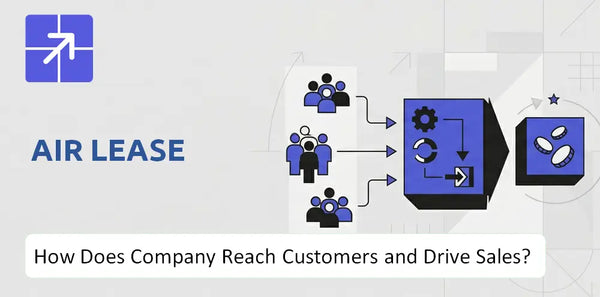
Focus sales teams on airlines with fleet shortages and offer tailored financing and timing solutions; link market demand to asset availability via Air Lease BCG Matrix Analysis.
Who Does Air Lease Want to Sell To?
Air Lease Corporation targets credit-worthy global airlines needing fleet expansion or modernization, focusing on flag carriers and low-cost carriers in growth markets to win long-term, yield-resilient contracts.
 Primary customers: Tier 1 global airlines
Air Lease Corporation sells primarily to credit-worthy flag carriers and major low-cost operators seeking newer, fuel-efficient aircraft such as the Airbus A321neo and Boeing 737-8/9 to meet environmental mandates and lower operating cost per seat.
Additional targets: high-growth regional carriers
Secondary segments include fast-growing domestic carriers in India, Southeast Asia, and Latin America, plus niche cargo operators and ACMI (aircraft, crew, maintenance, insurance) providers that value fleet flexibility and short-to-medium term lease structures.
Market positioning: modern-technology lessor with global reach
Air Lease Corporation positions itself as a provider of late-model, fuel-efficient commercial aircraft leasing with global sales coverage across 60+ countries, emphasizing aircraft availability, bespoke financing and long-term relationship management.
Why this positioning works: lowers airline cost and carbon
The message – delivering modern fleets that cut fuel burn and emissions – resonates with airlines facing sustainability rules and high fuel prices; by March 2026 the portfolio tilt to A321neo/737-8/9 aligns with operator demand and supports higher lease renewals and stable yields.
Reference: Competitive Landscape of Air Lease Company
Air Lease SWOT Analysis
- Complete SWOT Breakdown
- Fully Customizable
- Editable in Excel & Word
- Professional Formatting
- Investor-Ready Format

How Does Air Lease Get in Front of Customers?
Air Lease Corporation wins customers through a small, executive-led sales team that holds direct C-suite relationships and controls scarce delivery slots by placing multi-billion dollar orders years ahead; visibility comes from industry airshows, consultative fleet planning, and sale-leaseback offerings that convert airline needs into leases.

Executive-led direct sales
The primary acquisition channel is a concentrated, senior sales force that sells to airline C-suites through direct, consultative engagements and long-term relationships; this matters because airline procurement decisions hinge on trust, timing, and bespoke fleet solutions.
Digital presence and selective online reach
Air Lease Corporation uses a modest digital footprint – corporate website, investor reports, and targeted email outreach – to support relationship management and share fleet availability and transaction structures rather than mass B2C-style digital campaigns.
Direct sales and partnership distribution
Sales channels are direct bilateral deals with airlines and brokers, plus manufacturer relationships with Boeing and Airbus that secure forward delivery positions; these channels give privileged access to airlines during fleet renewal cycles.
Demand generation through supply control and events
Demand is generated by controlling delivery scarcity via large advance orders and by active presence at Paris and Farnborough airshows and airline planning meetings; sale-leaseback offers and timing around delivery windows create urgency.
Customer acquisition efficiency
Acquisition is highly efficient: senior teams close high-value leases with low unit marketing spend, converting strategic relationships into deals; in 2025 the company reported strong lease originations rates relative to peers, driven by committed orderbook leverage.
Most important reach advantage
The dominant advantage is forward delivery control from multi-billion dollar orders placed with Boeing and Airbus, which positions Air Lease Corporation as a primary source of capacity in a constrained market and drives airline customer acquisition and pricing leverage.
Air Lease Corporation aligns sales timing with airline fleet plans, converts inquiries via tailored proposals (new lease originations and sale-leasebacks), and sustains visibility through airshows and senior-level touchpoints; see the company ethos in Mission, Vision, and Values of Air Lease Company.
Air Lease Business Model Canvas
- One-time Payment
- No Research Needed – Save Hours of Work
- Built by Experts, Trusted by Consultants
- Instant Download, Ready to Use
- 100% Editable, Fully Customizable

How Does Air Lease Turn Attention Into Sales?
Air Lease Corporation converts airline interest into revenue by placing aircraft on long-term, fixed-rate operating leases (typically 8 – 12 years), securing commitments 24 – 36 months before delivery, and selling older assets to secondary investors to recycle capital into new, higher-yielding technology.
Core sales model: long-term operating leases and pre-delivery commitments
Air Lease Corporation sells via negotiated, contract-led B2B deals with airlines and leasing funds; the model relies on direct account sales, relationship management, and forward scheduling to secure leases before aircraft delivery.
Pricing and monetization logic: fixed-rate leases plus maintenance reserves
Pricing is fixed-rate, recurring lease rent for 8 – 12 years, often at premium market rates in 2025/2026; contracts include robust maintenance reserve requirements and fees that enhance lifetime yield per aircraft.
Conversion drivers: forward commitments, scarcity, and account trust
Conversion hinges on securing lease commitments 24 – 36 months ahead, commanding premium lease rates amid high demand, and using airline relationship management and negotiation tactics to lock deals and de-risk capital expenditures; this approach helped Air Lease Corporation sustain 100% placement of its forward order book in recent cycles.
Repeat revenue and portfolio recycling: fleet youth and asset sales
Air Lease maintains a young average fleet age of approximately 4.7 years by selling older aircraft to secondary market investors and institutional funds, recycling proceeds into new technology deliveries that yield higher lease rates and support renewals and upsells.
Key tactics include targeted airline customer acquisition at trade shows and via CRM-driven account outreach, lead generation strategies for airline lessors, and using demand signals to price leases; see Target Customers and Market of Air Lease Company for customer segmentation and go-to-market context: Target Customers and Market of Air Lease Company
Air Lease Marketing Mix
- Complete Marketing Mix Analysis
- Effortlessly Communicate Your Business Strategy
- Investor-Ready Format
- 100% Editable and Customizable
- Clear and Structured Layout

How Strong Does Air Lease's Commercial Engine Look Going Forward?
Air Lease Corporation's commercial engine looks strong heading into 2025/2026, backed by tight aircraft supply, a >$20 billion contracted order book through 2028, and near-100% utilization expected in 2026; rising lease rate factors and record secondary values should lift rental revenue while higher rates remain a moderating factor.
Supply constraints and modern fleet demand support future sales
OEM production limits, engine durability issues on older fleets, and airline demand for fuel-efficient types drive strong aircraft leasing sales and aircraft lessor demand generation tactics; Air Lease Corporation's >$20 billion backlog through 2028 plus deliveries of fuel-efficient jets should increase rental revenue and pricing power.
Channel reach and account management convert demand into contracts
Direct airline relationship management, targeted CRM workflows, and trade-show presence (B2B sales strategy for aircraft leasing) appear effective at turning aircraft leasing inquiries into contracts; active account management shortens sales funnel cycles and boosts airline customer acquisition.
Interest-rate and macro risks could dent uptake
Elevated interest rates raise financing costs and can slow airline capex, pressuring pricing strategies for aircraft lease agreements; cyclic airline demand shifts or OEM delivery delays are further risks to commercial aircraft leasing performance.
Sales and marketing outlook for 2025/2026
The outlook is strong and adaptable: utilization near 100%, growing rental revenue as new deliveries enter the fleet, and margin expansion as older leases roll to market prices; sustained growth depends on maintaining competitive cost of funds and executing airline relationship management and digital marketing for aircraft lessors.
For corporate governance context and ownership implications on commercial strategy see Ownership and Control of Air Lease Company
Air Lease Boston Consulting Group Matrix
- Built by Experts, Trusted by Consultants
- Structured for Consultants, Students, and Founders
- 100% Editable in Microsoft Word & Excel
- Instant Digital Download – Use Immediately
- Compatible with Mac & PC – Fully Unlocked

Related Blogs
- What Is the History of Air Lease Company and How Did It Evolve?
- What Is the Competitive Landscape of Air Lease Company and How Does It Compete?
- What Is the Growth Outlook of Air Lease Company and Where Is It Heading?
- How Does Air Lease Company Work and What Drives Its Business Model?
- What Do the Mission, Vision, and Core Values of Air Lease Company Reveal?
- Who Are the Core Customers in Air Lease Company's Target Market?
- Who Owns Air Lease Company Today and Who Holds Control?
Frequently Asked Questions
Air Lease targets credit-worthy global airlines that need fleet expansion or modernization. Its core focus is on flag carriers and major low-cost operators, especially those seeking newer, fuel-efficient aircraft to lower operating costs and meet environmental goals.
Disclaimer
All information, articles, and product details provided on this website are for general informational and educational purposes only. We do not claim any ownership over, nor do we intend to infringe upon, any trademarks, copyrights, logos, brand names, or other intellectual property mentioned or depicted on this site. Such intellectual property remains the property of its respective owners, and any references here are made solely for identification or informational purposes, without implying any affiliation, endorsement, or partnership.
We make no representations or warranties, express or implied, regarding the accuracy, completeness, or suitability of any content or products presented. Nothing on this website should be construed as legal, tax, investment, financial, medical, or other professional advice. In addition, no part of this site - including articles or product references - constitutes a solicitation, recommendation, endorsement, advertisement, or offer to buy or sell any securities, franchises, or other financial instruments, particularly in jurisdictions where such activity would be unlawful.
All content is of a general nature and may not address the specific circumstances of any individual or entity. It is not a substitute for professional advice or services. Any actions you take based on the information provided here are strictly at your own risk. You accept full responsibility for any decisions or outcomes arising from your use of this website and agree to release us from any liability in connection with your use of, or reliance upon, the content or products found herein.