
How does Babcock & Wilcox Enterprises convert legacy boiler expertise into decarbonization revenue?
Babcock & Wilcox Enterprises blends aftermarket services from its installed power-plant base with engineering for hydrogen and carbon capture projects to drive growth. This matters because 2025 contracts and pilot projects show early revenue from modular carbon-capture work, validating the pivot.
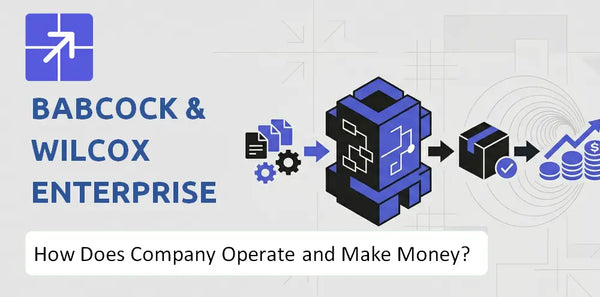
Babcock & Wilcox Enterprises funds R&D and project delivery by cross-selling services to utility clients and leveraging long-term service agreements; pursue partners for pipeline scale-up. See product analysis here: Babcock & Wilcox Enterprises BCG Matrix Analysis
What Does Babcock & Wilcox Enterprises Actually Sell?
Babcock & Wilcox Enterprises sells engineered steam generation systems, emissions-control equipment, waste-to-energy and biomass plants, carbon-capture and hydrogen-production platforms, plus aftermarket parts and long-term technical services; customers pay for turnkey energy-generation assets, emissions compliance technologies, and recurring service contracts that keep boilers and environmental systems operating.
 Core product lines and platforms
Babcock & Wilcox Enterprises business model rests on three pillars: advanced steam generation and environmental equipment (utility boilers, industrial boilers, wet and dry scrubbers), Renewable solutions (waste-to-energy and biomass-to-power plants), and decarbonization platforms (ClimateBright carbon-capture suite and BrightLoop hydrogen-production technology). Sales include engineered equipment, turnkey plant EPC (engineering, procurement, construction) contracts, and proprietary technology licenses.
Main buyers and contract types
Buyers are utilities, municipal waste authorities, independent power producers, industrial manufacturers, and government/defense agencies procuring emissions controls or decarbonization systems. Revenue comes from large project contracts, service and maintenance agreements, parts sales, and recurring service contracts and spare-parts supply.
Customer value and outcomes
Customers get compliant, reliable power and emissions performance, reduced particulate and SOx/NOx emissions, and waste-to-energy conversion that recovers revenue from refuse. Service contracts deliver predictable uptime and recurring revenue benefits for the seller while lowering lifecycle costs and regulatory risk for buyers.
Differentiators and buying rationale
Babcock & Wilcox Enterprises how it works is anchored in proprietary thermal and emissions technologies, integrated EPC capabilities, and aftermarket scale – letting customers buy full systems or retrofit modules. The ClimateBright and BrightLoop platforms position the firm in carbon capture and hydrogen markets, supporting strategic priorities in clean energy and creating higher-margin technology and service revenue streams; see a focused analysis in Growth Outlook of Babcock & Wilcox Enterprises Company.
Babcock & Wilcox Enterprises SWOT Analysis
- Complete SWOT Breakdown
- Fully Customizable
- Editable in Excel & Word
- Professional Formatting
- Investor-Ready Format

How Does Babcock & Wilcox Enterprises Run Its Business Day to Day?
Babcock & Wilcox Enterprises runs as a project-driven engineering and services firm: teams of specialist engineers design and deliver bespoke thermal and environmental solutions, supported by a global supply chain and field service network. Day-to-day work centers on managing multi-month projects, parts logistics, and scheduled outages while safeguarding recurring service revenue and intellectual property.

Project-led operating model and delivery flow
Operations run on a project-based engineering model where hundreds of specialists scope, design, and oversee execution for utility and industrial clients. Core systems include ERP for project controls, PLM for design, and field-service scheduling to coordinate outages and retrofits across regions.
How customers access products and services
Clients engage via long-term service contracts, retrofit orders, or construction agreements; procurement teams issue purchase orders and schedule site work. The sales-to-delivery cycle ranges from immediate parts orders to 18 – 36 month technology integrations, supporting recurring revenue from service contracts.
Production, sourcing, and development mechanics
The Thermal and Environmental segments focus on producing proprietary replacement parts and assemblies through a managed global supply chain and selected in-house fabrication. Renewable and Emerging Technology projects use staged engineering, vendor equipment procurement, and modular assembly, with development cycles typically 18 – 36 months.
Sales channels, contract structure, and distribution
Sales flow through direct account teams, bidding for utility contracts, and long-term service agreements; distribution for parts uses regional warehouses and logistics partners. Since exiting large fixed-fee construction, the company shifts to partnership agreements where it supplies core technology and oversight while subcontracting civil works.
Key assets, systems, and partnerships
Key assets include proprietary boiler, heat-recovery, and emissions-control IP, engineering centers, and field-service crews. Strategic partnerships with fabricators and EPC subcontractors lower capital intensity and concentrate internal effort on high-margin intellectual property and engineering oversight.
What drives efficiency and stability day to day
Operational stability comes from focusing on higher-margin engineering, recurring service contracts, and parts sales rather than fixed-fee construction risk; this reduces margin volatility and compresses working capital cycles. Field-service planning, parts availability, and subcontractor management are the daily operational levers that maintain uptime and cash flow.
For context on corporate priorities and culture that shape these routines, see Mission, Vision, and Values of Babcock & Wilcox Enterprises Company.
Babcock & Wilcox Enterprises Business Model Canvas
- One-time Payment
- No Research Needed – Save Hours of Work
- Built by Experts, Trusted by Consultants
- Instant Download, Ready to Use
- 100% Editable, Fully Customizable

How Does Revenue Flow Through Babcock & Wilcox Enterprises?
Revenue flows into Babcock & Wilcox Enterprises through long-term capital contracts and recurring service agreements; demand from operating power plants and awarded environmental projects converts into booked backlog and ongoing service revenue.
Thermal services: installed-base cash engine
The Thermal segment is the primary revenue driver for Babcock & Wilcox Enterprises business model, supplying proprietary parts and maintenance to an installed base exceeding 300 gigawatts globally; as plants run, recurring parts and service orders convert uptime into high-margin revenue.
Project revenue: Renewable and Environmental contracts
Large-scale engineering and construction awards in Renewable and Environmental segments are recognized over time, feeding a multi-year backlog that often tops $600 million, which smooths future top-line visibility and ties revenue to milestone delivery.
Pricing and monetization: mix of services, parts, and licensing
Babcock & Wilcox Enterprises how it works monetizes through fixed-price and cost-plus project contracts, recurring service agreements, spare-parts sales, and increasingly licensing fees for hydrogen and carbon-capture technologies, shifting revenue toward higher-margin, asset-light streams.
Main revenue levers and sensitivity
Revenue is most strongly driven by Thermal service demand and backlog conversion from awarded projects; margins hinge on plant run-rates, project execution efficiency, and the pace of technology licensing adoption tied to the company's R&D and strategic priorities. Read about target markets here: Target Customers and Market of Babcock & Wilcox Enterprises Company
Babcock & Wilcox Enterprises Marketing Mix
- Complete Marketing Mix Analysis
- Effortlessly Communicate Your Business Strategy
- Investor-Ready Format
- 100% Editable and Customizable
- Clear and Structured Layout

What Makes Babcock & Wilcox Enterprises's Model Sustainable or Fragile?
Babcock & Wilcox Enterprises business model is sustainable where its carbon capture and waste – to – energy technologies align with decarbonization demand, but fragile because converting a large backlog into profitable 2025 revenue depends on cash, interest rates, and customer capex timing. Structural strengths include proprietary tech and backlog; risks include leverage, R&D cash burn, and policy-dependent market timing.
Core strength: Essential role in decarbonization
Babcock & Wilcox Enterprises how it works centers on delivering carbon capture, waste – to – energy, and clean – fuel equipment that heavy industries require to meet emissions targets; this creates high demand elasticity when climate policy tightens. In 2025 the company's backlog exceeds $1.2 billion, providing near – term revenue visibility if execution holds.
Key assets or capabilities: Technology, service contracts, and engineering scale
Babcock & Wilcox Enterprise's product portfolio and engineering IP support large, complex projects; service contracts and aftermarket support drive recurring revenue and margin stability. Strategic partnerships with utilities and EPC firms shorten project cycles and help capture higher – margin retrofit work.
Dependencies or constraints: Backlog conversion, leverage, and policy timing
The model is dependent on timely conversion of the backlog into billed revenue and positive cash flow; failure or delays raise working capital needs. Sensitivity to global interest rates and concentrated utility customer capex cycles creates revenue timing risk, and continued heavy R&D in hydrogen/CCS elevates liquidity pressure if adoption lags.
Durability in 2025 – 2026: Cautiously optimistic but finance – tied
Professional judgment: the technological moat around carbon capture and thermal tech is widening, improving long – term competitiveness; yet financial stability is the primary variable to watch. If Babcock & Wilcox Enterprises maintains a positive book – to – bill and reduces net leverage from the 2024 peak (net debt/EBITDA was reported near 4.5x in FY2024), the model looks resilient through 2026; otherwise fragility rises.
Sales and Marketing Strategy of Babcock & Wilcox Enterprises Company
Babcock & Wilcox Enterprises Boston Consulting Group Matrix
- Built by Experts, Trusted by Consultants
- Structured for Consultants, Students, and Founders
- 100% Editable in Microsoft Word & Excel
- Instant Digital Download – Use Immediately
- Compatible with Mac & PC – Fully Unlocked

Related Blogs
- What Is the History of Babcock & Wilcox Enterprises Company and How Did It Evolve?
- What Is the Competitive Landscape of Babcock & Wilcox Enterprises Company and How Does It Compete?
- What Is the Growth Outlook of Babcock & Wilcox Enterprises Company and Where Is It Heading?
- How Does Babcock & Wilcox Enterprises Company Reach Customers and Turn Demand into Sales?
- What Do the Mission, Vision, and Core Values of Babcock & Wilcox Enterprises Company Reveal?
- Who Are the Core Customers in Babcock & Wilcox Enterprises Company's Target Market?
- Who Owns Babcock & Wilcox Enterprises Company Today and Who Holds Control?
Frequently Asked Questions
Babcock & Wilcox Enterprises sells engineered steam generation systems, emissions-control equipment, waste-to-energy and biomass plants, carbon-capture and hydrogen-production platforms, plus aftermarket parts and technical services. The company earns money from turnkey energy assets, technology licenses, service contracts, and spare-parts supply that support ongoing operations.
Disclaimer
All information, articles, and product details provided on this website are for general informational and educational purposes only. We do not claim any ownership over, nor do we intend to infringe upon, any trademarks, copyrights, logos, brand names, or other intellectual property mentioned or depicted on this site. Such intellectual property remains the property of its respective owners, and any references here are made solely for identification or informational purposes, without implying any affiliation, endorsement, or partnership.
We make no representations or warranties, express or implied, regarding the accuracy, completeness, or suitability of any content or products presented. Nothing on this website should be construed as legal, tax, investment, financial, medical, or other professional advice. In addition, no part of this site - including articles or product references - constitutes a solicitation, recommendation, endorsement, advertisement, or offer to buy or sell any securities, franchises, or other financial instruments, particularly in jurisdictions where such activity would be unlawful.
All content is of a general nature and may not address the specific circumstances of any individual or entity. It is not a substitute for professional advice or services. Any actions you take based on the information provided here are strictly at your own risk. You accept full responsibility for any decisions or outcomes arising from your use of this website and agree to release us from any liability in connection with your use of, or reliance upon, the content or products found herein.