
How does Babcock & Wilcox Enterprises convert its engineering pipeline into repeatable sales through its sales and marketing model?
Babcock & Wilcox Enterprises aligns technical sales with project finance and long-term service contracts to turn its ~8 billion global pipeline into recurring revenue. This matters because the 2025 pivot to decarbonization and hydrogen elevated demand for service agreements and licensed tech.
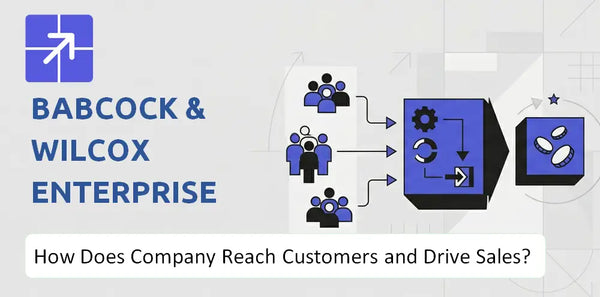
Babcock & Wilcox Enterprises targets utility and industrial customers via direct account teams, EPC partnerships, and OEM licensing; focus on long-term service margins shortens payback and boosts lifetime value. See Babcock & Wilcox Enterprises BCG Matrix Analysis
Who Does Babcock & Wilcox Enterprises Want to Sell To?
Babcock & Wilcox Enterprises, Inc. sells to large-scale energy and industrial operators needing bankable decarbonization and repowering solutions; it wins by offering proven thermal technologies, emissions controls, and project delivery that reduce regulatory and operational risk.
 Utility and Independent Power Producers
Global utilities and independent power producers are the primary buyers because they must meet 2030 emissions targets and repower aging fleets; Babcock & Wilcox Enterprises marketing targets these customers with turnkey retrofit and carbon capture offerings and project financing support.
Industrial Heavy Emitters
Sectors like cement, steel, and pulp and paper form the second tier; Babcock & Wilcox customer acquisition focuses on high-intensity thermal processes where regulatory compliance forces capital investment in emissions control and efficiency upgrades.
Municipal and Waste Management Owners
The Renewable segment pursues municipal and private waste-to-energy operators as a third tier, selling modular WtE plants and O&M contracts to convert waste streams into dispatchable energy and tipping-fee revenue streams.
Market Positioning
Babcock & Wilcox Enterprises positions itself as a bankable engineering partner for decarbonization, emphasizing proven performance, long-term service contracts, and compliance certainty to shorten procurement cycles and de-risk capital approvals.
Why the Positioning Works
The message – reducing emissions while maintaining uptime – resonates because buyers prioritize reliability and financing-ready technology; Babcock & Wilcox go to market through engineering EPC bids, long-cycle RFPs, and strategic partnerships that convert demand into sales.
Evidence and KPIs
In fiscal 2025 Babcock & Wilcox Enterprises, Inc. reported approximately $1.2 billion in revenue and backlog near $3.1 billion, reflecting large multi-year contracts typical of utility and industrial projects; targeted customers are those with high-intensity carbon footprints and aging infrastructure needing mandatory compliance upgrades – this forms the pipeline for Babcock & Wilcox demand generation strategies.
See a focused market breakdown in this piece on target customers and market strategy: Target Customers and Market of Babcock & Wilcox Enterprises Company
Babcock & Wilcox Enterprises SWOT Analysis
- Complete SWOT Breakdown
- Fully Customizable
- Editable in Excel & Word
- Professional Formatting
- Investor-Ready Format

How Does Babcock & Wilcox Enterprises Get in Front of Customers?
Babcock & Wilcox Enterprises, Inc. gets in front of customers through a global direct-sales engineering force, regional hubs across EMEA, APAC and the Americas, and strategic partnerships with EPC firms that embed proprietary technologies into major tenders. Awareness and demand are driven by technical white papers, industry summits, government engagement, and targeted pre-RFP consultative selling.

Consultative Field Sales and Technical Pre-Sales
Babcock & Wilcox Enterprises marketing centers on a technical global sales force of engineers who pursue consultative selling, engaging prospects often years before formal RFPs. This direct-sales model converts early technical engagement into higher win rates on large infrastructure contracts.
Digital Content and Technical Thought Leadership
Babcock & Wilcox digital marketing for energy companies uses white papers, case studies, and SEO to capture procurement teams and government buyers. Search, targeted email to energy ministry contacts, and LinkedIn posts promote ClimateBright and BrightLoop technical materials.
Regional Hubs and EPC Partnerships
Babcock & Wilcox customer acquisition relies on regional hubs in Europe, the Middle East, Africa, Asia – Pacific, and the Americas plus alliances with engineering, procurement, and construction (EPC) firms. These partnerships embed B&W Enterprises demand generation into multi – billion – dollar infrastructure bids.
Events, Summits, and Government Engagement
Demand generation tactics include presenting at global energy summits, targeted briefings with energy ministries, and sponsored technical sessions. Live demos and pilot projects at events drive procurement timelines and shorten the path to contract awards.
Sales Efficiency and Pipeline Quality
Babcock & Wilcox sales strategy emphasizes high-quality, long – lead opportunities; sales cycles often exceed 12 – 24 months but show higher average contract values, improving ROAS versus low – ticket approaches. CRM tracking focuses on technical milestones and procurement windows.
2025 Reach Advantage: Proprietary Tech and Early Embedment
The most important reach advantage in 2025 is embedding proprietary ClimateBright and BrightLoop technologies into EPC bids, positioning Babcock & Wilcox Enterprises, Inc. as a technology partner, not a commodity vendor. That embedment increases contract capture probability on large power – sector projects.
For context on competitive positioning within this go – to – market approach, see Competitive Landscape of Babcock & Wilcox Enterprises Company.
Babcock & Wilcox Enterprises Business Model Canvas
- One-time Payment
- No Research Needed – Save Hours of Work
- Built by Experts, Trusted by Consultants
- Instant Download, Ready to Use
- 100% Editable, Fully Customizable

How Does Babcock & Wilcox Enterprises Turn Attention Into Sales?
Babcock & Wilcox Enterprises turns attention into sales by closing capital equipment deals and converting them into higher – margin, recurring service and parts contracts that extend revenue over decades. The model uses proprietary IP and long – term service agreements to lock in customers and stabilize cash flow.
Lifecycle sales model
Babcock & Wilcox Enterprises marketing centers on direct project sales to utilities and industrials, then transitions to contract and service selling for aftermarket work, with field service and engineered retrofits sold through its enterprise sales process.
Pricing and monetization logic
Initial capital projects are one – time, large ticket contracts; monetization shifts to recurring parts, maintenance, and emissions retrofits which typically carry higher gross margins and steadier cash conversion.
Conversion and purchase drivers
Conversion relies on engineering credibility, proprietary intellectual property, regulatory compliance expertise, and trust from long project lifecycles; sales execution focuses on technical proposals, lifecycle cost analysis, and performance guarantees.
Repeat revenue and customer expansion
Babcock & Wilcox customer acquisition emphasizes aftercare: long – term service agreements, parts contracts, and staged retrofits drive upsells and high retention, turning one project into multi – decade revenue streams.
Babcock & Wilcox Enterprises, Inc. increased its parts – to – project ratio in fiscal 2025 to stabilize cash flow; management reported a deliberate shift toward aftermarket and service revenue, where gross margins exceed those of project work (company filings show service margins materially higher than project margins in 2025). The proprietary design and spare – parts control create a high – retention loop: owners needing emissions compliance retrofits or upgrades must buy OEM parts and engineering, sustaining recurring revenue. See Mission, Vision, and Values of Babcock & Wilcox Enterprises Company for context: Mission, Vision, and Values of Babcock & Wilcox Enterprises Company
Babcock & Wilcox Enterprises Marketing Mix
- Complete Marketing Mix Analysis
- Effortlessly Communicate Your Business Strategy
- Investor-Ready Format
- 100% Editable and Customizable
- Clear and Structured Layout

How Strong Does Babcock & Wilcox Enterprises's Commercial Engine Look Going Forward?
Babcock & Wilcox Enterprises, Inc. enters 2026 with a strengthening commercial engine driven by a >900 million dollar backlog and a strategic shift into higher-margin environmental technologies, but utility capex timing and high interest rates could slow bookings.
What Supports Future Demand
The backlog above 900,000,000 and the ramp of BrightLoop hydrogen and ClimateBright carbon capture provide strong product-market fit for decarbonization spend; licensing and service revenue should lift Babcock & Wilcox Enterprises marketing and B&W Enterprises demand generation toward steadier margins.
Channel and Marketing Effectiveness
Direct enterprise sales, targeted utility RFP engagement, and partnerships for technology licensing mean the Babcock & Wilcox sales strategy shifts from project-driven construction to recurring-tech and service channels; CRM-led lead qualification and trade-show account work continue to feed the enterprise sales process.
Risks to Commercial Performance
High interest rates and delayed utility capital expenditures remain top risks to Babcock & Wilcox customer acquisition and industrial energy equipment sales; execution risk exists while scaling BrightLoop and ClimateBright and converting backlog into profitable margins.
The Overall Sales and Marketing Outlook
Outlook for 2025/2026 is strengthening: management targets net-debt reduction and Adjusted EBITDA margin improvement toward 10% – 12%, suggesting more predictable, higher-quality earnings as Babcock & Wilcox go to market with technology-first offerings.
For deeper context on strategy and financial pacing see Growth Outlook of Babcock & Wilcox Enterprises Company
Babcock & Wilcox Enterprises Boston Consulting Group Matrix
- Built by Experts, Trusted by Consultants
- Structured for Consultants, Students, and Founders
- 100% Editable in Microsoft Word & Excel
- Instant Digital Download – Use Immediately
- Compatible with Mac & PC – Fully Unlocked

Related Blogs
- What Is the History of Babcock & Wilcox Enterprises Company and How Did It Evolve?
- What Is the Competitive Landscape of Babcock & Wilcox Enterprises Company and How Does It Compete?
- What Is the Growth Outlook of Babcock & Wilcox Enterprises Company and Where Is It Heading?
- How Does Babcock & Wilcox Enterprises Company Work and What Drives Its Business Model?
- What Do the Mission, Vision, and Core Values of Babcock & Wilcox Enterprises Company Reveal?
- Who Are the Core Customers in Babcock & Wilcox Enterprises Company's Target Market?
- Who Owns Babcock & Wilcox Enterprises Company Today and Who Holds Control?
Frequently Asked Questions
Babcock & Wilcox Enterprises sells to large-scale energy and industrial operators. Its main buyers include utilities, independent power producers, industrial heavy emitters such as cement and steel makers, and municipal or private waste-to-energy owners needing decarbonization, emissions control, and repowering solutions.
Disclaimer
All information, articles, and product details provided on this website are for general informational and educational purposes only. We do not claim any ownership over, nor do we intend to infringe upon, any trademarks, copyrights, logos, brand names, or other intellectual property mentioned or depicted on this site. Such intellectual property remains the property of its respective owners, and any references here are made solely for identification or informational purposes, without implying any affiliation, endorsement, or partnership.
We make no representations or warranties, express or implied, regarding the accuracy, completeness, or suitability of any content or products presented. Nothing on this website should be construed as legal, tax, investment, financial, medical, or other professional advice. In addition, no part of this site - including articles or product references - constitutes a solicitation, recommendation, endorsement, advertisement, or offer to buy or sell any securities, franchises, or other financial instruments, particularly in jurisdictions where such activity would be unlawful.
All content is of a general nature and may not address the specific circumstances of any individual or entity. It is not a substitute for professional advice or services. Any actions you take based on the information provided here are strictly at your own risk. You accept full responsibility for any decisions or outcomes arising from your use of this website and agree to release us from any liability in connection with your use of, or reliance upon, the content or products found herein.