
How does Barnes & Noble Education, Inc. convert campus retail into recurring institutional revenue?
Barnes & Noble Education, Inc. operates campus bookstores, digital course-material platforms, and equitable access programs that bundle course content into tuition billing. This matters because BNED is shifting toward predictable, subscription-like revenues as of 2025, with growing institutional contracts reported in 2025 financial disclosures.
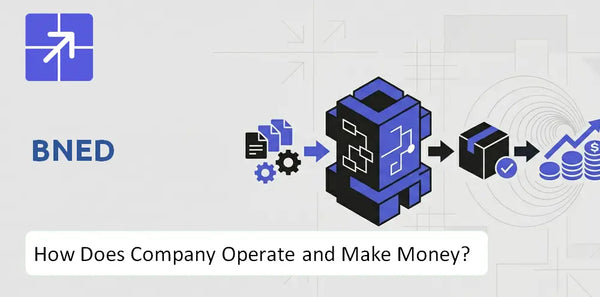
BNED increasingly embeds into university billing and partners on courseware, reducing retail volatility; see BNED BCG Matrix Analysis for product and portfolio context.
What Does BNED Actually Sell?
Barnes & Noble Education sells academic infrastructure and campus retail services: bundled course materials through equitable-access programs, campus bookstore merchandise, and digital learning platforms. Customers pay for required course materials bundled into tuition, campus-branded retail goods, and subscriptions or licenses to digital courseware and study tools.
 Core Offerings: Course Materials and Campus Retail
Barnes & Noble Education's flagship product is the First Day Complete equitable access program that delivers required print and digital course materials for a flat per-credit fee bundled into tuition. It also sells high-margin spirit merchandise, graduation products, and tech through ~650 campus bookstores, plus proprietary e-textbook and study platforms that connect publishers to students.
Main Buyers: Institutions and Students
Primary buyers are colleges and universities that contract BNED Company for campus solutions and equitable-access programs, and students who receive bundled materials or purchase bookstore merchandise and digital access. Institutional contracts drive recurring volume; individual students drive retail and ancillary sales.
Customer Value: Lower Cost and Convenience
Students get guaranteed access to required materials on day one and often lower per-student costs via bulk pricing and digital delivery; institutions get simplified material distribution and improved course completion metrics. BNED's digital platforms add learning analytics and integration with LMS systems to improve outcomes.
Differentiators: Bundling, Scale, and Campus Presence
BNED business model centres on First Day Complete equitable-access bundling, a physical footprint of ~650 campus stores for merchandising, and proprietary digital courseware – combining institutional contracting power with retail margins. That mix differentiates it from Chegg and Amazon by tying revenue to institutional partnerships and on-campus merchandising.
Mission, Vision, and Values of BNED Company
BNED SWOT Analysis
- Complete SWOT Breakdown
- Fully Customizable
- Editable in Excel & Word
- Professional Formatting
- Investor-Ready Format

How Does BNED Run Its Business Day to Day?
Barnes & Noble Education, Inc. runs day-to-day by synchronizing textbook and courseware supply with academic calendars, operating physical and virtual campus stores under long-term campus contracts, and routing digital content through campus systems and bursar billing for timely delivery and reconciliation.

Operating model: campus-centric retail and services
BNED Company operates campus retail and course materials services under multi-year contracts with colleges and universities, matching inventory and staffing to semester cycles and peak rush periods while coordinating with faculty and campus procurement offices.
Product and service delivery: physical and digital access
Students access offerings via on-campus stores, BNED e-commerce sites, and integrated digital delivery into campus Learning Management Systems (LMS); point-of-sale, online checkout, and LMS access keys drive purchases and consumption.
Production, sourcing, and content procurement
Barnes & Noble Education negotiates publisher contracts for physical textbooks, rentals, and digital courseware, sources used inventory for resale and rental programs, and licenses digital content and adaptive platforms to meet faculty-curated required materials lists.
Sales channels and distribution: omnichannel campus reach
Primary channels are college-run bookstores (brick-and-mortar), BNED online storefronts, campus direct billing via bursars, and institutional B2B contracts; rush-period logistics and ship-from-store fulfillment support peak demand.
Key assets, systems, and partnerships
Key assets include campus leases, inventory pools, proprietary point-of-sale and LMS integration tools, and publisher partnerships; BNED partnerships with colleges drive recurring revenue and campus-exclusive merchandising opportunities.
What makes the model work in practice
Operationally, timing to the academic calendar, deep faculty relationships for course material curation, and integrated billing with bursar offices enable predictable seasonal demand capture and higher campus wallet share; in 2025 BNED added B2B2C data integrations to ensure digital content delivery and billing reconciliation across LMS and university systems.
Operational metrics to watch: BNED reported that campus solutions and retail mix remain primary revenue drivers in 2025, with digital content adoption growing – management targets reducing rush fulfillment time below 48 hours and improving billing reconciliation accuracy to 99.5% for LMS-delivered courseware; see institutional client segmentation in Target Customers and Market of BNED Company.
BNED Business Model Canvas
- One-time Payment
- No Research Needed – Save Hours of Work
- Built by Experts, Trusted by Consultants
- Instant Download, Ready to Use
- 100% Editable, Fully Customizable

How Does Revenue Flow Through BNED?
Revenue flows into Barnes & Noble Education through three main channels: Retail, Wholesale, and Digital; demand is converted into cash via campus book sales, institutional contracts, and courseware subscriptions, with timing concentrated around semester start dates.
Core revenue: Campus Retail and Course Materials
Retail and textbook/course materials sales are the largest revenue source for BNED Company, driven by bookpacks, rentals, and digital courseware; this segment delivers high volume and recurring cash flow each semester. First Day Complete shifts nearly 100 percent of students into paid course material access at term start, lifting sell-through and upfront cash collection.
Additional revenue: Wholesale, Merchandising, and Services
Wholesale distribution to third-party retailers and general merchandise (campus apparel, supplies) add margins; merchandising often posts the highest profitability, with gross margins commonly above 40%. Ancillary services – adoptions, course materials management, and ancillary campus solutions – provide complementary recurring income.
Pricing and monetization: First Day Complete and mixed models
BNED business model monetizes via direct sales, rentals, subscription-style access (First Day Complete), institutional contracts, and wholesale margins; digital courseware adds licensing and subscription revenue that smooths seasonality. Textbook rentals and resales reduce cost of goods sold and increase cash turn.
What drives revenue most: adoption rates and semester timing
Revenue is highly seasonal – most cash inflows occur in Q3 and Q1, aligned with fall and spring term starts – and is driven by adoption rates and the First Day Complete enrollment conversion. Higher digital adoption increases recurring revenue and lowers returns; merchandising mix and institutional partnerships also materially affect BNED financial performance. See Growth Outlook of BNED Company for related analysis: Growth Outlook of BNED Company
BNED Marketing Mix
- Complete Marketing Mix Analysis
- Effortlessly Communicate Your Business Strategy
- Investor-Ready Format
- 100% Editable and Customizable
- Clear and Structured Layout

What Makes BNED's Model Sustainable or Fragile?
The sustainability of Barnes & Noble Education, Inc. rests on a stronger balance sheet after its 2024 – 2025 recapitalization and deep institutional integration via equitable access, yet it remains exposed to declining US college enrollment and adoption of Open Educational Resources (OER). Structural strengths include sticky campus contracts and scale; key risks are enrollment trends, OER substitution, and concentration in higher education.
Recapitalization and Institutional Moat Support the Model
The 2024 – 2025 recapitalization reduced net leverage and boosted liquidity, improving BNED Company's runway; equitable access agreements create high switching costs for universities, anchoring recurring campus revenues.
Key Assets and Capabilities That Sustain Operations
Barnes & Noble Education leverages a national campus footprint, integrated bookstore and courseware systems, and long-standing BNED partnerships with colleges to deliver bundled course materials, retail, and digital services at scale.
Dependencies and Operational Constraints
BNED business model depends on high institutional retention – management targets maintaining >95 percent retention – and continued conversion of legacy stores to equitable access; revenue concentration in higher education and exposure to textbook pricing dynamics are material constraints.
Durability Assessment for 2025/2026
Outlook for 2025/2026 is stable but demanding: the model is resilient if BNED maintains institutional retention above 95 percent, grows equitable access penetration, and offset secular declines in individual textbook sales; it is fragile if US undergraduate enrollment falls further or OER adoption accelerates.
For context on BNED Company's evolution and strategic shifts that underlie these dynamics, see History and Background of BNED Company
BNED Boston Consulting Group Matrix
- Built by Experts, Trusted by Consultants
- Structured for Consultants, Students, and Founders
- 100% Editable in Microsoft Word & Excel
- Instant Digital Download – Use Immediately
- Compatible with Mac & PC – Fully Unlocked

Related Blogs
- What Is the History of BNED Company and How Did It Evolve?
- What Is the Competitive Landscape of BNED Company and How Does It Compete?
- What Is the Growth Outlook of BNED Company and Where Is It Heading?
- How Does BNED Company Reach Customers and Turn Demand into Sales?
- What Do the Mission, Vision, and Core Values of BNED Company Reveal?
- Who Are the Core Customers in BNED Company's Target Market?
- Who Owns BNED Company Today and Who Holds Control?
Frequently Asked Questions
BNED sells academic infrastructure and campus retail services. Its offerings include bundled course materials through equitable-access programs, campus bookstore merchandise, and digital learning platforms. The company also sells subscriptions or licenses for digital courseware and study tools, with customers paying for required materials, branded retail goods, and access to digital services.
Disclaimer
All information, articles, and product details provided on this website are for general informational and educational purposes only. We do not claim any ownership over, nor do we intend to infringe upon, any trademarks, copyrights, logos, brand names, or other intellectual property mentioned or depicted on this site. Such intellectual property remains the property of its respective owners, and any references here are made solely for identification or informational purposes, without implying any affiliation, endorsement, or partnership.
We make no representations or warranties, express or implied, regarding the accuracy, completeness, or suitability of any content or products presented. Nothing on this website should be construed as legal, tax, investment, financial, medical, or other professional advice. In addition, no part of this site - including articles or product references - constitutes a solicitation, recommendation, endorsement, advertisement, or offer to buy or sell any securities, franchises, or other financial instruments, particularly in jurisdictions where such activity would be unlawful.
All content is of a general nature and may not address the specific circumstances of any individual or entity. It is not a substitute for professional advice or services. Any actions you take based on the information provided here are strictly at your own risk. You accept full responsibility for any decisions or outcomes arising from your use of this website and agree to release us from any liability in connection with your use of, or reliance upon, the content or products found herein.