
How does Barnes & Noble Education, Inc. align its sales and marketing model to capture campus demand and institutional contracts?
Barnes & Noble Education, Inc. shifted from retail to a service-led platform after its 2024 recapitalization, prioritizing institutional sales and recurring contracts to lock in campus revenue. This matters because First Day Complete adoption drives predictable margins and fewer single – term sales; in 2025 BNED reported growing institutional enrollments and stable contract renewals.
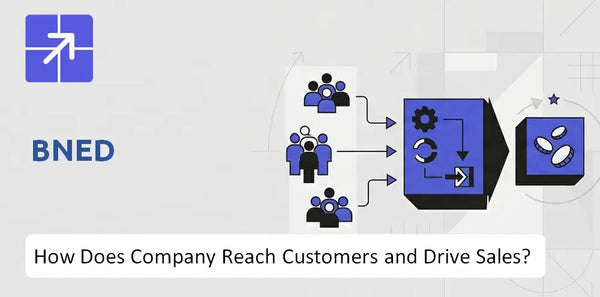
BNED routes demand via campus partnerships, direct institutional sales teams, and digital access programs; focus on contract length and implementation speed reduces churn. See product analysis: BNED BCG Matrix Analysis
Who Does BNED Want to Sell To?
Barnes & Noble Education, Inc. targets three tiers: higher-education institutions (administrators and CFOs), students (≈5,000,000 across ~700 campus stores and virtual outlets), and faculty as curricular influencers; BNED wins by tying offerings to institutional affordability and retention goals.
 Primary Institutional Buyers
University administrators and CFOs buy at scale to reduce total cost of attendance and improve retention. BNED customer acquisition targets procurement and campus retail teams with proposals showing cost-per-student savings and improved engagement metrics tied to course materials distribution and textbook rental programs.
Students as Direct Purchasers
Students form a captive B2C base of about 5,000,000; BNED uses omnichannel campus retail, targeted advertising for student segments, and loyalty programs for students to drive conversion from discovery to purchase – especially for digital course materials and rentals.
Faculty and Course Decision Makers
Faculty choices dictate demand for specific textbooks and digital materials; BNED engages faculty via adoption tools, sample digital content, and analytics-for-demand-forecasting to influence required course lists and long-term adoption rates.
Market Positioning
Barnes & Noble Education sales strategy positions BNED as an institutional partner, not a third-party vendor, emphasizing lower student costs, integrated omnichannel campus retail, and digital course materials distribution to keep institutions aligned on retention and affordability targets.
Why This Positioning Works
Universities prioritize measurable savings and student outcomes; BNED ties pricing strategies and promotional campaigns to those KPIs. Data: BNED serves ~700 campuses and leverages campus-store promotional campaigns plus e-commerce channels to improve textbook rental and purchase conversion rates and student engagement marketing.
Adjacent Segments and Upsell Paths
Adjacencies include continuing education, campus events, and faculty resource services; BNED digital textbook sales conversion strategies and Barnes & Noble Education omnichannel sales tactics focus on cross-sell of courseware, digital subscriptions, and campus merchandise to boost lifetime value.
See analysis of competitive forces and institutional partnerships in this article: Competitive Landscape of BNED Company
BNED SWOT Analysis
- Complete SWOT Breakdown
- Fully Customizable
- Editable in Excel & Word
- Professional Formatting
- Investor-Ready Format

How Does BNED Get in Front of Customers?
Barnes & Noble Education, Inc. gets in front of customers through on-campus bookstores bound by exclusive contracts and integrated digital storefronts; this omnichannel campus retail approach builds awareness, captures course-material demand, and drives sales across students, alumni, and families.

Campus Contracts as Primary Acquisition Engine
Multi-year exclusive contracts with colleges and universities grant Barnes & Noble Education local monopoly access to official campus retail, securing front-door placement for textbooks, course materials, and First Day Complete enrollment that reaches virtually every enrolled student before term start.
Digital Marketing and Online Reach
BNED uses search, paid media, email, apps, and social to drive traffic to its e-commerce platforms and course material portals; targeted advertising and email nudges during enrollment windows increase conversion for digital course materials distribution and spirit gear.
Retail Footprint and Distribution Access
On-campus stores, popup retail during peak weeks, and BNED's online storefronts plus partnerships with campus accounts and alumni offices form a distribution network that captures in-person and remote buyers for textbooks, rentals, and high-margin merchandise.
Demand Generation Tactics
First Day Complete (bundling course materials into tuition/fees) ensures 100% reach for enrolled students; seasonal campaigns around athletics and graduation, buyback programs, and targeted promotions drive spikes in spirit gear and textbook sales.
Customer Acquisition Efficiency
Exclusive campus contracts lower acquisition cost per student versus open-market channels; with First Day Complete adoption high at participating campuses, customer acquisition is effectively embedded in tuition processes, improving conversion and retention metrics.
Most Important Reach Advantage in 2025
The combination of exclusive on-campus contracts plus First Day Complete is BNED's strongest reach advantage in 2025, enabling predictable demand capture and cross-sell into apparel and digital textbook channels; see Growth Outlook of BNED Company for context.
BNED Business Model Canvas
- One-time Payment
- No Research Needed – Save Hours of Work
- Built by Experts, Trusted by Consultants
- Instant Download, Ready to Use
- 100% Editable, Fully Customizable

How Does BNED Turn Attention Into Sales?
BNED turns attention into sales by locking course material purchases at registration via the First Day Complete equitable access model and converting campus foot traffic into high-margin general merchandise through data-driven merchandising and localized inventory. These mechanics stabilize revenue and raise conversion rates across omnichannel campus retail and digital course materials distribution.
Core Sales Model: Equitable Access plus Omnichannel Retail
BNED primarily sells through institutional contracts for course materials (First Day Complete) and retail campus stores plus e-commerce. The model is partner-led for institutions and retail-led for students, blending subscription-like guaranteed sales from enrollments with transactional in-store and online purchases.
Pricing and Monetization Logic: Opt-out Access Fees and High-Margin Retail
Under First Day Complete BNED charges per-course access fees billed at registration, moving from opt-in to opt-out to capture nearly all enrolled students; this locks recurring semester revenue. Retail items (apparel, technology) are priced for >40 percent gross margin, supporting overall profitability.
Conversion and Purchase Drivers: Opt-out Enrollment and Data-Driven Merchandising
Switching to an opt-out First Day Complete model drove participation to near-universal levels heading into 2025/2026, far above the 30 to 40 percent capture typical of opt-in models; that stabilizes revenue at registration. For retail, BNED uses demand forecasting and localized assortments to convert foot traffic into sales of high-margin categories like apparel and tech.
Repeat Revenue or Customer Expansion: Renewals, Upsell, and Campus Programs
Course-access renewals recur each term via institutional agreements, creating predictable lifetime value per student. BNED expands revenue through ancillary services (courseware upgrades, rental-to-purchase paths), campus loyalty promotions, and targeted student engagement marketing to drive repeat in-store and online purchases.
Key metrics and mechanics: First Day Complete converts registration into booked sales at point of enrollment, cutting friction and boosting capture versus standard textbook opt-in; retail gross margins on apparel and technology exceed 40 percent, while institutional capture under opt-in averaged 30 to 40 percent historically. BNED leverages omnichannel campus retail and digital course materials distribution, uses analytics for demand forecasting, and runs BNED customer acquisition via campus partnerships and targeted advertising. See more on target markets in Target Customers and Market of BNED Company.
BNED Marketing Mix
- Complete Marketing Mix Analysis
- Effortlessly Communicate Your Business Strategy
- Investor-Ready Format
- 100% Editable and Customizable
- Clear and Structured Layout

How Strong Does BNED's Commercial Engine Look Going Forward?
The commercial engine at Barnes & Noble Education, Inc. looks cautiously stronger heading into 2025/2026 after the 2024 restructuring, with a healthier balance sheet and leaner cost base; key supports are equitable access adoption and high contract retention, while risks include enrollment declines and OER growth.
What Supports Future Demand
Higher penetration of First Day Complete (targeting a 60 percent adoption) creates predictable, recurring revenue; equitable access and digital course materials distribution improve cash flow visibility. The improved balance sheet and a lean cost structure from the 2024 restructuring support continued investment in BNED customer acquisition and student engagement marketing.
Channel and Marketing Effectiveness
BNED omnichannel campus retail plus e-commerce integration drives multi-touch conversions; campus store promotions and targeted advertising for student segments sustain acquisition. Consistent contract retention above 90 percent preserves revenue base, while analytics for demand forecasting improves inventory and pricing strategies.
Risks to Commercial Performance
Enrollment headwinds could reduce overall textbook demand, and accelerated Open Educational Resources adoption pressures pricing and textbook rental and purchase conversion rates. Execution risk exists in scaling First Day Complete to the target penetration and in maintaining BNED marketing channels effectiveness across digital and physical touchpoints.
The Overall Sales and Marketing Outlook
Outlook is stabilizing and cautiously optimistic: management projects Adjusted EBITDA of 45 million to 60 million dollars for fiscal 2025, reflecting defensive coverage from First Day Complete and high retention. Still, the commercial engine remains sensitive to enrollment trends and OER growth; preserving omnichannel execution and university partnerships will be key to how BNED turns student demand into purchases. Read more on Ownership and Control of BNED Company Ownership and Control of BNED Company
BNED Boston Consulting Group Matrix
- Built by Experts, Trusted by Consultants
- Structured for Consultants, Students, and Founders
- 100% Editable in Microsoft Word & Excel
- Instant Digital Download – Use Immediately
- Compatible with Mac & PC – Fully Unlocked

Related Blogs
- What Is the History of BNED Company and How Did It Evolve?
- What Is the Competitive Landscape of BNED Company and How Does It Compete?
- What Is the Growth Outlook of BNED Company and Where Is It Heading?
- How Does BNED Company Work and What Drives Its Business Model?
- What Do the Mission, Vision, and Core Values of BNED Company Reveal?
- Who Are the Core Customers in BNED Company's Target Market?
- Who Owns BNED Company Today and Who Holds Control?
Frequently Asked Questions
BNED sells to higher-education institutions, students, and faculty. Administrators and CFOs are key institutional buyers, students are direct purchasers across campus and online channels, and faculty influence which textbooks and digital materials are adopted for courses.
Disclaimer
All information, articles, and product details provided on this website are for general informational and educational purposes only. We do not claim any ownership over, nor do we intend to infringe upon, any trademarks, copyrights, logos, brand names, or other intellectual property mentioned or depicted on this site. Such intellectual property remains the property of its respective owners, and any references here are made solely for identification or informational purposes, without implying any affiliation, endorsement, or partnership.
We make no representations or warranties, express or implied, regarding the accuracy, completeness, or suitability of any content or products presented. Nothing on this website should be construed as legal, tax, investment, financial, medical, or other professional advice. In addition, no part of this site - including articles or product references - constitutes a solicitation, recommendation, endorsement, advertisement, or offer to buy or sell any securities, franchises, or other financial instruments, particularly in jurisdictions where such activity would be unlawful.
All content is of a general nature and may not address the specific circumstances of any individual or entity. It is not a substitute for professional advice or services. Any actions you take based on the information provided here are strictly at your own risk. You accept full responsibility for any decisions or outcomes arising from your use of this website and agree to release us from any liability in connection with your use of, or reliance upon, the content or products found herein.