
How does Diamondback Energy operate as a Permian Basin-focused oil producer and monetize its assets?
Diamondback Energy runs concentrated upstream oil and gas operations in the Permian Basin, using scale and technical skills to lower unit costs and maximize free cash flow. This matters because by 2025 Diamondback shifted to a value-over-volume strategy, targeting shareholder returns amid stronger oil prices and capital discipline.
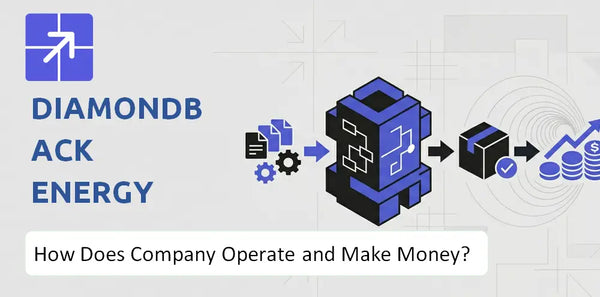
Focus on capital efficiency: optimize well productivity, lower operating costs, and allocate cash to dividends and buybacks; see strategic signals in 2025 cash-return programs and production optimization.
Diamondback Energy BCG Matrix Analysis
What Does Diamondback Energy Actually Sell?
Diamondback Energy sells crude oil, natural gas, and natural gas liquids (NGLs); customers pay for high-volume West Texas Intermediate (WTI) crude and associated hydrocarbons. Via subsidiary Viper Energy, it also monetizes mineral interests that deliver production revenue without operating costs.
 Core production: crude, gas, and NGLs
Diamondback Energy focuses on WTI-grade crude oil, associated natural gas, and NGLs from Permian Basin shale oil production. In fiscal 2025 crude sales comprised about over 85% of sales value while representing roughly half of produced volume.
Who buys it: refiners, integrators, traders
Primary buyers are refineries, integrated energy companies, and international trading houses seeking reliable WTI-grade crude and condensate. Midstream partners and local marketers also take gas and NGLs under long-term and spot contracts.
Customer value: reliability, scale, and regional quality
Customers get steady, high-volume supply from a Permian Basin operator with scale and logistics integration, lowering transportation and quality risk. Viper Energy mineral interests provide investors royalty-like cash flows without operating exposure.
Differentiators: Permian focus and integrated logistics
Diamondback Energy business model emphasizes shale oil production efficiency, acreage consolidation, and midstream access to improve realizations and margins. That operational footprint supports predictable sales volumes and easier contracting.
For detailed commercial tactics and go-to-market insight see Sales and Marketing Strategy of Diamondback Energy Company
Diamondback Energy SWOT Analysis
- Complete SWOT Breakdown
- Fully Customizable
- Editable in Excel & Word
- Professional Formatting
- Investor-Ready Format

How Does Diamondback Energy Run Its Business Day to Day?
Diamondback Energy runs day-to-day like a large-scale, high-tech oilfield operator, coordinating drilling, completions, transportation, and produced-water recycling across a contiguous Permian land base. Core systems include synchronized drilling schedules, centralized completions planning, midstream logistics, and real-time production monitoring that feed cash-flow and capital-allocation decisions.

Operating model: centralized field execution
Diamondback Energy operates a consolidated Permian footprint that lets it schedule dozens of rigs and completion crews in coordinated campaigns. Field teams, automated drilling telemetry, and a central operations center synchronize simul-frac programs and long-lateral sequencing to lower cycle times and per-well costs.
Product delivery: crude sale and midstream handoffs
Produced oil and gas move from lease gathering to owned or contracted midstream pipelines and terminals, then to refiners and NGL processors. Revenue realization depends on hub differentials, tolling agreements, and sales contracts; hedging smooths price exposure.
Production and development: long laterals and simul-fracs
Development prioritizes Wolfcamp and Spraberry benches with super-long laterals often >15,000 feet and multi-well simul-frac completions to maximize EUR per well. After the 2023 Endeavor Energy Resources merger, a larger contiguous inventory enabled optimized pad spacing and capital efficiency.
Sales channels: direct contracts and spot markets
Sales mix combines contracted offtakes, third-party marketing agreements, and spot sales at Midland/MEH hubs. Crude and gas volumes route via owned gathering and third-party pipelines; NGLs are sold to processors under fee or keep-whole arrangements.
Key assets, systems, partnerships: land, infra, tech
Key assets include a large contiguous acreage position in the Permian, owned gathering and treating plants, produced-water recycling facilities, and digital reservoir models. Strategic service-contracts with completion, drilling, and midstream partners drive execution scale and unit-cost improvements.
Why the model works: scale, repeatability, and cost control
Economies of scale from contiguous operations cut logistics and per-well costs; reproducible long-lateral designs and simul-frac sequencing raise EUR per dollar. Water recycling lowers variable costs and permits higher frac intensity while reducing freshwater sourcing needs.
Operational facts and metrics (2025): Diamondback Energy ran approximately 40 operated rigs on average in 2025 and achieved an estimated aggregate average lateral length near 12,000 – 15,000 feet on new wells; produced-water recycling handled roughly over 100 million barrels annually across its Permian system. Daily coordination manages completion spreads that can frac 6 – 12 wells concurrently on multi-well pads, improving cycle time to first production and lifting capital efficiency.
On economics: 2025 reported production averaged about 360,000 boe/d (company disclosure mix biased to crude), enabling free cash flow generation that funds buybacks and dividend policy while retaining capital for development. Cost controls target LOE (lease operating expense) and cash opex per boe in the low teens of dollars; drilling and completion (D&C) costs vary by lateral length but recent program metrics showed per-well D&C improving year-over-year by mid-single-digit percentages.
Operational risk and mitigation: daily focus includes water logistics, emissions monitoring, and downtime reduction. Water reuse reduces trucking and disposal capex, while telemetry and predictive maintenance shrink non-productive time. Hedging and marketing teams run active commodity-risk programs to protect cash flow during volatile price periods.
For context on competitive positioning and how Diamondback Energy fits in the Permian, see Competitive Landscape of Diamondback Energy Company.
Diamondback Energy Business Model Canvas
- One-time Payment
- No Research Needed – Save Hours of Work
- Built by Experts, Trusted by Consultants
- Instant Download, Ready to Use
- 100% Editable, Fully Customizable

How Does Revenue Flow Through Diamondback Energy?
Revenue for Diamondback Energy flows from selling produced hydrocarbons into midstream pipelines, with prices referenced to regional benchmarks and realized at point-of-delivery; demand converts to revenue when barrels and gas are delivered and priced against WTI Midland and the Waha Hub. Production scale, commodity prices, and cost control determine cash retained for operations, capex, and returns to investors.
Primary cash generation: oil and condensate sales
Diamondback Energy's main revenue stream is physical sales of crude oil and condensate from Permian Basin wells; in the 2025/2026 fiscal cycle pro-forma production reached roughly 850,000 BOE/day, making spot and contract sales tied to WTI Midland the largest income source.
Secondary streams: gas, NGLs, and midstream services
Natural gas and natural gas liquids (NGLs) add incremental revenue, plus fees and reimbursements from gathering and processing agreements that support Diamondback Energy operations and improve netbacks per BOE.
Pricing and monetization: market-linked sales with downside protection
Sales are monetized at delivery into regional midstream hubs; prices are benchmarked to WTI Midland and Waha Hub with active hedging to smooth receipts. The company targets a cash flow breakeven near $40/barrel to remain profitable under commodity volatility.
Largest revenue drivers: production scale and realized prices
Revenue is driven most by production volume (currently ~850,000 BOE/day pro-forma) and realized crude and gas prices after differentials; cost structure – lease operating expenses and gathering – sets margins, then disciplined capex determines free cash flow available for dividends and buybacks.
Cash flow allocation follows a set hierarchy: cover lease operating expenses and gathering costs, fund a disciplined capital expenditure program, then allocate free cash flow to a fixed-plus-variable dividend and aggressive share repurchases, reinforcing returns; for related market context see Target Customers and Market of Diamondback Energy Company.
Diamondback Energy Marketing Mix
- Complete Marketing Mix Analysis
- Effortlessly Communicate Your Business Strategy
- Investor-Ready Format
- 100% Editable and Customizable
- Clear and Structured Layout

What Makes Diamondback Energy's Model Sustainable or Fragile?
Diamondback Energy's model is sustainable thanks to a deep, high-return Tier 1 inventory and a low-cost structure, but it is fragile because all assets sit in the Permian Basin, exposing the firm to regional disruption and eventual inventory exhaustion.
Tier 1 Inventory and Low Cost Base Support Resilience
Diamondback Energy's Tier 1 inventory delivers high initial production (IP) and repeatable well economics, enabling 15+ years of high-return drilling locations and strong operating margins. The company's low cash costs per barrel and efficient well designs drive sustained free cash flow and support capital allocation to dividends, buybacks, and selective M&A.
Scale, Technical Ops, and Balance Sheet Strength
Diamondback Energy operations combine scale and technical execution: pad drilling, optimized completions, and cycle-time improvements push down well costs and boost EURs (estimated ultimate recovery). As of 2025 the company maintains a conservative leverage profile with ample liquidity, positioning it as a primary consolidator and cash-flow leader in US shale.
Permian Concentration and Infrastructure Constraints
Diamondback Energy is fully concentrated in the Permian Basin, creating exposure to regional pipeline bottlenecks, takeaway capacity limits, and local regulatory shifts. This geographic concentration increases sensitivity to differential pricing, curtailments, and any localized operational disruptions.
Durability Assessment for 2025 – 2026
For 2025 and 2026, professional judgment based on production, reserves, and cost metrics indicates Diamondback Energy's model is resilient: strong cash generation, low unit costs, and scale make it robust versus commodity swings. Still, long-term fragility lies in inventory exhaustion risk and lack of geographic diversification, which mean future resilience depends on disciplined capital allocation, M&A to renew acreage, and active commodity risk management. Read a focused outlook here: Growth Outlook of Diamondback Energy Company
Diamondback Energy Boston Consulting Group Matrix
- Built by Experts, Trusted by Consultants
- Structured for Consultants, Students, and Founders
- 100% Editable in Microsoft Word & Excel
- Instant Digital Download – Use Immediately
- Compatible with Mac & PC – Fully Unlocked

Related Blogs
- What Is the History of Diamondback Energy Company and How Did It Evolve?
- What Is the Competitive Landscape of Diamondback Energy Company and How Does It Compete?
- What Is the Growth Outlook of Diamondback Energy Company and Where Is It Heading?
- How Does Diamondback Energy Company Reach Customers and Turn Demand into Sales?
- What Do the Mission, Vision, and Core Values of Diamondback Energy Company Reveal?
- Who Are the Core Customers in Diamondback Energy Company's Target Market?
- Who Owns Diamondback Energy Company Today and Who Holds Control?
Frequently Asked Questions
Diamondback Energy sells crude oil, natural gas, and natural gas liquids. Its main value comes from WTI-grade crude from the Permian Basin, while Viper Energy helps monetize mineral interests that generate production revenue without operating costs.
Disclaimer
All information, articles, and product details provided on this website are for general informational and educational purposes only. We do not claim any ownership over, nor do we intend to infringe upon, any trademarks, copyrights, logos, brand names, or other intellectual property mentioned or depicted on this site. Such intellectual property remains the property of its respective owners, and any references here are made solely for identification or informational purposes, without implying any affiliation, endorsement, or partnership.
We make no representations or warranties, express or implied, regarding the accuracy, completeness, or suitability of any content or products presented. Nothing on this website should be construed as legal, tax, investment, financial, medical, or other professional advice. In addition, no part of this site - including articles or product references - constitutes a solicitation, recommendation, endorsement, advertisement, or offer to buy or sell any securities, franchises, or other financial instruments, particularly in jurisdictions where such activity would be unlawful.
All content is of a general nature and may not address the specific circumstances of any individual or entity. It is not a substitute for professional advice or services. Any actions you take based on the information provided here are strictly at your own risk. You accept full responsibility for any decisions or outcomes arising from your use of this website and agree to release us from any liability in connection with your use of, or reliance upon, the content or products found herein.