
How does Dycom Industries, Inc. convert telecom capex into on-the-ground fiber and tower builds?
Dycom Industries, Inc. contracts, staffs, and manages large-scale field deployments to build fiber and 5G sites, turning carrier capex into installed assets. This matters as BEAD peaks in 2026 and telecom carriers guided higher 2025 telecom infrastructure spend, signaling near-term revenue visibility for Dycom.
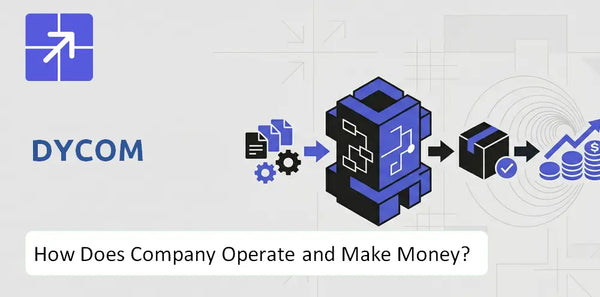
Track backlog, crew utilization, and equipment sourcing; execution speed governs margin. See project-level strategy in Dycom BCG Matrix Analysis.
What Does Dycom Actually Sell?
Dycom Industries sells turnkey telecom infrastructure services: labor, engineering, program management, and physical construction for fiber-optic and wireless networks, plus underground facility locating. Customers pay for scaled, compliant network build and maintenance capacity without carrying a large permanent construction workforce.
 Core Offerings: Network construction and technical services
Dycom provides program management, network engineering, fiber and wireless network deployment, and field construction crews. It also offers underground facility locating services that protect buried assets during excavation.
Primary Customers: Telecom and cable operators
Major buyers include AT&T, Verizon, Comcast and regional carriers that contract Dycom for large-scale buildouts and maintenance. Utility, municipal and enterprise customers use Dycom for specialized network projects too.
Customer Value: Scale, speed, and regulatory compliance
Clients receive rapid network expansion capacity, technical compliance (safety, right-of-way, permitting), and predictable project delivery. Outsourcing reduces customers' fixed labor costs and capital equipment needs.
Differentiators: Geographic reach and program management
Dycom's differentiated offering is national scale, a large skilled field workforce, and integrated program management that carriers cannot easily replicate. The company's backlog and recurring maintenance contracts create revenue visibility – Dycom reported backlog near $2.6 billion in fiscal 2025.
For context on company history and strategic moves that shaped these capabilities see History and Background of Dycom Company.
Dycom SWOT Analysis
- Complete SWOT Breakdown
- Fully Customizable
- Editable in Excel & Word
- Professional Formatting
- Investor-Ready Format

How Does Dycom Run Its Business Day to Day?
Dycom Industries runs day-to-day by dispatching thousands of technicians and a large equipment fleet through decentralized regional subsidiaries while using centralized procurement, safety, and project-management systems; project managers coordinate schedules with utility customers to execute high-volume fiber trenching, aerial line stringing, and small-cell 5G installs on tight timelines.

Operating model: decentralized field execution with centralized controls
Dycom Industries uses locally chartered subsidiaries to win permits and maintain customer relationships while central teams standardize procurement, safety, and ERP systems; day-to-day ops run on work orders fed from customer contracts and regional project managers.
Service delivery: project-based, scheduled by utility needs
Customers (telco, cable, wireless carriers, municipalities) schedule construction and maintenance projects; crews mobilize by dispatch, perform fiber and wireless builds, then close jobs through digital timesheets and QA sign-offs that feed billing.
Production and sourcing: materials and specialty equipment logistics
Daily execution depends on timely delivery of HDPE conduit, fiber-optic cable, pedestals, and aerial hardware; Dycom leverages volume purchasing and vendor contracts to manage lead times and capex for cable plows, bore rigs, and utility trucks.
Sales channels: contract-driven, backlog-fed revenue model
Revenue comes from multi-year contracts with large carriers and cable operators, supplemented by short-term service orders; project wins are funneled through regional sales teams and account managers who convert engineering proposals to field work.
Key assets and partnerships: skilled workforce and equipment fleet
Dycom relies on a workforce of thousands of field technicians, an owned and leased fleet of specialty vehicles, and supplier partnerships for fiber and conduit; centralized maintenance, safety training, and logistics maintain utilization and readiness.
What makes it work: scale, workforce productivity, and safety focus
Operational success hinges on labor productivity (crew output per week), safety metrics (TRIR and OSHA compliance), and supply-chain coordination; in 2025 Dycom reported a backlog that underpins revenue visibility and emphasizes high-volume, repeatable project execution – see Competitive Landscape of Dycom Company for context.
Dycom Business Model Canvas
- One-time Payment
- No Research Needed – Save Hours of Work
- Built by Experts, Trusted by Consultants
- Instant Download, Ready to Use
- 100% Editable, Fully Customizable

How Does Revenue Flow Through Dycom?
Revenue flows into Dycom Industries from MSAs and unit-based contracts tied to telecom capex and broadband programs; demand converts to cash as milestones or per-unit completions are billed. The company earns recurring maintenance and high-volume construction fees, converting a large backlog into steady progress billings.
Primary revenue: MSAs and unit contracts
Dycom generates most revenue under Master Service Agreements (MSAs) and unit-priced contracts with major carriers, where payments occur by milestones or per-unit work – for example, fixed price per foot of fiber or per wireless site completed. This model matters because it aligns cash flow with carrier capital expenditure cycles and government rural broadband funding.
Additional revenue: maintenance, specialty services
Secondary streams include recurring maintenance and network upgrades, specialty engineering, and pole and conduit management; these services supplement network construction contracting and lower volatility by adding repeatable service revenue. Subcontractor management and equipment rental margins also contribute.
Pricing and monetization model: progress billings & unit rates
Dycom monetizes through progress billings tied to project milestones and fixed unit pricing (per foot of fiber, per wireless site). Contracts often include pass-throughs for materials and change orders; cash conversion depends on timely milestone acceptance and carrier capex pacing.
What drives revenue most: carrier capex and broadband subsidies
Revenue is driven chiefly by major carriers' capital expenditure cycles, 5G rollouts, and government-subsidized rural broadband initiatives; as of the 2025/2026 fiscal cycle Dycom Industries derives over 90% of revenue from telecommunications. A total backlog entering 2026 near $7.2 billion converts into revenue via progress billings focused on high-volume fiber and wireless deployments.
See related analysis on Dycom sales strategy: Sales and Marketing Strategy of Dycom Company
Dycom Marketing Mix
- Complete Marketing Mix Analysis
- Effortlessly Communicate Your Business Strategy
- Investor-Ready Format
- 100% Editable and Customizable
- Clear and Structured Layout

What Makes Dycom's Model Sustainable or Fragile?
Dycom Industries' model is sustained by long-term fiber-to-the-home and 5G densification demand plus non-discretionary federal broadband funding, while fragile points include skilled labor shortages, labor-driven margin pressure, and high customer concentration. Structural strengths are high entry barriers and backlog visibility; risks are carrier capex swings and rising labor inflation.
What Supports the Model
Multi – decade transitions to fiber and 5G create sustained demand for telecom infrastructure services and network construction contracting. Federal broadband programs (e.g., IIJA/BEAD funding) add multi – year revenue visibility and reduce short – term capex cyclicality for Dycom Industries.
Key Assets or Capabilities
Specialized equipment fleet, national field operations, and long-standing carrier/customer relationships create scale advantages in fiber and wireless network deployment. Backlog and repeat contracts anchor Dycom revenue streams and service offerings explained to telecom and cable operators.
Dependencies or Constraints
Top – five customer concentration frequently exceeds 65% of revenue, creating outsized exposure to a few carriers' capex decisions. The subcontractor and labor model depends on skilled technicians; labor inflation and shortages directly compress operating margins, which historically hover between 6% and 9%.
How Durable the Model Looks
For 2025/2026 the model is positioned in strength due to unprecedented visibility from government – funded broadband projects and sizable backlog, so Dycom's capital expenditure strategy and equipment investments are justified. Still, sudden carrier capex cuts or macro labor cost shocks could quickly make the model fragile; monitor backlog conversion rates and field wage inflation closely and see Target Customers and Market of Dycom Company for customer detail.
Dycom Boston Consulting Group Matrix
- Built by Experts, Trusted by Consultants
- Structured for Consultants, Students, and Founders
- 100% Editable in Microsoft Word & Excel
- Instant Digital Download – Use Immediately
- Compatible with Mac & PC – Fully Unlocked

Related Blogs
- What Is the History of Dycom Company and How Did It Evolve?
- What Is the Competitive Landscape of Dycom Company and How Does It Compete?
- What Is the Growth Outlook of Dycom Company and Where Is It Heading?
- How Does Dycom Company Reach Customers and Turn Demand into Sales?
- What Do the Mission, Vision, and Core Values of Dycom Company Reveal?
- Who Are the Core Customers in Dycom Company's Target Market?
- Who Owns Dycom Company Today and Who Holds Control?
Frequently Asked Questions
Dycom sells turnkey telecom infrastructure services. That includes labor, engineering, program management, physical construction for fiber-optic and wireless networks, and underground facility locating. Customers use Dycom to get scaled, compliant network build and maintenance capacity without maintaining a large permanent construction workforce.
Disclaimer
All information, articles, and product details provided on this website are for general informational and educational purposes only. We do not claim any ownership over, nor do we intend to infringe upon, any trademarks, copyrights, logos, brand names, or other intellectual property mentioned or depicted on this site. Such intellectual property remains the property of its respective owners, and any references here are made solely for identification or informational purposes, without implying any affiliation, endorsement, or partnership.
We make no representations or warranties, express or implied, regarding the accuracy, completeness, or suitability of any content or products presented. Nothing on this website should be construed as legal, tax, investment, financial, medical, or other professional advice. In addition, no part of this site - including articles or product references - constitutes a solicitation, recommendation, endorsement, advertisement, or offer to buy or sell any securities, franchises, or other financial instruments, particularly in jurisdictions where such activity would be unlawful.
All content is of a general nature and may not address the specific circumstances of any individual or entity. It is not a substitute for professional advice or services. Any actions you take based on the information provided here are strictly at your own risk. You accept full responsibility for any decisions or outcomes arising from your use of this website and agree to release us from any liability in connection with your use of, or reliance upon, the content or products found herein.