
How does Equifax operate as a data infrastructure business and what drives its revenue streams?
Equifax sells credit, employment, and identity data plus analytics to lenders, employers, and platforms; its shift to cloud-native analytics and proprietary workforce signals in 2025 cut latency and broaden cross-sell. This matters because higher-margin analytics reduce sensitivity to rate cycles and boost recurring revenue; see Equifax BCG Matrix Analysis for product mapping.
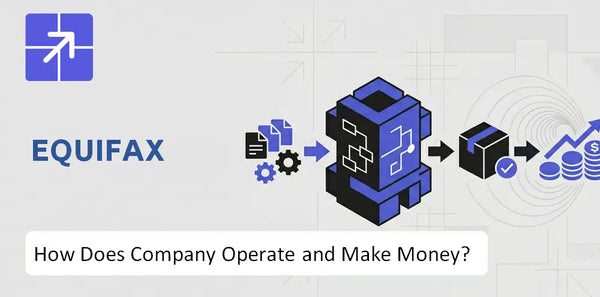
Equifax now monetizes the same datasets across lending, fraud, and HR markets; growth hinges on API adoption and subscription services, not just report pulls.
What Does Equifax Actually Sell?
Equifax sells decision-grade intelligence: credit reports, risk scores, identity and fraud tools, workforce employment data (The Work Number), and consumer credit monitoring. Customers pay for real-time certainty to automate lending, hiring, fraud prevention, and customer segmentation.
 Core offerings: decision-grade data and services
Equifax business model centers on large proprietary datasets, analytics, and APIs that deliver credit reports, risk scores, The Work Number employment verifications, identity verification, fraud prevention, and consumer credit monitoring.
Main buyer groups
Buyers include banks and lenders (for credit reporting and risk scoring), employers and HR platforms (The Work Number), enterprises (fraud, identity, marketing segments), and consumers (identity protection and monitoring).
Value delivered: certainty and automation
Clients gain faster, more consistent decisions: lenders reduce default risk, employers verify income instantly, and retailers cut fraud losses. Equifax converts data into actionable signals that improve approval accuracy and operational efficiency.
Competitive differentiators
The Work Number is a unique workforce dataset; Equifax combines breadth of consumer files, proprietary scoring models, and API delivery. Scale, historical depth, and integrated analytics make its offerings hard to replicate, supporting recurring revenue streams and high-margin data services.
Equifax generated significant 2025 revenue from services to financial institutions and workforce solutions; lenders rely on Equifax credit reporting and risk analytics for loan approvals, while enterprises buy identity protection and fraud tools. See market coverage and buyer segments in Target Customers and Market of Equifax Company.
Equifax SWOT Analysis
- Complete SWOT Breakdown
- Fully Customizable
- Editable in Excel & Word
- Professional Formatting
- Investor-Ready Format

How Does Equifax Run Its Business Day to Day?
Equifax runs as a continuous data refinery: it ingests billions of records daily from banks, utilities, and over 670,000 employers, normalizes and analyzes them in a fully native cloud platform completed in 2024 – 2025, and delivers scores and insights to customers via APIs and portals in milliseconds.

Operating Model: continuous data refinery
Equifax business model centers on real-time ingestion, normalization, and enrichment of third-party data. Data flows from lenders, utilities, and payroll providers into the Equifax Cloud, then through ML/AI pipelines to produce credit reporting, risk analytics, and identity products.
Product Delivery: API-first, low-latency access
Customers – banks, fintechs, employers, and consumers – access services via RESTful APIs, SDKs, or web portals. Typical transactions (credit score, identity check, income verification) return in milliseconds, supporting high-volume loan origination and hiring workflows.
Production & Development: cloud-native pipelines
Development runs CI/CD on the Equifax Cloud completed between 2024 and 2025, replacing legacy stacks. Teams deploy models and feature updates continuously; data engineers maintain ETL and normalization layers that process billions of points daily.
Sales Channels: direct B2B and platform integrations
Main channels include enterprise sales to banks and creditors, partnerships with fintechs and payroll providers, and consumer subscription sales for credit monitoring and identity protection. APIs and SDKs enable embedded workflows for lenders and recruiters.
Key Assets & Partnerships: data feeds and cloud infra
Critical assets are proprietary data stores, ML models, and the Equifax Cloud; key partners include financial institutions, utility firms, and over 670,000 employers supplying payroll data. These relationships underpin Equifax data services and identity protection offerings.
Why it works: scale, latency, and predictive analytics
The model scales because each additional data feed improves predictive power; low-latency API delivery keeps customers sticky; proprietary ML increases accuracy for underwriting and fraud detection, driving recurring revenue from analytics and credit reporting products.
Key day-to-day metrics: ingestion of billions of records per month, servicing millions of API calls daily, and leveraging cloud migration completed in 2025 to reduce latency and time-to-market for new products. For commercial context on go-to-market and customer acquisition, see Sales and Marketing Strategy of Equifax Company
Equifax Business Model Canvas
- One-time Payment
- No Research Needed – Save Hours of Work
- Built by Experts, Trusted by Consultants
- Instant Download, Ready to Use
- 100% Editable, Fully Customizable

How Does Revenue Flow Through Equifax?
Revenue flows through Equifax mainly via transactional fees and subscriptions: per-verification charges and credit-file pulls convert demand from lenders, employers, and governments into recurring cash. Fixed database costs and repeat sales of records create high incremental margins and predictable cash flow.
Workforce verifications as the primary revenue engine
Equifax Workforce Solutions (EWS) became the largest growth driver in the 2025 – 2026 fiscal cycle, accounting for roughly 45 percent of top-line growth through per-verification fees from mortgage lenders, government agencies, and background-check vendors.
Credit-file pulls and US Information Solutions
The US Information Solutions (USIS) segment produces revenue each time a bank or creditor pulls a credit file; this transactional model underpins Equifax credit reporting and the Equifax business model for lenders and creditors.
Subscription, APIs, and per-use pricing
Equifax monetizes demand via subscriptions, API usage fees, per-record verification charges, and licensing of analytics; credit monitoring services pricing and identity protection plans add recurring revenue alongside transactional sales.
What most strongly drives revenue
Volume of verification requests and credit-file pulls drives revenue most; with ~75 percent of revenue now from non-mortgage sources, diversification across commercial data services, identity protection, and analytics reduces exposure to mortgage cycles.
Because database maintenance costs are largely fixed, every additional sale of a captured record carries very high incremental margin; Equifax reported adjusted EBITDA margins in the 33 percent to 35 percent range in recent filings, reflecting efficient monetization of stored consumer and commercial data.
See how Equifax fits into the competitive landscape in this analysis: Competitive Landscape of Equifax Company
Equifax Marketing Mix
- Complete Marketing Mix Analysis
- Effortlessly Communicate Your Business Strategy
- Investor-Ready Format
- 100% Editable and Customizable
- Clear and Structured Layout

What Makes Equifax's Model Sustainable or Fragile?
Equifax's model is sustainable due to a deep proprietary data moat and cloud-native infrastructure, but fragile from cyber risk and regulatory pressure. Structural strengths include unique employment and credit data; key dependencies are data security, labor-market health, and compliance that could disrupt revenue if breached or re-regulated.
Proprietary data moat underpins recurring revenue
Equifax business model relies on exclusive datasets – including 172 million unique employment records – and broad credit files that power credit reporting, analytics, and identity protection services. These datasets give pricing power for subscription and API services to lenders and creditors, sustaining predictable revenue streams.
Cloud-native platform and analytics scale
How Equifax works shifted toward cloud-native operations, improving processing speed and lowering marginal costs for data services and Equifax API services for financial institutions. Investment in analytics and machine learning strengthens commercial product differentiation in risk management and marketing use cases.
Concentration and compliance dependencies
Key dependencies include sustained access to consumer and employment data feeds, continued buy-in from large lenders, and favorable regulatory treatment. Equifax revenue streams are sensitive to legislation on data portability, privacy, or restrictions on how credit reporting is monetized.
Cybersecurity risk and reputational fragility
Cyber risk remains the principal fragility: a major breach would hit consumer trust, invite fines from bodies like the Consumer Financial Protection Bureau (CFPB), and reduce uptake of Equifax credit monitoring services pricing tiers. Post-2017 reforms improved controls, but exposure persists.
Market and macro sensitivity
Equifax business model for lenders and creditors ties revenue to lending activity and employment trends; weaker labor markets or lower credit origination volumes can reduce demand for credit reporting and commercial analytics. Valuation in 2025/2026 remains sensitive to macro cycles.
Durability assessment for 2025/2026
In 2025/2026 the professional judgment is that Equifax is a robust, technology-led business with strong pricing power and scalable cloud infrastructure, but still exposed to cybersecurity incidents and regulatory shifts that could materially disrupt revenues from Equifax credit reporting, Equifax data services, and identity protection. See Ownership and Control of Equifax Company for related governance context: Ownership and Control of Equifax Company
Equifax Boston Consulting Group Matrix
- Built by Experts, Trusted by Consultants
- Structured for Consultants, Students, and Founders
- 100% Editable in Microsoft Word & Excel
- Instant Digital Download – Use Immediately
- Compatible with Mac & PC – Fully Unlocked

Related Blogs
- What Is the History of Equifax Company and How Did It Evolve?
- What Is the Competitive Landscape of Equifax Company and How Does It Compete?
- What Is the Growth Outlook of Equifax Company and Where Is It Heading?
- How Does Equifax Company Reach Customers and Turn Demand into Sales?
- What Do the Mission, Vision, and Core Values of Equifax Company Reveal?
- Who Are the Core Customers in Equifax Company's Target Market?
- Who Owns Equifax Company Today and Who Holds Control?
Frequently Asked Questions
Equifax sells decision-grade intelligence such as credit reports, risk scores, identity and fraud tools, workforce employment data through The Work Number, and consumer credit monitoring. Customers pay for fast, reliable signals that help automate lending, hiring, fraud prevention, and customer segmentation.
Disclaimer
All information, articles, and product details provided on this website are for general informational and educational purposes only. We do not claim any ownership over, nor do we intend to infringe upon, any trademarks, copyrights, logos, brand names, or other intellectual property mentioned or depicted on this site. Such intellectual property remains the property of its respective owners, and any references here are made solely for identification or informational purposes, without implying any affiliation, endorsement, or partnership.
We make no representations or warranties, express or implied, regarding the accuracy, completeness, or suitability of any content or products presented. Nothing on this website should be construed as legal, tax, investment, financial, medical, or other professional advice. In addition, no part of this site - including articles or product references - constitutes a solicitation, recommendation, endorsement, advertisement, or offer to buy or sell any securities, franchises, or other financial instruments, particularly in jurisdictions where such activity would be unlawful.
All content is of a general nature and may not address the specific circumstances of any individual or entity. It is not a substitute for professional advice or services. Any actions you take based on the information provided here are strictly at your own risk. You accept full responsibility for any decisions or outcomes arising from your use of this website and agree to release us from any liability in connection with your use of, or reliance upon, the content or products found herein.