
How does Fossil Group operate as a branded accessories and licensing business?
Fossil Group sells watches and accessories via owned brands, licensed fashion partnerships, and wholesale plus direct retail. This matters because 2025 revenue mix shifted toward direct-to-consumer and licensed royalties, reflecting recovery from smartwatch disruption and cost cuts announced in 2024 – 2025.
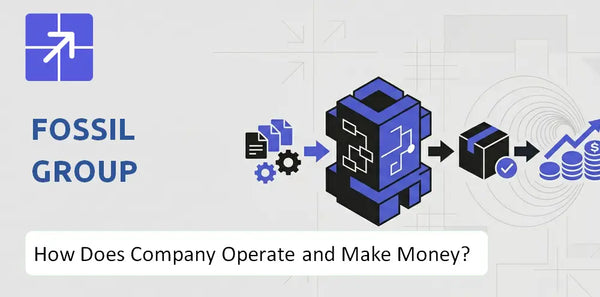
Focus on margin drivers: product mix, licensing income, and lower SG&A after 2025 restructuring. Track watch analog sales and license renewals as immediate signals. Fossil Group BCG Matrix Analysis
What Does Fossil Group Actually Sell?
Fossil Group sells fashion accessories – primarily traditional analog watches, jewelry, and leather goods – focused on design and brand prestige at accessible luxury prices; customers pay for style, craftsmanship, and branded status rather than cutting – edge tech.
 Core product mix
Fossil Group business model centers on analog watches, fine and fashion jewelry, and leather accessories across owned brands (Fossil, Skagen) and licensed brands (Michael Kors, Emporio Armani, Diesel). The company exited high-volume smartwatch competition and refocused on higher-margin design-led categories.
Who buys it
Primary buyers are style-conscious consumers seeking accessible luxury at price points typically between $100 and $500, plus gift buyers and wholesale partners (department stores, specialty retailers) and growing DTC (direct-to-consumer) e-commerce shoppers.
Customer value
Customers get recognizable design, perceived brand prestige, and reliable craftsmanship; jewelry's rising share in 2025 improves margins and inventory velocity, supporting higher gross margins versus traditional timepieces.
Why it stands out
Fossil Group stands out via a multi-brand licensing strategy that pairs in-house design with partner brands to scale distribution and royalties; combined retail, wholesale, and e-commerce channels plus a supplier network keep costs competitive and speed to market fast. See Growth Outlook of Fossil Group Company for context.
Fossil Group SWOT Analysis
- Complete SWOT Breakdown
- Fully Customizable
- Editable in Excel & Word
- Professional Formatting
- Investor-Ready Format

How Does Fossil Group Run Its Business Day to Day?
Fossil Group runs daily on a global design-to-distribution engine: in-house design and brand management feed outsourced Asian manufacturing and a logistics hub that supplies wholesale partners and direct-to-consumer channels; operations focus on inventory, margin protection, and the Transform and Grow consolidation of retail footprint.

Operating model: integrated design, outsourced production
Design, product planning, and brand strategy are centralized; manufacturing is largely outsourced to third-party suppliers in Asia to keep fixed costs low. Daily work centers on merchandising, inventory forecasting, and executing the Transform and Grow strategy that reduced global retail leases and simplified distribution.
Product delivery: dual-channel fulfillment
Products flow from Asian factories into regional distribution centers and then to department stores, specialty retailers, company e-commerce, and outlet stores. Retail orders, e-commerce fulfillment, and replenishment runs are scheduled daily to meet demand spikes and protect margins.
Production and sourcing: third-party manufacturing network
Fossil Group sources most finished goods from contract manufacturers in China, Vietnam, and Southeast Asia; in-house teams manage specs, quality control, and supplier relationships. Sourcing cadence aligns with seasonal collections and licensing agreements that account for a significant portion of product mix and royalties.
Sales channels: wholesale plus DTC
The company operates a global wholesale network to department stores and specialty retailers alongside DTC channels: e-commerce sites and company-owned outlets. Daily tracking of sell-through and channel margin helps decide allocation between wholesale and promotional DTC markdowns.
Key assets and systems: logistics, IT, and licenses
Critical assets include regional distribution centers, proprietary e-commerce platforms, ERP and inventory-management systems, and licensing contracts with fashion brands. Partnerships with tech firms for wearables and supplier networks underpin product diversification and timing.
Practical mechanics that make it work
Daily inventory monitoring prevents excess stock and heavy discounting that can harm brand equity; cadence of product launches and licensing renewals keeps SKU mix fresh. The Transform and Grow strategy cut store counts and lowered operating lease expense, improving operating leverage and cash flow.
Key daily metrics: sell-through rate, days inventory outstanding (DIO), channel margin, and licensed-royalty income; in fiscal 2025 Fossil Group reported global net revenue of $2.1 billion, with DTC and e-commerce growth outpacing wholesale and licensing contributing materially to margins. For operating detail on marketing and channel tactics see Sales and Marketing Strategy of Fossil Group Company
Fossil Group Business Model Canvas
- One-time Payment
- No Research Needed – Save Hours of Work
- Built by Experts, Trusted by Consultants
- Instant Download, Ready to Use
- 100% Editable, Fully Customizable

How Does Revenue Flow Through Fossil Group?
Revenue flows into Fossil Group through wholesale orders to retailers and direct-to-consumer (DTC) sales via owned stores and e-commerce; demand for watches, wearables, and licensed fashion accessories becomes reported net sales once goods ship or customer payments settle. In fiscal 2025 net sales were about 1.15 billion dollars, with wholesale still largest but DTC growing faster and carrying higher margins.
Wholesale: Core Revenue Engine
Wholesale sales to department stores, specialty retailers, and international distributors account for the biggest share of Fossil Group business model revenue, supplying volume and predictable reorder cycles. Wholesale remains critical for geographic reach even as the company shifts toward higher-margin channels.
Direct-to-Consumer and Licensed Brands
DTC via e-commerce and owned retail grows faster and boosts gross margin; licensed brand product sales (fashion labels) add revenue but carry royalty costs. Licensing revenue is significant in Fossil revenue streams but typically nets reduced contribution after royalties of 10 – 15% of related net sales.
Pricing and Monetization: Markup and Royalties
Fossil Group works on a product-markup model: buy or manufacture at low unit cost and sell at retail prices that target a gross margin above 50%. For licensed lines the company pays brand owners royalties (about 10 – 15% of net sales), which reduces net take from those SKUs.
What Most Strongly Drives Revenue
Volume in wholesale, higher-margin DTC mix, product assortment (smartwatches vs. traditional watches), and international distribution drive sales; margin flow-through depends on maintaining gross margins > 50% and cutting fixed operating costs to convert revenue to operating income. See additional context in this analysis on Ownership and Control of Fossil Group Company: Ownership and Control of Fossil Group Company
Fossil Group Marketing Mix
- Complete Marketing Mix Analysis
- Effortlessly Communicate Your Business Strategy
- Investor-Ready Format
- 100% Editable and Customizable
- Clear and Structured Layout

What Makes Fossil Group's Model Sustainable or Fragile?
Fossil Group's model is sustainable where fashion watches and jewelry retain cultural value and where cost cuts from the Transform and Grow program improve cash flow; it is fragile due to licensing concentration, wholesale channel decline, and limited growth in core analog watches. Structural strengths include diversified brands and lower break-even; key risks are license renewals and department store exposure.
What Supports the Model
The primary support is a diversified Fossil Group business model that combines owned labels and licensed fashion brands, preserving relevance in style-driven categories. The Transform and Grow initiative removed over $300,000,000 of annualized costs, lowering the break-even point and converting the company into a leaner, cash-flow-focused operator.
Key Assets or Capabilities
Key assets include multi-brand design and marketing teams, established global wholesale and DTC channels, and a supplier network for watches and jewelry. Fossil Group company structure supports flexible SKU management and an e-commerce push that helps offset retail softness.
Dependencies or Constraints
The business depends heavily on licensed brands for a meaningful share of Fossil revenue streams; loss of a major license such as Michael Kors would remove a significant revenue pillar. Continued erosion of department stores pressures wholesale volumes, and smartwatch competition limits growth in wearables despite partnerships with tech firms.
How Durable the Model Looks
For 2025/2026 professional judgment: Fossil Group is in stabilization, not growth. It looks more resilient on margins and cash conversion after cost cuts, yet exposed on top-line risks from license concentration and wholesale declines; jewelry and core fashion watches must sustain revenue while digital wearables scale slowly. Read a market context piece here: Competitive Landscape of Fossil Group Company
Fossil Group Boston Consulting Group Matrix
- Built by Experts, Trusted by Consultants
- Structured for Consultants, Students, and Founders
- 100% Editable in Microsoft Word & Excel
- Instant Digital Download – Use Immediately
- Compatible with Mac & PC – Fully Unlocked

Related Blogs
- What Is the History of Fossil Group Company and How Did It Evolve?
- What Is the Competitive Landscape of Fossil Group Company and How Does It Compete?
- What Is the Growth Outlook of Fossil Group Company and Where Is It Heading?
- How Does Fossil Group Company Reach Customers and Turn Demand into Sales?
- What Do the Mission, Vision, and Core Values of Fossil Group Company Reveal?
- Who Are the Core Customers in Fossil Group Company's Target Market?
- Who Owns Fossil Group Company Today and Who Holds Control?
Frequently Asked Questions
Fossil Group sells fashion accessories focused on design and brand prestige. Its core mix includes traditional analog watches, jewelry, and leather goods across owned and licensed brands. The company has moved away from high-volume smartwatch competition and now emphasizes higher-margin, design-led categories.
Disclaimer
All information, articles, and product details provided on this website are for general informational and educational purposes only. We do not claim any ownership over, nor do we intend to infringe upon, any trademarks, copyrights, logos, brand names, or other intellectual property mentioned or depicted on this site. Such intellectual property remains the property of its respective owners, and any references here are made solely for identification or informational purposes, without implying any affiliation, endorsement, or partnership.
We make no representations or warranties, express or implied, regarding the accuracy, completeness, or suitability of any content or products presented. Nothing on this website should be construed as legal, tax, investment, financial, medical, or other professional advice. In addition, no part of this site - including articles or product references - constitutes a solicitation, recommendation, endorsement, advertisement, or offer to buy or sell any securities, franchises, or other financial instruments, particularly in jurisdictions where such activity would be unlawful.
All content is of a general nature and may not address the specific circumstances of any individual or entity. It is not a substitute for professional advice or services. Any actions you take based on the information provided here are strictly at your own risk. You accept full responsibility for any decisions or outcomes arising from your use of this website and agree to release us from any liability in connection with your use of, or reliance upon, the content or products found herein.