
How does Global Partners LP move fuel from terminal to pump and monetize each step?
Global Partners LP runs terminals, transportation, storage, and retail fuel sites across the US Northeast, capturing margins from logistics and retail spreads. This matters because in 2025 the firm's pivot toward renewable diesel and ethanol blending raised wholesale throughput by 12% year-over-year.
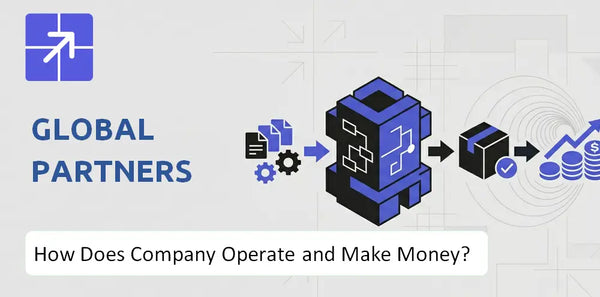
Focus on terminal capacity, retail footprint, and fuel mix; these drive cash flow and resilience. See product-level strategic framing in Global Partners BCG Matrix Analysis.
What Does Global Partners Actually Sell?
Global Partners LP sells fuel supply, storage capacity, and consumer convenience: wholesale refined and renewable fuels via terminals, commercial energy contracts for industrial/government users, and retail fuel plus backcourt food and coffee at ~1,700 sites.
 Core products and channels
Global Partners company operates three revenue channels: terminal-based wholesale fuel and renewable fuels (storage > 9,000,000 barrels), commercial energy sales (heating oil, residual fuels) to large customers, and retail fuel plus backcourt merchandise at ~1,700 locations under proprietary brands such as Alltown Fresh.
Who buys it
Buyers include third-party distributors and resellers purchasing wholesale access, industrial firms and government agencies contracting commercial energy, and retail consumers who purchase fuel, fresh food, and premium coffee at convenience sites.
Customer value delivered
Customers pay for reliability, logistics scale, and convenience: stable supply from an integrated terminal network, bulk commercial pricing and delivery services, and higher-margin convenience offerings that increase basket size and frequency at retail sites.
Why this offering stands out
Global Partners business model pairs large terminal storage and logistics (supporting Global Partners supply chain and wholesale fuel pricing strategy) with retail execution – Alltown Fresh boosts margin per site – so the firm captures income from commodity flows and convenience-store operations simultaneously; see Mission, Vision, and Values of Global Partners Company for context.
Global Partners SWOT Analysis
- Complete SWOT Breakdown
- Fully Customizable
- Editable in Excel & Word
- Professional Formatting
- Investor-Ready Format

How Does Global Partners Run Its Business Day to Day?
Global Partners LP runs daily by sourcing fuel from refiners, moving it through pipelines, barges, and rail to 25+ bulk terminals, and delivering to retail sites and wholesale customers while hedging price risk and optimizing store-level merchandising.

Operating model: vertically integrated fuel distribution
Global Partners company combines supply, storage, transportation, and retail. Traders manage procurement and hedges; logistics teams run terminals and scheduling; retail ops focus on store execution and non-fuel margins.
Product delivery: terminals to pumps and wholesale
Customers buy at >1,000 retail sites or wholesale accounts served from >25 bulk terminals; daily deliveries use bulk trucks and direct pipeline or barge transfers to meet demand and maintain rack supply.
Sourcing and production: refinery purchases and supply contracts
Fuel is sourced via contracts with refiners and spot markets; inventory is rotated through terminals. In 2025, procurement teams actively hedge crack spread exposure to protect distribution margin.
Sales channels: retail, wholesale, and commercial
Revenue streams flow from retail fuel sales, convenience store non-fuel sales, and wholesale fuel contracts. Retail and wholesale pricing align to terminal racks and hedged cost bases.
Key assets and systems: terminals, fleet, and trading desk
Core assets are >25 bulk terminals, wholesale racks, transportation fleet, and a trading/hedging platform. Strategic supplier relationships and technology for inventory visibility enable scale.
What makes it work: margin capture and retail mix
Daily margin management relies on hedging to stabilize cost of inventory and on boosting non-fuel sales, which in 2025 contribute a material portion of retail net contribution; tight logistics lower stockouts and shrink.
For customer segments and market positioning see Target Customers and Market of Global Partners Company
Global Partners Business Model Canvas
- One-time Payment
- No Research Needed – Save Hours of Work
- Built by Experts, Trusted by Consultants
- Instant Download, Ready to Use
- 100% Editable, Fully Customizable

How Does Revenue Flow Through Global Partners?
Revenue flows primarily from fuel throughput and in-store sales, converting gallons moved into cash via per-gallon margins and retail merchandise profits; demand for transportation fuels becomes revenue through wholesale markups, station sales, and fees across the supply chain.
Fuel throughput and retail margin
Global Partners company earns most revenue in its Gasoline Distribution and Station Operations (GDSO) by selling fuel volumes and high-margin convenience store items. Fuel margins in 2025 generally range between 30 and 40 cents per gallon, while merchandise margins typically exceed 30%, making retail add-ons a material profit driver.
Wholesale, commercial and throughput fees
Wholesale and Commercial segments generate revenue via bulk fuel markups and throughput fees tied to terminal and logistics usage. These segments monetize large-volume deliveries where small per-gallon markups scale into significant top-line dollars through the Global Partners fuel distribution network.
MLP structure and monetization model
As an MLP, Global Partners business model prioritizes converting operating cash into Distributable Cash Flow (DCF) and distributions. Monetization is volume-driven: sales revenue plus markups and convenience-store margins, with logistics, terminal fees, and commercial contracts adding predictable service fees.
Primary revenue drivers
What drives revenue most is throughput volume and cents-per-gallon (CPG) margins rather than crude price alone; scale pushes annual EBITDA toward the $450 million to $500 million range as of early 2026 by converting high-volume liquid throughput into steady distributions for unitholders. See further detail on Ownership and Control of Global Partners Company Ownership and Control of Global Partners Company.
Global Partners Marketing Mix
- Complete Marketing Mix Analysis
- Effortlessly Communicate Your Business Strategy
- Investor-Ready Format
- 100% Editable and Customizable
- Clear and Structured Layout

What Makes Global Partners's Model Sustainable or Fragile?
Global Partners company combines a tangible moat of terminals and distribution infrastructure with a retail pivot to higher-margin foodservice, but it is concentrated in New England/New York and exposed to EV adoption and regional regulation, creating both durable cash flows and structural fragility.
Physical-asset moat supports operating leverage
Owning and operating coastal terminals and a dense fuel distribution network makes it hard for competitors to replicate reach in the Northeast; high terminal utilization in 2025 lifted throughput and margin capture. This fixed-asset base underpins Global Partners business model and sustains retail and wholesale operations revenue streams.
Renewables pivot reduces transition risk
Shifting supply to renewable diesel and ethanol blending positions the company to meet 2026 environmental mandates; blending and higher-margin diesel help stabilize Global Partners revenue streams and de-risk commodity exposure in the supply chain.
Geographic concentration and regulatory dependence
Operations are heavily concentrated in New England and New York, so regional GDP swings, seasonal demand shifts, and state-level carbon or fuel policies materially affect cash flow. Terminal siting limits and local permitting constraints cap expansion options for the Global Partners fuel distribution network.
Durability outlook for 2025 – 2026
Professional judgment using 2025 data shows resilience: high terminal utilization, successful integration of recent acquisitions, and growth in convenience store operations revenue model via foodservice conversions. Still, long-term durability depends on converting sites to multi-fuel, sustaining wholesale fuel pricing strategy margins, and offsetting EV-driven gasoline demand declines.
Key metrics and risk signals: in 2025 Global Partners LP maintained elevated terminal throughput and reported improved adjusted margins on blended fuels; return drivers include retail foodservice rollouts and blending economics, while primary risks are regional demand erosion, regulatory changes, and execution of acquisitions strategy and impact – see more context in History and Background of Global Partners Company.
Global Partners Boston Consulting Group Matrix
- Built by Experts, Trusted by Consultants
- Structured for Consultants, Students, and Founders
- 100% Editable in Microsoft Word & Excel
- Instant Digital Download – Use Immediately
- Compatible with Mac & PC – Fully Unlocked

Related Blogs
- What Is the History of Global Partners Company and How Did It Evolve?
- What Is the Competitive Landscape of Global Partners Company and How Does It Compete?
- What Is the Growth Outlook of Global Partners Company and Where Is It Heading?
- How Does Global Partners Company Reach Customers and Turn Demand into Sales?
- What Do the Mission, Vision, and Core Values of Global Partners Company Reveal?
- Who Are the Core Customers in Global Partners Company's Target Market?
- Who Owns Global Partners Company Today and Who Holds Control?
Frequently Asked Questions
Global Partners sells fuel supply, storage capacity, and consumer convenience. Its business includes wholesale refined and renewable fuels through terminals, commercial energy contracts for large users, and retail fuel plus food and coffee at convenience sites. The company serves distributors, industrial and government buyers, and everyday retail customers.
Disclaimer
All information, articles, and product details provided on this website are for general informational and educational purposes only. We do not claim any ownership over, nor do we intend to infringe upon, any trademarks, copyrights, logos, brand names, or other intellectual property mentioned or depicted on this site. Such intellectual property remains the property of its respective owners, and any references here are made solely for identification or informational purposes, without implying any affiliation, endorsement, or partnership.
We make no representations or warranties, express or implied, regarding the accuracy, completeness, or suitability of any content or products presented. Nothing on this website should be construed as legal, tax, investment, financial, medical, or other professional advice. In addition, no part of this site - including articles or product references - constitutes a solicitation, recommendation, endorsement, advertisement, or offer to buy or sell any securities, franchises, or other financial instruments, particularly in jurisdictions where such activity would be unlawful.
All content is of a general nature and may not address the specific circumstances of any individual or entity. It is not a substitute for professional advice or services. Any actions you take based on the information provided here are strictly at your own risk. You accept full responsibility for any decisions or outcomes arising from your use of this website and agree to release us from any liability in connection with your use of, or reliance upon, the content or products found herein.