
How does Global Partners LP's sales and marketing model convert Northeast terminal control into retail sales?
Global Partners LP ties terminal-level logistics to retail distribution, capturing margins across the supply chain to stabilize cash flows and distributions. In 2025 it benefited from tight Northeast heating oil spreads and robust retail throughput, supporting margin resilience.
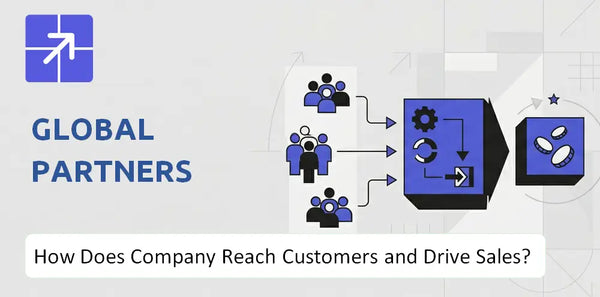
Control of terminals lets Global Partners LP prioritize routes and pricing, reducing stockouts and spot exposure. See operational positioning in Global Partners BCG Matrix Analysis.
Who Does Global Partners Want to Sell To?
Global Partners LP targets three buyer tiers: wholesale gasoline dealers and sub-wholesalers, large commercial and government fuel users, and everyday consumers at its ~1,600 retail sites; the firm wins them with reliable supply, transparent pricing, and a growing premium convenience play focused on fresh food.
 Core wholesale buyers
Global Partners customer acquisition centers on unbranded and branded gasoline dealers and sub-wholesalers who need consistent bulk supply and clear pricing. The Wholesale segment drives volume and margin stability via contracted deliveries and real-time pricing tools.
Commercial and institutional accounts
Large-scale end-users – government agencies, municipalities, and industrial firms – make up the Commercial segment buying heating oil, diesel, and residual fuels. Global Partners demand generation for this group emphasizes long-term contracts, on-site logistics, and compliance-ready fuel products.
Retail consumers and convenience shoppers
Retail distribution strategy covers ~1,600 owned, leased, or supplied gas stations and convenience stores; recent strategy pivot targets premium convenience shoppers via the Alltown Fresh brand to capture higher-margin fresh food consumers, not just fuel-only buyers.
Market positioning and channel mix
Global Partners positions itself as a reliable fuel and convenience operator combining wholesale scale with local retail reach. Its omnichannel outreach mixes direct sales, channel partnerships, and retail merchandising to convert demand into purchases.
Why this positioning works
The strategy appeals because it aligns distribution capacity with buyer needs: bulk pricing and transparency for wholesalers, contract reliability for commercial users, and higher-margin convenience merchandising for retail shoppers. Metrics in 2025 show retail network sales and convenience margins increasingly driving EBITDA mix, supporting targeted Global Partners sales strategy and Global Partners retail distribution and merchandising strategy.
Further reading
For operational and monetization context see How Global Partners Company Works and Makes Money.
Global Partners SWOT Analysis
- Complete SWOT Breakdown
- Fully Customizable
- Editable in Excel & Word
- Professional Formatting
- Investor-Ready Format

How Does Global Partners Get in Front of Customers?
Global Partners LP reaches customers through a dominant physical footprint of bulk terminals and branded retail sites, targeted B2B sales agreements, and a growing digital loyalty platform that converts engagement into purchases.

Bulk terminals as primary gateway
Over 25 bulk terminals serve as the main acquisition channel for wholesale and commercial demand across New England and New York, enabling timed deliveries, large-volume contracts, and logistical control that drive repeat B2B business.
Digital marketing and loyalty expansion
In 2025 the integrated loyalty platform reached over 1.5 million active users, using data analytics and personalized offers via app, email, and push to improve conversion rates and retention across retail brands.
Retail network and branded visibility
High-traffic real estate and recognizable retail banners such as Alltown, XtraMart, and Honey Farms provide walk-in demand and merchandising presence, funneling foot traffic to fuel gasoline and convenience sales.
Sales channels and supply agreements
Specialized sales teams manage long-term supply agreements and use spot-market pricing tools to win and retain B2B accounts; this distribution strategy stabilizes volumes and margins in commercial channels.
Demand generation tactics
Promotions, localized pricing, loyalty offers, and targeted email/app campaigns create demand; in 2025 personalized promotions from the loyalty program increased repeat transactions materially for retail sites.
Customer acquisition efficiency
Combining physical reach with loyalty-driven digital offers improves customer acquisition cost and lifetime value; the >1.5 million active loyalty users provide a measurable, low-cost channel for repeat sales.
Most important reach advantage in 2025
The integrated model – 25+ bulk terminals plus branded retail and a data-driven loyalty platform – gives Global Partners LP unmatched regional scale for omnichannel outreach and converting demand into purchases. Read a market perspective in Competitive Landscape of Global Partners Company.
Global Partners Business Model Canvas
- One-time Payment
- No Research Needed – Save Hours of Work
- Built by Experts, Trusted by Consultants
- Instant Download, Ready to Use
- 100% Editable, Fully Customizable

How Does Global Partners Turn Attention Into Sales?
Global Partners LP turns attention into sales by optimizing fuel and retail margins and cross-selling inside stores, while wholesale demand converts via credit and last-mile logistics; these mechanics push high-volume demand into profitable Adjusted EBITDA.
Core Sales Model: Hybrid Wholesale and Retail Conversion
Global Partners customer acquisition combines B2B wholesale contracts with retail, company-owned stores and franchise-operated locations; sales occur via direct fuel supply contracts, inside-store transactions, and partner-led distribution.
Pricing and Monetization Logic: Margin-First, Volume-Driven
Pricing blends commodity-based fuel margins with high-margin food & beverage sales; monetization uses spot and contract sales, promotional pricing in stores, and bundled offers to lift average ticket and margin percent.
Conversion and Purchase Drivers: Credit, Logistics, and Inside Sales
Wholesale converts demand by offering flexible credit terms and dependable last-mile logistics that smaller rivals can't match; retail converts fuel customers through inside sales teams that upsell Alltown Fresh and impulse items.
Repeat Revenue and Customer Expansion: Cross-Sell and Store Format Scaling
Repeat revenue comes from fuel loyalty and F&B repeat purchase behavior; expanding the Alltown Fresh kitchen scaled inside-store sales to approximately 38 percent of total retail gross profit by end of 2025, boosting lifetime value.
Conversion math and risk control: Global Partners hedges commodity exposure and uses risk management to protect product margins so volume translates into profit; Adjusted EBITDA for fiscal 2025 landed in the $400,000,000 to $425,000,000 range, reflecting margin capture and retail mix shift.
Operational levers that turn attention into purchases include targeted omnichannel outreach, localized pricing and promotions, CRM-driven nurture sequences for B2B accounts, and optimized in-store merchandising that raises add-on attach rates; the company measures success with KPIs such as same-store retail gross profit per site, wholesale days sales outstanding, and inside-sales attach rate.
See Ownership and governance context in this related write-up: Ownership and Control of Global Partners Company
Global Partners Marketing Mix
- Complete Marketing Mix Analysis
- Effortlessly Communicate Your Business Strategy
- Investor-Ready Format
- 100% Editable and Customizable
- Clear and Structured Layout

How Strong Does Global Partners's Commercial Engine Look Going Forward?
Global Partners LP's commercial engine looks resilient into 2026, driven by increased terminal capacity, Northeast corridor dominance, and growing renewable fuels sales; main supportive factors are terminal-driven pricing power and retail diversification, while electrification and commodity margin volatility could weaken volumes.
Terminal scale and regional pricing power
Expanded storage to roughly 9,000,000 barrels after 2024 – 2025 acquisitions supports bulk throughput, improves spot margin capture, and strengthens Global Partners customer acquisition in the Northeast by enabling better timing of purchases and sales.
Channel reach and retail diversification
Large retail footprint and non-fuel retail growth raise per-location revenue; omnichannel outreach – site-level merchandising plus B2B supply contracts – helps Global Partners converting demand into purchases and boosts resilience against fuel volume declines.
Risks: electrification and margin cyclicality
Long-term vehicle electrification and airline SAF adoption timing risk traditional fuel volumes; plus wholesale margin swings can compress earnings and stress Global Partners sales strategy if hedges underperform.
Outlook for sales and marketing effectiveness
With a managed leverage near 3.3x and consistent distributions, the commercial engine looks stable to positive for 2026: expect outperformance versus regional peers via terminal economics and renewable fuels push; see related market context in Target Customers and Market of Global Partners Company.
Global Partners Boston Consulting Group Matrix
- Built by Experts, Trusted by Consultants
- Structured for Consultants, Students, and Founders
- 100% Editable in Microsoft Word & Excel
- Instant Digital Download – Use Immediately
- Compatible with Mac & PC – Fully Unlocked

Related Blogs
- What Is the History of Global Partners Company and How Did It Evolve?
- What Is the Competitive Landscape of Global Partners Company and How Does It Compete?
- What Is the Growth Outlook of Global Partners Company and Where Is It Heading?
- How Does Global Partners Company Work and What Drives Its Business Model?
- What Do the Mission, Vision, and Core Values of Global Partners Company Reveal?
- Who Are the Core Customers in Global Partners Company's Target Market?
- Who Owns Global Partners Company Today and Who Holds Control?
Frequently Asked Questions
Global Partners wants to sell to wholesale gasoline dealers and sub-wholesalers, large commercial and government fuel users, and everyday consumers at its retail sites. The blog says it uses reliable supply, transparent pricing, and premium convenience offerings to serve those different buyer groups.
Disclaimer
All information, articles, and product details provided on this website are for general informational and educational purposes only. We do not claim any ownership over, nor do we intend to infringe upon, any trademarks, copyrights, logos, brand names, or other intellectual property mentioned or depicted on this site. Such intellectual property remains the property of its respective owners, and any references here are made solely for identification or informational purposes, without implying any affiliation, endorsement, or partnership.
We make no representations or warranties, express or implied, regarding the accuracy, completeness, or suitability of any content or products presented. Nothing on this website should be construed as legal, tax, investment, financial, medical, or other professional advice. In addition, no part of this site - including articles or product references - constitutes a solicitation, recommendation, endorsement, advertisement, or offer to buy or sell any securities, franchises, or other financial instruments, particularly in jurisdictions where such activity would be unlawful.
All content is of a general nature and may not address the specific circumstances of any individual or entity. It is not a substitute for professional advice or services. Any actions you take based on the information provided here are strictly at your own risk. You accept full responsibility for any decisions or outcomes arising from your use of this website and agree to release us from any liability in connection with your use of, or reliance upon, the content or products found herein.