
How does Gaming and Leisure Properties, Inc. own casinos and earn rent from operators?
Gaming and Leisure Properties, Inc. (GLPI) owns casino real estate and leases it to operators under long-term triple-net leases, converting volatile gaming profits into steady rental income. This matters because GLPI reported 2025 rent coverage stability amid regional gaming recovery and portfolio re-leasing activity in 2025 – 2026.
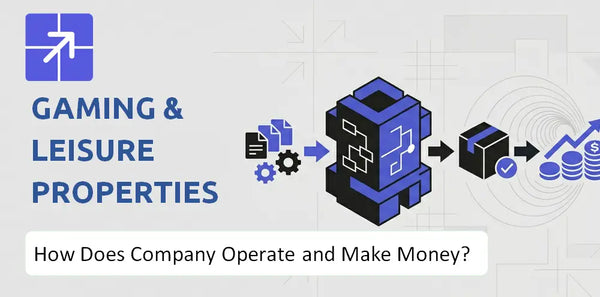
GLPI's model lowers operator capital needs and locks predictable cash flow for shareholders; monitor lease maturities and operator EBITDA for early risk signals. See product: Gaming & Leisure Properties BCG Matrix Analysis
What Does Gaming & Leisure Properties Actually Sell?
Gaming and Leisure Properties, Inc. sells specialized real estate: casino floors, hotel rooms, and related amenities via long-term triple-net leases. Customers pay for leased, mission-critical gaming environments and the capital relief those assets provide.
 Core real estate assets offered
Gaming & Leisure Properties (a gaming and leisure REIT) owns about ~65 properties across 20 states, totaling millions of square feet of casino floor, hotel rooms, restaurants, and entertainment space. The company sells long-term sale-leaseback transactions and triple-net lease agreements that transfer property ownership while retaining operator control of gaming operations.
Who buys these assets
Major gaming operators – including Penn Entertainment and Caesars Entertainment partners – buy the capital relief from the GLPI business model by selling land and buildings and leasing them back. Buyers are primarily casino operators seeking balance-sheet flexibility and access to cash for growth.
Customer value and payment drivers
Customers pay rent to secure long-term rights to facilities often constrained by state gaming licenses; that cash frees up capital for technology, marketing, or expansion. For 2025, GLPI's lease income and steady occupancy underpin predictable cash flow supporting its dividend policy and REIT tax structure.
Why this offering stands out
GLPI's specialization as a casino real estate investment trust and its casino lease structure provide defensive, rent-stable cash flows tied to regulated, license-protected assets. The company's acquisitions strategy focuses on sale-leaseback deals and selective buyouts that expand scale and diversification, reducing single-tenant concentration risk.
See related governance and strategy context in Mission, Vision, and Values of Gaming & Leisure Properties Company
Gaming & Leisure Properties SWOT Analysis
- Complete SWOT Breakdown
- Fully Customizable
- Editable in Excel & Word
- Professional Formatting
- Investor-Ready Format

How Does Gaming & Leisure Properties Run Its Business Day to Day?
Gaming and Leisure Properties runs as a lean asset manager using triple-net leases where tenants pay maintenance, insurance, and taxes; day-to-day work centers on tenant monitoring, deal execution, and capital markets management to keep financing costs below lease yields.

Operating Model: Asset-light, finance-first REIT
Gaming & Leisure Properties operates as a gaming and leisure REIT that owns land and buildings while casino operators run properties under long-term triple-net leases. Management focuses on lease underwriting, credit surveillance, and optimizing a capital structure that funds acquisitions and distributions.
Product or Service Delivery: Real estate leased to operators
Customers (casino operators) access properties via lease agreements and occasional sale-leaseback deals; GLPI collects rent and enforces lease covenants while tenants handle operations and guest services on site.
Production, Sourcing, or Development: Acquisitions and leasebacks
GLPI sources assets through acquisitions and leaseback transactions with operators; due diligence assesses property cash flow, required capital expenditures, and tenant credit before funding deals.
Sales Channels or Distribution: Institutional capital markets
Primary channels are capital markets and structured deals with operators; GLPI raises debt and equity to fund acquisitions, negotiates lease terms, and distributes income to REIT shareholders via dividends.
Key Assets, Systems, or Partnerships: Portfolio, capital stack, and operator ties
Key assets are a multi-billion-dollar portfolio of casino real estate; critical systems include lease administration, credit analytics, and treasury functions. Strategic partnerships with major operators (including legacy deals with Penn Entertainment) support deal flow and portfolio scale.
What Makes the Model Work in Practice: Predictable cash flow and low operating overhead
The triple-net lease structure transfers property-level risk to tenants, enabling a small headcount and predictable rental income. Success depends on tenant credit quality, disciplined underwriting, and keeping cost of debt below lease yields to preserve spread and dividend capacity.
As of fiscal 2025 GLPI reported rental revenue and related income that supported a REIT payout with a trailing twelve-month dividend yield near 7 – 8%, funded by lease cash flows and a capital plan that included $1 – 2 billion of acquisitions and refinancings in the prior 12 months; daily work prioritizes monitoring cash collections, covenant compliance, and refinancing timelines.
For structural context and ownership detail see Ownership and Control of Gaming & Leisure Properties Company
Gaming & Leisure Properties Business Model Canvas
- One-time Payment
- No Research Needed – Save Hours of Work
- Built by Experts, Trusted by Consultants
- Instant Download, Ready to Use
- 100% Editable, Fully Customizable

How Does Revenue Flow Through Gaming & Leisure Properties?
Revenue flows into Gaming & Leisure Properties through long-term lease payments from casino operators, converting predictable rent into distributable cash; demand for gaming drives occupancy and variable rent components tied to property performance.
Primary revenue: long-term casino leases
Most revenue comes from long-term lease agreements with initial terms of 15 to 35 years, producing contractual rent rather than gaming win-loss. For fiscal 2025 Gaming and Leisure Properties, Inc. reported total revenue of approximately $1.62 billion, reflecting the stability of a casino real estate investment trust.
Additional revenue: variable rent and service fees
Some leases include variable components tied to net revenue of the underlying property and occasional service or reimbursement arrangements with tenants, adding upside when operators perform well.
Pricing and monetization model: fixed escalators plus revenue share
Leases typically include fixed annual rent escalators of about 1.5% – 2% and, in some contracts, net revenue – linked rent. That mix converts property cash flows into Adjusted Funds From Operations; AFFO reached an estimated $3.82 per share in 2025 and funds dividend distributions.
Main revenue drivers: operator stability and lease terms
Revenue is driven most by lease coverage, tenant credit (operator performance and defaults), and GLPI acquisitions strategy that expands rent bases. Investor focus often centers on GLPI dividend yield and payout policy because most AFFO is distributed as dividends.
See related competitive analysis for context: Competitive Landscape of Gaming & Leisure Properties Company
Gaming & Leisure Properties Marketing Mix
- Complete Marketing Mix Analysis
- Effortlessly Communicate Your Business Strategy
- Investor-Ready Format
- 100% Editable and Customizable
- Clear and Structured Layout

What Makes Gaming & Leisure Properties's Model Sustainable or Fragile?
Gaming & Leisure Properties' model rests on regulatory moats – gaming licenses tie operators to locations – plus stable, long-term triple-net leases; but it is fragile from tenant concentration (notably Penn Entertainment) and sensitivity to interest rates and rising financing costs.
Regulatory moats secure cash flow
State gaming licenses and local approvals create high relocation costs for operators, making lease income sticky and predictable. This regulatory barrier supports the Gaming & Leisure Properties rent roll and stabilizes long-term net operating income.
Tangible real estate and lease structure
GLPI business model uses sale-leaseback and triple-net leases that shift operating risk to tenants; property ownership plus a diversified geographic portfolio underpins asset values and credit collateral for financing.
Tenant concentration and operator health
About 40 – 45% of rent was historically linked to Penn Entertainment; heavy reliance on a few large operators raises counterparty risk and amplifies revenue volatility if an operator underperforms or defaults.
Interest-rate and refinancing exposure
Rising interest rates lift GLPI financing costs and cap rates, making acquisitions pricier. With a conservative leverage profile – management target debt-to-EBITDA near 4.5x in 2025 – the REIT retains capacity but remains sensitive to credit spreads and refinancing maturities.
Durability in regional gaming markets
Regional casinos showed resilience through economic cycles; GLPI's focus on regional assets has supported occupancy and rental collections. For 2025/2026, professional judgment rates the model as highly sustainable given conservative leverage and steady regional demand.
Key tactical considerations for investors
Watch tenant mix, Penn Entertainment exposure, lease tenure, and upcoming debt maturities. See GLPI dividend yield and payout policy in earnings disclosures and review how GLPI lease agreements with casino operators work in lease covenants and breakage clauses; more on strategy in this article: Sales and Marketing Strategy of Gaming & Leisure Properties Company
Gaming & Leisure Properties Boston Consulting Group Matrix
- Built by Experts, Trusted by Consultants
- Structured for Consultants, Students, and Founders
- 100% Editable in Microsoft Word & Excel
- Instant Digital Download – Use Immediately
- Compatible with Mac & PC – Fully Unlocked

Related Blogs
- What Is the History of Gaming & Leisure Properties Company and How Did It Evolve?
- What Is the Competitive Landscape of Gaming & Leisure Properties Company and How Does It Compete?
- What Is the Growth Outlook of Gaming & Leisure Properties Company and Where Is It Heading?
- How Does Gaming & Leisure Properties Company Reach Customers and Turn Demand into Sales?
- What Do the Mission, Vision, and Core Values of Gaming & Leisure Properties Company Reveal?
- Who Are the Core Customers in Gaming & Leisure Properties Company's Target Market?
- Who Owns Gaming & Leisure Properties Company Today and Who Holds Control?
Frequently Asked Questions
Gaming & Leisure Properties sells specialized real estate used for casinos and related amenities. Its business centers on long-term sale-leaseback transactions and triple-net leases, where casino operators sell land and buildings, keep operating control, and pay rent for mission-critical gaming properties.
Disclaimer
All information, articles, and product details provided on this website are for general informational and educational purposes only. We do not claim any ownership over, nor do we intend to infringe upon, any trademarks, copyrights, logos, brand names, or other intellectual property mentioned or depicted on this site. Such intellectual property remains the property of its respective owners, and any references here are made solely for identification or informational purposes, without implying any affiliation, endorsement, or partnership.
We make no representations or warranties, express or implied, regarding the accuracy, completeness, or suitability of any content or products presented. Nothing on this website should be construed as legal, tax, investment, financial, medical, or other professional advice. In addition, no part of this site - including articles or product references - constitutes a solicitation, recommendation, endorsement, advertisement, or offer to buy or sell any securities, franchises, or other financial instruments, particularly in jurisdictions where such activity would be unlawful.
All content is of a general nature and may not address the specific circumstances of any individual or entity. It is not a substitute for professional advice or services. Any actions you take based on the information provided here are strictly at your own risk. You accept full responsibility for any decisions or outcomes arising from your use of this website and agree to release us from any liability in connection with your use of, or reliance upon, the content or products found herein.