
How does Gaming and Leisure Properties' sales and marketing model convert leases into predictable rental sales?
Gaming and Leisure Properties focuses on sale-leaseback and master leases, targeting casino operators to secure long-term triple-net rent streams. This matters because GLPI reached 100 percent occupancy by March 2026, signaling durable demand and predictable cash flows.
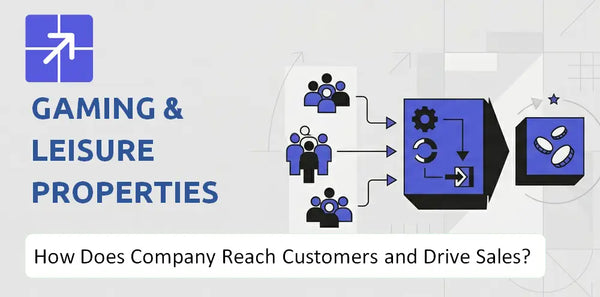
GLPI markets via direct operator relationships, structured financing pitches, and portfolio case studies; one practical move: showcase lease coverage metrics to close deals faster. See product insight: Gaming & Leisure Properties BCG Matrix Analysis
Who Does Gaming & Leisure Properties Want to Sell To?
Gaming and Leisure Properties, Inc. targets licensed, established casino operators needing capital or real estate solutions – primarily regional and national operators with stable cashflows and strong regulatory positions; GLPI wins them by offering sale-leaseback capital, long-term triple-net leases, and partnership-driven property strategies.
 Core target: established gaming operators
Gaming and Leisure Properties focuses on major tenants such as PENN Entertainment, Caesars Entertainment, Boyd Gaming, and Bally's Corporation, prioritizing operators with EBITDAR-to-rent coverage typically above 2.0x so long-term lease obligations are secure.
Secondary segments: regional, licensed markets
GLPI pursues operators in regional US markets where limited gaming licenses and regulatory stability create competitive moats; secondary targets include mid – market operators needing capital for expansion or deleveraging.
Market positioning: landlord of choice for casino real estate
Gaming and Leisure Properties positions itself as a reliable capital partner offering long-term, triple-net lease structures, portfolio scale across 2025 with diversified geography, and operational alignment with tenant growth strategies.
Why this positioning resonates
Operators choose GLPI because sale-leaseback deals free up capital – GLPI reported stabilized portfolio revenues and maintained tenant coverage metrics that support predictable rent streams – so tenants can invest in operations while GLPI focuses on real estate returns. See more in How Gaming & Leisure Properties Company Works and Makes Money
Gaming & Leisure Properties SWOT Analysis
- Complete SWOT Breakdown
- Fully Customizable
- Editable in Excel & Word
- Professional Formatting
- Investor-Ready Format

How Does Gaming & Leisure Properties Get in Front of Customers?
Gaming and Leisure Properties reaches customers mainly through executive B2B relationship management, institutional M&A channels, and strategic funding partnerships, driving awareness via direct negotiations with casino operators and by backing marquee projects that signal capacity and capital.

Executive-level B2B Relationship Management
GLPI sales teams engage CEOs and CFOs of operators to structure sale-leaseback deals and joint development financings; these direct executive negotiations convert large-property equity into long-term leases and recurring rent revenue. In 2025 GLPI closed multiple portfolio transactions that contributed to over $1.2 billion of investment activity, underscoring this channel.
Digital and Investor Communications
GLPI leverages investor presentations, targeted IR outreach, and content distribution to reach institutional operators and capital partners; digital channels amplify transaction announcements and lease structures. Regular SEC filings, webcast presentations, and email briefings supported visibility during the 2025 Bally's Chicago funding milestone.
Direct Sales, M&A and Partnership Distribution
Primary distribution to customers occurs via direct corporate sales and M&A advisors rather than retail channels; GLPI partners with operators and private-equity firms to transfer real estate and lease rights. Strategic partnerships enabled GLPI to be the landlord and capital provider for large-scale developments, expanding its tenant base.
Demand Generation Through Flagship Projects
GLPI creates demand by funding marquee projects – most notably the Bally's Chicago permanent casino project – which acts as a proof point for appetite in 2025 – 2026. Acting as a long-term, fixed-rate capital partner attracts operators seeking to monetize real estate for digital gaming pivots or renovations.
Customer Acquisition Efficiency and Metrics
Efficiency is measured by deal velocity, rent coverage, and lease duration rather than CAC (customer acquisition cost) used in consumer sectors. GLPI's portfolio-wide average lease term exceeded 20 years on key agreements in 2025, improving predictability of cash flows and lowering effective acquisition economics.
Most Important Reach Advantage in 2025 – 2026
The strongest advantage is access to long-term, fixed-rate capital and an established reputation as a casino real estate specialist; this makes GLPI the first call for operators seeking monetization. That positioning, plus demonstrable deals like the Bally's Chicago partnership, drives scale and repeat business.
Further reading on GLPI customer and growth dynamics is available in this analysis: Growth Outlook of Gaming & Leisure Properties Company
Gaming & Leisure Properties Business Model Canvas
- One-time Payment
- No Research Needed – Save Hours of Work
- Built by Experts, Trusted by Consultants
- Instant Download, Ready to Use
- 100% Editable, Fully Customizable

How Does Gaming & Leisure Properties Turn Attention Into Sales?
Gaming and Leisure Properties turns operator attention into long-term cash flow by signing multi-decade master leases with built-in escalators, percentage rent, catch-up clauses, and cross-collateralized guarantees that align tenant incentives and lock in recurring revenue.
Core sales model: long-term lease finance with operator partnerships
Gaming and Leisure Properties sells stability through capital leasing: GLPI converts operator capital needs into 15 – 20 year master leases, partner-led selling, and portfolio-level transactions that transfer real estate while operators retain operations.
Pricing and monetization logic: base rent, escalators, and percentage rent
GLPI generates revenue via fixed rent with annual escalators typically 1.5% – 2.0%, plus percentage rent tied to facility gross gaming revenue (GGR), creating blended yield that rises with tenant performance.
Conversion and purchase drivers: contractual frictions and alignment
High switching costs for licensed gaming venues, regulatory approvals, and cross-collateralized guarantees make vacating unattractive; in 2025 GLPI used catch-up rent provisions to capture missed percentage rent and secured portfolio guarantees to convert operator interest into committed cash flow.
Repeat revenue & customer expansion: renewals, roll-ups, and ancillary fees
Leases include multiple renewal options and often expand to additional properties; GLPI's 2025 portfolio actions emphasized cross-collateralization and lease extensions to preserve near-zero vacancy and predictable recurring revenue streams.
Operational facts: GLPI's 2025 lease model commonly features initial lease terms of 15 – 20 years, rent escalators of 1.5% – 2.0% annually, percentage rent tied to GGR, and catch-up clauses; combined with portfolio guarantees these elements converted operator demand into secured rental revenue and minimized vacancy risk. Read more company context in History and Background of Gaming & Leisure Properties Company
Gaming & Leisure Properties Marketing Mix
- Complete Marketing Mix Analysis
- Effortlessly Communicate Your Business Strategy
- Investor-Ready Format
- 100% Editable and Customizable
- Clear and Structured Layout

How Strong Does Gaming & Leisure Properties's Commercial Engine Look Going Forward?
Gaming and Leisure Properties' commercial engine looks solid for 2025/2026, backed by projected revenue above $1.6 billion and rising AFFO; inflation – linked leases and stable regional gaming demand support sales conversion, while elevated rates and operator mix could temper near – term growth.
What Supports Future Demand
GLPI's portfolio benefits from long – term, inflation – adjusted lease structures and concentrated exposure to non – discretionary regional gaming demand; projected 2025 revenue > $1.6 billion and stable casino revenues provide a predictable base for tenant sales and marketing efforts.
Channel and Marketing Effectiveness
GLPI supports operator customer acquisition through on – property promotions, local marketing alignment, and capital projects that improve guest experience; these channels help convert foot traffic into higher gross gaming revenue and support tenant rent coverage metrics.
Risks to Commercial Performance
Key risks include sustained higher interest rates that pressure REIT valuations, operator financial stress from competitive regional markets, and concentrated tenant exposure; net leverage targeted at 4.5x – 5.0x leaves room but requires disciplined capital allocation for $500M – $1B annual acquisitions.
The Overall Sales and Marketing Outlook
Outlook is strong and adaptable for 2025/2026: GLPI's inflation – protected leases and focus on regional gaming create resilient cash flow and predictable tenant marketing ROI, while targeted investments and partnership programs should sustain demand generation for gaming properties.
See related analysis on ownership and governance: Ownership and Control of Gaming & Leisure Properties Company
Gaming & Leisure Properties Boston Consulting Group Matrix
- Built by Experts, Trusted by Consultants
- Structured for Consultants, Students, and Founders
- 100% Editable in Microsoft Word & Excel
- Instant Digital Download – Use Immediately
- Compatible with Mac & PC – Fully Unlocked

Related Blogs
- What Is the History of Gaming & Leisure Properties Company and How Did It Evolve?
- What Is the Competitive Landscape of Gaming & Leisure Properties Company and How Does It Compete?
- What Is the Growth Outlook of Gaming & Leisure Properties Company and Where Is It Heading?
- How Does Gaming & Leisure Properties Company Work and What Drives Its Business Model?
- What Do the Mission, Vision, and Core Values of Gaming & Leisure Properties Company Reveal?
- Who Are the Core Customers in Gaming & Leisure Properties Company's Target Market?
- Who Owns Gaming & Leisure Properties Company Today and Who Holds Control?
Frequently Asked Questions
Gaming & Leisure Properties targets licensed, established casino operators that need capital or real estate solutions. Its focus is on regional and national operators with stable cash flows and strong regulatory positions, including names like PENN Entertainment, Caesars Entertainment, Boyd Gaming, and Bally's Corporation.
Disclaimer
All information, articles, and product details provided on this website are for general informational and educational purposes only. We do not claim any ownership over, nor do we intend to infringe upon, any trademarks, copyrights, logos, brand names, or other intellectual property mentioned or depicted on this site. Such intellectual property remains the property of its respective owners, and any references here are made solely for identification or informational purposes, without implying any affiliation, endorsement, or partnership.
We make no representations or warranties, express or implied, regarding the accuracy, completeness, or suitability of any content or products presented. Nothing on this website should be construed as legal, tax, investment, financial, medical, or other professional advice. In addition, no part of this site - including articles or product references - constitutes a solicitation, recommendation, endorsement, advertisement, or offer to buy or sell any securities, franchises, or other financial instruments, particularly in jurisdictions where such activity would be unlawful.
All content is of a general nature and may not address the specific circumstances of any individual or entity. It is not a substitute for professional advice or services. Any actions you take based on the information provided here are strictly at your own risk. You accept full responsibility for any decisions or outcomes arising from your use of this website and agree to release us from any liability in connection with your use of, or reliance upon, the content or products found herein.