
How does Industries Qatar convert Qatar's gas into traded industrial products and earn revenue?
Industries Qatar turns Qatar's natural gas into steel, petrochemicals, and fertilizer, selling global commodities and capturing margin across the value chain. This matters because IQ drove over 20% of Qatar Stock Exchange market cap in early 2026, signaling macro exposure to commodity cycles. See product link: Industries Qatar BCG Matrix Analysis
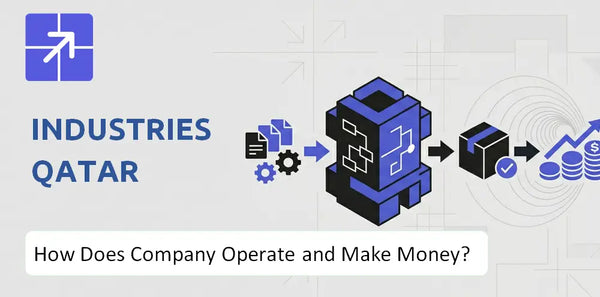
IQ's cash generation depends on feedstock prices, plant utilization, and export routes; monitor LNG spreads and regional capacity additions for near-term earnings visibility.
What Does Industries Qatar Actually Sell?
Industries Qatar sells industrial commodities: petrochemicals (polyethylene, methanol, MTBE), fertilizers (urea, ammonia) and steel products (rebars, wire rods, billets). Customers pay for consistent volume, chemical specifications, and dependable logistics from large-scale, integrated plants.
 Core industrial products and feedstocks
Industries Qatar offers polyethylene grades used in packaging and pipe, methanol for chemical intermediates, MTBE for fuel blending, urea and ammonia via QAFCO for fertilizers, and steel products through Qatar Steel including rebars, wire rods and billets.
Primary buyers and channels
Buyers are petrochemical converters, fuel blenders, global fertilizer distributors, agricultural traders, and Middle East construction firms; sales flow via long-term contracts, spot markets, and export logistics through Hamad Port and third-party distributors.
Customer value and use cases
Customers get high-volume, standardized commodities that enable stable production planning: fertilizers improve crop yields, polyethylene and methanol feed downstream manufacturing, and steel supports infrastructure projects – backed by integrated supply and quality control.
Differentiators in the market
Industries Qatar business model explained: vertical integration across hydrocarbons-to-chemicals and fertilizers, scale advantages – QAFCO is among the world's largest urea producers – and regional steel supply focus deliver reliability and cost competitiveness; see Competitive Landscape of Industries Qatar Company for context.
Industries Qatar SWOT Analysis
- Complete SWOT Breakdown
- Fully Customizable
- Editable in Excel & Word
- Professional Formatting
- Investor-Ready Format

How Does Industries Qatar Run Its Business Day to Day?
Industries Qatar runs day-to-day as a holding group coordinating four major subsidiaries and JVs to convert QatarEnergy natural gas into fertilizers, petrochemicals, and steel, then sell most output internationally. Operations hinge on integrated feedstock supply, centralized asset management, logistics orchestration, and sales contracts that convert production into cash flow.

Operating model: centralized holding, decentralized operations
Industries Qatar consolidates strategic direction, capital allocation, and risk management while QAPCO, QAFAC, QAFCO, and Qatar Steel run plant-level operations. Day-to-day decisions – maintenance, production scheduling, capex execution – are delegated to subsidiaries, with holding-level oversight of corporate finance, treasury, and investor relations.
Product and service delivery: contract-driven exports
Customers access products through long-term offtake contracts and spot sales; fertilizers and petrochemicals are sold to distributors and industrial buyers across Asia, Europe, and South America. Domestic steel sales serve Qatar infrastructure projects, supported by direct contracts with EPC firms and government entities.
Production, sourcing, and development: gas-to-products value chain
Feedstock supply is secured via long-term agreements with QatarEnergy, supplying natural gas to Mesaieed and Ras Laffan complexes. Plants convert methane and associated feedstocks into ethylene, polyethylene, urea, ammonia, methanol, and steel billets through large-scale continuous processes; routine turnarounds and debottlenecking projects lift throughput and margins.
Sales channels and distribution: global logistics network
Industries Qatar uses a mix of long-term vessel charters, third-party shipping, and port facilities to export >70% of volumes to Asia and Europe. Regional traders, distributors, and directly contracted industrial buyers form the sales pipeline; domestic steel moves via direct tendering to construction and state projects.
Key assets, systems, and partnerships: integrated assets and feedstock security
Core assets include Mesaieed and Ras Laffan complexes, large-scale urea/ammonia units, steam crackers, polymer lines, and Qatar Steel mills. Strategic partnership with QatarEnergy ensures competitively priced feedstock; joint ventures provide technical, marketing, and financing scale. ERP, process control (DCS), and logistics scheduling systems optimize throughput and working capital.
Why the model works: vertical integration and contract discipline
The model scales because of guaranteed low-cost gas, long-term offtake agreements, and large fixed-asset bases that spread costs over high volumes. Efficiency arises from integrated planning across petrochemicals, fertilizers, and steel, predictable supply chains, and disciplined capex – supporting stable cash flows and dividends; in 2025 Industries Qatar reported consolidated revenue of QAR 19.3 billion and net profit of QAR 9.1 billion.
Sales and Marketing Strategy of Industries Qatar Company
Industries Qatar Business Model Canvas
- One-time Payment
- No Research Needed – Save Hours of Work
- Built by Experts, Trusted by Consultants
- Instant Download, Ready to Use
- 100% Editable, Fully Customizable

How Does Revenue Flow Through Industries Qatar?
Revenue at Industries Qatar flows from sales of fertilizers, polyethylene, and steel, with volumes multiplied by global benchmark prices; steady crop-nutrient demand converts production into cash. Low-cost natural gas feedstock and high-margin operations at subsidiaries turn sales into robust free cash flow and dividends.
Fertilizers: Core Revenue Driver
Fertilizers (urea and ammonia) supplied the largest share of net earnings in fiscal 2025 due to steady global demand; the fertilizer segment benefited from selling volumes near pre-2024 capacity and global urea price realization. The monetization hinges on high margins from low-cost natural gas feedstock secured domestically.
Polymers and Steel: Secondary Cash Sources
Polyethylene sales index to international polymer prices and volumes from downstream plants; steel and industrial products add diversification and steady baseline revenue, especially from regional construction demand. Subsidiaries remit profits and dividends upward to Industries Qatar, reinforcing the holding company cash pool.
Pricing and Monetization Model
Industries Qatar monetizes through spot and contracted sales tied to global benchmark prices for urea, polyethylene, and steel; long-term offtakes and merchant sales capture market upside. Low feedstock cost creates a margin wedge, so even when benchmark prices fall, cash generation remains positive.
Primary Revenue Drivers
Revenue is driven most by sales volumes and global benchmark pricing; access to natural gas at regulated domestic rates is the single biggest competitive advantage. In fiscal 2025, dividends and subsidiary profit remittances funded capital projects like Ammonia-7 and supported a dividend payout ratio that typically exceeds 80 percent of net earnings.
For context on corporate history and structure, see History and Background of Industries Qatar Company.
Industries Qatar Marketing Mix
- Complete Marketing Mix Analysis
- Effortlessly Communicate Your Business Strategy
- Investor-Ready Format
- 100% Editable and Customizable
- Clear and Structured Layout

What Makes Industries Qatar's Model Sustainable or Fragile?
Industries Qatar's model is sustainable due to a debt-free balance sheet and a cost advantage from low-cost Qatari gas, while fragility stems from commodity price swings, shipping cost volatility, and geopolitical risks that can disrupt supply chains and export demand.
Low-cost feedstock and financial strength
Industries Qatar benefits from very low natural gas feedstock costs and a debt-free balance sheet in 2025, enabling strong free cash flow and dividend capacity versus peers.
Scale, integrated assets, and technology
Integrated petrochemicals, fertilizers, and steel operations across Industries Qatar subsidiaries create vertical synergies and high utilization; investments in ammonia cracking and Blue Ammonia position the group for low-carbon markets in 2025 – 2026.
Concentration on gas and commodity exposure
The model depends heavily on natural gas supply and global commodity prices; fertilizers and petrochemicals price cycles drive revenue swings, and EU carbon border adjustment mechanisms could increase costs for gas-intensive exports.
Resilience outlook for 2025 – 2026
In 2025 Industries Qatar remains a cash-generative powerhouse with robust margins and low leverage, but long-term valuation hinges on scaling low-carbon products, managing shipping/commodity volatility, and navigating regulatory costs through 2026 and beyond.
See detailed ownership context in this analysis: Ownership and Control of Industries Qatar Company
Industries Qatar Boston Consulting Group Matrix
- Built by Experts, Trusted by Consultants
- Structured for Consultants, Students, and Founders
- 100% Editable in Microsoft Word & Excel
- Instant Digital Download – Use Immediately
- Compatible with Mac & PC – Fully Unlocked

Related Blogs
- What Is the History of Industries Qatar Company and How Did It Evolve?
- What Is the Competitive Landscape of Industries Qatar Company and How Does It Compete?
- What Is the Growth Outlook of Industries Qatar Company and Where Is It Heading?
- How Does Industries Qatar Company Reach Customers and Turn Demand into Sales?
- What Do the Mission, Vision, and Core Values of Industries Qatar Company Reveal?
- Who Are the Core Customers in Industries Qatar Company's Target Market?
- Who Owns Industries Qatar Company Today and Who Holds Control?
Frequently Asked Questions
Industries Qatar sells petrochemicals, fertilizers, and steel products. Its portfolio includes polyethylene, methanol, MTBE, urea, ammonia, rebars, wire rods, and billets. The company focuses on standardized industrial commodities that support packaging, chemicals, agriculture, and infrastructure projects.
Disclaimer
All information, articles, and product details provided on this website are for general informational and educational purposes only. We do not claim any ownership over, nor do we intend to infringe upon, any trademarks, copyrights, logos, brand names, or other intellectual property mentioned or depicted on this site. Such intellectual property remains the property of its respective owners, and any references here are made solely for identification or informational purposes, without implying any affiliation, endorsement, or partnership.
We make no representations or warranties, express or implied, regarding the accuracy, completeness, or suitability of any content or products presented. Nothing on this website should be construed as legal, tax, investment, financial, medical, or other professional advice. In addition, no part of this site - including articles or product references - constitutes a solicitation, recommendation, endorsement, advertisement, or offer to buy or sell any securities, franchises, or other financial instruments, particularly in jurisdictions where such activity would be unlawful.
All content is of a general nature and may not address the specific circumstances of any individual or entity. It is not a substitute for professional advice or services. Any actions you take based on the information provided here are strictly at your own risk. You accept full responsibility for any decisions or outcomes arising from your use of this website and agree to release us from any liability in connection with your use of, or reliance upon, the content or products found herein.