
How does Industries Qatar's centralized sales and marketing model convert volume into durable sales and margins?
Industries Qatar centralizes marketing to pool global volumes, cut distribution costs, and lock long-term offtakes; this drove an average 38 percent EBITDA margin in FY2025 and supported resilience as customers sought lower-carbon, reliable inputs into 2026.
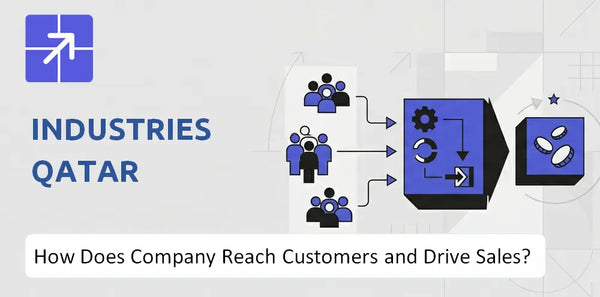
Also, prioritize long-term contracts and integrated logistics to stabilize pricing and utilization; see product positioning in the Industries Qatar BCG Matrix Analysis.
Who Does Industries Qatar Want to Sell To?
Industries Qatar targets three buyer groups: bulk fertilizer importers in India, Brazil and Southeast Asia; petrochemical manufacturers and plastic converters in China and Europe; and infrastructure contractors in Qatar and the GCC for steel. The company wins them through scale pricing, technical product specs, and emerging low-carbon credentials to command premium margins.
 Main customer group: large agricultural importers
Industries Qatar focuses fertilizer sales on large-scale importers and national procurement agencies in India, Brazil and Southeast Asia where food-security policies drive demand; urea and ammonia shipments account for the bulk of export volumes and represent the highest-volume revenue stream for the fertilizers subsidiary.
Additional segments: petrochemicals and converters
For petrochemicals, Industries Qatar targets industrial manufacturers and plastic converters in China and Europe who require high-density polyethylene, MEG and fuel additives like MTBE; these customers buy on technical specifications, consistency, and long-term supply contracts linked to price indexation.
Market positioning: regional backbone, global supplier
Industries Qatar positions itself as a low-cost, large-scale producer with integrated assets across fertilizers, petrochemicals and steel; in 2025 the strategy emphasized export volumes and long-term offtake agreements to stabilize cash flow amid cyclical commodity prices.
Why the positioning works: scale, contracts, and green premium
Scale delivers competitive unit costs; anchored long-term contracts reduce spot volatility; and by 2026 Industries Qatar is targeting green-conscious industrial buyers with blue ammonia and low-carbon steel to capture premium pricing tiers and improve customer acquisition and retention.
Key facts and numbers: in fiscal 2025 Industries Qatar reported consolidated revenue drivers heavily weighted to petrochemicals and fertilizers; the fertilizers arm exported to top markets including India where annual urea demand exceeds 25 million tonnes (FAO/market sources), and petrochemical customers in China represented more than 30% of polymer off-take volumes. The steel segment prioritizes Qatar and GCC infrastructure contracts tied to Saudi giga-project pipelines and Qatar's North Field Expansion, where local steel demand rose by an estimated 12% year-over-year in 2025 (regional construction data).
Sales approach and channels: Industries Qatar mixes direct sales teams for large strategic accounts, tender-based sales for infrastructure contracts, and distributor partnerships for regional reach – matching its Industries Qatar sales process to customer type. Digital quoting, CRM-driven account management and participation in major trade shows drive demand generation and customer engagement for B2B buyers.
Pricing and commercial terms: strategic customers secure long-term offtake agreements with index-linked pricing and volume commitments; green-conscious buyers receive differentiated pricing for low-carbon products. This alignment supports predictable cash flow and improves conversion of demand into sales.
For procurement, tender and partner details see History and Background of Industries Qatar Company.
Industries Qatar SWOT Analysis
- Complete SWOT Breakdown
- Fully Customizable
- Editable in Excel & Word
- Professional Formatting
- Investor-Ready Format

How Does Industries Qatar Get in Front of Customers?
Industries Qatar reaches customers mainly through centralized export and marketing via Muntajat plus direct B2B sales for steel, combining global logistics, distributor networks, and long-term contracts to convert demand into sales.

Muntajat: Global Marketing and Distribution
Muntajat serves as the primary acquisition channel, marketing and distributing petrochemicals and fertilizers across more than 120 countries, centralizing export sales and reducing duplicate sales costs across Industries Qatar subsidiaries.
Digital and Trade-Driven Visibility
Industries Qatar marketing strategy relies on targeted digital feeds, corporate sites, and participation in commodity exchanges and trade platforms to surface leads; digital channels support tenders, product specs, and technical data sheets used in procurement.
Direct Sales and Distributor Networks
Qatar Steel uses direct B2B sales offices and a network of authorized distributors for major Middle East construction projects, while Muntajat handles bulk channels for petrochemicals and fertilizers, simplifying Industries Qatar distribution channels.
Demand Generation via Long-Term Contracts
Demand generation centers on long-term strategic partnerships, framework supply agreements, and listing on global commodity exchanges; these secure recurring volumes and make Industries Qatar products first-choice in bulk procurement.
Acquisition Efficiency and Cost Advantages
Centralizing sales through Muntajat cuts redundant SG&A and improves customer acquisition efficiency; using one global distributor yields lower cost per ton sold and faster contract execution for export sales.
Scale Advantage: Integrated Logistics and Brand
The most important reach advantage is a unified distribution footprint plus integrated logistics that, in 2025, support export volumes and channel access across >120 markets, enabling rapid scaling of Industries Qatar customer engagement and conversion.
For specifics on corporate structure and how ownership shapes go-to-market, see Ownership and Control of Industries Qatar Company
Industries Qatar Business Model Canvas
- One-time Payment
- No Research Needed – Save Hours of Work
- Built by Experts, Trusted by Consultants
- Instant Download, Ready to Use
- 100% Editable, Fully Customizable

How Does Industries Qatar Turn Attention Into Sales?
Industries Qatar turns attention into sales by leveraging first-quartile cost positioning and long-term feedstock deals to offer competitive pricing, signing a mix of spot and long-term off-take contracts that convert demand into revenue and high retention.
Core sales model: Contract-led B2B commercialization
Industries Qatar uses direct B2B sales and long-term off-take agreements with industrial buyers and distributors, supplemented by spot market transactions to capture upside. The mix supports predictable volumes and flexible merchant selling when margins justify incremental spot sales.
Pricing and monetization logic: Cost-advantaged, spread-driven pricing
Pricing is set around advantaged feedstock costs from QatarEnergy, enabling the group to undercut European/North American peers while protecting margins. Monetization combines recurring contract revenues and spot sales that exploit real-time market spreads between feedstock, ethylene/propylene and finished polymers.
Conversion and purchase drivers: Cost position, availability, and product mix
Conversion hinges on being in the first quartile of the global cost curve and long-term feedstock security, which build trust with large industrial buyers. In 2025 Industries Qatar reported capacity utilization exceeding 100 percent, showing that these drivers turn demand into maximum production and sales.
Repeat revenue and customer expansion: Off-takes, optimization, and retention
High retention comes from long-term off-take contracts and supplier reliability; the group actively shifts output between higher-margin grades like LDPE and LLDPE to capture spreads and expand revenue per tonne. This product optimization raised realized polymer margins in 2025 versus peers.
See operational and commercial context in How Industries Qatar Company Works and Makes Money
Industries Qatar Marketing Mix
- Complete Marketing Mix Analysis
- Effortlessly Communicate Your Business Strategy
- Investor-Ready Format
- 100% Editable and Customizable
- Clear and Structured Layout

How Strong Does Industries Qatar's Commercial Engine Look Going Forward?
Industries Qatar's commercial engine looks robust heading into 2026/2027, driven by a net cash position above QAR 16 billion, zero external group debt, and near-term capacity expansion from QAFCO 7. Main supports: low-cost feedstock, strong export channels, and high dividend visibility; main weakness: global commodity price volatility and feedstock price pass-through risk.
Capacity-led demand support
The QAFCO 7 blue ammonia and fertilizer expansion increases fertilizer capacity by nearly 20 percent, lifting sales volumes and supporting Industries Qatar marketing strategy focused on feedstock-cost advantaged exports to agriculture markets.
Channel and marketing effectiveness
Industries Qatar leverages direct B2B sales, long-term offtake agreements, integrated logistics, and strong distributor relationships across Asia and MENA, keeping customer acquisition efficient and the sales process tight.
Risks to commercial performance
Key risks: global fertilizer and petrochemical price volatility, feedstock (natural gas) price swings, and shipping/logistics disruptions that can widen margins or compress demand in export markets.
Overall sales and marketing outlook
Outlook for 2025/2026 is highly positive: defensive, high-yield industrial profile with strong free cash flow supporting a projected dividend payout ratio above 75 percent, and upside from regional infrastructure and low-carbon fertilizer demand; channel mix and CRM maturity support scalable demand generation.
Operational and commercial facts to watch: net cash > QAR 16 billion, zero external group debt, QAFCO 7 capacity uplift ~20 percent, and projected dividend payout > 75 percent for 2026; see market positioning and customer segments in this companion piece Target Customers and Market of Industries Qatar Company.
Industries Qatar Boston Consulting Group Matrix
- Built by Experts, Trusted by Consultants
- Structured for Consultants, Students, and Founders
- 100% Editable in Microsoft Word & Excel
- Instant Digital Download – Use Immediately
- Compatible with Mac & PC – Fully Unlocked

Related Blogs
- What Is the History of Industries Qatar Company and How Did It Evolve?
- What Is the Competitive Landscape of Industries Qatar Company and How Does It Compete?
- What Is the Growth Outlook of Industries Qatar Company and Where Is It Heading?
- How Does Industries Qatar Company Work and What Drives Its Business Model?
- What Do the Mission, Vision, and Core Values of Industries Qatar Company Reveal?
- Who Are the Core Customers in Industries Qatar Company's Target Market?
- Who Owns Industries Qatar Company Today and Who Holds Control?
Frequently Asked Questions
Industries Qatar mainly sells to bulk fertilizer importers in India, Brazil, and Southeast Asia, petrochemical manufacturers and plastic converters in China and Europe, and infrastructure contractors in Qatar and the GCC. The company matches each group with scale pricing, technical product specs, and long-term supply agreements to turn demand into sales.
Disclaimer
All information, articles, and product details provided on this website are for general informational and educational purposes only. We do not claim any ownership over, nor do we intend to infringe upon, any trademarks, copyrights, logos, brand names, or other intellectual property mentioned or depicted on this site. Such intellectual property remains the property of its respective owners, and any references here are made solely for identification or informational purposes, without implying any affiliation, endorsement, or partnership.
We make no representations or warranties, express or implied, regarding the accuracy, completeness, or suitability of any content or products presented. Nothing on this website should be construed as legal, tax, investment, financial, medical, or other professional advice. In addition, no part of this site - including articles or product references - constitutes a solicitation, recommendation, endorsement, advertisement, or offer to buy or sell any securities, franchises, or other financial instruments, particularly in jurisdictions where such activity would be unlawful.
All content is of a general nature and may not address the specific circumstances of any individual or entity. It is not a substitute for professional advice or services. Any actions you take based on the information provided here are strictly at your own risk. You accept full responsibility for any decisions or outcomes arising from your use of this website and agree to release us from any liability in connection with your use of, or reliance upon, the content or products found herein.