
How does Kornit Digital turn on-demand apparel printing into a recurring-revenue business?
Kornit Digital sells industrial digital textile printers, proprietary inks and consumables, plus software for on-demand production, shifting apparel from mass manufacture to make-on-order. This matters as fast-fashion waste – about 30 percent unsold inventory – drives demand for localized, digital printing; Kornit reported 2025 signals of rising software subscriptions and consumable attach rates.
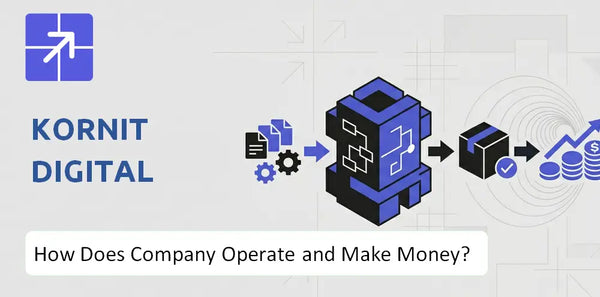
Kornit captures value via hardware sales plus recurring revenue from consumables and cloud software; investors should watch consumable gross margin and software annual recurring revenue growth. See product analysis: Kornit Digital BCG Matrix Analysis
What Does Kornit Digital Actually Sell?
Kornit Digital sells a vertically integrated production ecosystem centered on industrial digital inkjet printers, consumable inks, and cloud workflow software; customers pay for turnkey on-demand apparel and fabric production capacity, consumables, and automated fulfillment via Kornit printing technology.
 Core hardware and consumables
Kornit Digital's flagship systems include the Apollo and Atlas MAX for direct-to-garment printing and the Presto line for direct-to-fabric applications; revenue comes from equipment sales and recurring consumables such as proprietary NeoPigment inks and pretreatment chemistry.
Customers and buyer types
Buyers are e-commerce brands, print-on-demand and dropshipping platforms, large retailers, and cut-and-sew manufacturers seeking on-demand apparel printing or industrial textile printing capacity; typical purchasers are capital equipment buyers and operations managers.
Practical value delivered
Customers get rapid, low-volume production (on-demand apparel printing) with minimal setup, reduced inventory risk, and integrated software-driven fulfillment via the KornitX workflow platform; the model supports faster time-to-market and higher SKU variety with measurable margin on consumables.
Differentiators and buying ease
Kornit stands out for its wet-on-wet NeoPigment ink chemistry (biodegradable) optimized for its printers, vertical integration that ties hardware to consumables and KornitX software, and lower water use versus traditional screen printing; customers buy an end-to-end Kornit Digital production workflow, not just a printer. Target Customers and Market of Kornit Digital Company
Kornit Digital SWOT Analysis
- Complete SWOT Breakdown
- Fully Customizable
- Editable in Excel & Word
- Professional Formatting
- Investor-Ready Format

How Does Kornit Digital Run Its Business Day to Day?
Kornit Digital runs daily as a dual business: precision industrial textile printers built and serviced worldwide, plus in-house production and distribution of Kornit NeoPigment inks and fixation chemistries. Orders flow through KornitX software, routing digital print files to local fulfillment partners while field engineers maintain uptime and spare parts logistics.

Operating model: integrated hardware, consumables, and software
Kornit Digital combines capital equipment sales with recurring consumables and software services. Daily ops balance machine manufacturing, chemical production, KornitX job orchestration, and global field service to keep installed printers online and revenue recurring.
Product and service delivery: buy, connect, print
Customers purchase industrial textile printers via authorized dealers or direct sales, subscribe to KornitX and supply contracts for NeoPigment inks, then route on-demand print jobs through the platform to local fulfillment partners for rapid delivery.
Production, sourcing, and development: controlled supply chains
Manufacturing assembles precision printers from global suppliers; dedicated chemical plants produce inks and fixatives under ISO controls. R&D develops Kornit printing technology and NeoPigment formulations; component sourcing emphasizes lead-time visibility to meet 2025 demand.
Sales channels and distribution: hybrid global network
Main channels include direct enterprise sales, authorized dealers, and digital integrations for ecommerce and print-on-demand partners. KornitX enables dropshipping, routing a digital file in London to a fulfillment partner in New York within hours for on-demand apparel printing.
Key assets, systems, and partnerships: KornitX and field service
Critical assets are the installed base of industrial textile printers, KornitX cloud platform, NeoPigment ink production, and a global network of certified service engineers. Strategic partnerships include authorized dealers and fulfillment partners that expand geographic reach and reduce delivery time.
What makes the model work in practice: recurring consumables and platform routing
Recurring ink and chemical sales plus KornitX job routing create predictable revenue and high utilization of the installed base. Efficient spare-parts logistics and a global service footprint sustain uptime; in 2025 a focus on service contracts and consumables drove steady annuity-like margins.
For ownership context see Ownership and Control of Kornit Digital Company
Kornit Digital Business Model Canvas
- One-time Payment
- No Research Needed – Save Hours of Work
- Built by Experts, Trusted by Consultants
- Instant Download, Ready to Use
- 100% Editable, Fully Customizable

How Does Revenue Flow Through Kornit Digital?
Revenue at Kornit Digital flows from high-value hardware sales into recurring, high-margin consumables and service contracts; each new printer creates a growing stream of ink and support revenue that compounds over time.
Core revenue: industrial printers
Sales of Kornit Digital industrial textile printers and direct-to-garment printing systems generate the initial large cash inflow, with 2025 prices typically between $400,000 and over $1,000,000 per unit, establishing the installed base that drives follow-on sales.
Recurring revenue: proprietary consumables and service
Once installed, systems require Kornit NeoPigment ink and pre-treatment fluids purchased exclusively to preserve warranties and print quality; by early 2026 consumables and service stabilized at roughly 50 – 55% of annual turnover, forming the high-margin annuity.
Pricing and monetization model
Kornit monetizes through one-time printer sales plus ongoing consumable purchases and service agreements; pricing mixes capital equipment margins with recurring ink margins and optional software or cloud fees for production workflow and integration.
What most drives revenue
Revenue growth hinges on machine unit shipments that expand the installed base and on utilization rates – higher throughput raises per-machine ink consumption – so sales volume, customer uptime, and shift to on-demand apparel printing determine top-line expansion.
For commercial context and go-to-market detail see the Sales and Marketing Strategy of Kornit Digital Company
Kornit Digital Marketing Mix
- Complete Marketing Mix Analysis
- Effortlessly Communicate Your Business Strategy
- Investor-Ready Format
- 100% Editable and Customizable
- Clear and Structured Layout

What Makes Kornit Digital's Model Sustainable or Fragile?
The Kornit Digital model is sustainable through a strong environmental profile and deep integration into customer workflows, yet fragile due to capital intensity and sensitivity to credit and consumer cycles. Structural strengths include superior water- and energy-efficiency and software-led recurring revenue; risks stem from interest-rate-driven capex pullbacks and rising lower-cost digital competition.
Environmental advantage drives adoption
Kornit Digital's printing technology uses 95 percent less water and 94 percent less energy versus traditional screen printing, making Kornit printing technology the preferred option for brands facing ESG rules in 2026. That environmental delta accelerates wins in apparel, ecommerce, and circular fashion initiatives where on-demand apparel printing reduces inventory waste.
Integrated workflow and software lock-in
Kornit business model combines industrial textile printers with a software platform and NeoPigment inks to create recurring revenue from consumables, maintenance, and cloud services. This vertical integration – hardware, inks, software, and training – raises switching costs for large customers and supports higher lifetime value.
Capital intensity and financing exposure
High upfront cost of Kornit printers concentrates sales on customers with access to financing; tightening credit markets or higher interest rates can cause rapid year-over-year declines in system orders – historical cycles show sharp 'air pockets' when capex pauses. Dependence on large accounts and channel partners increases concentration risk.
Durability in 2025/2026: robust but transitioning
Professional judgment for 2025/2026: the model is currently robust but in transition. Successful scale-up of the Apollo high-volume system is essential to convert Kornit from sampling and on-demand printing into a mainstream industrial replacement for screen printing; failure to do so leaves the business exposed to mid-market, lower-cost digital competitors and cyclical capex shocks. See Competitive Landscape of Kornit Digital Company for more context.
Kornit Digital Boston Consulting Group Matrix
- Built by Experts, Trusted by Consultants
- Structured for Consultants, Students, and Founders
- 100% Editable in Microsoft Word & Excel
- Instant Digital Download – Use Immediately
- Compatible with Mac & PC – Fully Unlocked

Related Blogs
- What Is the History of Kornit Digital Company and How Did It Evolve?
- What Is the Competitive Landscape of Kornit Digital Company and How Does It Compete?
- What Is the Growth Outlook of Kornit Digital Company and Where Is It Heading?
- How Does Kornit Digital Company Reach Customers and Turn Demand into Sales?
- What Do the Mission, Vision, and Core Values of Kornit Digital Company Reveal?
- Who Are the Core Customers in Kornit Digital Company's Target Market?
- Who Owns Kornit Digital Company Today and Who Holds Control?
Frequently Asked Questions
Kornit Digital sells a vertically integrated production ecosystem. That includes industrial digital inkjet printers, proprietary inks and pretreatment chemistry, and cloud workflow software. Customers buy turnkey on-demand apparel and fabric production capacity, plus automated fulfillment through Kornit printing technology and the KornitX workflow platform.
Disclaimer
All information, articles, and product details provided on this website are for general informational and educational purposes only. We do not claim any ownership over, nor do we intend to infringe upon, any trademarks, copyrights, logos, brand names, or other intellectual property mentioned or depicted on this site. Such intellectual property remains the property of its respective owners, and any references here are made solely for identification or informational purposes, without implying any affiliation, endorsement, or partnership.
We make no representations or warranties, express or implied, regarding the accuracy, completeness, or suitability of any content or products presented. Nothing on this website should be construed as legal, tax, investment, financial, medical, or other professional advice. In addition, no part of this site - including articles or product references - constitutes a solicitation, recommendation, endorsement, advertisement, or offer to buy or sell any securities, franchises, or other financial instruments, particularly in jurisdictions where such activity would be unlawful.
All content is of a general nature and may not address the specific circumstances of any individual or entity. It is not a substitute for professional advice or services. Any actions you take based on the information provided here are strictly at your own risk. You accept full responsibility for any decisions or outcomes arising from your use of this website and agree to release us from any liability in connection with your use of, or reliance upon, the content or products found herein.