
How does Kornit Digital's sales and marketing model convert fashion e-commerce demand into on – demand production sales?
Kornit Digital sells integrated printers, patented inks, and workflow software to enable on – demand apparel production, shifting customers from inventory risk to speed – to – market. This matters as retailers cut unsold stock; in 2025 Kornit reported stronger service and consumables growth, showing recurring revenue traction.
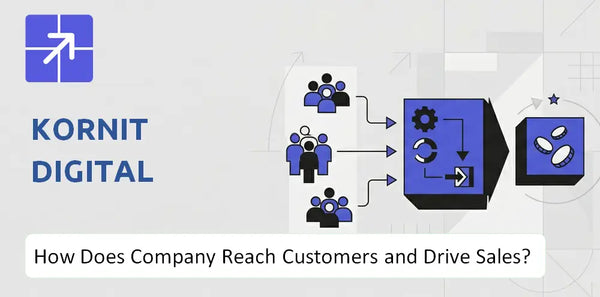
Kornit leans on TCO proofs, dealer networks, and software subscriptions to drive installs and ink consumption; emphasize quick ROI to close enterprise deals and expand consumables revenue. See product placement in Kornit Digital BCG Matrix Analysis.
Who Does Kornit Digital Want to Sell To?
Kornit Digital targets high-volume textile producers needing agility and scalability: global brands and retailers, print-on-demand fulfillers, and traditional commercial screen printers. The firm wins customers by selling labor-saving, compliant industrial printers that enable near-shoring, 24/7 reliability, and automation for producers processing >100,000 units/year.
 Primary: Global Brands and Retailers
Global brands and retailers such as mass-market e-tailers and sportswear leaders seek to de-risk supply chains via near-shoring and faster GTM. Kornit Digital customer acquisition focuses on pitching labor savings, reduced lead times, and environmental compliance to buyers responsible for supply chain resilience and sustainability; typical target buyers manage >100,000 units annually.
Secondary: Custom Decorators and Fulfillers
Print-on-demand platforms and fulfillers like Printful-scale operators require 24/7 uptime and tight e-commerce integrations. Kornit Digital go-to-market strategy emphasizes API/e-commerce hooks, predictable throughput, and financing options to convert digital textile printing sales channels into long-term accounts.
Tertiary: Commercial Screen Printers
Traditional screen printers looking to automate labor-intensive processes are pursued with retrofit and trade-up offers. The sales model highlights ROI for shops crossing 100,000 units/year, where Apollo and Atlas MAX systems drive headcount reduction and compliance with environmental regulations.
Market Positioning: Industrial, Scalable, Sustainable
Kornit positions itself as the industrial leader for digital textile printing, selling scalability and sustainability to enterprise buyers. The Kornit Digital sales model bundles hardware, inks, software, and service contracts; in 2025 pipeline metrics showed enterprise deals accounting for a majority of machine revenue.
Why This Positioning Works
Buyers prioritize near-shoring, reduced inventory risk, and ESG compliance; Kornit's pitch maps directly to those needs with measurable metrics: throughput increases, lower water/chemical usage, and multi-shift reliability. Case evidence and targeted trade-show lead generation tactics convert demand into machine sales and recurring consumables revenue; see Growth Outlook of Kornit Digital Company for context.
Ideal Customer Profile and Economics
The ideal customer processes over 100,000 units annually, where capital expenditure on Apollo or Atlas MAX is justified by labor savings, higher gross margins on short-run SKUs, and reduced compliance costs. Kornit Digital lead generation and nurturing strategies prioritize these accounts via demos, site pilots, and distributor financing programs.
Kornit Digital SWOT Analysis
- Complete SWOT Breakdown
- Fully Customizable
- Editable in Excel & Word
- Professional Formatting
- Investor-Ready Format

How Does Kornit Digital Get in Front of Customers?
Kornit Digital gets in front of customers through a blended approach: a specialized direct enterprise sales force plus high-visibility industrial demos at trade shows and integrations with e-commerce and software partners to capture print-on-demand and fulfillment accounts.

Enterprise direct sales as the primary acquisition channel
Kornit Digital customer acquisition centers on a consultative direct sales team targeting large apparel brands and fulfillment operators. Sales reps quantify benefits – reduced water, cut inventory markdowns, and payback timelines – so deal sizes skew high, often >US$1m for multi-machine deployments in 2025.
Digital marketing and platform integrations for online reach
Kornit leverages e-commerce integrations and software partners to surface its systems inside merchants' digital storefronts and fulfillment stacks, driving inbound leads from print-on-demand B2B growth tactics. Paid search, LinkedIn thought leadership, and targeted email nurture campaigns support lead generation for sales-qualified opportunities.
Trade shows, demos, and distribution access
Kornit Digital go-to-market strategy relies heavily on trade events such as ITMA and FESPA where live demonstrations – Apollo producing 1,500 garments per hour – convert prospects. Strategic reseller and integrator partnerships extend reach into regional markets and fulfillment ecosystems.
Demand generation tactics that drive qualified pipeline
High-impact demos, ROI case studies, targeted account-based marketing, and event-driven promotions form the core of Kornit Digital lead generation and nurturing strategies. Case studies cited by sales show 30 – 40% faster SKU-to-market times for customers deploying digital textile printing sales channels.
Customer acquisition efficiency and sales funnel
Enterprise deals reduce unit marketing spend; Kornit's sales model emphasizes longer sales cycles but higher lifetime value. In 2025, average deal sizes and service contracts improved gross visibility into recurring revenue from consumables and cloud services.
Most important reach advantage in 2025 – 2026
The dominant advantage is integrated channel placement: being embedded in e-commerce and fulfillment platforms makes Kornit Digital the default for automated, cloud-connected fulfillment centers, accelerating conversion of demand into machine sales. See Competitive Landscape of Kornit Digital Company for context: Competitive Landscape of Kornit Digital Company
Kornit Digital Business Model Canvas
- One-time Payment
- No Research Needed – Save Hours of Work
- Built by Experts, Trusted by Consultants
- Instant Download, Ready to Use
- 100% Editable, Fully Customizable

How Does Kornit Digital Turn Attention Into Sales?
Kornit Digital turns attention into sales by selling industrial printers as entry points and monetizing high-margin NeoPigment inks and consumables; KornitX software then locks customers into recurring purchases and integrated workflows so revenue scales with volume rather than repeat acquisition. This razor-and-blade approach plus software-driven switching costs converts interest into predictable, repeatable revenue.
Core Sales Model: Hardware-to-Consumables Platform
Kornit Digital sells industrial direct-to-garment systems through direct sales, channel partners, and distributors, then drives ongoing revenue via proprietary NeoPigment inks and consumables. The initial machine sale finances deployment; the commercial core is recurring ink spend tied to customer production volumes and Kornit Digital customer acquisition through trade shows, demos, and reseller networks.
Pricing and Monetization Logic: Razor-and-Blade with Software Lock-In
Pricing mixes one-time hardware fees (often financed) with usage-based consumable sales and service contracts; NeoPigment inks carry higher gross margins than printers. Kornit offers financing and pay-per-print economics for print-on-demand B2B growth tactics to lower upfront friction and accelerate adoption.
Conversion and Purchase Drivers: Integration, Trust, and ROI
Sales convert via site demos, sample runs, ROI models, and KornitX e-commerce integrations for print fulfillment that show throughput and margin improvement. Sales funnel activities include targeted Kornit Digital marketing channels for apparel printers, trade show lead capture, and proof-of-concept installs that reduce perceived risk.
Repeat Revenue and Customer Expansion: Recurring Ink Sales and Software Stickiness
Once production is digitized via KornitX, switching costs rise and recurring ink consumption scales with order volume; Kornit reports recurring revenue growth driven by consumables and services, with consumables contributing a materially higher gross margin and predictable lifetime value. Upsells include service plans, larger systems, and Kornit partner and reseller program benefits.
For operational context and revenue breakdowns tied to this sales model see How Kornit Digital Company Works and Makes Money
Kornit Digital Marketing Mix
- Complete Marketing Mix Analysis
- Effortlessly Communicate Your Business Strategy
- Investor-Ready Format
- 100% Editable and Customizable
- Clear and Structured Layout

How Strong Does Kornit Digital's Commercial Engine Look Going Forward?
Kornit Digital's commercial engine looks notably stronger heading into mid-2026 as Apollo adoption reaches mass-production scale and capital spending by major fulfillers resurges; this should lift consumables-led revenue while near-shoring and ESG trends support demand, though macro softness or slower fleet replacement could weigh on growth.
What Supports Future Demand
Wide Apollo platform adoption creates repeat consumables demand; Kornit Digital customer acquisition benefits from strong product-market fit and existing install base. The 2025 fiscal rebound to roughly $340,000,000 revenue with consumables growth outpacing hardware by 12 percent signals durable aftermarket cash flow and loyalty.
Channel and Marketing Effectiveness
Direct sales to large fulfillers, a growing reseller network, and trade-show lead generation tactics keep Kornit Digital go-to-market strategy broad and effective. E-commerce integrations and print-on-demand B2B growth tactics improve lead-to-order conversion and shorten the Kornit Digital sales funnel for print-on-demand businesses.
Risks to Commercial Performance
Key risks include cyclical capex pauses among fulfillers, pricing pressure on ink and consumables, and slower-than-expected migration from offshore mass-production. If ink volumes fail to reach the projected 20 percent increase for 2025/2026, consumables-led revenue and EBITDA recovery would be impaired.
The Overall Sales and Marketing Outlook
Outlook is cautiously optimistic: sales model and channels appear adaptable and scalable, supported by secular near-shoring and ESG tailwinds; the market stabilization in 2024 plus sustained positive EBITDA guidance underpin a view of accelerating strength into 2026. See a concise corporate history for context: History and Background of Kornit Digital Company
Kornit Digital Boston Consulting Group Matrix
- Built by Experts, Trusted by Consultants
- Structured for Consultants, Students, and Founders
- 100% Editable in Microsoft Word & Excel
- Instant Digital Download – Use Immediately
- Compatible with Mac & PC – Fully Unlocked

Related Blogs
- What Is the History of Kornit Digital Company and How Did It Evolve?
- What Is the Competitive Landscape of Kornit Digital Company and How Does It Compete?
- What Is the Growth Outlook of Kornit Digital Company and Where Is It Heading?
- How Does Kornit Digital Company Work and What Drives Its Business Model?
- What Do the Mission, Vision, and Core Values of Kornit Digital Company Reveal?
- Who Are the Core Customers in Kornit Digital Company's Target Market?
- Who Owns Kornit Digital Company Today and Who Holds Control?
Frequently Asked Questions
Kornit Digital primarily targets global brands and retailers, print-on-demand fulfillers, and commercial screen printers. The article says it focuses on high-volume textile producers that need agility, scalability, labor savings, and compliance. The ideal customer processes over 100,000 units annually, where industrial automation and near-shoring create clear business value.
Disclaimer
All information, articles, and product details provided on this website are for general informational and educational purposes only. We do not claim any ownership over, nor do we intend to infringe upon, any trademarks, copyrights, logos, brand names, or other intellectual property mentioned or depicted on this site. Such intellectual property remains the property of its respective owners, and any references here are made solely for identification or informational purposes, without implying any affiliation, endorsement, or partnership.
We make no representations or warranties, express or implied, regarding the accuracy, completeness, or suitability of any content or products presented. Nothing on this website should be construed as legal, tax, investment, financial, medical, or other professional advice. In addition, no part of this site - including articles or product references - constitutes a solicitation, recommendation, endorsement, advertisement, or offer to buy or sell any securities, franchises, or other financial instruments, particularly in jurisdictions where such activity would be unlawful.
All content is of a general nature and may not address the specific circumstances of any individual or entity. It is not a substitute for professional advice or services. Any actions you take based on the information provided here are strictly at your own risk. You accept full responsibility for any decisions or outcomes arising from your use of this website and agree to release us from any liability in connection with your use of, or reliance upon, the content or products found herein.