
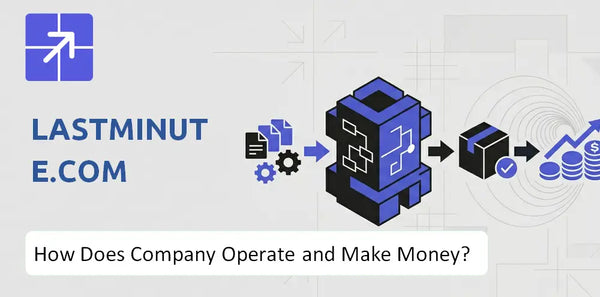
How does lastminute.com package and sell holiday bundles to capture margin while operating as a capital-light travel intermediary?
lastminute.com aggregates inventory and sells bundled holidays rather than owning assets, so it earns fees and commissions on bookings. This matters because by 2025 the firm shifted toward higher-margin packages, increasing dependency on marketing ROI and conversion rates amid tight travel demand.
Focus on improving paid-search conversion and dynamic packaging margins; tracking CPA and average order value drove the 2025 shift toward bundled offerings. See product analysis: lastminute.com BCG Matrix Analysis
What Does lastminute.com Actually Sell?
lastminute.com sells travel intermediation: bundled Dynamic Packages (flight+hotel), standalone flights, hotels, car rentals, and travel insurance via web and mobile platforms; customers pay for convenience, perceived discounts, and real-time package pricing backed by dynamic pricing and OTA inventory sourcing.
 Core product: Dynamic Package and travel inventory
Dynamic Package bundles flights and hotels into a single discounted purchase in real time using dynamic pricing in travel; additionally offers standalone flight bookings, hotel stays, car rentals, and travel insurance across its mobile and desktop platforms.
Main buyers: Consumers and travel suppliers
Leisure and value-seeking travelers in Europe buy packages and flash-sales via the lastminute.com mobile app; airlines, hotels, and car rental partners buy distribution and excess-capacity offload through OTA channels and B2B/white-label services.
Customer value: price, convenience, and inventory access
Customers get perceived savings – packages that can be up to 15 – 30% cheaper versus separately booked components in sample fare comparisons – and one – stop checkout, mobile booking features, and time-limited flash sales that drive conversion.
Differentiator: real-time bundling and supplier channel access
lastminute.com stands out by combining dynamic packaging, yield-management algorithms, and a large European audience so suppliers can clear unsold inventory without publicly lowering rack rates; affiliate partnerships and targeted marketing amplify distribution.
For more on corporate control and strategic positioning see Ownership and Control of lastminute.com Company.
lastminute.com SWOT Analysis
- Complete SWOT Breakdown
- Fully Customizable
- Editable in Excel & Word
- Professional Formatting
- Investor-Ready Format

How Does lastminute.com Run Its Business Day to Day?
lastminute.com runs day-to-day as a tech-led online travel agency: a real-time inventory aggregator routes airline seats and 1M+ accommodations into multi-brand booking flows, while AI-driven pricing and performance marketing convert traffic into transactions across European segments.

Operating model: real-time aggregation and conversion
lastminute.com business model centers on a proprietary tech stack that aggregates live fares and hotel availability, normalizes rates, and exposes options via brand-specific funnels (lastminute.com, Rumbo, Volagratis, weg.de) to capture regional demand.
Product delivery: seamless online booking experience
Customers search on web or mobile, see dynamic pricing and package options powered by AI, and complete bookings via integrated payment gateways; digital confirmations and supplier APIs finalize travel tickets and vouchers in real time.
Production & sourcing: broad supplier connections
Inventory is sourced from hundreds of airlines and >1,000,000 accommodation providers via GDS, direct integrations, and channel managers; contracts combine commission and net-rate models to support packaged and stand-alone offers.
Sales channels: multi-brand, meta, and paid search
Daily customer acquisition uses performance marketing (Google Search keyword bidding), the in-house meta-search Jetcost, direct apps/sites, affiliates, and OTA partnerships; paid search accounts for a material share of bookings and CAC.
Key assets & partnerships: tech, brands, and supplier network
Core assets include a proprietary aggregation engine, AI personalization, the Jetcost meta-search, multiple European brands, plus partnerships with airlines, hotel chains, and channel managers that secure inventory and negotiated commission structures.
Why the model works: scale, data, and real-time pricing
Scale across brands and suppliers yields richer data for AI-driven personalization and dynamic pricing, reducing per-booking labor – by early 2026 AI enhancements increased bookings per employee by an estimated 35% in company disclosures, improving margins.
Traffic and conversion metrics are monitored hourly: performance marketing drives ~40 – 55% of sessions, Jetcost funnels incremental demand, and dynamic pricing (yield management) captures fare differentials; commission and markup mix varies by product, with hotel commissions commonly 10 – 20% and packaged margins higher due to markups and ancillary fees.
Operational cadence: inventory syncs continuously via APIs; pricing engines reprice every seconds for high-demand routes; customer service handles post – booking issues through centralized hubs; fraud and payment systems run 24/7 to protect revenue. See related analysis on sales and marketing in this piece: Sales and Marketing Strategy of lastminute.com Company
lastminute.com Business Model Canvas
- One-time Payment
- No Research Needed – Save Hours of Work
- Built by Experts, Trusted by Consultants
- Instant Download, Ready to Use
- 100% Editable, Fully Customizable

How Does Revenue Flow Through lastminute.com?
Revenue at lastminute.com flows from bookings and advertising: customers generate transactions via flights, hotels, and packages, which convert demand into fees, markups, and ad sales. The company turns higher-margin Dynamic Packages into merchant revenue while standalone bookings yield lower commissions or fixed service fees.
Dynamic Packages: the primary revenue engine
lastminute.com earns its largest margin when it acts as merchant of record on Dynamic Packages, capturing a take rate typically between 12 percent and 15 percent of Gross Travel Value (GTV). In 2025 the company reported GTV exceeding 3.9 billion euros, making package merchanting the main profit driver.
Ancillaries, advertising, and merchant markups
Secondary income comes from ancillaries (travel protection, flexible cancellation), merchant markups on hotels and car rentals, and a media division that sells targeted ads to tourism boards and airline partners, which are high-margin relative to ticket commissions.
Pricing and monetization model
Monetization mixes thin commissions or flat service fees on standalone flights with higher markups when lastminute.com is merchant of record; additional revenue comes from ancillary fees and sold advertising inventory. Dynamic pricing in travel and yield management increase realized take rates on packaged bookings.
What drives revenue most
Volume of packaged bookings, average order value, and the percentage of bookings sold as Dynamic Packages determine revenue most strongly; advertising CPMs and ancillaries lift margins further. See market and customer segmentation in Target Customers and Market of lastminute.com Company.
lastminute.com Marketing Mix
- Complete Marketing Mix Analysis
- Effortlessly Communicate Your Business Strategy
- Investor-Ready Format
- 100% Editable and Customizable
- Clear and Structured Layout

What Makes lastminute.com's Model Sustainable or Fragile?
lastminute.com's model is sustained by proprietary Dynamic Packaging and a shift to higher-margin customers, but it is fragile due to heavy reliance on Google for traffic and volatile airline distribution fees that can spike customer acquisition costs and compress net margins.
Dynamic Packaging as a Defensive Moat
Dynamic Packaging and bundled pricing create complex offers that search engines and metasearch find hard to replicate, enabling higher conversion rates and better yield management across flights, hotels, and extras.
Key Assets: Tech, Partnerships, and Customer Data
Proprietary inventory management, supplier partnerships with airlines and hotels, and first-party customer data power personalized offers and flash sales; the mobile app is central to moving users off paid channels to direct repeat business.
Dependencies and Concentration Risks
lastminute.com is highly dependent on Google for organic and paid traffic, on airline distribution fees (IATA/EDIFACT/GDS rules), and on supplier inventory access; any material increase in acquisition cost or distribution fees erodes the OTA revenue model and commission margins.
Durability in 2025/2026: Resilient but Exposed
Management targets a 16 percent EBITDA margin in fiscal 2025 after cost cuts and focus on higher-value customers, showing resilience as a niche OTA leader; long-term durability depends on migrating users to the lastminute.com mobile app to lower acquisition costs and secure direct repeat revenue (Mission, Vision, and Values of lastminute.com Company).
lastminute.com Boston Consulting Group Matrix
- Built by Experts, Trusted by Consultants
- Structured for Consultants, Students, and Founders
- 100% Editable in Microsoft Word & Excel
- Instant Digital Download – Use Immediately
- Compatible with Mac & PC – Fully Unlocked

Related Blogs
- What Is the History of lastminute.com Company and How Did It Evolve?
- What Is the Competitive Landscape of lastminute.com Company and How Does It Compete?
- What Is the Growth Outlook of lastminute.com Company and Where Is It Heading?
- How Does lastminute.com Company Reach Customers and Turn Demand into Sales?
- What Do the Mission, Vision, and Core Values of lastminute.com Company Reveal?
- Who Are the Core Customers in lastminute.com Company's Target Market?
- Who Owns lastminute.com Company Today and Who Holds Control?
Frequently Asked Questions
lastminute.com sells travel intermediation products. Its core offer is Dynamic Packages that bundle flights and hotels, plus standalone flights, hotels, car rentals, and travel insurance. Customers use the web and mobile platforms to get convenience, one-stop checkout, and real-time pricing backed by OTA inventory sourcing.
Disclaimer
All information, articles, and product details provided on this website are for general informational and educational purposes only. We do not claim any ownership over, nor do we intend to infringe upon, any trademarks, copyrights, logos, brand names, or other intellectual property mentioned or depicted on this site. Such intellectual property remains the property of its respective owners, and any references here are made solely for identification or informational purposes, without implying any affiliation, endorsement, or partnership.
We make no representations or warranties, express or implied, regarding the accuracy, completeness, or suitability of any content or products presented. Nothing on this website should be construed as legal, tax, investment, financial, medical, or other professional advice. In addition, no part of this site - including articles or product references - constitutes a solicitation, recommendation, endorsement, advertisement, or offer to buy or sell any securities, franchises, or other financial instruments, particularly in jurisdictions where such activity would be unlawful.
All content is of a general nature and may not address the specific circumstances of any individual or entity. It is not a substitute for professional advice or services. Any actions you take based on the information provided here are strictly at your own risk. You accept full responsibility for any decisions or outcomes arising from your use of this website and agree to release us from any liability in connection with your use of, or reliance upon, the content or products found herein.