
How does Nayax integrate payments, IoT, and software to run unattended commerce as a recurring-revenue business?
Nayax bundles hardware, cloud software, and payment processing so operators run vending and self-service sites without multiple vendors. This matters because Nayax reported accelerating cashless transaction growth in 2025, signaling rising ARPU and stickiness.
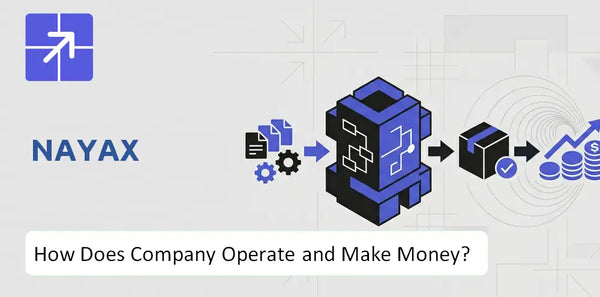
Nayax captures recurring fees from device telemetry, payments, and SaaS subscriptions; operators benefit from reduced ops cost and higher transaction capture. See product detail: Nayax BCG Matrix Analysis
What Does Nayax Actually Sell?
Nayax sells a business-in-a-box for unattended retail: IoT-enabled payment terminals (VPOS Touch, Onyx), telemetry devices, a cloud management platform, and a consumer engagement suite. Customers pay for hardware, transaction processing, cloud telemetry, and subscription-based marketing and loyalty tools that drive repeat sales.
 Core products and platforms
Nayax offers EMV and contactless-enabled terminals (VPOS Touch, Onyx), telemetry modules for remote monitoring, a cloud-based Nayax telemetry platform for inventory and machine health, and a consumer engagement suite with loyalty and CRM features. Revenue derives from device sales, a SaaS subscription model, and transaction fees per cashless payments for vending.
Who buys it
Main buyers are vending operators, unattended retail owners (coffee, micro-markets), fleet and self-service kiosk operators, and retail chains integrating Nayax payment gateway for unattended retail. Channel partners and retailers use Nayax payment solutions to add cashless payments for vending and POS integration.
Customer value delivered
Operators get real-time sales and inventory data, reduced on-site servicing via remote diagnostics, increased sales from cashless payments, and customer retention through loyalty programs. Nayax telemetry platform customers report lower downtime and higher transaction capture rates versus cash-only machines.
Why customers choose Nayax
Nayax stands out for end-to-end integration: certified EMV/contactless hardware, cloud analytics, and integrated marketing tools in one stack – simplifying merchant onboarding and compliance. Pricing mixes device sale, subscription (SaaS), and transaction fees, aligning incentives for scale and recurring revenue; see further detail in Ownership and Control of Nayax Company.
Nayax SWOT Analysis
- Complete SWOT Breakdown
- Fully Customizable
- Editable in Excel & Word
- Professional Formatting
- Investor-Ready Format

How Does Nayax Run Its Business Day to Day?
Nayax runs day-to-day as a payments and telemetry intermediary that connects unattended retail and EV/parking operators to cloud services; transactions and device telemetry flow from edge hardware through encrypted cellular/satellite links into global cloud systems for authorization, settlement, and operator dashboards. Operations center on maintaining 1.6 million+ managed devices, real-time data processing, and partner integrations that keep inventory, payments, loyalty, and reporting synchronized.

Operational backbone and payment routing
Every customer tap routes via Nayax payment solutions: edge device encrypts card or contactless EMV data, sends it over cellular/satellite to the Nayax payment gateway for tokenization, authorization, and settlement to acquirers. The operating model is continuous, automated, and monitored from regional NOC teams.
Product and service delivery to operators
Operators access services through SaaS dashboards and APIs; hardware is sold or leased via distributors, then registered to operator accounts. Cashless payments for vending and EV charging are delivered as a bundled hardware-plus-subscription offering with optional loyalty and CRM features.
Hardware sourcing and software development
Nayax sources telemetry and POS hardware from OEM partners and develops firmware and cloud software in-house; continuous CI/CD releases roll out security, EMV/contactless updates, and new telemetry collectors. Field firmware updates and device provisioning are routine daily tasks.
Sales channels and partner distribution
Main channels are equipment manufacturers, distributors, and direct sales to large operators; integrations with POS systems and platform partners expand reach. Resellers bundle Nayax hardware and the Nayax telemetry platform into turnkey unattended retail solutions.
Key assets, systems, and partnerships
Key assets: global cloud infrastructure, device fleet management, payment gateway, and partner network. Strategic partnerships with acquirers, OEMs, and telcos keep devices connected and payments settled; redundancy and regional data centers support instant settlement and compliance.
What makes the model work in practice
High uptime, end-to-end encryption, and telemetry that feeds operators actionable inventory and revenue data drive retention; Nayax transaction fees and pricing plus SaaS subscriptions create recurring revenue. Monitoring, technical support, and fast device provisioning scale the business efficiently.
Read more on the company context in History and Background of Nayax Company
Nayax Business Model Canvas
- One-time Payment
- No Research Needed – Save Hours of Work
- Built by Experts, Trusted by Consultants
- Instant Download, Ready to Use
- 100% Editable, Fully Customizable

How Does Revenue Flow Through Nayax?
Nayax converts demand into cash via hardware sales, recurring SaaS subscriptions, and transaction processing fees – each step turns device deployment and consumer payments into revenue. Operators buy devices, connect them to the Nayax telemetry platform, and generate ongoing income streams from subscriptions and payment volumes.
Primary revenue: recurring SaaS and processing fees
The largest revenue source is monthly SaaS subscriptions plus percentage-based payment processing fees collected on transactions routed through Nayax payment solutions. As of fiscal 2025 recurring revenue from SaaS and processing fees accounts for nearly 75% of total revenue, improving predictability and scaling with cashless payments for vending and unattended retail.
Additional revenue: hardware sales and services
Upfront device sales of card readers and IoT modules, integration fees, installation, and premium services (loyalty, CRM, EMV/contactless upgrades) provide immediate cash and higher-margin add-ons. Hardware and professional services remain key for merchant onboarding and compliance.
Pricing and monetization model
Nayax monetizes via device sales, a SaaS subscription model per connected device, and transaction commissions: fixed monthly fees plus a percentage-based processing fee per sale. This hybrid model ties revenue to both installed base growth and transaction volume through Nayax payment gateway for unattended retail.
What drives revenue most
Two factors drive revenue: growth in cashless payments (higher transaction volume raises processing fee income) and expansion of the installed device base (more subscriptions). In 2025 global shift to contactless payments and Nayax IoT telemetry benefits for operators mean revenue scales with both transactions and device uptime. See market positioning in Competitive Landscape of Nayax Company.
Nayax Marketing Mix
- Complete Marketing Mix Analysis
- Effortlessly Communicate Your Business Strategy
- Investor-Ready Format
- 100% Editable and Customizable
- Clear and Structured Layout

What Makes Nayax's Model Sustainable or Fragile?
Nayax's model is sustainable due to high switching costs and rapid EV charging growth, but fragile from hardware supply-chain risk and sensitivity to consumer spending. Structural strengths include sticky payments and telemetry; dependencies include terminal suppliers and transaction volumes, which can quickly reduce processing-fee revenue if spending falls.
High switching costs and stickiness
Operators retain Nayax for years because migrating historical sales, loyalty, and inventory data into a new system is operationally costly. Retention has remained above 95 percent, anchoring recurring SaaS and transaction-fee revenue.
Integrated payments plus telemetry
Nayax combines cashless payments with remote monitoring (telemetry), loyalty, and CRM features, so clients buy both hardware and ongoing Nayax payment solutions subscriptions. This bundling increases average revenue per site and raises barriers to competitor entry.
Hardware and supply-chain concentration
Nayax depends on third-party terminal and chipset suppliers; global shortages in 2021 – 2023 showed how device lead-times can delay deployments. A hardware bottleneck would cap growth of the Nayax telemetry platform and the unattended retail payment provider footprint.
Durability in 2025/2026 – diversified but exposed
By 2025 Nayax expanded into attended retail software and EV charging infrastructure, diversifying revenue beyond vending transaction fees and strengthening resilience. Still, if transaction volumes fall 10 – 15 percent in an economic slowdown, processing-fee revenue would decline immediately, making near-term cashflow sensitive to consumer discretionary spending. Read more on commercial strategy in the Sales and Marketing Strategy of Nayax Company.
Nayax Boston Consulting Group Matrix
- Built by Experts, Trusted by Consultants
- Structured for Consultants, Students, and Founders
- 100% Editable in Microsoft Word & Excel
- Instant Digital Download – Use Immediately
- Compatible with Mac & PC – Fully Unlocked

Related Blogs
- What Is the History of Nayax Company and How Did It Evolve?
- What Is the Competitive Landscape of Nayax Company and How Does It Compete?
- What Is the Growth Outlook of Nayax Company and Where Is It Heading?
- How Does Nayax Company Reach Customers and Turn Demand into Sales?
- What Do the Mission, Vision, and Core Values of Nayax Company Reveal?
- Who Are the Core Customers in Nayax Company's Target Market?
- Who Owns Nayax Company Today and Who Holds Control?
Frequently Asked Questions
Nayax sells a business-in-a-box for unattended retail. Its offering includes IoT-enabled payment terminals, telemetry devices, a cloud management platform, and a consumer engagement suite. Customers pay for hardware, transaction processing, cloud telemetry, and subscription-based marketing and loyalty tools that support repeat sales.
Disclaimer
All information, articles, and product details provided on this website are for general informational and educational purposes only. We do not claim any ownership over, nor do we intend to infringe upon, any trademarks, copyrights, logos, brand names, or other intellectual property mentioned or depicted on this site. Such intellectual property remains the property of its respective owners, and any references here are made solely for identification or informational purposes, without implying any affiliation, endorsement, or partnership.
We make no representations or warranties, express or implied, regarding the accuracy, completeness, or suitability of any content or products presented. Nothing on this website should be construed as legal, tax, investment, financial, medical, or other professional advice. In addition, no part of this site - including articles or product references - constitutes a solicitation, recommendation, endorsement, advertisement, or offer to buy or sell any securities, franchises, or other financial instruments, particularly in jurisdictions where such activity would be unlawful.
All content is of a general nature and may not address the specific circumstances of any individual or entity. It is not a substitute for professional advice or services. Any actions you take based on the information provided here are strictly at your own risk. You accept full responsibility for any decisions or outcomes arising from your use of this website and agree to release us from any liability in connection with your use of, or reliance upon, the content or products found herein.