
How does Nayax convert outbound sales and channel partnerships into recurring payments revenue?
Nayax shifts from hardware sales to a recurring-revenue fintech platform, raising client switching costs via integrated payments, telemetry, and management software. In 2025 Nayax reported growth in SaaS-enabled payment volumes, signaling stronger platform monetization.
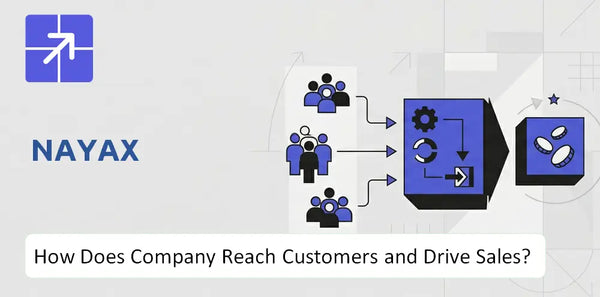
Nayax reaches customers through direct enterprise sales, channel partners, and marketplaces, then captures share via subscription fees and transaction margins. Track adoption with telemetry-driven upsell triggers and usage-based billing.
See product insight: Nayax BCG Matrix Analysis
Who Does Nayax Want to Sell To?
Nayax targets unattended retail operators from single-location vending owners to global enterprise accounts, focusing on businesses digitizing cash-heavy workflows and scaling self-service infrastructure without adding staff. In 2025 Nayax doubles down on Tier 1 global retailers and large EV charging operators needing multi-currency support and centralized cross-border management.
 Main target: Large unattended retail and EV charging operators
Nayax wins high-value, multi-site operators – national vending fleets, automated laundromats, car washes, and EV charging networks – by offering scalable Nayax payment solutions, centralized telemetry, and retail payment analytics that reduce cash handling and speed reconciliation.
Additional segments: SMBs and vertical specialists
Secondary targets include small-to-medium enterprises running a few vending machines, hospitality kiosks, and franchise operators seeking cashless payment systems, POS integration benefits, and loyalty features to boost per-device revenue and retention.
Market positioning: Enterprise-capable, operator-focused payments platform
Nayax positions itself as an omnichannel payments and telemetry vendor combining hardware, cloud management, and analytics – aimed at operators who need robust remote monitoring and multi-currency settlements across borders rather than simple single-machine card readers.
Why this positioning works: scale, compliance, and integrations
The message resonates because Nayax offers centralized device management, API integration guides for developers, and loyalty and promotion tools that drive repeat purchases; by 2025 Nayax emphasizes enterprise SLAs and cross – border settlement capabilities required by Tier 1 retailers and large EV charging operators. See Ownership and Control of Nayax Company
Nayax SWOT Analysis
- Complete SWOT Breakdown
- Fully Customizable
- Editable in Excel & Word
- Professional Formatting
- Investor-Ready Format

How Does Nayax Get in Front of Customers?
Nayax gets in front of customers through a hybrid go-to-market: direct enterprise sales and OEM integrations for large accounts, plus a global network of over 85 distributors and resellers for small operators; digital outreach targets vertical trade shows and search to capture demand for cashless payment systems and vending machine telemetry.

Enterprise and OEM Partnerships Drive Large Deals
Nayax relies on a direct sales force to close large-scale enterprise accounts and on strategic OEM deals where Nayax hardware is pre-installed at the factory, shortening the sales cycle and embedding Nayax payment solutions into machines before deployment.
Digital Marketing and Targeted Search Visibility
Nayax uses search engine strategies and content targeting operators seeking remote monitoring and cashless payments; paid search and SEO focus on keywords like Nayax payment solutions and vending machine telemetry to capture intent-driven leads.
Distributor Network and Local Reseller Access
For the fragmented small-business market, Nayax sells through a global network of over 85 distributors and resellers across more than 80 countries, providing local sales, installation, and support for retailers and vending operators.
Event-Driven Demand Generation
Nayax concentrates digital demand generation on vertical-specific trade shows and industry events, complemented by targeted campaigns solving pain points like remote inventory management and the transition to cashless payments.
Acquisition Efficiency and Sales Funnel
Mixing OEMs, direct sales, and resellers keeps customer acquisition cost lower for small accounts while enabling high average contract values for enterprise deals; OEM pre-installation reduces time-to-revenue and boosts conversion rates.
Key Reach Advantage in 2025
The strongest advantage is the combined OEM and distributor model: OEM embeds create scale at manufacture, while the distributor network provides local coverage – together enabling rapid deployment of Nayax omnichannel payment solutions for retailers and vending operators in 2025.
Read more context in this company profile: History and Background of Nayax Company
Nayax Business Model Canvas
- One-time Payment
- No Research Needed – Save Hours of Work
- Built by Experts, Trusted by Consultants
- Instant Download, Ready to Use
- 100% Editable, Fully Customizable

How Does Nayax Turn Attention Into Sales?
Nayax turns attention into sales by selling entry hardware (Onyx, Nova) then converting deployments into recurring revenue via payments, SaaS telemetry, and value-added services; upsells and loyalty features drive lifetime value and operator retention.
Core sales model: land then expand with hardware-led entry
Nayax primarily uses direct and partner-led sales to place terminals and telemetry devices into vending, retail, and unattended retail channels, then converts those installations into subscription and transaction relationships through Nayax payment solutions and channel partners.
Pricing and monetization logic: hardware plus recurring services
Nayax sells devices as one-time hardware purchases and charges transaction processing fees plus monthly SaaS subscriptions for vending machine telemetry and retail payment analytics; value-added services such as Monyx Wallet and loyalty programs add incremental recurring revenue.
Conversion and purchase drivers: ROI, convenience, and channel support
Operators convert when hardware improves sales through cashless payment systems and when telemetry reduces downtime; competitive pricing, partner integrations, and proof points such as faster transactions and increased average ticket size drive purchases.
Repeat revenue and expansion: subscriptions, fees, and upsells
After installation, Nayax expands revenue via transaction fees, monthly SaaS for remote monitoring, and add-ons like loyalty and promotions; by early 2026 recurring revenue reached 70% of total sales, boosting lifetime value and operator stickiness.
Key metrics: device-led installs create a payback window typically under 12 months for high-traffic vending and retail sites; Nayax reported accelerated recurring mix to 70% by early 2026, with transaction processing and subscriptions forming the bulk of ARR; upsell levers include loyalty, real-time inventory alerts, and POS integrations that raise per-machine revenue and retention. Read the company background in Mission, Vision, and Values of Nayax Company
Nayax Marketing Mix
- Complete Marketing Mix Analysis
- Effortlessly Communicate Your Business Strategy
- Investor-Ready Format
- 100% Editable and Customizable
- Clear and Structured Layout

How Strong Does Nayax's Commercial Engine Look Going Forward?
The commercial engine for Nayax looks strong entering 2025/2026, driven by secular cashless trends and EV charging growth, though hardware margin volatility and integration risk could slow momentum. Key supports include ramping SaaS revenue, Retail Pro acquisition expanding attended retail, and projected device scale; main weaknesses are supply – chain pressure and integration execution.
What Supports Future Demand
Global shift to cashless payment systems and expansion of EV charging boost addressable market; Nayax payment solutions scale to an expected >1.4 million devices by end – 2026 supporting recurring transactions. The Retail Pro acquisition expands into attended retail, diversifying revenue and improving product – market fit for retail payment analytics and POS integrations.
Channel and Marketing Effectiveness
Nayax customer acquisition leverages OEM partnerships, direct sales to vending operators, and channel resellers for fast deploys of Nayax cashless payments for vending machines and Nayax omnichannel payment solutions for retailers. Digital lead gen, case studies, and API integration capabilities shorten the Nayax sales funnel and improve conversion for SMBs and enterprise fleets.
Risks to Commercial Performance
Hardware margins face supply – chain and component price risk that can compress gross margin; foreign currency exposure and higher customer acquisition cost in saturated markets also threaten unit economics. Integration missteps with EV charging management software or Retail Pro could delay cross – sell and retention benefits.
The Overall Sales and Marketing Outlook
Outlook is strong and adaptable: with SaaS and payment processing weight rising, management expects revenue CAGR >30% through 2026 and adjusted EBITDA margins moving toward 20 – 22%, assuming continued device growth and successful integration of EV and Retail Pro assets. See Target Customers and Market of Nayax Company for demand context: Target Customers and Market of Nayax Company
Nayax Boston Consulting Group Matrix
- Built by Experts, Trusted by Consultants
- Structured for Consultants, Students, and Founders
- 100% Editable in Microsoft Word & Excel
- Instant Digital Download – Use Immediately
- Compatible with Mac & PC – Fully Unlocked

Related Blogs
- What Is the History of Nayax Company and How Did It Evolve?
- What Is the Competitive Landscape of Nayax Company and How Does It Compete?
- What Is the Growth Outlook of Nayax Company and Where Is It Heading?
- How Does Nayax Company Work and What Drives Its Business Model?
- What Do the Mission, Vision, and Core Values of Nayax Company Reveal?
- Who Are the Core Customers in Nayax Company's Target Market?
- Who Owns Nayax Company Today and Who Holds Control?
Frequently Asked Questions
Nayax is targeting unattended retail operators, from single-location vending owners to global enterprise accounts. The article also highlights large EV charging operators, automated laundromats, car washes, hospitality kiosks, and franchise operators that want to digitize cash-heavy workflows without adding staff.
Disclaimer
All information, articles, and product details provided on this website are for general informational and educational purposes only. We do not claim any ownership over, nor do we intend to infringe upon, any trademarks, copyrights, logos, brand names, or other intellectual property mentioned or depicted on this site. Such intellectual property remains the property of its respective owners, and any references here are made solely for identification or informational purposes, without implying any affiliation, endorsement, or partnership.
We make no representations or warranties, express or implied, regarding the accuracy, completeness, or suitability of any content or products presented. Nothing on this website should be construed as legal, tax, investment, financial, medical, or other professional advice. In addition, no part of this site - including articles or product references - constitutes a solicitation, recommendation, endorsement, advertisement, or offer to buy or sell any securities, franchises, or other financial instruments, particularly in jurisdictions where such activity would be unlawful.
All content is of a general nature and may not address the specific circumstances of any individual or entity. It is not a substitute for professional advice or services. Any actions you take based on the information provided here are strictly at your own risk. You accept full responsibility for any decisions or outcomes arising from your use of this website and agree to release us from any liability in connection with your use of, or reliance upon, the content or products found herein.