
How does Piston Group operate as a Tier 1 assembly partner and what drives its modular manufacturing revenue?
Piston Group assembles and integrates major automotive systems for OEMs, capturing margin from final integration and value-added modules. This matters because in 2025 it reported expanded EV thermal contracts, highlighting a strategic shift toward electrified platforms and higher-margin services. Piston Group BCG Matrix Analysis
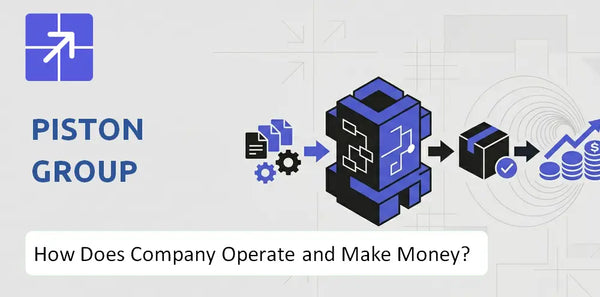
Piston Group scales via long-term OEM contracts, plant-level cost sharing, and engineering services; monitor contract win rates and EV thermal backlog as leading signals.
What Does Piston Group Actually Sell?
Piston Group sells fully integrated automotive modules and engineering services that deliver pre-assembled, sequenced systems – complete interiors, cooling modules, powertrain assemblies, and high-voltage EV battery packs – so OEMs pay for ready-to-fit modules and on-site sequencing that cut factory complexity and logistics.
 What Piston Group Offers
Piston Group provides physical integration, engineering and final assembly of complex automotive modules: complete vehicle interiors, HVAC and cooling modules, engine and transmission assemblies, and high-voltage battery packs with thermal management. Services include testing, sequencing, JIT (just-in-time) delivery and on-site installation engineering, reducing OEM on-line assembly steps.
Who Buys It
Primary customers are global automotive OEMs and tier-1 suppliers that outsource module integration to shrink their plant footprint and complexity. Secondary buyers include EV manufacturers seeking turnkey battery pack assembly and contract manufacturers needing sequencing and logistics support.
What Value Customers Get
Customers get lower in-plant labor, fewer quality holds, and predictable takt-time by receiving pre-tested, line-ready modules. Piston Group's sequencing and logistics cut OEM handling costs and reduce assembly-line downtime; clients report reduction in on-floor assembly labor by up to 30% in comparable integrations.
Why the Offering Stands Out
Piston Group operations combine systems engineering, final-stage assembly and just-in-sequence delivery – so OEMs buy a single-source solution, not loose parts. Their integration reduces logistical complexity, shortens supplier chains, and accelerates EV production ramp-ups; see an ownership overview in Ownership and Control of Piston Group Company.
Piston Group SWOT Analysis
- Complete SWOT Breakdown
- Fully Customizable
- Editable in Excel & Word
- Professional Formatting
- Investor-Ready Format

How Does Piston Group Run Its Business Day to Day?
Piston Group runs high-velocity, Just-in-Sequence manufacturing and logistics across dozens of North American facilities, syncing lines to automaker assembly schedules via real-time data feeds. Daily flow: customer sequence triggers, line assembly, inbound Tier 2 deliveries, and rigorous quality checks to avoid stoppages.

Operating model: Just-in-Sequence, client-synced manufacturing
Piston Group business model centers on Just-in-Sequence (JIS) production that follows live signals from clients such as Ford, GM, and Stellantis. Plants run rolling schedules where each module is built in the exact order the assembly line needs it, minimizing inventory and takt time.
Product or service delivery: Modules delivered to assembly line on sequence
Customers receive finished modules and subassemblies at the exact sequence and time their assembly stations require; carriers and internal logistics move modules directly to plant infeed points, reducing line buffer and lead time.
Production, sourcing, and development: Tiered supplier network and in-house assembly
Piston Group sources thousands of components from Tier 2 suppliers and performs final assembly in-house across dozens of sites. Engineering and process teams maintain standardized work instructions and run continuous improvement (CI) cycles to keep defect rates below client thresholds.
Sales channels and distribution: Contract OEM relationships and plant-level feeds
Revenue comes from long-term contracts with automakers and program-based pricing for modules; distribution is direct to OEM plants using sequenced delivery windows and logistics partners integrated into Piston Group operations.
Key assets, systems, and partnerships: People, IT, and supplier network
The business runs on a workforce exceeding 11,000 employees, ERP/MES (manufacturing execution systems), real-time EDI feeds from OEMs, and a broad Tier 1/2 supplier base. Strategic partnerships with logistics providers and OEM engineering teams are critical.
What makes the model work in practice: sequence discipline and quality focus
Strict sequence adherence, near-zero defect targets, and real-time supply visibility enable reliable service; a single missed part can halt an OEM line within hours, so Piston Group emphasizes redundancy and rapid corrective action.
Operational metrics to watch daily: on-time-in-full (OTIF) for sequenced deliveries, module defect PPM, inventory days of supply (target near zero for finished modules), and supplier lead-time variance; these metrics drive margins in the piston group revenue model and piston group operations. See related analysis in Sales and Marketing Strategy of Piston Group Company
Piston Group Business Model Canvas
- One-time Payment
- No Research Needed – Save Hours of Work
- Built by Experts, Trusted by Consultants
- Instant Download, Ready to Use
- 100% Editable, Fully Customizable

How Does Revenue Flow Through Piston Group?
Revenue at Piston Group Company flows mainly from long-term, high-volume production contracts tied to vehicle platforms; demand converts to revenue as OEM build rates increase and per-unit assembly fees accrue. In 2025 the firm reached an estimated annual revenue run rate of $3.8 billion, with revenues scaling directly with vehicle sales volumes.
Primary revenue: long-term production contracts
Piston Group business model centers on multi-year contracts (typically five to seven years) with OEMs to assemble truck and SUV platforms. These high-volume contracts lock in predictable per-unit fees and link piston group operations to platform build rates.
Additional revenue: services and aftermarket work
Secondary piston group revenue model items include engineering support, prototype builds, short-run specialty assemblies, and limited aftermarket retrofit services that complement the core assembly business.
Pricing and monetization: cost-plus per-unit fees
Monetization follows a cost-plus or per-unit fee structure: Piston Group earns a margin on labor, engineering, and assembly value added to raw components. Margins per unit are thin, but cash flow is strong due to scale.
What drives revenue most: vehicle build rates and platform success
Revenue moves in direct proportion to OEM build rates; when a truck or SUV platform sells well, piston group operations see top-line growth. Scale – producing hundreds of thousands of units annually – turns small per-unit margins into substantial free cash flow.
Key figures and mechanics: 2025 run rate $3.8 billion; contract lengths typically 5 – 7 years; revenue tied to OEM production volumes and per-unit cost-plus fees. See further context in the Competitive Landscape of Piston Group Company: Competitive Landscape of Piston Group Company
Piston Group Marketing Mix
- Complete Marketing Mix Analysis
- Effortlessly Communicate Your Business Strategy
- Investor-Ready Format
- 100% Editable and Customizable
- Clear and Structured Layout

What Makes Piston Group's Model Sustainable or Fragile?
Piston Group's model is sustainable through strategic diversification and Minority Business Enterprise status, which secures supplier-diversity contracts and higher-margin engineering work, but it is fragile from North American concentration, interest-rate sensitivity, and EV retooling costs that pressure margins.
Strategic diversification and supplier-diversity moat
Piston Group business model benefits from being a Minority Business Enterprise, winning supplier-diversity mandates and reducing competitive bidding pressure; acquisitions such as Detroit Thermal Systems and Irvin Automotive moved Piston Group operations into higher-margin thermal-management and proprietary components, helping raise average business-unit margins in 2025.
Key assets, engineering capabilities, and proprietary IP
Piston Group Company holds engineering teams, proprietary thermal-management components, and manufacturing lines that enable integrated services from design to production; these assets support recurring contracts with OEMs and Tier-1s and underpin the piston group revenue model shift toward EV thermal solutions.
Market concentration, demand sensitivity, and capital intensity
Piston Group services are heavily dependent on North American auto production: roughly ~80% of revenue remained North America-exposed in 2025, which concentrates risk; rising labor costs and expensive retooling for EV platforms create margin squeeze; interest-rate-driven capex costs and cyclic consumer demand for new vehicles amplify revenue volatility.
Durability outlook for 2025 – 2026
For 2025 and 2026, the piston group strategy shows cautious resilience as the firm shifts portfolio toward EV thermal management and proprietary components, but durability is conditional: success depends on securing multi-year OEM contracts, managing retooling capex, and navigating fluctuating production volumes between hybrids and full EVs; see Growth Outlook of Piston Group Company for deeper context.
Piston Group Boston Consulting Group Matrix
- Built by Experts, Trusted by Consultants
- Structured for Consultants, Students, and Founders
- 100% Editable in Microsoft Word & Excel
- Instant Digital Download – Use Immediately
- Compatible with Mac & PC – Fully Unlocked

Related Blogs
- What Is the History of Piston Group Company and How Did It Evolve?
- What Is the Competitive Landscape of Piston Group Company and How Does It Compete?
- What Is the Growth Outlook of Piston Group Company and Where Is It Heading?
- How Does Piston Group Company Reach Customers and Turn Demand into Sales?
- What Do the Mission, Vision, and Core Values of Piston Group Company Reveal?
- Who Are the Core Customers in Piston Group Company's Target Market?
- Who Owns Piston Group Company Today and Who Holds Control?
Frequently Asked Questions
Piston Group sells fully integrated automotive modules and engineering services. Its offerings include complete interiors, HVAC and cooling modules, engine and transmission assemblies, and high-voltage EV battery packs. The company also handles testing, sequencing, just-in-time delivery, and on-site installation support for OEMs.
Disclaimer
All information, articles, and product details provided on this website are for general informational and educational purposes only. We do not claim any ownership over, nor do we intend to infringe upon, any trademarks, copyrights, logos, brand names, or other intellectual property mentioned or depicted on this site. Such intellectual property remains the property of its respective owners, and any references here are made solely for identification or informational purposes, without implying any affiliation, endorsement, or partnership.
We make no representations or warranties, express or implied, regarding the accuracy, completeness, or suitability of any content or products presented. Nothing on this website should be construed as legal, tax, investment, financial, medical, or other professional advice. In addition, no part of this site - including articles or product references - constitutes a solicitation, recommendation, endorsement, advertisement, or offer to buy or sell any securities, franchises, or other financial instruments, particularly in jurisdictions where such activity would be unlawful.
All content is of a general nature and may not address the specific circumstances of any individual or entity. It is not a substitute for professional advice or services. Any actions you take based on the information provided here are strictly at your own risk. You accept full responsibility for any decisions or outcomes arising from your use of this website and agree to release us from any liability in connection with your use of, or reliance upon, the content or products found herein.