
How does Prosus operate as a holding investor that scales consumer internet platforms?
Prosus invests in and manages stakes across e – commerce, food delivery, and fintech to capture growth in emerging markets. This matters because its value hinges on realizing gains from Tencent and portfolio exits amid a 2025 shift to profitability discipline; 2025 reports show tighter capital allocation.
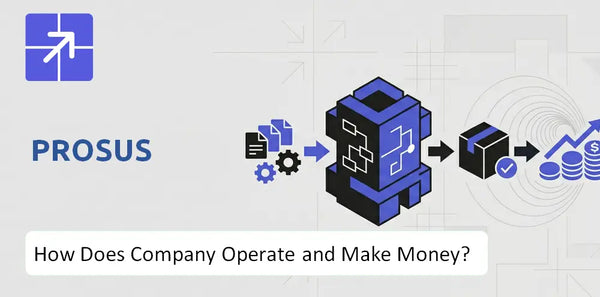
Focus on operational improvements and selective exits to close the valuation gap with Tencent; see Prosus BCG Matrix Analysis for portfolio positioning and exit levers.
What Does Prosus Actually Sell?
Prosus sells equity exposure to fast-growing digital consumer and fintech markets via a managed portfolio of internet businesses; customers pay for access to food delivery, classifieds, payments, and online learning platforms and for portfolio-level growth and diversification.
 Core Offerings: what Prosus actually sells
Prosus company provides shareholders with concentrated equity stakes in market-leading internet platforms across Food Delivery (iFood, Swiggy), Classifieds (OLX Group), Payments and Fintech (PayU), and EdTech (Stack Overflow, Skillsoft). The product is effectively a managed, high-growth tech portfolio offering diversified exposure to India, Brazil, and Southeast Asia.
Who buys it
Buyers are public equity investors, institutional allocators, and retail shareholders seeking emerging-market tech exposure not easily replicated via single listings. Strategic partners and later-stage investors also access minority stakes through Prosus-led rounds and co-investments.
What value customers get
Shareholders receive growth upside from digital adoption, diversification across sectors and geographies, and the benefit of permanent capital and global operational expertise that supports scale and monetization. For portfolio companies, Prosus offers capital, tech scaling know-how, and market expansion support.
Why the offering stands out
Prosus business model stands out because it bundles multiple high-growth internet leaders into one liquid instrument with active portfolio management, reducing single-stock risk while capturing outsized returns from emerging markets. The Naspers and Prosus relationship provides access to capital and governance depth that underpin long-term investments.
By end-FY2025 Prosus held major public and private investments representing over €130 billion in gross asset value across segments, with Food Delivery and Classifieds driving the largest user growth; investors evaluate Prosus for the combination of scale, diversification, and exposure to rising digital monetization. Read more on Ownership and Control of Prosus Company Ownership and Control of Prosus Company
Prosus SWOT Analysis
- Complete SWOT Breakdown
- Fully Customizable
- Editable in Excel & Word
- Professional Formatting
- Investor-Ready Format

How Does Prosus Run Its Business Day to Day?
Prosus runs daily as a hybrid operator and investor: management allocates capital, optimises the portfolio, and executes an open-ended share buyback program while coordinating with Naspers on a cross – holding structure and Tencent disposals to close the NAV discount.

Operating model: hybrid operator-investor
Prosus company combines direct operating control in consolidated businesses and private – equity style minority investing; day – to – day focus is capital allocation, performance oversight, and balance – sheet engineering to lift shareholder returns.
Product or service delivery: platform-led access
Customers access services via portfolio platforms (food delivery, classifieds, fintech, edtech); Prosus supports customer APIs, payments rails, and app ecosystems to drive transactions and monetisation.
Development and sourcing: build and buy
For consolidated assets like iFood, Prosus invests in product engineering, data science, and local logistics; for associates it funds strategic growth rounds and selectively acquires capabilities to close product gaps.
Sales channels and distribution: digital-first networks
Main channels are apps, web marketplaces, partner integrations and merchant partnerships; scaling relies on marketplace liquidity, consumer payments, and regional marketing operations.
Key assets, systems and partnerships: tech, data, capital
Core assets include platform technology stacks, logistics fleets (iFood), payments infrastructure, AI/data teams, and capital from Tencent stakes; strategic partnerships accelerate regional market entry.
What makes the model work in practice: active capital allocation
Execution hinges on reallocating capital to high – return portfolio companies, active governance for consolidated businesses, and financial engineering – notably selling Tencent shares to repurchase undervalued Prosus stock – to reduce the NAV discount and improve shareholder returns.
Operational metrics in 2025: Prosus reported central net cash and investments movements driven by Tencent disposals totalling about US$10.4 billion in 2025, while buybacks aimed to repurchase up to US$3.0 billion of Prosus shares during the year; iFood's market position in Brazil (~80 percent market share in key cities) remained a daily operational focus.
Prosus investment strategy balances consolidated control (iFood), strategic minority stakes (Tencent, Delivery Hero) and value realisation via systematic disposals; governance teams meet daily on capital allocation, portfolio KPIs, and cross – holding mechanics with Naspers and execute trading blocks to fund share repurchases and close the NAV gap. Read more on market positioning in this review: Competitive Landscape of Prosus Company
Prosus Business Model Canvas
- One-time Payment
- No Research Needed – Save Hours of Work
- Built by Experts, Trusted by Consultants
- Instant Download, Ready to Use
- 100% Editable, Fully Customizable

How Does Revenue Flow Through Prosus?
Revenue flows into Prosus company via operating sales from consolidated subsidiaries, large Tencent dividend inflows, and capital gains from exits or IPOs; demand converts to revenue through user transactions, advertising, and asset realizations.
Core operational revenue from classifieds and marketplaces
Prosus business model earns primary revenue from Classifieds advertising fees and marketplace seller services; high-traffic listings turn buyer demand into predictable ad and listing income, especially in regions where classifieds lead local internet commerce.
Additional revenue from food delivery, fintech, and platform services
Food Delivery and Fintech units generate transaction commissions, delivery fees, and merchant services; complementary services like payments, credit, and logistics add recurring take-rates and upsell opportunities across Prosus portfolio companies.
Pricing and monetization: commissions, ads, and dividends
Prosus monetizes via per-transaction commissions (Food Delivery, Fintech), ad pricing and premium listing fees (Classifieds), and portfolio income including dividends and realized capital gains from exits and IPOs such as strategic sales.
What drives revenue most: Tencent dividends plus trading profit
Historically, the Tencent dividend (holding ~24 percent) supplies major cash inflows used for buybacks and funding; by early 2026 Prosus reached an aggregate trading profit of over $400,000,000 from its consolidated e-commerce portfolio, generating >$400,000,000 in core headline earnings independently of Tencent dividends, while capital gains from exits amplify returns.
See a concise company history and context in this piece: History and Background of Prosus Company
Prosus Marketing Mix
- Complete Marketing Mix Analysis
- Effortlessly Communicate Your Business Strategy
- Investor-Ready Format
- 100% Editable and Customizable
- Clear and Structured Layout

What Makes Prosus's Model Sustainable or Fragile?
Prosus company's model is supported by a strong balance sheet and recurring cash from its Tencent stake but is fragile because of concentration in China and currency exposure in emerging markets. Structural strengths include scale, cash generation, and an active buyback program; primary risks are regulatory shocks, holding-company discount, and geopolitical tension.
Fortress balance sheet and cash flow
Prosus business model rests on a large Tencent dividend stream that generated recurring cash (Tencent dividends contributed materially to 2025 cash inflows) and a net cash/near-cash position that funds investments and buybacks without forcing asset sales.
High-alpha reinvestment capacity
Prosus investment strategy targets AI, fintech, classifieds and edtech, enabling redeployment of capital into high-return opportunities across Emerging Markets and Europe; ongoing M&A and minority stakes preserve optionality and upside.
Concentration and regulatory dependency
Prosus revenue streams and valuation are highly tied to Tencent and China exposure, creating regulatory and geopolitical single-country risk; currency volatility in India, Brazil and other EMs amplifies earnings unpredictability.
Resilience in 2025 – 2026: improved but exposed
By 2026 professional judgment finds Prosus more resilient: it moved from cash-burning to profitable operations and reduced leverage, while aggressive share repurchases increased net asset value per share; buybacks materially reduced share count in 2025, supporting per-share value despite persistent holding-company discount.
Key fragilities remain: persistent holding company discount where market cap lags asset value, potential Chinese regulatory shocks to Tencent stake, and FX swings across emerging-market portfolio companies; still, Prosus vs Naspers differences in listed structure and capital allocation have allowed Prosus to pursue buybacks and external acquisitions to narrow that gap – see Sales and Marketing Strategy of Prosus Company for commercial positioning context: Sales and Marketing Strategy of Prosus Company
Prosus Boston Consulting Group Matrix
- Built by Experts, Trusted by Consultants
- Structured for Consultants, Students, and Founders
- 100% Editable in Microsoft Word & Excel
- Instant Digital Download – Use Immediately
- Compatible with Mac & PC – Fully Unlocked

Related Blogs
- What Is the History of Prosus Company and How Did It Evolve?
- What Is the Competitive Landscape of Prosus Company and How Does It Compete?
- What Is the Growth Outlook of Prosus Company and Where Is It Heading?
- How Does Prosus Company Reach Customers and Turn Demand into Sales?
- What Do the Mission, Vision, and Core Values of Prosus Company Reveal?
- Who Are the Core Customers in Prosus Company's Target Market?
- Who Owns Prosus Company Today and Who Holds Control?
Frequently Asked Questions
Prosus sells equity exposure to fast-growing digital consumer and fintech markets through a managed portfolio of internet businesses. Investors get access to food delivery, classifieds, payments, and online learning platforms, plus portfolio-level growth and diversification across markets like India, Brazil, and Southeast Asia.
Disclaimer
All information, articles, and product details provided on this website are for general informational and educational purposes only. We do not claim any ownership over, nor do we intend to infringe upon, any trademarks, copyrights, logos, brand names, or other intellectual property mentioned or depicted on this site. Such intellectual property remains the property of its respective owners, and any references here are made solely for identification or informational purposes, without implying any affiliation, endorsement, or partnership.
We make no representations or warranties, express or implied, regarding the accuracy, completeness, or suitability of any content or products presented. Nothing on this website should be construed as legal, tax, investment, financial, medical, or other professional advice. In addition, no part of this site - including articles or product references - constitutes a solicitation, recommendation, endorsement, advertisement, or offer to buy or sell any securities, franchises, or other financial instruments, particularly in jurisdictions where such activity would be unlawful.
All content is of a general nature and may not address the specific circumstances of any individual or entity. It is not a substitute for professional advice or services. Any actions you take based on the information provided here are strictly at your own risk. You accept full responsibility for any decisions or outcomes arising from your use of this website and agree to release us from any liability in connection with your use of, or reliance upon, the content or products found herein.