
How does Prosus convert local demand into sales through its sales and marketing model?
Prosus scales portfolio platforms via localized paid acquisition, partnerships, and in-app monetization to exploit network effects. This matters because by 2026 Prosus shifted toward free cash flow focus, tightening its discount to NAV and prioritizing efficient go-to-market execution. Prosus BCG Matrix Analysis
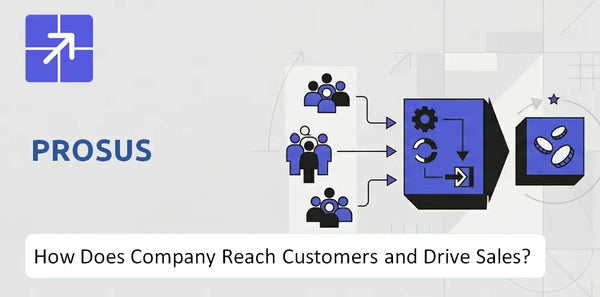
Focus paid CAC by market, push partnerships for distribution, and optimize conversion funnels; these moves raise ROI and speed capital recycling into AI and credit fintech.
Who Does Prosus Want to Sell To?
Prosus targets three core customer groups: the rising middle class in emerging markets for food delivery and classifieds, global developers and tech professionals via Stack Overflow, and merchants/SMEs needing cross-border payments and credit through PayU and fintech investments. The aim is to win high – lifetime – value, repeat transactors using localized acquisition and payment-led conversion tactics.
 Main customer group: emerging – market consumers
Prosus focuses on the burgeoning middle class in India, Brazil, and Southeast Asia for food delivery and classifieds, where digital penetration and spend per user rose in 2024 – 25. Targeting urban millennials and Gen Z who transact weekly allows Prosus to convert demand into sales via localized apps, promotions, and partnerships with last – mile logistics providers.
Additional segments: developers and SMB merchants
Stack Overflow reaches over 100 million monthly visitors, making global developers a high-value audience for EdTech and talent products. PayU and fintech stakes target merchants and small – to – medium enterprises needing cross – border payments and credit in complex regulatory markets, focusing on businesses that show repeat transaction patterns.
Market positioning: platform + payments
Prosus positions itself as a data – driven platform investor combining marketplaces, food delivery, classifieds, EdTech, and payments to capture value across the funnel. Integrating PayU into merchant flows and using classifieds to feed marketplace listings lets Prosus monetize both transactions and data, improving unit economics and customer acquisition cost (CAC).
Why this positioning works: repeat transactions and payments
Focusing on high – lifetime – value users who transact repeatedly increases average revenue per user (ARPU) and reduces churn. Prosus leverages localized customer acquisition, mobile – first engagement, and integrated fintech to raise conversion rates and lifetime margins; see this analysis on how Prosus integrates platform and payment strategies: How Prosus Company Works and Makes Money
Prosus SWOT Analysis
- Complete SWOT Breakdown
- Fully Customizable
- Editable in Excel & Word
- Professional Formatting
- Investor-Ready Format

How Does Prosus Get in Front of Customers?
Prosus reaches customers via mobile-first digital acquisition, local market dominance, and integrations into checkout and platform flows. It builds awareness through performance marketing, organic search, app distribution, and partner ecosystems to turn demand into sales.

Mobile-first Performance Marketing
Prosus prioritizes mobile performance marketing across portfolio verticals, driving app installs and in-app engagement; this matters because mobile accounts for the majority of user sessions in its emerging markets verticals.
Digital Marketing and Organic Search
Prosus leverages paid search, app-store optimization, social ads, content, email, and strong SEO for marketplaces like OLX; OLX uses organic search dominance and AI recommendations to connect millions monthly.
Checkout and Platform Integrations
PayU integrates into checkout flows of large e – commerce platforms, capturing high-intent customers at point of sale and reducing drop-off; partnerships with merchants and platforms expand distribution rapidly.
Hyper-local Logistics and Marketplace Reach
Food delivery brands use hyper-local logistics and aggressive promotions to win share; iFood holds over 80 percent share in Brazil, showing how logistics plus local marketing convert demand to orders.
Demand Gen Tactics: Promotions and AI
Prosus portfolio teams run targeted promotions, referral programs, influencer campaigns, and AI-driven personalization to lift conversion rates and repeat purchases across classifieds, food delivery, and fintech.
Customer Acquisition Efficiency
Acquisition mixes are optimized by local unit economics; PayU captures transaction fees at checkout improving LTV/CAC, while marketplaces benefit from near-zero marginal cost per additional user via network effects.
Most Important Reach Advantage in 2025
Prosus's greatest edge is scale from platform integrations and ecosystem traffic – especially Tencent-linked flows – plus localized operations that deliver high penetration in markets like Brazil and India.
For deeper context on group strategy and values see Mission, Vision, and Values of Prosus Company
Prosus Business Model Canvas
- One-time Payment
- No Research Needed – Save Hours of Work
- Built by Experts, Trusted by Consultants
- Instant Download, Ready to Use
- 100% Editable, Fully Customizable

How Does Prosus Turn Attention Into Sales?
Prosus turns attention into sales by driving high-frequency engagement and applying tiered monetization across verticals, from commissioned marketplaces to subscription and payments fees. The group converts traffic with targeted ads, take-rate optimization, and embedded fintech to capture more spend per user.
Core sales model: platform-led, marketplace, and subscription mix
Prosus uses self-serve marketplaces and app-led experiences plus enterprise contracts for B2B products; Food & Grocery and Classifieds drive high-frequency consumer transactions while EdTech and business services run subscription and contract sales.
Pricing and monetization logic: tiered take-rates and recurring revenue
Food & Grocery take rates average between 15 percent and 26 percent, augmented by high-margin sponsored listings; EdTech moved toward B2B subscriptions with Stack Overflow for Teams enterprise recurring revenue up 30 percent year-over-year through 2025; Payments monetizes via transaction fees and merchant lending spreads.
Conversion and purchase drivers: frequency, convenience, and embedded payments
High-frequency engagement (daily ordering, classifieds browsing) plus localized UX and mobile-first flows drive conversion; embedded payments raised conversion as Total Payment Volume hit an annualized run rate > 120 billion dollars by early 2026, increasing monetizable transactions.
Repeat revenue and customer expansion: retention, upsell, and cross-sell
Retention focuses on subscription renewals (EdTech) and repeat orders (Food & Grocery); Prosus expands customer lifetime value via sponsored listings, merchant lending, and in-app promotions that drive upsell and cross-border marketplace growth.
Prosus customer acquisition strategy emphasizes localized marketing channels, e-commerce partnerships, and analytics-driven optimization; see Competitive Landscape of Prosus Company for context: Competitive Landscape of Prosus Company
Prosus Marketing Mix
- Complete Marketing Mix Analysis
- Effortlessly Communicate Your Business Strategy
- Investor-Ready Format
- 100% Editable and Customizable
- Clear and Structured Layout

How Strong Does Prosus's Commercial Engine Look Going Forward?
Prosus's commercial engine enters 2025/2026 with noticeably stronger profitability and clearer operating leverage; consolidation of e – commerce trading profit in 2024 and a projected 250 basis point trading – margin expansion in FY2025 support growth, while emerging – market macro volatility could weaken near – term demand and CAC stability.
What Supports Future Demand
Prosus customer acquisition strategy benefits from a diversified portfolio and strong brand positions in classifieds and marketplaces, improving product – market fit and repeat purchase rates. Generative AI to lower CAC in Classifieds and EdTech and ongoing fintech integrations that simplify payments should increase conversion and lifetime value.
Channel and Marketing Effectiveness
Digital-first channels, local partnerships, and mobile – first engagement drive efficient acquisition across emerging markets; Prosus marketing channels combine organic classifieds traffic with paid acquisition and localized distributor partnerships. Data – driven ad targeting and analytics have started to show operating leverage in FY2024 and are forecast to improve unit economics in FY2025.
Risks to Commercial Performance
Macroeconomic volatility in LatAm, India, and other emerging markets can depress ARPU and CAC efficiency, and currency swings may hit reported margins. Execution risk exists in scaling generative AI pilots across Classifieds and EdTech and in integrating fintech/payment solutions without increasing fraud or regulatory costs.
The Overall Sales and Marketing Outlook
Outlook is overweight going into 2025/2026: disciplined capital allocation, share buybacks, and expected IPO/liquidity events underpin value creation, while projected 250 basis points of additional trading – margin expansion in FY2025 signals improving Prosus demand generation and conversion. See History and Background of Prosus Company for corporate context: History and Background of Prosus Company
Prosus Boston Consulting Group Matrix
- Built by Experts, Trusted by Consultants
- Structured for Consultants, Students, and Founders
- 100% Editable in Microsoft Word & Excel
- Instant Digital Download – Use Immediately
- Compatible with Mac & PC – Fully Unlocked

Related Blogs
- What Is the History of Prosus Company and How Did It Evolve?
- What Is the Competitive Landscape of Prosus Company and How Does It Compete?
- What Is the Growth Outlook of Prosus Company and Where Is It Heading?
- How Does Prosus Company Work and What Drives Its Business Model?
- What Do the Mission, Vision, and Core Values of Prosus Company Reveal?
- Who Are the Core Customers in Prosus Company's Target Market?
- Who Owns Prosus Company Today and Who Holds Control?
Frequently Asked Questions
Prosus primarily targets emerging-market consumers, especially the rising middle class in India, Brazil, and Southeast Asia. It also serves global developers through Stack Overflow and merchants or SMEs through PayU and fintech investments. The strategy is to attract repeat transactors with localized apps, payments, and market-specific engagement.
Disclaimer
All information, articles, and product details provided on this website are for general informational and educational purposes only. We do not claim any ownership over, nor do we intend to infringe upon, any trademarks, copyrights, logos, brand names, or other intellectual property mentioned or depicted on this site. Such intellectual property remains the property of its respective owners, and any references here are made solely for identification or informational purposes, without implying any affiliation, endorsement, or partnership.
We make no representations or warranties, express or implied, regarding the accuracy, completeness, or suitability of any content or products presented. Nothing on this website should be construed as legal, tax, investment, financial, medical, or other professional advice. In addition, no part of this site - including articles or product references - constitutes a solicitation, recommendation, endorsement, advertisement, or offer to buy or sell any securities, franchises, or other financial instruments, particularly in jurisdictions where such activity would be unlawful.
All content is of a general nature and may not address the specific circumstances of any individual or entity. It is not a substitute for professional advice or services. Any actions you take based on the information provided here are strictly at your own risk. You accept full responsibility for any decisions or outcomes arising from your use of this website and agree to release us from any liability in connection with your use of, or reliance upon, the content or products found herein.