
How does Sadot Group work as a bridge between grain producers and global buyers, and what drives its trading-based business model?
Sadot Group shifts from retail food to large-scale agricultural commodities, trading grain and oilseeds across borders to capture volume margins. This matters because in 2025 global grains volatility and logistics bottlenecks raised arbitrage opportunities, boosting trader margins. Sadot Group BCG Matrix Analysis
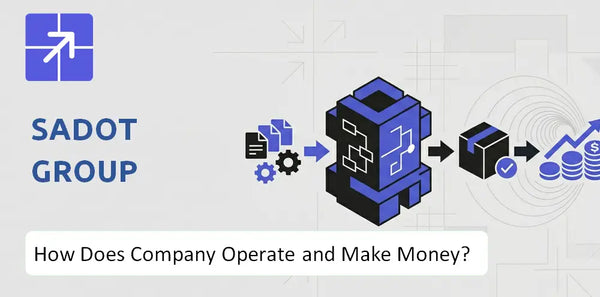
Focus on supply-chain lean operations, price hedging, and freight optimization; these drive cash flow and scale while limiting asset intensity – key for investors watching 2025 trade-margin expansion.
What Does Sadot Group Actually Sell?
Sadot Group sells bulk agricultural commodities – wheat, corn, soybean meal, and edible oils – plus origination and logistics services to institutional buyers who pay for reliable, large-volume supply and delivery solutions.
 Core product mix: grains and oils
Sadot Group business model centers on sourcing and trading staple crops: wheat, corn, soybean meal, and multiple edible oils. Sales focus on bulk contracts and forward contracts rather than retail packaging.
Primary buyers and channels
Buyers include flour mills, animal feed manufacturers, national food procurement agencies, and large food processors. Contracts are typically long-term supply agreements and spot shipments to ports.
Customer value: reliability and scale
Customers pay for volume certainty, quality specs, and end-to-end logistics – warehousing, freight, and customs handling – reducing procurement risk and inventory variability.
Differentiators in the market
Sadot Group works through surplus-region origination, integrated logistics, and risk-managed trading, which supports competitive pricing and timely deliveries; recent 2025 trading volume exceeded 3.2 million tonnes, strengthening its supply-chain position. Read a detailed company growth analysis: Growth Outlook of Sadot Group Company
Sadot Group SWOT Analysis
- Complete SWOT Breakdown
- Fully Customizable
- Editable in Excel & Word
- Professional Formatting
- Investor-Ready Format

How Does Sadot Group Run Its Business Day to Day?
Sadot Group runs daily as an international trading hub: originators source grain from the Americas and Europe, logistics teams manage maritime movement to the Middle East, Africa, and Asia, and a trading desk hedges price risk in real time while operations monitor production and shipments.

Operating model: asset-light origination with selective farming
The Sadot Group business model centers on an asset-light origination network that contracts commodities from farm hubs, with direct farming operations added in 2025 in Zambia to secure supply. Daily workflows link procurement, price risk management, and logistics execution to move millions of tons annually.
Product or service delivery: contract-to-ship execution
Buyers access Sadot Group services through commercial trading agreements and spot contracts; the company issues commercial invoices, arranges loading, and tracks shipments to delivery points in target markets, settling payment via trade finance instruments and bank guarantees.
Production, sourcing, and development: blended sourcing plus owned farms
Sourcing combines long-term supplier contracts in the Americas/Europe with the 2025 addition of owned farming assets in Zambia to control crop quality and volumes; agronomy teams, seed and input procurement, and on-site management ensure predictable yields.
Sales channels and distribution: direct sales and channel partners
Sales flow via direct bilateral contracts, brokers, and regional distributors; distribution relies on chartered vessels, bulk terminals, and local logistics partners to reach wholesale buyers and food processors across the Middle East, Africa, and Asia.
Key assets, systems, and partnerships: logistics, trading, and finance stack
Critical assets include a trading floor, maritime charters, storage agreements, and farm sites in Zambia; systems cover real-time price feeds, an ERP for inventory and shipment tracking, and partnerships with banks for trade finance and with agri-input suppliers for field operations.
What makes the model work in practice: scale, risk controls, and vertical capture
Efficiency comes from volume scale, an asset-light origination model that lowers working capital per ton, active hedging to limit exposure during transit, and selective vertical integration (Zambia farms) to capture margin and tighten supply reliability.
On a typical day traders monitor global grain prices and futures, risk managers execute hedges to cover shipments in transit, procurement finalizes load plans with suppliers, operations confirm vessel berthing and discharge schedules, and finance clears trade finance to fund cargoes; in 2025 Sadot Group reported managing logistics for shipments totaling several million tons and expanding direct farming to increase controllable supply by an estimated 10 – 15%.
See additional context in the article History and Background of Sadot Group Company
Sadot Group Business Model Canvas
- One-time Payment
- No Research Needed – Save Hours of Work
- Built by Experts, Trusted by Consultants
- Instant Download, Ready to Use
- 100% Editable, Fully Customizable

How Does Revenue Flow Through Sadot Group?
Sadot Group generates revenue mainly by buying commodities at origin and selling them to end customers at higher delivery prices, capturing the spread; demand converts to revenue through high-volume physical trades and logistics execution. Secondary income comes from growing sustainable agri-assets and related services that lift margins.
Main revenue stream: commodity spread trading
The primary Sadot Group business model revenue source is the purchase-to-delivery spread on bulk agricultural commodities; at >2 million metric tons annual throughput as of early 2026, this activity pushes top-line toward USD 1,000,000,000. Volume and velocity make low per-ton margins profitable.
Additional revenue streams: agri-assets and services
Sadot Group services include trading, logistics coordination, and risk-management fees plus returns from strategic investments in sustainable agri-assets that yield higher margins than third-party trading. These assets also support recurring cash flows and diversify revenue streams.
Pricing and monetization model: low-margin, high-turnover
Monetization relies on per-ton spreads, freight and logistics arbitrage, and service fees; trades are typically structured as sale contracts with delivery terms and working-capital financing, turning demand into cash via completed shipments and invoicing.
What drives revenue most: scale, logistics efficiency, and market access
Revenue scales with traded volume and optimized logistics costs; tight supplier partnerships, access to export markets, and faster inventory turns reduce capital drag and boost margins. See Target Customers and Market of Sadot Group Company for customer segmentation and market positioning.
Sadot Group Marketing Mix
- Complete Marketing Mix Analysis
- Effortlessly Communicate Your Business Strategy
- Investor-Ready Format
- 100% Editable and Customizable
- Clear and Structured Layout

What Makes Sadot Group's Model Sustainable or Fragile?
The Sadot Group business model rests on steady, inelastic global food-grain demand and a move toward vertical integration, but it is exposed to geopolitical disruptions and volatile freight costs that can compress arbitrage margins quickly.
Structural support: perennial grain demand
Global cereal and pulse demand creates a consistent floor for Sadot Group services and trading volumes; in 2025 global grains consumption was roughly 2.8 billion tonnes, supporting steady throughput for grain traders and processors. Vertical integration into origin markets raises gross margins by capturing procurement, processing, and logistics spreads.
Key assets and capabilities enabling scale
Owning origin assets – silos, tolling mills, and port-ward logistics – gives Sadot Group company overview an edge on cost and supply reliability; combined with commercial origination teams and long-term offtake contracts, this supports repeatable revenue streams and partnerships across continents.
Dependencies, concentration and operational constraints
Sadot Group revenue streams depend on a few high-volume shipping corridors and origin countries; exposure to geopolitical risk and container/freight-cost spikes can swing margins. Working capital and trade finance availability also constrain growth when commodity prices move rapidly.
Durability in 2025/2026: resilient but fragile
Professional judgment for 2025/2026 rates Sadot Group as a high-growth, high-utility agri player that is resilient thanks to vertical integration and steady demand, yet fragile because thin-margin commodity arbitrage amplifies freight and geopolitical shocks; strong risk management and diversified supply chains are essential. See Mission, Vision, and Values of Sadot Group Company for context: Mission, Vision, and Values of Sadot Group Company
Sadot Group Boston Consulting Group Matrix
- Built by Experts, Trusted by Consultants
- Structured for Consultants, Students, and Founders
- 100% Editable in Microsoft Word & Excel
- Instant Digital Download – Use Immediately
- Compatible with Mac & PC – Fully Unlocked

Related Blogs
- What Is the History of Sadot Group Company and How Did It Evolve?
- What Is the Competitive Landscape of Sadot Group Company and How Does It Compete?
- What Is the Growth Outlook of Sadot Group Company and Where Is It Heading?
- How Does Sadot Group Company Reach Customers and Turn Demand into Sales?
- What Do the Mission, Vision, and Core Values of Sadot Group Company Reveal?
- Who Are the Core Customers in Sadot Group Company's Target Market?
- Who Owns Sadot Group Company Today and Who Holds Control?
Frequently Asked Questions
Sadot Group sells bulk agricultural commodities, including wheat, corn, soybean meal, and edible oils. It also provides origination and logistics services for institutional buyers that need reliable, large-volume supply and delivery solutions through bulk contracts and forward contracts.
Disclaimer
All information, articles, and product details provided on this website are for general informational and educational purposes only. We do not claim any ownership over, nor do we intend to infringe upon, any trademarks, copyrights, logos, brand names, or other intellectual property mentioned or depicted on this site. Such intellectual property remains the property of its respective owners, and any references here are made solely for identification or informational purposes, without implying any affiliation, endorsement, or partnership.
We make no representations or warranties, express or implied, regarding the accuracy, completeness, or suitability of any content or products presented. Nothing on this website should be construed as legal, tax, investment, financial, medical, or other professional advice. In addition, no part of this site - including articles or product references - constitutes a solicitation, recommendation, endorsement, advertisement, or offer to buy or sell any securities, franchises, or other financial instruments, particularly in jurisdictions where such activity would be unlawful.
All content is of a general nature and may not address the specific circumstances of any individual or entity. It is not a substitute for professional advice or services. Any actions you take based on the information provided here are strictly at your own risk. You accept full responsibility for any decisions or outcomes arising from your use of this website and agree to release us from any liability in connection with your use of, or reliance upon, the content or products found herein.