
How does Scroll Corporation convert catalog roots into a services-driven commerce platform?
Scroll Corporation blends legacy catalog retail with e-commerce and B2B logistics, turning order fulfillment and platform services into recurring revenue. This matters as Scroll reported a 2025 shift toward infrastructure contracts, raising service margins amid Japan's aging market and tighter retail spend.
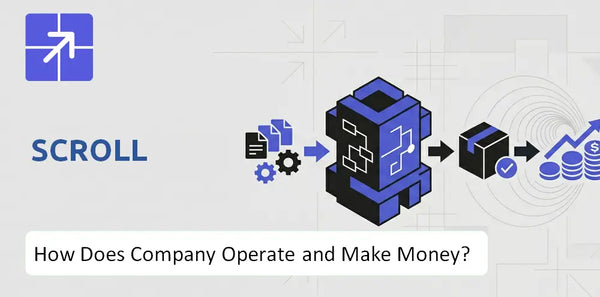
Focus on contracted logistics and platform fees; they stabilize cash flow even if retail volumes dip. See operational implications in Scroll BCG Matrix Analysis
What Does Scroll Actually Sell?
Scroll Corporation sells consumer goods – apparel, household goods, furniture – plus beauty and health products, insurance and travel packages, and a B2B e-commerce back-end (fulfillment, logistics, payments, customer support) that turns operational capability into third-party revenue.
 Product mix: physical goods and platform services
Scroll company offers D2C apparel, household goods, furniture, luxury items via X-sell, proprietary cosmetics and supplements, insurance agency services, travel packages, and a B2B e-commerce stack for merchants.
Buyer segments
Retail consumers buy D2C and luxury products; health and beauty customers purchase cosmetics/supplements; SMBs and digital-first brands buy Scroll's B2B back-end and logistics services.
Customer value: convenience, curated products, operational scale
Customers get curated product assortments, branded luxury storefronts, bundled insurance/travel offerings, and for merchants, turnkey fulfillment, payment processing, and customer support that lower unit economics.
Differentiators and go-to-market
Scroll stands out by monetizing its internal ops as a B2B service, offering integrated logistics+payments and using its D2C brands as demand drivers – so operational cost centers become revenue lines. See Growth Outlook of Scroll Company for related analysis.
Scroll SWOT Analysis
- Complete SWOT Breakdown
- Fully Customizable
- Editable in Excel & Word
- Professional Formatting
- Investor-Ready Format

How Does Scroll Run Its Business Day to Day?
Scroll Corporation runs daily by routing inventory through automated fulfillment centers, coordinating third-party logistics (3PL), and running parallel marketing tracks; orders flow from D2C and B2B clients into AI inventory systems and out via last-mile carriers while Solutions handles partner infrastructure and delivery coordination.

Operating model: centralized fulfillment, hybrid marketing
Operations center on the Scroll Logistics Center and similar hubs that consolidate inbound goods, run automated sorting, and feed AI-driven demand forecasting into WMS (warehouse management systems). Daily tasking balances D2C picks and B2B replenishment runs; IT monitors throughput, exceptions, and SLA adherence.
Product and service delivery: omnichannel order flow
Customers access offerings via e-commerce stores, subscription portals, or B2B APIs; orders are allocated to nearest fulfillment node, picked by automated conveyors, packed, and handed to carriers for last-mile delivery. Catalog orders for older demographics are processed through the same fulfillment backbone with printed-insert routing.
Production, sourcing, and development: curated inventory and partner sourcing
Merchandise is procured from Tier 1 suppliers and specialty vendors under negotiated terms; private-label items are developed with contract manufacturers. Daily workflows include supplier EDI intake, quality-check exceptions, and cycle counts to keep on-hand accuracy above industry benchmarks.
Sales channels and distribution: dual-track reach
Sales flow through direct e-commerce, subscription memberships, catalog mailings, and wholesale/B2B contracts. Digital ad buys and data-driven campaigns drive younger cohorts while printed catalogs and phone orders maintain older customer retention; both feed the same fulfillment pipeline.
Key assets, systems, and partnerships: automation plus BPO solutions
Core assets include the Scroll Logistics Center, WMS/TMS stacks, AI forecasting engines, and 3PL partnerships; the Solutions segment runs BPO services – hosting, last-mile coordination, and partner integrations. Strategic carrier agreements and publisher partnerships expand reach and lower per-unit delivery cost.
What makes the model work: scale, data, and integrated ops
Operational synergy yields lower unit logistics cost via pooled inventory and dynamic routing; AI forecasting reduces stockouts and excess by improving forecast accuracy. The Solutions BPO provides recurring revenue and spreads fixed tech costs, enabling economies of scale a standalone retailer cannot match.
Daily KPIs tracked include throughput (orders/hour), on-time delivery rate, inventory accuracy, and Solutions contract uptime; public filings show logistics-driven gross margins and recurring Solutions revenue contributing materially to 2025 performance – see further context in Competitive Landscape of Scroll Company.
Scroll Business Model Canvas
- One-time Payment
- No Research Needed – Save Hours of Work
- Built by Experts, Trusted by Consultants
- Instant Download, Ready to Use
- 100% Editable, Fully Customizable

How Does Revenue Flow Through Scroll?
Revenue at Scroll Corporation flows from direct retail sales, services, and commission-based financial products; demand converts to revenue via product sales, recurring service fees, and commission splits, leveraging a >6 million active-member database to raise customer LTV.
Retail sales via D2C and e-commerce
The largest revenue source is direct-to-consumer apparel and beauty sales, where traditional retail markup drives gross volume; consolidated net sales for the fiscal year ending March 2026 are projected at 85 billion yen.
Solutions and services segment
Services revenue comes from the Solutions segment via recurring monthly fees and transaction-based pricing; operating margins here typically exceed 8-10%, materially higher than pure retail margins of 3-4%.
Pricing and monetization mix
Monetization blends retail markups, subscriptions and service fees, plus commissions from insurance and financial products; the company uses subscription-style recurring billing and transaction fees to stabilize cash flows.
Key revenue drivers
Revenue growth is driven by scaling active members (>6 million), increasing cross-sell LTV across apparel, beauty, and insurance, and shifting mix toward higher-margin Solutions services; improving LTV by even 10% materially boosts profitability.
See related analysis on ownership and strategy in Ownership and Control of Scroll Company
Scroll Marketing Mix
- Complete Marketing Mix Analysis
- Effortlessly Communicate Your Business Strategy
- Investor-Ready Format
- 100% Editable and Customizable
- Clear and Structured Layout

What Makes Scroll's Model Sustainable or Fragile?
Scroll Company's model is sustainable through its shift from pure retail to a Solutions provider, and via a high dividend policy that attracts value investors; but it is fragile from rising logistics costs and an aging catalog-buying base that threaten long-term volumes.
Defensive Shift to Solutions
Transitioning to a solutions and e-commerce infrastructure provider reduces dependence on shrinking Japanese retail. This mitigates exposure to pure retail cyclicality and positions Scroll Company to sell services to other merchants and publishers.
Logistics and Dividend Appeal
Built logistics networks and fulfillment capabilities support recurring B2B contracts, while a target payout of 40% dividend or stable Dividend on Equity (DOE) attracts income-focused investors seeking yield in 2025.
Exposure to Rising Operational Costs
Profitability depends on controlling labor and fuel; the post-2024 logistics cost shock in Japan raised unit costs materially, squeezing margins in 2025 and continuing into 2026 unless efficiencies or price pass-through are achieved.
Durability in 2025/2026
Mid-term resilience looks cautiously optimistic: competition from Amazon Japan and Rakuten remains intense, but Scroll Company's specialized e-commerce infrastructure role creates a moat that supports mid-term cash flows and dividend capacity.
Target Customers and Market of Scroll Company
Scroll Boston Consulting Group Matrix
- Built by Experts, Trusted by Consultants
- Structured for Consultants, Students, and Founders
- 100% Editable in Microsoft Word & Excel
- Instant Digital Download – Use Immediately
- Compatible with Mac & PC – Fully Unlocked

Related Blogs
- What Is the History of Scroll Company and How Did It Evolve?
- What Is the Competitive Landscape of Scroll Company and How Does It Compete?
- What Is the Growth Outlook of Scroll Company and Where Is It Heading?
- How Does Scroll Company Reach Customers and Turn Demand into Sales?
- What Do the Mission, Vision, and Core Values of Scroll Company Reveal?
- Who Are the Core Customers in Scroll Company's Target Market?
- Who Owns Scroll Company Today and Who Holds Control?
Frequently Asked Questions
Scroll sells consumer goods and services across several categories. Its mix includes apparel, household goods, furniture, beauty and health products, insurance and travel packages, plus a B2B e-commerce back-end with fulfillment, logistics, payments, and customer support.
Disclaimer
All information, articles, and product details provided on this website are for general informational and educational purposes only. We do not claim any ownership over, nor do we intend to infringe upon, any trademarks, copyrights, logos, brand names, or other intellectual property mentioned or depicted on this site. Such intellectual property remains the property of its respective owners, and any references here are made solely for identification or informational purposes, without implying any affiliation, endorsement, or partnership.
We make no representations or warranties, express or implied, regarding the accuracy, completeness, or suitability of any content or products presented. Nothing on this website should be construed as legal, tax, investment, financial, medical, or other professional advice. In addition, no part of this site - including articles or product references - constitutes a solicitation, recommendation, endorsement, advertisement, or offer to buy or sell any securities, franchises, or other financial instruments, particularly in jurisdictions where such activity would be unlawful.
All content is of a general nature and may not address the specific circumstances of any individual or entity. It is not a substitute for professional advice or services. Any actions you take based on the information provided here are strictly at your own risk. You accept full responsibility for any decisions or outcomes arising from your use of this website and agree to release us from any liability in connection with your use of, or reliance upon, the content or products found herein.