
How does Shimizu Corporation generate revenue through construction, engineering, and real estate development?
Shimizu Corporation builds, engineers, and develops real estate, blending large-scale construction with specialized civil works and tech-driven solutions. This matters as Shimizu reported renewed order growth in 2025 tied to infrastructure modernization and green building demand. See Shimizu BCG Matrix Analysis
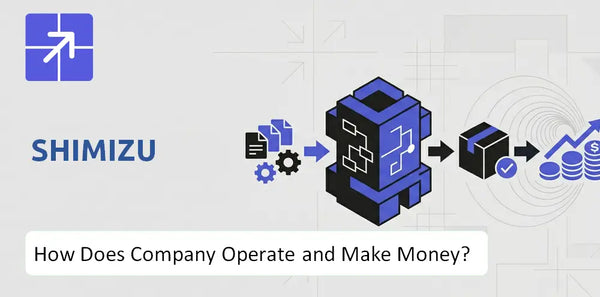
Focus on project mix: prioritize high-margin engineering and overseas PPP projects to offset domestic labor constraints and cost pressure in 2025.
What Does Shimizu Actually Sell?
Shimizu Corporation sells end-to-end architectural design, civil engineering, and property development solutions; customers pay for delivered built assets plus embedded technical services such as seismic isolation and carbon-neutral systems. Core offerings include design-build projects, real estate leasing/sales, and integrated digital-physical building platforms like Shimz Next Generation Office that bundle energy-saving systems and digital twin capabilities.
 What the Company Offers
Shimizu Corporation delivers design-build construction for semiconductor fabs, pharmaceutical labs, skyscrapers, tunnels, and bridges, plus specialist engineering: seismic isolation, prefabrication, modular systems, and carbon-neutral construction. It also sells and leases commercial offices and logistics facilities and integrates digital twin and energy-management systems in the Shimz Next Generation Office package.
Who Buys It
Buyers are governments and infrastructure agencies, multinational corporations in semiconductors and pharmaceuticals, real estate investors and occupiers, and logistics operators. Large developers and institutional investors also contract Shimizu for turnkey projects and long-term asset management services.
What Value Customers Get
Customers receive delivered, operational assets with reduced seismic risk, lower lifecycle carbon and energy costs, faster project schedules via prefabrication, and digital twin-driven facility optimization. For example, Shimizu reported in fiscal 2025 that its integrated building solutions improved client energy intensity by 15% on average in completed smart-office pilots.
Why the Offering Stands Out
Shimizu construction firm combines in-house architecture, engineering, construction, and real estate operations to offer single-source accountability and lifecycle services. Its Shimz Next Generation Office differentiates through embedded digital twin and energy systems, and its seismic isolation expertise is a market-known technical moat that supports premium pricing and repeat contracts; see Competitive Landscape of Shimizu Company.
Shimizu SWOT Analysis
- Complete SWOT Breakdown
- Fully Customizable
- Editable in Excel & Word
- Professional Formatting
- Investor-Ready Format

How Does Shimizu Run Its Business Day to Day?
Shimizu Corporation runs day-to-day as an integrated design-build contractor that directs projects from blueprint to handover, coordinating site teams, subcontractors, procurement, and R&D through centralized project management systems. Daily workflows combine on-site execution, the Shimz Smart Site autonomous robotics platform, and procurement risk controls to keep schedules and budgets on track.

Integrated design – build operating model
Project managers at Shimizu Corporation own scope, schedule, cost, and quality across architecture, engineering, and construction, using a single delivery flow to reduce handoffs and accelerate commissioning.
Customer access and project delivery
Clients contract Shimizu Company through direct bids, negotiated EPC (engineering, procurement, construction) agreements, or PPPs; the firm delivers via staged milestones, on – site progress reporting, and final commissioning with warranty handoffs.
Production, sourcing and technical development
Daily engineering teams test materials like carbon – core concrete and prefabricate modules in controlled yards; procurement hedges volatile steel, cement, and energy costs to protect margins and timelines.
Sales channels and client pipelines
Shimizu construction firm wins work via public tenders, corporate RFPs, and strategic partnerships; account teams maintain pipelines and secure repeat business from infrastructure and real estate developers.
Key assets, systems and partnerships
Core assets include the Shimz Smart Site robotics platform, prefabrication yards, engineering R&D centers, and procurement platforms; strategic JV partners expand capacity for large infrastructure bids.
What makes the model work in practice
Efficiency comes from integrated project management, automation reducing labor gaps, and active cost hedging; in FY2025 Shimizu reported sustained project margins while scaling automation across sites.
On-site, autonomous robots handle welding, ceiling installation, and material transport under the Shimz Smart Site program, reducing manual hours and raising productivity; daily R&D cycles test materials and methods, and procurement teams execute volume buys and hedges to stabilize input costs.
Project-level metrics tracked daily include schedule adherence, safety incidents, percent complete, and cost-to-complete; senior managers review forecast variances weekly to reallocate subcontractor capacity or accelerate prefabrication to avoid delay penalties.
For market context and client targeting read Target Customers and Market of Shimizu Company
Shimizu Business Model Canvas
- One-time Payment
- No Research Needed – Save Hours of Work
- Built by Experts, Trusted by Consultants
- Instant Download, Ready to Use
- 100% Editable, Fully Customizable

How Does Revenue Flow Through Shimizu?
Revenue at Shimizu Corporation flows mainly from multi-year construction contracts and recurring property income; demand from developers and public agencies converts to cash as projects progress and as rental and asset sales occur.
Main revenue: Long-term construction contracts
Shimizu Corporation recognizes most sales via the percentage-of-completion method on long-term construction projects; for FY2025 net sales remain around 2.0 trillion yen, with ~75% from domestic building construction, making contract execution the primary cash engine.
Additional revenue: Civil, overseas, and real estate
Civil engineering and overseas projects supply the remaining construction revenue, while the Real Estate Development arm produces steady rental income and periodic capital gains from property sales, cushioning cyclicality.
Pricing and monetization model: fixed-price and milestone billing
Shimizu monetizes via negotiated contract sums, milestone progress billings, and sales of developed assets; higher-margin specialized work – industrial plants for semiconductor fabs – raises effective margins through value-added engineering and turnkey delivery.
Primary drivers: sector mix and project mix
Revenue is driven most by domestic building demand, the mix shift into higher-margin specialized segments (notably semiconductor-related industrial plants), and recurring streams from real estate; see related corporate ownership context at Ownership and Control of Shimizu Company.
Shimizu Marketing Mix
- Complete Marketing Mix Analysis
- Effortlessly Communicate Your Business Strategy
- Investor-Ready Format
- 100% Editable and Customizable
- Clear and Structured Layout

What Makes Shimizu's Model Sustainable or Fragile?
Shimizu Corporation's model is sustained by a large order backlog and leadership in decarbonization projects, yet fragile because of thin operating margins, cost-push inflation, and Japan's 2024 labor-hour caps that pressure delivery. Its strengths hinge on project pipeline and green credentials; its vulnerabilities rest on margin pass-through and labor automation execution.
Massive backlog gives revenue visibility
Shimizu Corporation carried an order backlog near 2.8 trillion yen in early 2025, roughly two years of revenue visibility, which smooths top-line forecasting and supports long-term project staffing and procurement plans.
Strategic fit with decarbonization demand
Leadership in offshore wind construction and Net Zero Energy Buildings (ZEB) aligns Shimizu construction firm with tightening regulations and public-sector green spending, strengthening bid competitiveness for major infrastructure and energy projects.
Thin margins and cost inflation
Operating margins have ranged between 3 – 5 percent due to persistent raw-material price inflation and rising labor wages; this margin profile limits shock absorption and increases reliance on passing costs to clients.
Labor rules and delivery risk
The so-called 2024 Problem – strict overtime caps in Japanese logistics and construction – creates systemic risk to project delivery speed and scheduling, raising subcontracting and delay costs that compress profitability.
Assets, partnerships, and technology
Shimizu projects and services leverage scale, an established brand, engineering and architecture expertise, and partnerships for offshore wind; investments in prefabrication and robotics aim to reduce labor intensity and lower unit costs.
Dependency on cost pass-through and automation
The business model depends on successful contract pricing (ability to pass higher costs to clients) and rapid scale-up of labor-saving robotics; failure on either front would materially weaken Shimizu revenue streams and margin recovery.
Resilience assessment for 2025/2026
My view: Shimizu Company business model is stable but low-yield in 2025/2026 – resilient in demand due to backlog and green projects, yet exposed by narrow operating margins, inflationary cost pressures, and the 2024 labor-cap impact; execution on pricing and robotics is decisive.
Further reading on growth outlook
See Growth Outlook of Shimizu Company for detailed context on revenue drivers, project mix, and strategic priorities: Growth Outlook of Shimizu Company
Shimizu Boston Consulting Group Matrix
- Built by Experts, Trusted by Consultants
- Structured for Consultants, Students, and Founders
- 100% Editable in Microsoft Word & Excel
- Instant Digital Download – Use Immediately
- Compatible with Mac & PC – Fully Unlocked

Related Blogs
- What Is the History of Shimizu Company and How Did It Evolve?
- What Is the Competitive Landscape of Shimizu Company and How Does It Compete?
- What Is the Growth Outlook of Shimizu Company and Where Is It Heading?
- How Does Shimizu Company Reach Customers and Turn Demand into Sales?
- What Do the Mission, Vision, and Core Values of Shimizu Company Reveal?
- Who Are the Core Customers in Shimizu Company's Target Market?
- Who Owns Shimizu Company Today and Who Holds Control?
Frequently Asked Questions
Shimizu sells end-to-end architectural design, civil engineering, and property development solutions. Its offerings include design-build projects, real estate leasing and sales, and integrated building platforms such as Shimz Next Generation Office, which bundle energy-saving systems, digital twin tools, and seismic isolation expertise.
Disclaimer
All information, articles, and product details provided on this website are for general informational and educational purposes only. We do not claim any ownership over, nor do we intend to infringe upon, any trademarks, copyrights, logos, brand names, or other intellectual property mentioned or depicted on this site. Such intellectual property remains the property of its respective owners, and any references here are made solely for identification or informational purposes, without implying any affiliation, endorsement, or partnership.
We make no representations or warranties, express or implied, regarding the accuracy, completeness, or suitability of any content or products presented. Nothing on this website should be construed as legal, tax, investment, financial, medical, or other professional advice. In addition, no part of this site - including articles or product references - constitutes a solicitation, recommendation, endorsement, advertisement, or offer to buy or sell any securities, franchises, or other financial instruments, particularly in jurisdictions where such activity would be unlawful.
All content is of a general nature and may not address the specific circumstances of any individual or entity. It is not a substitute for professional advice or services. Any actions you take based on the information provided here are strictly at your own risk. You accept full responsibility for any decisions or outcomes arising from your use of this website and agree to release us from any liability in connection with your use of, or reliance upon, the content or products found herein.