
How does Shimizu Corporation's sales and marketing model convert technical bids into recurring services?
Shimizu Corporation shifts sales from one-off construction to lifecycle contracts and green energy services, using technical differentiation to win higher-margin projects. In 2025 it reported rising services backlog, signaling steadier revenue despite material-cost pressure.
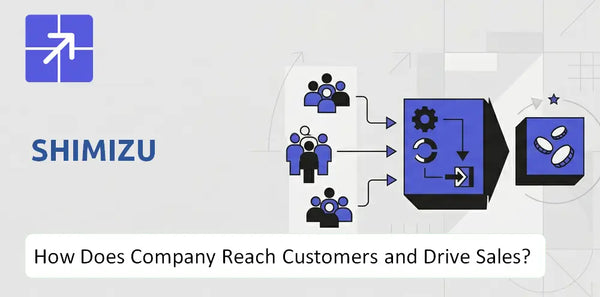
Focus sales on technical teams that sell integrated facility management and long-term energy contracts; this raises stickiness and predictable cash flow. See product analysis: Shimizu BCG Matrix Analysis
Who Does Shimizu Want to Sell To?
Shimizu Corporation targets three tiers: blue-chip manufacturing and semiconductor firms needing cleanrooms and logistics hubs; public-sector agencies for large infrastructure; and global developers focused on sustainable urban redevelopment, especially data centers and healthcare in Southeast Asia and the US. The sales approach emphasizes ESG-led projects that capture premium pricing and reduce exposure to commodity cycles.
 Core corporate clients in manufacturing and semiconductors
Shimizu Company marketing concentrates on blue-chip manufacturers and semiconductor firms in Japan's tech clusters (e.g., Chiba, Tsukuba). These clients require specialized cleanrooms, precision logistics, and accelerated delivery – contracts here exceeded ¥120 billion in 2025 within industrial facilities and logistics projects.
Public sector and government infrastructure
Shimizu Corporation sales strategy keeps government agencies as a high-conviction tier for tunnels, bridges, and resilience works tied to national spending plans. In 2025 public-sector wins represented about 28% of contract backlog, driven by disaster-resilient infrastructure mandates.
Global developers for sustainable urban redevelopment
Shimizu customer outreach targets developers in Southeast Asia and the US for data centers, healthcare, and mixed-use redevelopment. ESG-focused projects – energy-efficient data centers and health facilities – contributed to a 15 – 20% margin premium on recent bids in 2025.
Market positioning: trusted ESG-led engineering partner
Shimizu positions itself as an integrated construction and engineering partner emphasizing sustainability, digital construction, and lifecycle services. This positioning supports higher-value bids in corporate and developer segments and improves win rates in procurement processes.
Why this positioning works
Clients prioritize ESG metrics and risk reduction; Shimizu's investments in green design, prefabrication, and BIM (building information modeling) cut schedules and commodity exposure. In 2025 the firm reported improved client retention and a 7% increase in repeat client revenue versus 2024.
Related reading on company context
For corporate history and strategic evolution, see History and Background of Shimizu Company, which details legacy capabilities that underpin current B2B sales approaches and Shimizu digital marketing efforts.
Shimizu SWOT Analysis
- Complete SWOT Breakdown
- Fully Customizable
- Editable in Excel & Word
- Professional Formatting
- Investor-Ready Format

How Does Shimizu Get in Front of Customers?
Shimizu Corporation reaches customers via consultative technical sales, strategic joint ventures, and its Open Innovation platform, plus international subsidiaries. In 2025 it leans on digital twins and virtual construction demos to convert early-stage interest into contracts.

Consultative Technical Sales and Super Construction Reputation
Shimizu Company marketing centers on project-led consultative sales: engineers and technical leads engage clients during planning to shape scope and budgets. Its Super Construction track record – flagship carbon-neutral buildings and large urban renewal projects – generates reputation-driven demand and repeat mandates.
Open Innovation and Early-Stage Engagement
Shimizu Corporation sales strategy uses an Open Innovation platform to onboard tech partners and clients in design phases, positioning teams as consultants rather than contractors. This reduces procurement friction and shortens the Shimizu sales funnel by securing stakeholder buy-in early.
Local Subsidiaries and Strategic Alliances for Market Access
International outreach relies on local subsidiaries and alliances to bypass entry barriers and win public/private bids. Joint ventures supply local credibility, helping Shimizu customer outreach in Asia, Europe, and SE Asia where regulatory know-how matters.
Digital Twins and Virtual Construction as Sales Tools
In FY2025 Shimizu digital marketing and sales deployed digital twins and virtual construction simulations as primary presales tools, demonstrating cost savings and schedule certainty. Management reports show these tools reduced estimate disputes and accelerated approvals, cutting pre-construction decision time by up to 30% in pilot projects.
Demand Generation via Flagship Projects and Events
Shimizu Company demand generation tactics include showcasing carbon-neutral flagship builds, hosting design-review workshops, and speaking at trade shows. These events and case studies feed the B2B pipeline and drive high-value RFPs.
Sales Channel Efficiency and Conversion Metrics
Direct technical sales teams and JV partners produce high-quality leads; FY2025 internal metrics indicate a project win rate improvement of roughly 5 percentage points after adopting virtual construction demos. Customer acquisition is costlier than pure software firms but yields larger contract sizes.
Most Important Reach Advantage: Technical Credibility
Shimizu branding and market positioning in 2025 rests on technical credibility – Super Construction expertise and digital demonstration capabilities – which scale trust with public clients and developers. That trust is the main engine for reaching customers at scale.
For a broader operational and revenue context see How Shimizu Company Works and Makes Money
Shimizu Business Model Canvas
- One-time Payment
- No Research Needed – Save Hours of Work
- Built by Experts, Trusted by Consultants
- Instant Download, Ready to Use
- 100% Editable, Fully Customizable

How Does Shimizu Turn Attention Into Sales?
Shimizu Company turns attention into sales by moving prospects from competitive bidding to negotiated contracts, using Front-End Engineering and Design to lock clients early and recurring real-estate services to secure post-completion revenue.
Core Sales Model: Project-led direct and negotiated contracts
Shimizu Corporation sales strategy centers on direct project sales via competitive bids then converting to negotiated contracts; Front-End Engineering and Design (FEED) secures client commitment in pre-construction and reduces poaching.
Pricing and Monetization Logic: Fixed contracts plus recurring services
Pricing mixes project-based fixed fees and negotiated margins for construction, plus recurring revenue streams from Real Estate and Building Management – maintenance, EPC energy services, and performance contracts that drive high-margin, predictable cash flow.
Conversion and Purchase Drivers: FEED, trust, and AI price controls
FEED locks procurement decisions early; reputation and long-term client relationships (Shimizu customer outreach) increase trust; AI-driven Profit Management Systems adjust pricing in real time using supply-chain signals to protect margins and convert demand into profitable sales.
Repeat Revenue and Customer Expansion: Recurring building services
Real Estate and Building Management provide recurring contracts – maintenance, energy savings, and facility services – that enable upsells and renewals; these services pushed Shimizu toward a ¥2.2 trillion revenue target for 2025 by increasing lifetime value per project.
Shimizu Company marketing uses targeted B2B outreach, digital campaigns, and trade events to feed the sales funnel; FEED and negotiated contracting convert qualified leads into long-term contracts while the building-management recurring model preserves margins. See Target Customers and Market of Shimizu Company for market segmentation and client profiles: Target Customers and Market of Shimizu Company
Shimizu Marketing Mix
- Complete Marketing Mix Analysis
- Effortlessly Communicate Your Business Strategy
- Investor-Ready Format
- 100% Editable and Customizable
- Clear and Structured Layout

How Strong Does Shimizu's Commercial Engine Look Going Forward?
Shimizu Corporation's commercial engine looks resilient going into 2026, backed by a record backlog above 2.5 trillion yen and growing non-construction revenue streams; persistent labor shortages and rising materials costs remain clear headwinds. Key drivers are autonomous construction tech, offshore wind investments, and the shift to real estate and renewables that diversify revenue and sharpen sales differentiation.
What Supports Future Demand
Brand credibility in large-scale infrastructure, a 2.5 trillion yen construction backlog entering 2026, and growing renewable-energy and real-estate pipelines sustain demand and improve Shimizu Company marketing resonance with institutional clients.
Channel and Marketing Effectiveness
Shimizu Corporation sales strategy mixes direct B2B account teams, developer partnerships, and project tenders; digital marketing and targeted client outreach shorten the Shimizu sales funnel for large contracts while trade shows and alliances feed pipeline leads.
Risks to Commercial Performance
Japan's construction labor shortfall and material cost inflation can squeeze margins; slower public capex or offshore-wind permitting delays pose contract timing and cash-flow risks to Shimizu customer outreach and demand generation tactics.
The Overall Sales and Marketing Outlook
Outlook for 2025/2026 is positive and adaptable: management targets an operating margin recovery toward 4 percent, supported by tech-driven productivity gains and recurring revenue from renewables and real estate, making Shimizu Corporation sales strategy more resilient against cycles. See Mission, Vision, and Values of Shimizu Company for corporate context: Mission, Vision, and Values of Shimizu Company
Shimizu Boston Consulting Group Matrix
- Built by Experts, Trusted by Consultants
- Structured for Consultants, Students, and Founders
- 100% Editable in Microsoft Word & Excel
- Instant Digital Download – Use Immediately
- Compatible with Mac & PC – Fully Unlocked

Related Blogs
- What Is the History of Shimizu Company and How Did It Evolve?
- What Is the Competitive Landscape of Shimizu Company and How Does It Compete?
- What Is the Growth Outlook of Shimizu Company and Where Is It Heading?
- How Does Shimizu Company Work and What Drives Its Business Model?
- What Do the Mission, Vision, and Core Values of Shimizu Company Reveal?
- Who Are the Core Customers in Shimizu Company's Target Market?
- Who Owns Shimizu Company Today and Who Holds Control?
Frequently Asked Questions
Shimizu targets blue-chip manufacturers and semiconductor firms, public-sector agencies, and global developers. Its focus is on cleanrooms, logistics hubs, large infrastructure, and sustainable redevelopment projects such as data centers and healthcare facilities in Southeast Asia and the US. The company emphasizes ESG-led work that supports premium pricing and lower commodity-cycle risk.
Disclaimer
All information, articles, and product details provided on this website are for general informational and educational purposes only. We do not claim any ownership over, nor do we intend to infringe upon, any trademarks, copyrights, logos, brand names, or other intellectual property mentioned or depicted on this site. Such intellectual property remains the property of its respective owners, and any references here are made solely for identification or informational purposes, without implying any affiliation, endorsement, or partnership.
We make no representations or warranties, express or implied, regarding the accuracy, completeness, or suitability of any content or products presented. Nothing on this website should be construed as legal, tax, investment, financial, medical, or other professional advice. In addition, no part of this site - including articles or product references - constitutes a solicitation, recommendation, endorsement, advertisement, or offer to buy or sell any securities, franchises, or other financial instruments, particularly in jurisdictions where such activity would be unlawful.
All content is of a general nature and may not address the specific circumstances of any individual or entity. It is not a substitute for professional advice or services. Any actions you take based on the information provided here are strictly at your own risk. You accept full responsibility for any decisions or outcomes arising from your use of this website and agree to release us from any liability in connection with your use of, or reliance upon, the content or products found herein.