
How does StepStone Group package research and advisory to connect investors with private-market opportunities?
StepStone Group blends global research, portfolio construction, and advisory to place institutions into private equity, debt, real estate, and infrastructure. This matters as institutions shift to alternatives; in 2025 StepStone expanded solutions revenue, highlighting scalable, high-margin mandates.
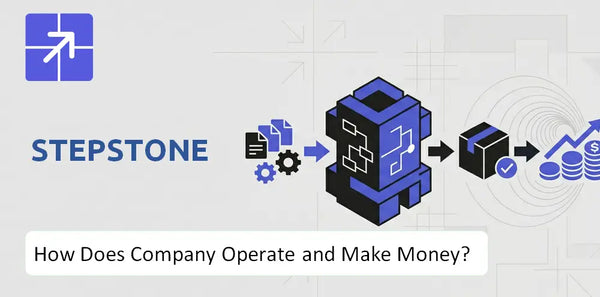
Track productized offerings like StepStone BCG Matrix Analysis to see which strategies drive fee growth and client retention in 2025; prioritize scalable advisory mandates. One quick insight: focus on repeatable solutions to lift margins.
What Does StepStone Actually Sell?
StepStone Group sells tailored private markets solutions: bespoke Separately Managed Accounts (SMAs), niche commingled funds (secondaries, co – investments), plus advisory, due diligence, and portfolio monitoring services that clients pay for to outsource private markets investing.
 Core private markets products and services
StepStone Group offers Separately Managed Accounts (SMAs) for institutional mandates, commingled funds focused on secondaries and co – investments, advisory retainers, and data – driven portfolio monitoring platforms. Clients pay fees for access, fiduciary oversight, and manager selection.
Primary buyers
Pension funds, sovereign wealth funds, endowments, insurance companies, and increasingly ultra – high – net – worth individuals and family offices buy StepStone's turnkey private markets capability. See Target Customers and Market of StepStone Company for market mapping.
Practical value delivered
Clients receive reduced operational complexity, outsourced due diligence, access to diversified manager pools, and ongoing performance analytics. For example, in fiscal 2025 StepStone reported overseeing over USD 130 billion in assets under management and advisory, demonstrating scale in sourcing deals and managers.
Differentiators and ease of purchase
StepStone's edge is specialist private markets origination, a global research platform, and customizable SMA governance – selling a turnkey private markets department. Fee mix in 2025 combined management and performance fees plus advisory retainers, with recurring management fees providing the majority of revenue.
StepStone SWOT Analysis
- Complete SWOT Breakdown
- Fully Customizable
- Editable in Excel & Word
- Professional Formatting
- Investor-Ready Format

How Does StepStone Run Its Business Day to Day?
StepStone Group runs as a global, digitally integrated investment engine: teams monitor over 85,000 private companies via the proprietary SPI data platform, source primary fund commitments, execute secondary purchases, and diligence direct co-investments; daily work is decentralized across offices but unified by realtime data, workflow systems, and constant client communication to match long-dated private asset liquidity with institutional needs.

Operating model: data-driven, distributed investment platform
Investment teams worldwide use the SPI platform to aggregate quantitative and qualitative signals on private companies and funds, feed deal pipelines, and route opportunities through centralized approval workflows; risk, legal, and portfolio teams then translate signals into commitments and allocations.
Product and service delivery: institutional client advisory and execution
Clients access offerings via bespoke mandates, separate accounts, and commingled funds; relationship teams manage subscriptions, reporting, and liquidity windows while execution desks handle secondary transactions and co-invest structuring.
Production, sourcing, and deal origination
Origination combines direct GP relationships, proprietary screening of >85,000 private companies, and secondary sourcing from institutional sellers; dedicated origination teams negotiate pricing and paperwork for primary, secondary, and co-invest deals.
Sales channels and distribution: institutional and advisory network
Distribution relies on global client coverage, placement agents, and institutional consultants; product specialists coordinate with client account managers to place capital across funds, secondaries, and customized mandates.
Key assets, systems, and partnerships
Core assets include the SPI data platform, proprietary fund and company databases, research teams, trading desks, and LP relationships; partnerships span GPs, institutional sellers, and service providers for legal, tax, and custody functions.
What makes the model work: scale, data, and high-touch client service
Scale of coverage (85,000 companies), centralized analytics, and high-touch client teams compress information frictions in private markets so teams can price illiquidity, structure secondaries, and meet long-term LP cashflow needs.
Related reading: Competitive Landscape of StepStone Company
StepStone Business Model Canvas
- One-time Payment
- No Research Needed – Save Hours of Work
- Built by Experts, Trusted by Consultants
- Instant Download, Ready to Use
- 100% Editable, Fully Customizable

How Does Revenue Flow Through StepStone?
Revenue at StepStone flows from recurring contractual management fees and performance-linked carried interest, with growing contribution from wealth-channel evergreen funds; demand converts into revenue via long-term mandates and retail inflows. Management and advisory fees create stable cash flow while carried interest and wealth subscriptions provide upside and diversification.
Main revenue stream: Contractual management and advisory fees
Management and advisory fees accounted for approximately 75 percent of total revenues as of Q1 2026, typically charged as a percentage of fee-earning assets under management (AUM) or committed capital. These fees convert demand into predictable cash flows because separate managed accounts (SMAs) and institutional mandates often lock clients in for 10+ years.
Additional revenue: Carried interest and wealth-channel inflows
Carried interest (performance fees) generates upside once client return hurdles are met; in recent years carried interest contributed the variable portion of earnings and can spike in strong markets. Expansion into wealth via evergreen funds adds recurring monthly and quarterly retail-oriented inflows, diversifying traditional institutional revenue streams.
Pricing and monetization model: Fee percentages, subscription-style wealth fees
Demand monetizes through percentage-based management fees on AUM or committed capital, carried interest tied to hurdle rates, and subscription-like fees from evergreen retail products. Contracts for SMAs and advisory mandates commonly embed tiered fee schedules and periodic billing (monthly/quarterly).
Primary revenue drivers: AUM growth, mandate longevity, and performance
Revenue is driven most by growth in fee-earning AUM, retention of long-term mandates, and realized performance that unlocks carried interest; wealth-channel expansion reduces concentration risk. See related governance and ownership context in Ownership and Control of StepStone Company.
StepStone Marketing Mix
- Complete Marketing Mix Analysis
- Effortlessly Communicate Your Business Strategy
- Investor-Ready Format
- 100% Editable and Customizable
- Clear and Structured Layout

What Makes StepStone's Model Sustainable or Fragile?
StepStone Group's model is sustained by deep institutional ties and a data-driven, high-switching-cost platform but is fragile to market valuation swings and public equity downturns. Structural strengths include scale and recurring fee economics; key risks are the denominator effect and reliance on private-market outperformance.
Institutional stickiness and scale
Long-term relationships with pensions and sovereign wealth funds create a sticky client base; by early 2026 total capital under advisement and management exceeded $730,000,000,000, underpinning recurring fee revenue and cross – sell opportunities.
Data advantage and high switching costs
Proprietary performance datasets and analytics raise the cost of switching providers and enhance sourcing for secondaries and infrastructure deals, supporting advisory and placement fees in StepStone business model and StepStone company overview narratives.
Denominator effect and market sensitivity
When public equities fall, clients' allocation denominators shrink and they may slow private market commitments; in 2025 higher public market volatility and elevated interest rates contributed to softer new deal volumes across the industry.
Durability in 2025/2026: resilient but conditional
Professional judgment for 2025/2026 rates StepStone Group as relatively resilient given its pivot into secondaries and infrastructure and diversified StepStone revenue streams; however, sustained underperformance of private markets versus public indices or a prolonged market rout would weaken growth and fee momentum. See Sales and Marketing Strategy of StepStone Company for related go – to – market context.
StepStone Boston Consulting Group Matrix
- Built by Experts, Trusted by Consultants
- Structured for Consultants, Students, and Founders
- 100% Editable in Microsoft Word & Excel
- Instant Digital Download – Use Immediately
- Compatible with Mac & PC – Fully Unlocked

Related Blogs
- What Is the History of StepStone Company and How Did It Evolve?
- What Is the Competitive Landscape of StepStone Company and How Does It Compete?
- What Is the Growth Outlook of StepStone Company and Where Is It Heading?
- How Does StepStone Company Reach Customers and Turn Demand into Sales?
- What Do the Mission, Vision, and Core Values of StepStone Company Reveal?
- Who Are the Core Customers in StepStone Company's Target Market?
- Who Owns StepStone Company Today and Who Holds Control?
Frequently Asked Questions
StepStone sells tailored private markets solutions. Its offerings include Separately Managed Accounts, commingled funds focused on secondaries and co-investments, plus advisory, due diligence, and portfolio monitoring services. Clients pay for access, fiduciary oversight, and manager selection so they can outsource private markets investing.
Disclaimer
All information, articles, and product details provided on this website are for general informational and educational purposes only. We do not claim any ownership over, nor do we intend to infringe upon, any trademarks, copyrights, logos, brand names, or other intellectual property mentioned or depicted on this site. Such intellectual property remains the property of its respective owners, and any references here are made solely for identification or informational purposes, without implying any affiliation, endorsement, or partnership.
We make no representations or warranties, express or implied, regarding the accuracy, completeness, or suitability of any content or products presented. Nothing on this website should be construed as legal, tax, investment, financial, medical, or other professional advice. In addition, no part of this site - including articles or product references - constitutes a solicitation, recommendation, endorsement, advertisement, or offer to buy or sell any securities, franchises, or other financial instruments, particularly in jurisdictions where such activity would be unlawful.
All content is of a general nature and may not address the specific circumstances of any individual or entity. It is not a substitute for professional advice or services. Any actions you take based on the information provided here are strictly at your own risk. You accept full responsibility for any decisions or outcomes arising from your use of this website and agree to release us from any liability in connection with your use of, or reliance upon, the content or products found herein.