
How does Vivendi operate its content-to-distribution value chain and monetize IP across media businesses?
Vivendi integrates content creation in publishing, music, and gaming with global distribution via television and advertising to capture multiple revenue streams. This matters as Vivendi's 2025 asset separation pushed units to compete independently, reducing the conglomerate discount and aligning with platform rivals; see the recent spin strategy.
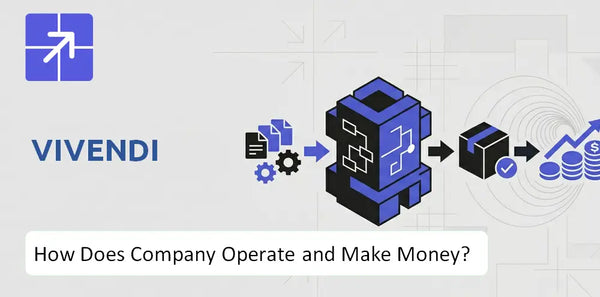
Focus on cross-division IP ownership, licensing, and ad sales to drive scalable margins; track quarterly content licensing trends and streaming ad revenue. For a product-level view see Vivendi BCG Matrix Analysis.
What Does Vivendi Actually Sell?
Vivendi sells access to premium entertainment, professional communication services, and consumer goods – customers pay for subscriptions, advertising reach, marketing services, digital goods, and retail purchases across its platforms.
 Core offerings: subscriptions, services, retail, and digital goods
Vivendi business model centers on subscription TV and streaming via Canal+, marketing and media services via Havas, travel-retail and book sales via Lagardere and Hachette, and mobile gaming with in-app purchases and ads through Gameloft.
Main buyers: consumers, advertisers, and corporations
Paying customers include over 28 million Canal+ subscribers globally (early 2026), advertisers and brands buying media and digital ad inventory, corporations and SMEs hiring Havas for marketing, travelers buying in Lagardere outlets, and > 50 million monthly active users of Gameloft titles.
Customer value: access, reach, and monetizable engagement
Consumers get premium content and convenience; advertisers gain targeted audiences and media buying; enterprises receive creative strategy and execution; gamers purchase digital items and experience ongoing engagement that drives recurring revenue.
Differentiators: integrated media-to-marketing ecosystem
Vivendi stands out by combining content production/distribution (Canal+, Hachette), agency services (Havas), retail reach (Lagardere travel outlets), and digital gaming (Gameloft), enabling cross-sell, bundled monetization, and diversified Vivendi revenue streams.
See the company context and evolution in this article: History and Background of Vivendi Company
Vivendi SWOT Analysis
- Complete SWOT Breakdown
- Fully Customizable
- Editable in Excel & Word
- Professional Formatting
- Investor-Ready Format

How Does Vivendi Run Its Business Day to Day?
Vivendi runs day-to-day through decentralized operational units aligned to monetize intellectual property across media, advertising, publishing, gaming, and audio; delivery flows use content creation, rights management, and cross – division syndication with shared corporate platforms for finance, legal, and distribution. Key systems include rights registries, adtech stacks, retail logistics, and streaming/CDN infrastructure; practical mechanics hinge on local autonomy plus centralized cross – promotion and IP accounting.

Decentralized operating model, centralized IP economics
Business units run autonomously on local P&Ls while following group rules to extract value from content rights. Corporate coordinates licensing, tax, and strategic investments so IP generated in one division is monetized across others, supporting the Vivendi business model and corporate strategy.
How customers access content and services
Consumers access offerings via subscriptions (streaming and pay-TV), transactional sales (books, games), advertising-supported platforms, and retail concessions; digital channels (apps, OTT) and physical retail in transit hubs drive usage and revenue streams.
Production, sourcing and content development
Canal Plus acquires and produces content, including high-value sports rights and a library of thousands of titles; Havas sources creative talent and media inventory through agency networks; Lagardere secures supply and merchandise for thousands of retail points across 40 countries, concentrating on airports and stations.
Sales channels and distribution systems
Distribution mixes direct-to-consumer streaming and subscriptions, third-party platform licensing, agency-led client work, and physical retail concessions; Gameloft and Universal Music distribution leverage app stores, DSPs, and global licensing partners to reach end users.
Key assets, systems, and partnerships
Core assets include content libraries, sports rights, publishing catalogs, adtech stacks, retail leases, and gaming IP; systems are rights registries, CRM, billing/recurring-revenue engines, and CDNs. Strategic partnerships expand footprint in Africa and Asia and support Vivendi subsidiaries growth.
Why the model works in practice
Efficiency comes from monetizing the same IP across formats and regions, turning publishing into screen content and games, and combining agency creative with media buying for full – funnel solutions. Cross – promotion lifts content lifetime value and reduces CAC, supporting Vivendi revenue streams and profitability.
Operational example: Canal Plus runs sports-rights auctions and local production teams, Havas uses village campuses to integrate creative and media for clients, and Lagardere services over 3,000 travel retail locations in roughly 40 countries; corporate then executes cross – division licensing deals and shared services to capture additional revenue per asset. See Competitive Landscape of Vivendi Company for broader context: Competitive Landscape of Vivendi Company
Vivendi Business Model Canvas
- One-time Payment
- No Research Needed – Save Hours of Work
- Built by Experts, Trusted by Consultants
- Instant Download, Ready to Use
- 100% Editable, Fully Customizable

How Does Revenue Flow Through Vivendi?
Revenue flows through Vivendi via diversified streams: recurring subscriptions, transactional sales, and service fees. Demand for content, advertising, and travel retail converts into cash through subscriptions, media commissions, physical retail sales, digital monetization, and dividends from holdings.
Subscription backbone: Canal+ and recurring income
Canal+ subscription fees form the primary revenue base, providing predictability and customer lifetime value; in 2025 subscriptions accounted for approximately 50 percent of Vivendi consolidated turnover, underpinning cash flow stability.
Advertising, services and transactional sales
Havas earns service fees and commissions on media spend, benefiting from digital ad growth, while Lagardere supplies high-volume transactional sales in travel retail and publishing, especially in airport environments with higher margins.
Pricing and monetization mix
Vivendi monetizes via subscriptions (Canal+), service fees and commissions (Havas), transactional retail and publishing sales (Lagardere), digital in-game purchases and ad revenue, plus licensing and dividend income from minority stakes.
Key revenue drivers in 2025
Consolidated revenues reached approximately €19.5 billion in fiscal 2025 driven by international expansion and full integration of Lagardere assets; growth depended most on subscription retention, digital ad spend, travel retail recovery, and dividend flows from minority holdings. Read more on commercial execution in our Sales and Marketing Strategy of Vivendi Company.
Vivendi Marketing Mix
- Complete Marketing Mix Analysis
- Effortlessly Communicate Your Business Strategy
- Investor-Ready Format
- 100% Editable and Customizable
- Clear and Structured Layout

What Makes Vivendi's Model Sustainable or Fragile?
Vivendi's model benefits from global scale and a diversified media portfolio that blends defensive advertising, subscription, and licensing cash flows; key risks include premium content bidding wars, ad budget cyclicality, and reduced group-level liquidity after the 2025 demerger. Structural strengths are clear, but dependency on content rights and advertising makes the model sensitive to market and competitive shocks.
Scale and Geographic Diversification Support the Model
Vivendi business model gains resilience from operations across Europe, Africa, and global music markets; after the MultiChoice integration in 2025, Canal+ serves a fast-growing African pay-TV base that offsets stagnation in some European markets. In 2025 Vivendi reported consolidated revenue drivers showing stronger growth in emerging markets and music licensing.
Key Assets and Capabilities
Vivendi subsidiaries include Canal+ and Havas alongside major music assets that underpin content monetization; Universal Music Group-related licensing and catalogue revenues supply recurring royalties and streaming income. Strategic partnerships and localized distribution (notably Canal+ in Africa) give scale advantages in content distribution and advertising sales.
Dependencies and Concentration Risks
How Vivendi works depends heavily on winning premium content rights, ad market cycles, and subscription retention; bidding for sports and film rights drives cost volatility. The 2025 demerger strategy reduces cross-divisional cash reserves, increasing reliance on each unit's standalone funding and capital markets access for M&A or content spending.
How Durable the Model Looks in 2025 – 2026
In 2026 Vivendi company overview positions it as a high-conviction play on specialized media, but resilience is mixed: scale and recurring music royalties are strengths while competition from US tech platforms pressures margins at Havas and Canal+. If standalone entities sustain operating margins near 2025 levels and manage content costs, the model holds; otherwise, exposure to advertising volatility and content bidding makes it fragile. Read more on corporate intent in Mission, Vision, and Values of Vivendi Company
Vivendi Boston Consulting Group Matrix
- Built by Experts, Trusted by Consultants
- Structured for Consultants, Students, and Founders
- 100% Editable in Microsoft Word & Excel
- Instant Digital Download – Use Immediately
- Compatible with Mac & PC – Fully Unlocked

Related Blogs
- What Is the History of Vivendi Company and How Did It Evolve?
- What Is the Competitive Landscape of Vivendi Company and How Does It Compete?
- What Is the Growth Outlook of Vivendi Company and Where Is It Heading?
- How Does Vivendi Company Reach Customers and Turn Demand into Sales?
- What Do the Mission, Vision, and Core Values of Vivendi Company Reveal?
- Who Are the Core Customers in Vivendi Company's Target Market?
- Who Owns Vivendi Company Today and Who Holds Control?
Frequently Asked Questions
Vivendi sells access to premium entertainment, professional communication services, and consumer goods. Its core offerings include subscriptions, advertising reach, marketing services, digital goods, and retail purchases through businesses like Canal+, Havas, Lagardere, Hachette, and Gameloft.
Disclaimer
All information, articles, and product details provided on this website are for general informational and educational purposes only. We do not claim any ownership over, nor do we intend to infringe upon, any trademarks, copyrights, logos, brand names, or other intellectual property mentioned or depicted on this site. Such intellectual property remains the property of its respective owners, and any references here are made solely for identification or informational purposes, without implying any affiliation, endorsement, or partnership.
We make no representations or warranties, express or implied, regarding the accuracy, completeness, or suitability of any content or products presented. Nothing on this website should be construed as legal, tax, investment, financial, medical, or other professional advice. In addition, no part of this site - including articles or product references - constitutes a solicitation, recommendation, endorsement, advertisement, or offer to buy or sell any securities, franchises, or other financial instruments, particularly in jurisdictions where such activity would be unlawful.
All content is of a general nature and may not address the specific circumstances of any individual or entity. It is not a substitute for professional advice or services. Any actions you take based on the information provided here are strictly at your own risk. You accept full responsibility for any decisions or outcomes arising from your use of this website and agree to release us from any liability in connection with your use of, or reliance upon, the content or products found herein.