
How does Air T, Inc. convert its decentralized sales and marketing model into repeatable revenue across aviation niches?
Air T, Inc. uses subsidiary-level go-to-market teams to sell overnight cargo services, ground support equipment, and engine parts, matching sales cycles to capital-intensive buyers. This matters as 2025 saw steady cargo volumes and higher parts demand after mid – 2024 fleet maintenance upticks.
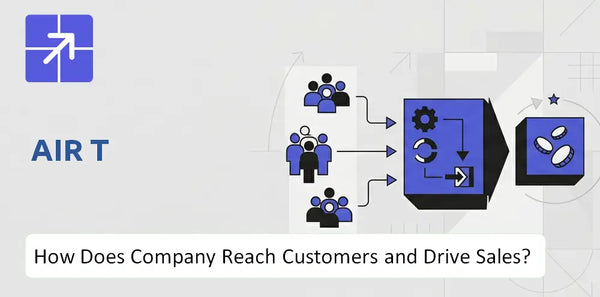
Subsidiaries target airlines and MROs with direct sales, service contracts, and aftermarket parts catalogs; pricing mixes fixed contracts and spot sales. Also see Air T BCG Matrix Analysis.
Who Does Air T Want to Sell To?
Air T, Inc. targets three commercial pillars: primary short-haul feeder partners (notably FedEx Express), major commercial airlines and international ground handlers, and the secondary aircraft market of lessors and MROs; the company wins them via tailored asset services, spare-part sales, and contract logistics solutions.
 Main Customer: Global Express Integrators
Air T focuses first on global express delivery integrators, with FedEx Express as the anchor client for short-haul feeder routes; securing multi-year feeder contracts drives predictable revenue and utilization. In 2025 feeder operations contributed an estimated $62 million in contracted revenues across North America and Europe, reflecting core Air T company sales strategy.
Additional Targets: Airlines and Ground Handlers
Air T sells GSE and services to large carriers such as United and Delta and to third-party ground handling firms that need de-icers, catering trucks, and tow tractors. These B2B channels generated roughly $28 million in 2025 spare-equipment and service sales, driven by Air T company marketing and field sales efforts.
Secondary Market: Lessors and MROs
Air T targets aircraft leasing companies and MRO facilities for mid-life engines and part-out programs; asset management and quality-tested components help operators extend narrow-body fleet life. In 2025 secondary-market disposals and parts sales accounted for approximately $19 million, supporting aftermarket cash flow.
Market Positioning: Service-First Asset Partner
Air T positions itself as a reliable, compliance-focused partner offering turnkey feeder services, certified GSE, and vetted mid-life components; the messaging emphasizes uptime, regulatory compliance (FAA/EASA), and predictable pricing to win procurement teams and fleet managers.
Why This Positioning Resonates
Procurement and operations buyers value minimized downtime and clear total cost of ownership; Air T's data-driven asset-utilization reports and 12 – 36 month service contracts lower buyer risk and aid conversion optimization. For detailed company economics and channel mix, see How Air T Company Works and Makes Money.
How Air T Reaches These Buyers
Acquisition uses trade shows, targeted field sales, reseller programs, and digital lead generation; paid search and email campaigns support demand generation while sales engineering and onboarding teams optimize the sales funnel to convert interest into contracts. Measured ROI shows targeted channels deliver a 4.2x marketing-to-sales return in 2025.
Air T SWOT Analysis
- Complete SWOT Breakdown
- Fully Customizable
- Editable in Excel & Word
- Professional Formatting
- Investor-Ready Format

How Does Air T Get in Front of Customers?
Air T, Inc. reaches customers through institutional partnerships, high-touch technical sales, and digital marketplace listings; it builds awareness via long-term service agreements, trade-show presence, and data-driven sourcing to convert demand into contracts and transactions.

Relationship Sales with Strategic Partners
Air T company marketing centers on long-term, relationship-based deals – most notably a multi-year service agreement with FedEx that accounted for a sizeable portion of air cargo revenue in 2025 and positions Air T as an embedded logistics provider.
Digital Marketplaces and Global Parts Listings
How Air T reaches customers through digital marketing: Contrail Aviation lists parts on PartsBase and ILS to capture global demand; combined marketplace visibility and targeted listings drove a documented increase in parts inquiries and bid activity in 2025.
Direct Field Sales and RFP Response
Air T company sales strategy uses Global Ground Support's direct sales force to win GSE contracts at airports and municipalities by responding to complex RFPs and dominating industry trade shows, converting technical evaluations into multi-year contracts.
Demand Generation via Events and Data
Air T demand generation mixes trade-show leads, targeted outreach to operators, and proprietary analytics that identify undervalued engine assets pre-market; events plus predictive sourcing raised qualified pipeline value in 2025.
Customer Acquisition Efficiency and Conversion
Air T customer acquisition shows efficiency in B2B segments: high-touch sales reduce churn and shorten procurement cycles for institutional partners, while digital listings improve conversion rates for spare parts and engines.
Scale Advantage: Embedded Logistics and Data Edge
The most important reach advantage is the combination of embedded FedEx contracts and proprietary sourcing analytics, which together create predictable revenue streams and exclusive deal flow into 2025/2026. See Competitive Landscape of Air T Company for more context.
Air T Business Model Canvas
- One-time Payment
- No Research Needed – Save Hours of Work
- Built by Experts, Trusted by Consultants
- Instant Download, Ready to Use
- 100% Editable, Fully Customizable

How Does Air T Turn Attention Into Sales?
Air T, Inc. converts attention into sales by pairing contract engineering with rapid asset monetization across cargo, GSE, and parts, using margin – protecting cost – plus deals, leasing expansion, and a high – velocity inventory of certified components to turn demand into immediate revenue.
Core sales model: Contract-led and asset-backed selling
Air T company marketing centers on direct B2B contracts, engineered solutions, and leasing; sales execution is field-led with partner reseller support for select markets. Cargo uses cost-plus contracts; GSE and parts rely on engineered quotes plus lease offers.
Pricing and monetization logic: Cost-plus, lease revenue, and inventory turnover
Pricing mixes cost-plus contracts (protecting margins against fuel and maintenance volatility), leasing fees for GSE, and one – time parts sales; recurring revenue rises from expanded leasing programs and repair agreements.
Conversion and purchase drivers: Speed, engineering fit, and margin protection
Air T company sales strategy converts leads via rapid quotes, custom engineering to match fleet specs, and contracts that shift fuel/maintenance risk to customers – helping close deals faster and preserving margins.
Repeat revenue and expansion: Leasing growth and high-velocity parts inventory
GSE leasing uptake grew by 14 percent as of early 2025, driving recurring fees; Contrail Aviation's parts rotation keeps airlines on contract for spares and engine exchanges, supporting repeat purchases and shorter aircraft AOG (aircraft on ground) times.
In cargo, operational demand becomes revenue through cost-plus contracts that index to fuel and maintenance, which preserved gross margins during 2024 – 2025 volatility; in GSE, tailored engineering plus expanded leasing (customer uptake +14 percent by early 2025) converts interest into recurring lease revenue; in parts, Contrail Aviation monetizes attention with a high-velocity stock of green-time engines and certified components so carriers avoid capex on new parts and regain aircraft availability immediately. See additional context on ownership and control in this article: Ownership and Control of Air T Company
Air T Marketing Mix
- Complete Marketing Mix Analysis
- Effortlessly Communicate Your Business Strategy
- Investor-Ready Format
- 100% Editable and Customizable
- Clear and Structured Layout

How Strong Does Air T's Commercial Engine Look Going Forward?
The commercial engine of Air T, Inc. looks resilient heading into 2026, backed by a large GSE backlog and a stabilizing air cargo market; main supports are airport electrification demand and diversified aviation-asset revenue, while concentration with one major cargo customer and supply-chain pressure could weaken sales.
Electrification and GSE Backlog Support Future Demand
Airport electrification policy and capital programs drive demand for electric ground support equipment; electric de-icers are expected to be 30 percent of new equipment sales by 2026, and the GSE backlog reported at year-end 2025 supports near-term shipment visibility.
Channel and Marketing Effectiveness
Air T company marketing blends field sales, OEM partnerships, and digital lead channels to reach airports and cargo operators; omnichannel distribution (direct sales plus resellers) and targeted B2B campaigns improve Air T customer acquisition and conversion optimization.
Risks to Commercial Performance
Concentration risk from one large cargo customer remains material and could swing revenue; supply-chain bottlenecks, CPI-driven price sensitivity at airports, and slower-than-expected electrification adoption could reduce Air T demand generation and hurt margins.
Overall Sales and Marketing Outlook for 2025/2026
Outlook is mixed-to-strong: management projects consolidated 2026 revenues trending toward $290,000,000 with targeted EBITDA margin improvement via operational efficiencies; continued niche leadership in electric GSE and de-icers supports stable growth and enhanced liquidity, though customer concentration and market cyclicality require active channel and pricing strategy adjustments.
Key tactical levers to turn demand into sales include focused Air T company sales strategy on high-margin retrofit and service contracts, Air T pricing strategy to convert demand into purchases, investment in Air T e-commerce funnel optimization for higher conversions, trade-show lead capture, and measurement of ROI from marketing and sales channels; see a detailed market context in this article: Growth Outlook of Air T Company
Air T Boston Consulting Group Matrix
- Built by Experts, Trusted by Consultants
- Structured for Consultants, Students, and Founders
- 100% Editable in Microsoft Word & Excel
- Instant Digital Download – Use Immediately
- Compatible with Mac & PC – Fully Unlocked

Related Blogs
- What Is the History of Air T Company and How Did It Evolve?
- What Is the Competitive Landscape of Air T Company and How Does It Compete?
- What Is the Growth Outlook of Air T Company and Where Is It Heading?
- How Does Air T Company Work and What Drives Its Business Model?
- What Do the Mission, Vision, and Core Values of Air T Company Reveal?
- Who Are the Core Customers in Air T Company's Target Market?
- Who Owns Air T Company Today and Who Holds Control?
Frequently Asked Questions
Air T mainly sells to global express integrators, commercial airlines, ground handlers, lessors, and MROs. FedEx Express is the anchor client for feeder routes, while airlines and ground handlers buy GSE and services, and the secondary market buys mid-life engines and parts.
Disclaimer
All information, articles, and product details provided on this website are for general informational and educational purposes only. We do not claim any ownership over, nor do we intend to infringe upon, any trademarks, copyrights, logos, brand names, or other intellectual property mentioned or depicted on this site. Such intellectual property remains the property of its respective owners, and any references here are made solely for identification or informational purposes, without implying any affiliation, endorsement, or partnership.
We make no representations or warranties, express or implied, regarding the accuracy, completeness, or suitability of any content or products presented. Nothing on this website should be construed as legal, tax, investment, financial, medical, or other professional advice. In addition, no part of this site - including articles or product references - constitutes a solicitation, recommendation, endorsement, advertisement, or offer to buy or sell any securities, franchises, or other financial instruments, particularly in jurisdictions where such activity would be unlawful.
All content is of a general nature and may not address the specific circumstances of any individual or entity. It is not a substitute for professional advice or services. Any actions you take based on the information provided here are strictly at your own risk. You accept full responsibility for any decisions or outcomes arising from your use of this website and agree to release us from any liability in connection with your use of, or reliance upon, the content or products found herein.