
How does Bank of Communications convert digital leads into sales through its sales and marketing model?
Bank of Communications blends branch networks, digital channels, and corporate RM teams to push mortgages, wealth, and high-end manufacturing loans. This matters because in 2025 it increased digital retail deposits and prioritized fee income amid NIM pressure, signaling a shift to capital-light revenues.
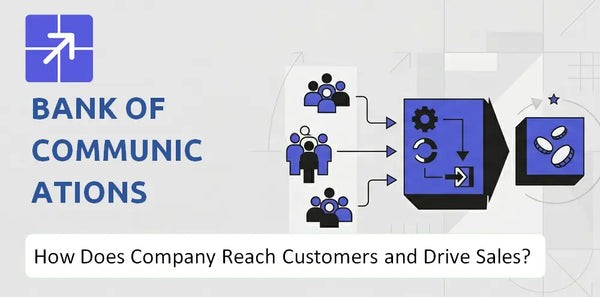
Focus digital ads on product funnels, route high-value leads to relationship managers, and price advisory fees to lift noninterest income. See detailed positioning in Bank of Communications BCG Matrix Analysis.
Who Does Bank of Communications Want to Sell To?
Bank of Communications wants to sell to three core segments: high-tech corporate clients, mass-affluent retail customers, and institutional partners, using targeted, policy-aligned corporate lending, digital wealth products, and cross-border settlement services to convert demand into revenue.
 Main Corporate Target: New Quality Productive Forces
Bank of Communications prioritizes green energy, semiconductors, and advanced manufacturing firms that align with national industrial policy; these clients drive large corporate loans and fee-based trade finance. In 2025 the bank increased sector-focused corporate loan exposure, reflecting a strategic tilt to high-growth industrial borrowers.
Additional Target: Mass-Affluent and Silver Economy
Retail focus targets retirees with high savings (the Silver Economy) and Generation Z via digital wealth products and mobile onboarding; wealth management AUM growth and higher-yield deposits from retirees raise cross-selling potential. The bank reports rising mobile app user acquisition and digital banking channels engagement in 2025.
Market Positioning: Shanghai Gateway for Cross – Border Flows
Headquartered in Shanghai, Bank of Communications positions itself as a premier gateway for international corporations needing cross-border settlement and offshore RMB services, supporting FDI and sophisticated trade finance; this drives institutional client acquisition and partnership marketing.
Why This Positioning Works: Policy Fit and Omnichannel Reach
Aligning with national industrial policy wins priority clients and reduces credit selection friction, while omnichannel customer journeys – branches plus digital banking channels – boost sales conversion. The bank leverages CRM-driven targeted marketing campaigns and product cross-selling techniques to turn leads into deposits and fee income; see the Growth Outlook of Bank of Communications Company for related analysis.
Bank of Communications SWOT Analysis
- Complete SWOT Breakdown
- Fully Customizable
- Editable in Excel & Word
- Professional Formatting
- Investor-Ready Format

How Does Bank of Communications Get in Front of Customers?
Bank of Communications reaches customers through an omni-channel mix: a digitally-led Mobile Banking App, Open Banking API partnerships, a 2,800-branch domestic network and overseas presence, plus relationship managers using big-data to pre-empt corporate needs.

Mobile App and Digital Ecosystem Drive Acquisition
The Mobile Banking App 10.0 is the primary acquisition engine, serving over 105 million monthly active users with AI-driven personalization that increases activation and cross-selling rates across retail and wealth segments.
Digital Marketing and Platform Distribution
Bank of Communications uses search, paid media, app-store optimization, email CRM, and platform integrations (notably WeChat) to drive downloads and engagement; Open Banking APIs embed services into third-party portals to capture intent at point-of-need.
Branch Network and Relationship Managers
The domestic network of approximately 2,800 branches in high-growth urban hubs plus offices in 18 countries supports complex sales, SME outreach and wealth advisory; relationship managers use big-data to surface leads before formal applications.
Demand Generation Tactics
Main tactics include targeted in-app campaigns, embedded offers via Open Banking APIs, corporate outreach by RM teams, seasonal promotions, and co-marketing with industrial internet platforms to pull pre-qualified demand into the funnel.
Customer Acquisition Efficiency
AI personalization and API distribution reduce customer acquisition costs by improving conversion; internal analytics prioritize high-LTV cohorts, so acquisition spends focus on segments with faster payback and higher cross-sell potential.
Most Important Reach Advantage
The combination of a massive app user base (105M MAU), Open Banking embedding, and a large branch footprint gives Bank of Communications scale and seamless omnichannel touchpoints for converting demand into deposits and loans in 2025/2026.
Further context on legacy, strategy and evolution is available in History and Background of Bank of Communications Company
Bank of Communications Business Model Canvas
- One-time Payment
- No Research Needed – Save Hours of Work
- Built by Experts, Trusted by Consultants
- Instant Download, Ready to Use
- 100% Editable, Fully Customizable

How Does Bank of Communications Turn Attention Into Sales?
Bank of Communications turns attention into sales by linking wealth management, asset management, and investment banking into a single sales funnel; retail deposit interest becomes product sales and corporate relationships convert via supply-chain finance. The bank captures deposits, transaction data, and assets under management to drive cross-sell and repeat revenue.
Integrated Wealth-Asset-IB Sales Engine
Bank of Communications uses a direct and branch-led sales model supported by digital banking channels Bank of Communications and relationship managers to sell proprietary wealth management products and institutional services.
Risk-Based Pricing and Monetization
Revenue comes from interest margins on loans and deposits, management fees on funds, and transaction fees; pricing is set by an internal rating system that enables competitive lending rates while preserving asset quality.
Conversion and Purchase Drivers
Cross-selling financial products Bank of Communications, trust in branch network, CRM-driven targeted marketing campaigns examples, and one-on-one advisory convert leads into deposits and AUM; supply-chain finance locks SME ecosystems to capture recurring cashflows.
Repeat Revenue and Customer Expansion
Wealth management upsells, fee-based asset management growth, and corporate deposit stickiness drive repeat revenue; by start of 2026 AUM exceeded 5.6 trillion RMB, supporting sustainable fee income.
Bank of Communications customer acquisition and Bank of Communications sales conversion rely on customer segmentation Bank of Communications, CRM implementation case study practices, and omnichannel customer journey and conversion strategies; supply-chain lending keeps NPLs resilient near 1.33 percent while enabling pricing that converts demand into funded loans and deposits. See Competitive Landscape of Bank of Communications Company for context: Competitive Landscape of Bank of Communications Company
Bank of Communications Marketing Mix
- Complete Marketing Mix Analysis
- Effortlessly Communicate Your Business Strategy
- Investor-Ready Format
- 100% Editable and Customizable
- Clear and Structured Layout

How Strong Does Bank of Communications's Commercial Engine Look Going Forward?
Bank of Communications' commercial engine looks stable but faces headwinds from China's structural slowdown; core drivers – liability optimization, digital distribution, and prudent capital – support steady, low-single-digit earnings growth while legacy property-linked credit costs temper upside.
What Supports Future Demand
Strong deposit franchise and optimized liability mix have stabilized net interest margin near 1.38 percent by early 2026, supporting loan pricing and margin recovery for sales conversion and Bank of Communications customer acquisition.
Channel and Marketing Effectiveness
Superior digital banking channels and mobile app user acquisition strategies are reducing distribution cost and improving cross-selling financial products Bank of Communications; digital-led CRM and targeted marketing campaigns examples show faster lead-to-deposit conversion and lower acquisition cost.
Risks to Commercial Performance
Legacy property exposure keeps credit costs elevated; if property-related provisions rise, return on assets and sales conversion for mortgage and wealth channels could weaken – monitor nonperforming loan trends and provisioning coverage closely.
The Overall Sales and Marketing Outlook
Outlook for 2025/2026 is steady and adaptable: Tier 1 capital adequacy above 13.5 percent lets Bank of Communications expand into green finance and infrastructure, while a digital-first omnichannel customer journey drives cost-to-income toward 26 percent and supports measured growth in SME customer acquisition tactics used by Bank of Communications.
For ownership context and governance factors that shape distribution strategy, see Ownership and Control of Bank of Communications Company
Bank of Communications Boston Consulting Group Matrix
- Built by Experts, Trusted by Consultants
- Structured for Consultants, Students, and Founders
- 100% Editable in Microsoft Word & Excel
- Instant Digital Download – Use Immediately
- Compatible with Mac & PC – Fully Unlocked

Related Blogs
- What Is the History of Bank of Communications Company and How Did It Evolve?
- What Is the Competitive Landscape of Bank of Communications Company and How Does It Compete?
- What Is the Growth Outlook of Bank of Communications Company and Where Is It Heading?
- How Does Bank of Communications Company Work and What Drives Its Business Model?
- What Do the Mission, Vision, and Core Values of Bank of Communications Company Reveal?
- Who Are the Core Customers in Bank of Communications Company's Target Market?
- Who Owns Bank of Communications Company Today and Who Holds Control?
Frequently Asked Questions
Bank of Communications wants to sell to high-tech corporate clients, mass-affluent retail customers, and institutional partners. The blog says it uses policy-aligned corporate lending, digital wealth products, and cross-border settlement services to turn demand into revenue across these segments.
Disclaimer
All information, articles, and product details provided on this website are for general informational and educational purposes only. We do not claim any ownership over, nor do we intend to infringe upon, any trademarks, copyrights, logos, brand names, or other intellectual property mentioned or depicted on this site. Such intellectual property remains the property of its respective owners, and any references here are made solely for identification or informational purposes, without implying any affiliation, endorsement, or partnership.
We make no representations or warranties, express or implied, regarding the accuracy, completeness, or suitability of any content or products presented. Nothing on this website should be construed as legal, tax, investment, financial, medical, or other professional advice. In addition, no part of this site - including articles or product references - constitutes a solicitation, recommendation, endorsement, advertisement, or offer to buy or sell any securities, franchises, or other financial instruments, particularly in jurisdictions where such activity would be unlawful.
All content is of a general nature and may not address the specific circumstances of any individual or entity. It is not a substitute for professional advice or services. Any actions you take based on the information provided here are strictly at your own risk. You accept full responsibility for any decisions or outcomes arising from your use of this website and agree to release us from any liability in connection with your use of, or reliance upon, the content or products found herein.