
How does FutureFuel Corp. convert B2B contracts and biofuels market demand into repeat sales via its sales and marketing model?
FutureFuel Corp. blends long-term specialty-chemicals contracts with policy-driven biodiesel sales to stabilize revenue and capture upside. This matters because maintaining a debt-free balance sheet in 2025 – 2026 lets FutureFuel absorb feedstock swings and seize M&A or plant upgrades. Recent 2025 filings show resilient margins on custom-manufacturing agreements.
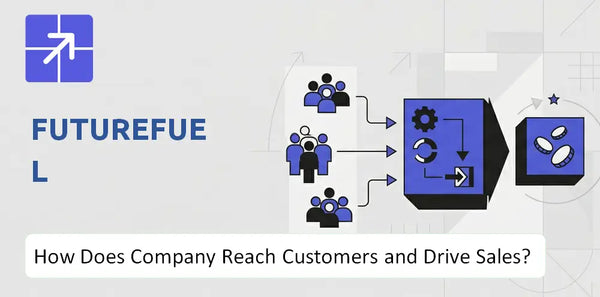
Prioritize direct sales to industrial clients and policy-aware trading desks; invest in technical service teams to protect renewals and realize price premiums. See tactical product review: FutureFuel BCG Matrix Analysis
Who Does FutureFuel Want to Sell To?
FutureFuel Corp. targets three buyer tiers: global life sciences and diversified chemical firms needing custom synthesis, agricultural companies buying herbicides and additives, and U.S. Midwest fuel blenders and petroleum distributors needing biodiesel to meet Renewable Fuel Standard mandates. The company wins by offering scale, technical precision, and long-term supply contracts tied to its 59-million-gallon annual biodiesel capacity.
 Primary: Global Chemical and Life Sciences Buyers
FutureFuel customer acquisition focuses on large chemical and life sciences corporations that require custom synthesis for bleach activators and specialty intermediates. These customers value technical precision, regulatory compliance, and high-volume runs tied to predictable procurement cycles; FutureFuel targets long-term contracts and tailored R&D partnerships to move through the FutureFuel sales funnel into repeat business.
Secondary: Agricultural and Agrochemical Firms
Agricultural buyers purchase herbicides and chemical additives; FutureFuel demand generation emphasizes product consistency, supply reliability, and regulatory safety data sheets. Sales and distribution strategy leverages regional distributors and B2B lead generation tactics, with pricing strategy set to win volume contracts during seasonal procurement windows.
Tertiary: U.S. Midwest Biofuels Customers
FutureFuel sales strategy targets regional fuel blenders and petroleum distributors in the U.S. Midwest that must meet Renewable Fuel Standard (RFS) obligations. The company leverages its 59-million-gallon annual biodiesel capacity to offer predictable supply, RIN (renewable identification number) support, and blending logistics to secure multi-year offtake agreements.
Market Positioning: Scale plus Technical R&D
FutureFuel positions itself as a high-volume, technically capable supplier bridging specialty chemicals and biofuels. The company emphasizes custom synthesis capabilities, regulatory compliance, and integrated supply-chain services to move prospects quickly through the FutureFuel sales funnel into contracted demand.
Why This Positioning Works
Large buyers prioritize reliability and regulatory compliance; FutureFuel converts demand into sales by offering long-term contracts, technical service teams, and capacity that matches customer scale. Measured wins include multi-year biodiesel offtakes linked to RFS credits and custom synthesis contracts that raise average contract sizes and lower churn.
Related Reading on Company Strategy
See Mission, Vision, and Values of FutureFuel Company for context on corporate priorities and how they shape FutureFuel marketing channels and distribution strategy: Mission, Vision, and Values of FutureFuel Company
FutureFuel SWOT Analysis
- Complete SWOT Breakdown
- Fully Customizable
- Editable in Excel & Word
- Professional Formatting
- Investor-Ready Format

How Does FutureFuel Get in Front of Customers?
FutureFuel Corp. reaches customers through deep technical sales relationships in Chemical Technologies and geographically driven Biofuels distribution from Batesville, Arkansas, combining direct account management, joint development, RIN market activity, and platform visibility to drive demand and convert sales.

Direct high-touch industrial sales
FutureFuel customer acquisition relies on long-term, technical account teams that manage multi-decade relationships and joint development projects with industrial buyers, which matters because these clients require bespoke chemistries few rivals can supply.
Digital presence and regulatory platforms
FutureFuel marketing channels include targeted industry content, investor and trade disclosures, and maintaining listings on major fuel distribution and RIN trading platforms to stay visible to blenders and institutional buyers.
Direct sales plus distribution access
For Chemical Technologies, FutureFuel sales strategy is direct B2B engagement; for Biofuels, Batesville logistics enable regional blender access and placements on fuel marketplaces and wholesale platforms to simplify purchase flows.
Demand generation via RINs and trade engagement
FutureFuel demand generation leans on active participation in the RIN market, trade shows, technical seminars, and co-development announcements that create pipeline leads among obligated blenders and specialty-chemical buyers.
Customer acquisition efficiency and unit economics
Customer acquisition is efficient for repeat B2B buyers: long contracts and technical barriers lower churn and raise lifetime value; Biofuels benefit from reduced transport costs at Batesville, improving margin-to-sales conversion.
Most important reach advantage in 2025
The strongest reach advantage is technical specialization plus strategic location: decades-long customer ties in chemicals and the Batesville plant that gives FutureFuel distribution strategy a logistics cost edge for regional blenders in 2025.
Key numbers: in fiscal 2025 Biofuels volumes were concentrated at Batesville, which helped reduce inbound/outbound freight and supported RIN sales that contributed materially to cash flow; long-term Chemical Technologies contracts often span multiple years with average contract tenors exceeding 3 years, supporting predictable revenue and high customer retention – see Growth Outlook of FutureFuel Company for detailed metrics and context: Growth Outlook of FutureFuel Company
FutureFuel Business Model Canvas
- One-time Payment
- No Research Needed – Save Hours of Work
- Built by Experts, Trusted by Consultants
- Instant Download, Ready to Use
- 100% Editable, Fully Customizable

How Does FutureFuel Turn Attention Into Sales?
FutureFuel Corp. converts attention into sales by locking chemical customers into multi-year supply agreements with cost-pass-throughs and by selling biofuels via daily rack pricing plus environmental credits, turning technical interest into stable, recurring revenue and cash. These mechanics push leads through a disciplined FutureFuel sales funnel into predictable free cash flow.
Core sales model: contract-led industrial and spot retail channels
FutureFuel customer acquisition relies on direct B2B contracting for chemicals and merchant rack sales for biofuels; large industrial buyers sign multi-year supply agreements while wholesale and retail customers purchase via daily rack and distributor networks.
Pricing and monetization logic: pass-throughs, rack pricing, and credits
Chemical contracts include cost-pass-through clauses that protect margins against feedstock swings; biofuels use competitive daily rack pricing plus monetization of RINs and low-carbon credits, and post-2025 alignment to Section 45Z increases per-gallon subsidy capture.
Conversion and purchase drivers: contract terms, regulation, and price transparency
Technical interest converts via guaranteed supply, predictable margin mechanics, and regulatory incentives; for biofuels, daily rack visibility and credit arbitrage drive quick purchase decisions – trust and fit matter for long lead industrial deals.
Repeat revenue and expansion: recurring volumes and credit optimization
Multi-year chemical agreements create recurring revenue and high customer retention; biofuels repeat sales stem from fuel customers and distributors, while ongoing optimization of carbon intensity (to qualify for Section 45Z) boosts per-unit economics and expands margin capture over time.
FutureFuel sales strategy metrics: as of 2025 the company often reports a cash-to-market-cap ratio above 40%, maintains multi-year contract coverage for a majority of specialty chemical volumes, and has increased low-carbon credit monetization after adjusting operations to lower carbon intensity scores under Section 45Z. See further ownership context in Ownership and Control of FutureFuel Company.
FutureFuel Marketing Mix
- Complete Marketing Mix Analysis
- Effortlessly Communicate Your Business Strategy
- Investor-Ready Format
- 100% Editable and Customizable
- Clear and Structured Layout

How Strong Does FutureFuel's Commercial Engine Look Going Forward?
FutureFuel Corp.'s commercial engine enters 2025/2026 with a defensive tilt: strong cash reserves (> 200,000,000) and zero long-term debt support demand conversion, while diversified chemical revenues and bio-based product upgrades underpin resilience; the shift from the Biodiesel Tax Credit to 45Z production credits is the main headwind for near-term biofuel sales momentum.
What Supports Future Demand
The chemical segment provides a revenue floor of roughly 160,000,000 to 190,000,000 annually, offering margin stability that funds marketing and channel expansion; strong cash (> 200,000,000) and no long-term debt allow self-funding of product upgrades and targeted demand generation without dilution.
Channel and Marketing Effectiveness
FutureFuel customer acquisition leverages B2B distribution, direct sales to chemical customers, and selective digital channels; the sales funnel mixes account-based outreach with digital lead capture, keeping conversion rates steady while enabling scalable trade show and targeted advertising tactics.
Risks to Commercial Performance
Policy shifts from the Biodiesel Tax Credit to 45Z create RIN (Renewable Identification Number) and credit-price volatility that can depress demand; supply-chain disruptions or feedstock cost spikes would squeeze margins and reduce marketing ROI.
The Overall Sales and Marketing Outlook
Outlook for 2026 is cautiously optimistic: diversified revenue and a cash-rich, unlevered balance sheet make FutureFuel sales strategy adaptable and defensible, with potential for special dividends or capex-funded growth if RIN prices stabilize and demand generation via digital marketing and wholesale partnerships holds.
See company context and evolution in this article: History and Background of FutureFuel Company
FutureFuel Boston Consulting Group Matrix
- Built by Experts, Trusted by Consultants
- Structured for Consultants, Students, and Founders
- 100% Editable in Microsoft Word & Excel
- Instant Digital Download – Use Immediately
- Compatible with Mac & PC – Fully Unlocked

Related Blogs
- What Is the History of FutureFuel Company and How Did It Evolve?
- What Is the Competitive Landscape of FutureFuel Company and How Does It Compete?
- What Is the Growth Outlook of FutureFuel Company and Where Is It Heading?
- How Does FutureFuel Company Work and What Drives Its Business Model?
- What Do the Mission, Vision, and Core Values of FutureFuel Company Reveal?
- Who Are the Core Customers in FutureFuel Company's Target Market?
- Who Owns FutureFuel Company Today and Who Holds Control?
Frequently Asked Questions
FutureFuel first targets global chemical and life sciences buyers that need custom synthesis and specialty intermediates. It also serves agricultural firms and Midwest biofuels customers, but the core strategy is built around technical precision, regulatory compliance, and long-term supply contracts.
Disclaimer
All information, articles, and product details provided on this website are for general informational and educational purposes only. We do not claim any ownership over, nor do we intend to infringe upon, any trademarks, copyrights, logos, brand names, or other intellectual property mentioned or depicted on this site. Such intellectual property remains the property of its respective owners, and any references here are made solely for identification or informational purposes, without implying any affiliation, endorsement, or partnership.
We make no representations or warranties, express or implied, regarding the accuracy, completeness, or suitability of any content or products presented. Nothing on this website should be construed as legal, tax, investment, financial, medical, or other professional advice. In addition, no part of this site - including articles or product references - constitutes a solicitation, recommendation, endorsement, advertisement, or offer to buy or sell any securities, franchises, or other financial instruments, particularly in jurisdictions where such activity would be unlawful.
All content is of a general nature and may not address the specific circumstances of any individual or entity. It is not a substitute for professional advice or services. Any actions you take based on the information provided here are strictly at your own risk. You accept full responsibility for any decisions or outcomes arising from your use of this website and agree to release us from any liability in connection with your use of, or reliance upon, the content or products found herein.