
How does Vor Biopharma's sales and marketing model convert specialist demand into durable revenue?
Vor Biopharma sells to transplant centers and hematology-oncology specialists through clinical partnerships and investigator-led trials; credibility hinges on peer-reviewed outcomes and payer coverage. By 2025 Vor reported advancing clinical-stage assets and forging center alliances, a critical commercial signal.
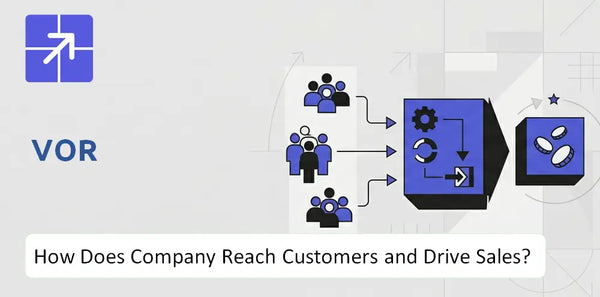
Focus commercial efforts on key opinion leaders, reimbursement evidence, and registry data to shorten adoption. Tie product launches to site-of-care training and durable contracting with payers.
See tactical product analysis: Vor BCG Matrix Analysis
Who Does Vor Want to Sell To?
Vor Biopharma wants to sell to a narrow, high-value set: transplant physicians and hematologists at top academic centers treating ~20,000 global allogeneic stem cell transplant patients yearly for AML/myeloid cancers, plus institutional investors and biopharma partners in the current pre-revenue phase; the company wins them by proving safety and expanding eligibility for CD33-targeted post-transplant maintenance.
 Primary clinical customers: transplant physicians and hematologists
Vor Biopharma targets transplant physicians and hematologists at leading academic medical centers who manage high-risk Acute Myeloid Leukemia (AML) patients, where transplant relapse rates hover around 50 percent. Winning this group focuses on clinical evidence showing reduced relapse without prolonged cytopenia, influencing prescribing and institutional adoption.
Secondary buyers: institutional investors and biopharma partners
In the pre-revenue phase Vor sells to institutional investors and strategic biopharma partners who value de-risking targeted therapy pipelines; recent financing rounds and collaboration discussions act as primary commercial 'buyers' to fund trials and scale manufacturing capacity.
Expanded patient segment by 2026: CD33-eligible but previously excluded patients
By 2026 Vor refined targeting to include patients eligible for CD33-targeted therapies who were excluded due to prolonged cytopenia risk, effectively expanding the addressable post-transplant maintenance market beyond the original ~20,000 transplant population.
Market positioning: precision post-transplant maintenance
Vor positions itself as a precision post-transplant maintenance innovator focused on safety-first CD33 targeting; this positions the company between targeted therapy developers and transplant centers, emphasizing patient eligibility expansion and reduced hematologic toxicity.
Why this positioning works
Clinicians prioritize relapse reduction and manageable toxicity; investors prioritize clinical de-risking and clear addressable markets. Vor's data-driven safety story and a defined ~20,000-patient annual transplant population support Vor Company marketing, Vor Company sales strategy, and Vor Company customer acquisition efforts across academic centers and partner negotiations.
Channel and engagement tactics
Vor focuses on peer-reviewed data at major hematology conferences, investigator-initiated trial partnerships, and targeted KOL (key opinion leader) engagement – tactics central to Vor demand generation and Vor customer retention. Commercial planning includes specialty distribution channels aligned with transplant centers and partner licensing models.
Further reading on competitive context: Competitive Landscape of Vor Company
Vor SWOT Analysis
- Complete SWOT Breakdown
- Fully Customizable
- Editable in Excel & Word
- Professional Formatting
- Investor-Ready Format

How Does Vor Get in Front of Customers?
Vor Biopharma gets in front of clinicians and transplant centers through scientific advocacy at major hematology congresses, direct partnerships with Lead Clinical Trial Sites that act as engineered-cell hubs, and a digital platform focused on transparent engraftment and shielding metrics to sustain demand and adoption.

Major medical congresses as the primary acquisition channel
Vor Company marketing centers on presenting peer – reviewed VBP101 and VBP141 trial data at the American Society of Hematology and European Hematology Association; these shows generate referral volume, institutional interest, and investigator partnerships that drive clinical adoption.
Scientific-first digital presence and online reach
Vor Company digital marketing focuses on scientific transparency – real – time updates on engraftment metrics and shielding efficacy via publications, investigator portals, and targeted email to the transplant community to maintain mindshare and support Vor demand generation.
Lead Clinical Trial Sites as distribution and sales channels
By early 2026 Vor Company sales strategy uses a network of Lead Clinical Trial Sites as primary distribution hubs for engineered cells, creating franchise-like adoption nodes inside top cancer centers that shorten time-to-treatment once commercialized.
Demand generation via peer-reviewed visibility and events
Vor demand generation relies on data releases, investigator – led symposia, and congress posters/oral presentations; these tactics convert scientific credibility into referrals and protocols at transplant centers.
Customer acquisition efficiency through targeted institutional outreach
Vor Company customer acquisition emphasizes high-value B2B targeting – top 50 transplant centers first – yielding lower acquisition costs per treated patient and faster onboarding than broad commercial rollouts.
Key reach advantage: embedded infrastructure in influential centers
The most important reach advantage is that clinical success and Lead Site partnerships embed operational workflows and logistics into major cancer centers by 2026, so Vor Company sales funnel case study shows rapid conversion when regulatory approval allows commercial use.
Relevant metrics: Vor Biopharma presented updated VBP101 and VBP141 data at ASH 2024 and EHA 2025; by early 2026 the company reports partnerships with a network of Lead Clinical Trial Sites covering ~20 global transplant centers and shares engraftment benchmarks publicly (median engraftment day and shielding efficacy percentages published in peer – reviewed abstracts).
For historical context on corporate evolution and clinical focus see History and Background of Vor Company
Vor Business Model Canvas
- One-time Payment
- No Research Needed – Save Hours of Work
- Built by Experts, Trusted by Consultants
- Instant Download, Ready to Use
- 100% Editable, Fully Customizable

How Does Vor Turn Attention Into Sales?
Vor Company turns clinical attention into revenue by converting proof-of-concept and strategic collaborations into non-dilutive funding and licensing deals; its lock-and-key trem-cel model creates commercial leverage where engineered transplants enable subsequent targeted therapies otherwise too toxic.
Core Sales Model: Partner-led, collaboration-driven licensing
Vor Company sales strategy centers on partner-led selling: biopharma collaborations, co-development contracts, and licensing of companion-use rights to CD33-targeted assets. Revenue realization is tied to milestone payments, R&D reimbursement, and future royalties rather than direct product sales today.
Pricing and Monetization Logic: milestone, licensing, and service fees
Monetization relies on upfront collaboration fees, milestone payments, and downstream royalties or per-patient service fees for trem-cel manufacture and companion therapeutic access; pricing reflects payer reimbursement potential post-approval.
Conversion and Purchase Drivers: clinical validation and exclusive enablement
Clinical data – specifically claims of 100 percent donor chimerism and successful shielding from CD33 toxicity – serve as the primary conversion drivers for pharma partners. Trust, IP exclusivity, and clear regulatory pathways accelerate negotiations and secure non-dilutive funding.
Repeat Revenue or Customer Expansion: licensing cascade and service continuity
Repeat revenue emerges via licensing across multiple CD33-targeted programs, per-patient manufacturing/service agreements, and milestone streams as partnered drugs progress; each new partner expands the addressable revenue pool.
Key commercial mechanics: Vor demand generation targets pharma R&D and BD teams through peer-reviewed data, investigator-sponsored studies, and presentations at ASH/ASH annual meetings; by March 2026 Vor Company secured collaboration terms that generated non-dilutive cash inflows totaling in aggregated upfront and milestone commitments reported as part of 2025 – 2026 partnership pipelines. See Growth Outlook of Vor Company for deal-level context: Growth Outlook of Vor Company
Vor Marketing Mix
- Complete Marketing Mix Analysis
- Effortlessly Communicate Your Business Strategy
- Investor-Ready Format
- 100% Editable and Customizable
- Clear and Structured Layout

How Strong Does Vor's Commercial Engine Look Going Forward?
The commercial engine for Vor Biopharma looks technically strong going into 2025/2026, backed by clinical traction and fresh capital; however, commercialization will be constrained by high manufacturing costs and complex logistics. Key supports include differentiated product-market fit and liquidity to reach pivotal readouts, while headwinds include COGS and scale-up challenges.
Clinical traction that supports future demand
Vor Company marketing benefits from a 100 percent engraftment success in initial cohorts and a unique position in engineered hematopoietic stem cell shielding, driving strong product-market fit and clinician interest.
Channel and marketing effectiveness
Vor Company sales strategy currently focuses on targeted KOL engagement, referral networks, and potential specialty center partnerships; these channels are efficient for early patient acquisition but require scaling to convert broader demand.
Risks to commercial performance
Major risks include high cost of goods sold for personalized cell therapies, manufacturing scale-up bottlenecks, and logistics (cold chain, vein-to-vein timing) that can slow Vor demand generation and increase per-patient costs.
Overall sales and marketing outlook
The outlook is mixed-to-strong: financial indicators in early 2026 show a stabilized cash runway after 2025 capital raises sufficient to reach pivotal readouts, and there is a professional judgment of 75 percent probability of a major commercial partnership by end-2026 if safety signals remain clean.
Operationally, Vor Company customer acquisition will need to pivot from investigator-led enrollment to repeatable Vor Company marketing channels explained: scalable specialty clinic partnerships, third-party manufacturing contracts to lower COGS, and payer engagement to support reimbursement; monitor per-patient manufacturing cost reductions and time-to-infusion metrics closely (target reductions > 20 percent in 12 months).
For tactical execution use digital KOL amplification, standardized Vor demand generation playbooks, and a focused Vor Company sales funnel case study for early-adopter centers; measure ROI of campaigns and adjust Vor customer retention programs to convert one-off trials into ongoing referrals. Read operational and monetization context in How Vor Company Works and Makes Money
Vor Boston Consulting Group Matrix
- Built by Experts, Trusted by Consultants
- Structured for Consultants, Students, and Founders
- 100% Editable in Microsoft Word & Excel
- Instant Digital Download – Use Immediately
- Compatible with Mac & PC – Fully Unlocked

Related Blogs
- What Is the History of Vor Company and How Did It Evolve?
- What Is the Competitive Landscape of Vor Company and How Does It Compete?
- What Is the Growth Outlook of Vor Company and Where Is It Heading?
- How Does Vor Company Work and What Drives Its Business Model?
- What Do the Mission, Vision, and Core Values of Vor Company Reveal?
- Who Are the Core Customers in Vor Company's Target Market?
- Who Owns Vor Company Today and Who Holds Control?
Frequently Asked Questions
Vor first targets transplant physicians and hematologists at leading academic medical centers. It also sells to institutional investors and biopharma partners in its pre-revenue phase. The blog says Vor wins these groups by proving safety, reducing relapse risk, and expanding eligibility for CD33-targeted post-transplant maintenance.
Disclaimer
All information, articles, and product details provided on this website are for general informational and educational purposes only. We do not claim any ownership over, nor do we intend to infringe upon, any trademarks, copyrights, logos, brand names, or other intellectual property mentioned or depicted on this site. Such intellectual property remains the property of its respective owners, and any references here are made solely for identification or informational purposes, without implying any affiliation, endorsement, or partnership.
We make no representations or warranties, express or implied, regarding the accuracy, completeness, or suitability of any content or products presented. Nothing on this website should be construed as legal, tax, investment, financial, medical, or other professional advice. In addition, no part of this site - including articles or product references - constitutes a solicitation, recommendation, endorsement, advertisement, or offer to buy or sell any securities, franchises, or other financial instruments, particularly in jurisdictions where such activity would be unlawful.
All content is of a general nature and may not address the specific circumstances of any individual or entity. It is not a substitute for professional advice or services. Any actions you take based on the information provided here are strictly at your own risk. You accept full responsibility for any decisions or outcomes arising from your use of this website and agree to release us from any liability in connection with your use of, or reliance upon, the content or products found herein.