
Who are Bank Central Asia's core customers among Indonesia's retail and corporate transaction users?
Bank Central Asia targets high-frequency retail payers and mid-to-large corporates that drive transactional volumes; this matters because BCA's CASA ratio stayed above 80% in 2025, underpinning its projected 24 – 26% ROE through 2026. See strategic product link: Bank Central Asia BCG Matrix Analysis
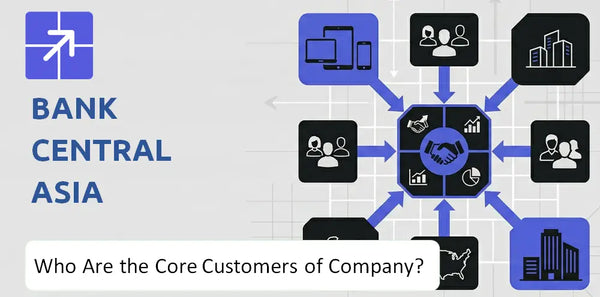
BCA's core customers are urban salaried workers, affluent SMEs, and corporates who keep deposits and transact daily; focus on these segments preserves low funding costs and high liquidity velocity.
Who Is Bank Central Asia Trying to Win?
Bank Central Asia tries to win urban middle-to-upper class retail clients needing wealth management and high-frequency digital payments, Small and Medium Enterprises (SMEs) needing working capital and trade finance, and large corporates requiring corporate banking and treasury services.
 Main customer group: Affluent retail and high-frequency transactors
Affluent retail individuals and young professionals in urban centers are prioritized for wealth management and digital payment products because they generate high deposits and transaction volumes; in 2025 BCA reported retail deposits concentrated in urban branches and digital channels, with high-net-worth clients contributing a major share of fee income.
Secondary customer groups: SMEs and mass-market digital users
SME banking customers BCA receive targeted working capital, trade finance, and cash management; SMEs account for a significant portion of business loan originations in 2025. The mass market is pursued via mobile-first initiatives to capture students, young adults, and millennial/Gen Z cohorts for long-term digital engagement.
Customer type and market role: Mixed retail and corporate focus
Bank Central Asia serves a mixed base: retail banking customers BCA drive deposit and fee income, while corporate and institutional clients supply larger lending and treasury revenues; strategy balances consumer-facing digital adoption with institutional relationship banking.
Most important segment: Quality over quantity – high-value retail and SMEs
The most important segment is wealthy retail clients plus SMEs that produce frequent transactions and stable deposits; in 2025 BCA emphasized capturing customers with high transaction frequency and significant deposit potential to lift net interest margin and non-interest income – see Growth Outlook of Bank Central Asia Company for further context.
Bank Central Asia SWOT Analysis
- Complete SWOT Breakdown
- Fully Customizable
- Editable in Excel & Word
- Professional Formatting
- Investor-Ready Format

What Do Bank Central Asia's Customers Care About Most?
Bank Central Asia target market customers prioritize reliability, fast clearing, and seamless ecosystem integration; retail users want a frictionless myBCA experience while SME and corporate clients demand speed and network reach for B2B trust. Brand prestige and perceived financial stability drive retention and reduce churn.

Core reliability and service continuity
Customers choose Bank Central Asia for uninterrupted access and low failure rates – myBCA uptime exceeded 99.9% in 2025, reducing transaction friction for retail banking customers BCA and SME banking customers BCA.
Practical buying drivers: speed, reach, and fees
SME and corporate clients value rapid clearing and an extensive branch/ATM network – BCA processed a majority of interbank clearing with median same-day settlement times in 2025, and network scale lowers counterparty risk for business banking target market for BCA.
Emotional and aspirational appeal
Holding a Bank Central Asia account signals professional maturity to young professionals as BCA core customers and urban middle class customers of Bank Central Asia; for many Indonesian customers it functions as a status and trust cue.
What customers value most
Customers value a single high-performance interface – myBCA consolidated payments, transfers, and wealth features – driving adoption in the BCA target market for mobile banking app adoption and increasing active digital users to over 30 million in 2025.
Loyalty and repeat demand
High switching costs, integrated products, and perceived prestige create a psychological moat; retention among retail banking customers BCA remained above 85% in 2025, supporting recurring deposit and transaction volumes.
Why customers choose Bank Central Asia
BCA target customers pick Bank Central Asia for proven reliability, breadth of services across retail versus corporate customers of BCA, and network trust – this combination drives wins in loans, mortgages and credit and in wealth management clients BCA. See Ownership and Control of Bank Central Asia Company for governance context: Ownership and Control of Bank Central Asia Company
Bank Central Asia Business Model Canvas
- One-time Payment
- No Research Needed – Save Hours of Work
- Built by Experts, Trusted by Consultants
- Instant Download, Ready to Use
- 100% Editable, Fully Customizable

Where Is Demand Strongest for Bank Central Asia?
Demand for Bank Central Asia target market is strongest in Greater Jakarta and tier-1 metros like Surabaya and Medan, where commercial density and urban middle class customers concentrate. Digital channels, led by the myBCA app, and wealth management for high net worth individuals are the most active environments.
Main Market Location: Greater Jakarta and Tier-1 Metros
Greater Jakarta, Surabaya, and Medan account for the bulk of retail banking customers BCA and SME banking customers BCA due to high transaction density and corporate headquarters concentration. These urban hubs drive most branch deposits, loan originations, and card usage, reflecting the demographic profile of BCA customers in Indonesia.
Secondary Markets: Regional Cities and SMEs
Secondary demand comes from regional provincial capitals and fast-growing SMEs, where small and medium enterprises banking solutions BCA are increasingly adopted. Retail versus corporate customers of BCA show rising SME credit requests and digital onboarding outside Java.
Where Bank Central Asia Is Strongest: Digital and Urban Retail
BCA appears strongest in digital banking services and urban retail: the myBCA app now handles the vast majority of consumer interactions, shifting revenue mix toward digital fees and deposits. In 2025 mobile banking transaction volumes are projected to exceed 35 billion annually, underscoring BCA target market for mobile banking app adoption.
Where Demand May Be Growing Fastest: Digital Channels and Wealth Management
Fastest growth is in digital channels and wealth management: mobile transactions and robo-advice uptake among young professionals as BCA core customers are expanding, while wealth management clients BCA seek diversified products as Indonesia's affluent class rises. See Sales and Marketing Strategy of Bank Central Asia Company for related segmentation and channel strategy.
Bank Central Asia Marketing Mix
- Complete Marketing Mix Analysis
- Effortlessly Communicate Your Business Strategy
- Investor-Ready Format
- 100% Editable and Customizable
- Clear and Structured Layout

How Does Bank Central Asia Keep Its Audience Growing?
BCA keeps its audience growing by using transaction data to cross-sell credit and wealth products, and by investing in technology that embeds banking into daily life, widening reach to adjacent segments while keeping churn low.
How Bank Central Asia Expands Its Customer Base
Bank Central Asia target market expansion leans on data-driven cross-selling: using >1 billion monthly transactions to offer tailored mortgages, auto loans, and credit lines that target retail banking customers BCA and SME banking customers BCA; these credit products are projected to grow at a 10 – 12 percent CAGR through 2026, capturing young professionals as BCA core customers and urban middle class customers of Bank Central Asia.
Customer Retention Drivers
Retention rests on an industry-leading customer service reputation and a digital-first stack: mobile app adoption, integrated payments, and account aggregation raise switching costs; combined with branch+digital servicing for SME banking customers BCA and wealth management clients BCA, net promoter scores and retention rates remain above peers.
Loyalty, Repeat Demand, and Customer Depth
BCA deepens customer relationships via recurring products – savings, recurring transfers, payroll, insurance, and wealth management – driving share-of-wallet among high net worth individuals BCA wealth management services and retail customers; ecosystem stickiness is evident as average product holdings per customer exceed industry averages and digital active users top 20 million in 2025.
The Strongest Customer-Base Growth Lever
The single biggest lever is converting legacy transaction volumes into digital-first credit and wealth flows: by 2025 management expects BCA target customers to shift from transactional banking to higher-margin lending and wealth products, preserving market share and positioning Bank Central Asia as the most defensive and profitable bank in Southeast Asia; see Competitive Landscape of Bank Central Asia Company for context.
Bank Central Asia Boston Consulting Group Matrix
- Built by Experts, Trusted by Consultants
- Structured for Consultants, Students, and Founders
- 100% Editable in Microsoft Word & Excel
- Instant Digital Download – Use Immediately
- Compatible with Mac & PC – Fully Unlocked

Related Blogs
- What Is the History of Bank Central Asia Company and How Did It Evolve?
- What Is the Competitive Landscape of Bank Central Asia Company and How Does It Compete?
- What Is the Growth Outlook of Bank Central Asia Company and Where Is It Heading?
- How Does Bank Central Asia Company Work and What Drives Its Business Model?
- How Does Bank Central Asia Company Reach Customers and Turn Demand into Sales?
- What Do the Mission, Vision, and Core Values of Bank Central Asia Company Reveal?
- Who Owns Bank Central Asia Company Today and Who Holds Control?
Frequently Asked Questions
Bank Central Asia's core customer groups are affluent urban retail clients, SMEs, and large corporates. The blog emphasizes high-frequency transactors and wealthy retail users as the main segment, with SMEs and mass-market digital users as secondary groups. Corporate and institutional clients also matter because they contribute lending and treasury revenues.
Disclaimer
All information, articles, and product details provided on this website are for general informational and educational purposes only. We do not claim any ownership over, nor do we intend to infringe upon, any trademarks, copyrights, logos, brand names, or other intellectual property mentioned or depicted on this site. Such intellectual property remains the property of its respective owners, and any references here are made solely for identification or informational purposes, without implying any affiliation, endorsement, or partnership.
We make no representations or warranties, express or implied, regarding the accuracy, completeness, or suitability of any content or products presented. Nothing on this website should be construed as legal, tax, investment, financial, medical, or other professional advice. In addition, no part of this site - including articles or product references - constitutes a solicitation, recommendation, endorsement, advertisement, or offer to buy or sell any securities, franchises, or other financial instruments, particularly in jurisdictions where such activity would be unlawful.
All content is of a general nature and may not address the specific circumstances of any individual or entity. It is not a substitute for professional advice or services. Any actions you take based on the information provided here are strictly at your own risk. You accept full responsibility for any decisions or outcomes arising from your use of this website and agree to release us from any liability in connection with your use of, or reliance upon, the content or products found herein.