
How does Bank Central Asia operate its payments-led banking model and what drives its profitability?
Bank Central Asia runs a payments and transaction platform that feeds low-cost deposit flows into lending and fee businesses. This matters because in 2025 its dominant retail deposit share supported high net interest margins vs peers amid policy rate shifts.
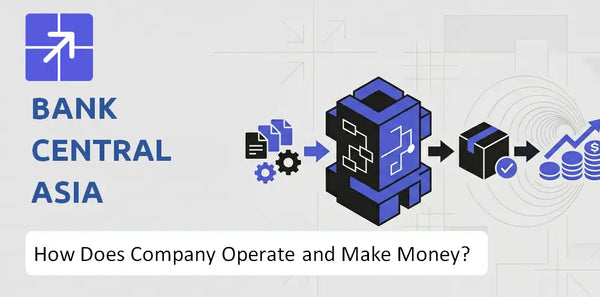
Its scale in retail payments cuts funding costs and boosts fee income; monitor its digital transaction volumes and deposit market share for signals. See Bank Central Asia BCG Matrix Analysis
What Does Bank Central Asia Actually Sell?
Bank Central Asia sells financial security and transactional convenience: deposit accounts, loans, and a digital payments platform that processes daily commerce in Indonesia; customers pay for access, transactions, credit, and investment distribution. Its digital banking platform and payment rails are the core product, supported by wealth management and insurance distribution fees.
 Core financial products and platforms
Bank Central Asia offers savings, current accounts, time deposits, retail and corporate lending (mortgages, auto loans, working capital), and a high-volume digital banking platform that handles billions of transactions annually. It also sells wealth management and insurance distribution services to the growing middle class.
Main buyer groups
Individual retail customers (over 31 million customers by 2026), SMEs requiring working-capital and payment services, and large corporates using treasury and cash-management solutions.
Practical customer value
Customers get secure deposit storage, credit access, seamless payments via mobile and online channels, and access to managed investments and insurance – reducing friction for daily commerce and enabling credit-fueled consumption and business growth.
Differentiators and ease of purchase
BCA stands out for its large retail footprint, low-cost digital rails, and integrated mobile banking apps that drive transaction volume and fee income; customers sign up via branches or streamlined digital onboarding. See Sales and Marketing Strategy of Bank Central Asia Company for distribution detail: Sales and Marketing Strategy of Bank Central Asia Company
Bank Central Asia SWOT Analysis
- Complete SWOT Breakdown
- Fully Customizable
- Editable in Excel & Word
- Professional Formatting
- Investor-Ready Format

How Does Bank Central Asia Run Its Business Day to Day?
Bank Central Asia runs daily as a high-frequency payments hub: a hybrid branch-plus-digital model that routes payroll, merchant settlements, and retail flows through a core ledger and risk engines to fund a diversified loan book. Operational plumbing covers transaction switching, liquidity management, credit decisioning, and customer servicing across channels.

Operating model: hybrid branch and digital core
Bank Central Asia combines BCA business model elements: 1,200+ physical branches integrated with a central digital platform. The bank processes high-frequency retail and corporate payments through real-time switches, a core banking ledger, and centralized liquidity pools so funds cycle from deposits into loans daily.
Product and service delivery: digital-first access
Customers access BCA banking services via mobile and internet banking apps, ATM networks, and branches; on a typical 2025 day the bank handles over 100 million transactions online, accounting for more than 99% of volume, while branches serve relationship and complex needs.
How products are created and sourced
BCA develops loan, deposit, and payment products in-house, using proprietary credit models, third-party data for underwriting, and vendor fintech integrations for payment rails and wallet services. Product cycles prioritize compliance with Indonesian regulators and conservative credit metrics.
Sales channels and distribution
Distribution mixes branch sales, corporate RM teams, digital acquisition via apps and APIs, and partner channels (merchant acquiring, payroll integrations). Retail onboarding often begins digitally; payroll and business settlements make BCA the primary account for many customers.
Key assets, systems, and partnerships
Core assets include the central ledger, real-time payment switches, enterprise data warehouse, and risk engines; partnerships span card networks, payment processors, and fintech APIs. These systems enable scale and support BCA digital banking strategy and apps.
What makes the model work in practice
Sticky customer relationships – payroll & settlement primary accounts – create predictable deposit inflows and high liquidity. That liquidity funds a conservative, diversified lending portfolio across corporate, commercial, and consumer segments, underpinning BCA revenue streams from interest, fees, and commissions. Read more on market fit in Target Customers and Market of Bank Central Asia Company.
Bank Central Asia Business Model Canvas
- One-time Payment
- No Research Needed – Save Hours of Work
- Built by Experts, Trusted by Consultants
- Instant Download, Ready to Use
- 100% Editable, Fully Customizable

How Does Revenue Flow Through Bank Central Asia?
Revenue at Bank Central Asia flows from lending spreads and fee-based services: cheap deposit funding converts into interest income via loans, while transaction volume and advisory services convert customer activity into fees and commissions.
Main revenue: Net Interest Income from lending
Net Interest Income is the core of Bank Central Asia revenue driven by a CASA ratio ~82 percent (early 2026) that supplies low-cost deposits. Those funds are lent at market rates producing a Net Interest Margin near 6.0 percent, which accounts for the majority of operating income.
Additional revenue: Fee-Based Income and digital services
Non-interest income from transaction fees, merchant services, wealth-management commissions, and card interchange contributes about 25 percent of operating income, supported by large digital payments volume and retail banking BCA offerings.
Pricing and monetization model: spreads, fees, commissions
BCA business model monetizes through interest spread (loan yield minus deposit cost), transaction fees on digital banking BCA platforms, and advisory/wealth commissions. Lending products and interest rates set the gross margin; merchant and card fees scale with payment volume.
What drives revenue most: CASA mix, loan growth, and digital volume
Revenue sensitivity centers on CASA mix (low funding cost), loan book growth (retail and corporate lending), and digital transaction volumes. Cost of funds declines as CASA stays high, so small shifts in CASA or NIM materially change BCA profitability; see Ownership and Control of Bank Central Asia Company for governance context: Ownership and Control of Bank Central Asia Company
Bank Central Asia Marketing Mix
- Complete Marketing Mix Analysis
- Effortlessly Communicate Your Business Strategy
- Investor-Ready Format
- 100% Editable and Customizable
- Clear and Structured Layout

What Makes Bank Central Asia's Model Sustainable or Fragile?
Bank Central Asia's model is sustainable due to massive scale, a cost-of-funds edge, and conservative credit controls, but fragile from fintech disruption, regulatory dependence, and sensitivity to EM capital flows. Structural strengths include deposit dominance and diversified fee income; risks include digital-only competitors and domestic consumption swings.
Scale and Cost-of-Funds Advantage
BCA business model benefits from the largest retail deposit base in Indonesia, giving a low cost of funds that competitors struggle to match; this underpins margin resilience and supports market-leading lending spreads in 2025.
Key Assets or Capabilities
BCA banking services rest on an extensive branch and ATM network, high-adoption mobile apps, and strong brand trust; proprietary data analytics and payment rails drive fee income and cross-sell of BCA lending products and interest-rate sensitive offerings.
Dependencies or Constraints
BCA relies heavily on Indonesian retail consumption and regulatory stability; concentration in domestic deposits and exposure as a systemic bank means changes in macro policy, interest-rate cycles, or capital-flow volatility amplify earnings risk.
How Durable the Model Looks in 2025 – 2026
Professional judgment: BCA remains a premium defensive asset in 2025 with non-performing loans under 2.0 percent and Return on Equity ~24 percent; its tech-first transition has reduced disruption risk, though valuation is sensitive to emerging-market capital flows and fintech margin compression.
For deeper context on corporate direction and culture see Mission, Vision, and Values of Bank Central Asia Company.
Bank Central Asia Boston Consulting Group Matrix
- Built by Experts, Trusted by Consultants
- Structured for Consultants, Students, and Founders
- 100% Editable in Microsoft Word & Excel
- Instant Digital Download – Use Immediately
- Compatible with Mac & PC – Fully Unlocked

Related Blogs
- What Is the History of Bank Central Asia Company and How Did It Evolve?
- What Is the Competitive Landscape of Bank Central Asia Company and How Does It Compete?
- What Is the Growth Outlook of Bank Central Asia Company and Where Is It Heading?
- How Does Bank Central Asia Company Reach Customers and Turn Demand into Sales?
- What Do the Mission, Vision, and Core Values of Bank Central Asia Company Reveal?
- Who Are the Core Customers in Bank Central Asia Company's Target Market?
- Who Owns Bank Central Asia Company Today and Who Holds Control?
Frequently Asked Questions
Bank Central Asia sells deposit accounts, loans, and digital payment services. It also earns fees from wealth management and insurance distribution. The article says its core value is transactional convenience, financial security, and access to credit through mobile, online, branch, and payment rails.
Disclaimer
All information, articles, and product details provided on this website are for general informational and educational purposes only. We do not claim any ownership over, nor do we intend to infringe upon, any trademarks, copyrights, logos, brand names, or other intellectual property mentioned or depicted on this site. Such intellectual property remains the property of its respective owners, and any references here are made solely for identification or informational purposes, without implying any affiliation, endorsement, or partnership.
We make no representations or warranties, express or implied, regarding the accuracy, completeness, or suitability of any content or products presented. Nothing on this website should be construed as legal, tax, investment, financial, medical, or other professional advice. In addition, no part of this site - including articles or product references - constitutes a solicitation, recommendation, endorsement, advertisement, or offer to buy or sell any securities, franchises, or other financial instruments, particularly in jurisdictions where such activity would be unlawful.
All content is of a general nature and may not address the specific circumstances of any individual or entity. It is not a substitute for professional advice or services. Any actions you take based on the information provided here are strictly at your own risk. You accept full responsibility for any decisions or outcomes arising from your use of this website and agree to release us from any liability in connection with your use of, or reliance upon, the content or products found herein.